2026年4月5日
3D ACADEMY offers affordable English study programs in Cebu, Philippines – perfect for beginners, professionals, and exam takers.

3D UNIVERSAL ENGLISH INSTITUTE INC
info.3d-universal.com
8:00-17:00(Mon-Fri)
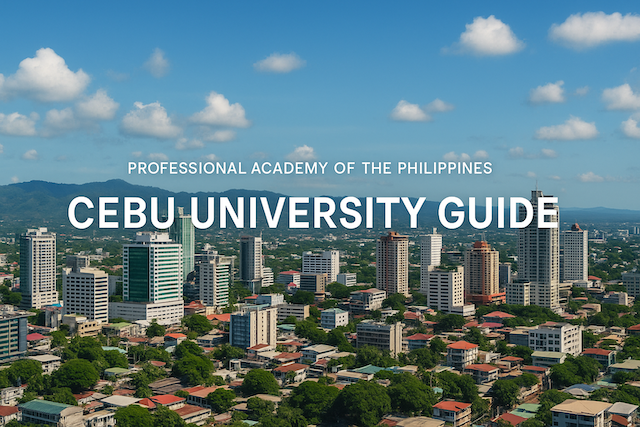
Professional Academy of the Philippines: Cebu University Guide
Contents
- Professional Academy of the Philippines: Cebu University Guide
- Overview of the Professional Academy of the Philippines
- Location and Accessibility
- Academic Philosophy and Learning Approach
- Programs Offered at PAP Cebu
- Admission Requirements
- Tuition Fees and Payment Options
- Campus and Facilities
- Student Life and Community
- Career and Job Opportunities
- Why Choose the Professional Academy of the Philippines in Cebu?
- Tips for Prospective Students
- Final Thoughts
- FAQs (Frequently Asked Questions)
- What type of institution is the Professional Academy of the Philippines in Cebu?
- Does PAP Cebu offer full bachelor’s degree programs?
- What programs and courses are commonly offered at PAP Cebu?
- Who is the ideal student for the Professional Academy of the Philippines in Cebu?
- What are the general admission requirements?
- How much are the tuition fees, and are there installment options?
- What is the class schedule like for working students?
- What kind of teaching and learning methods are used?
- Are there career support and job placement opportunities?
- Is the Professional Academy of the Philippines in Cebu recognized by employers?
- How can I find the latest information about programs and schedules?
Professional Academy of the Philippines: Cebu University Guide
The Professional Academy of the Philippines (PAP) is an institution known for its specialized programs designed to build practical, industry-ready skills for students and working professionals. In Cebu, the academy has become an option for learners who want focused training, flexible learning setups, and career-oriented programs that lead directly to employment opportunities.
This guide provides a comprehensive overview of the Professional Academy of the Philippines in Cebu. It covers the school’s programs, admission process, student life, tuition expectations, campus environment, and reasons why many learners choose PAP for career advancement. Whether you are a senior high school graduate, a working professional seeking upskilling, or an international student looking for applied learning in the Philippines, this article will help you understand what the school offers.
Overview of the Professional Academy of the Philippines
The Professional Academy of the Philippines (PAP) is an educational institution designed to deliver competency-based training programs. Instead of offering traditional four-year college degrees, PAP focuses on practical, industry-specific skills that can be used immediately in the workplace. The institution partners with professional organizations, businesses, and government bodies to ensure that its curriculum stays relevant.
Key characteristics of PAP include:
-
Short-term and mid-term specialized programs
-
Hands-on and applied learning methods
-
Flexible class schedules for working students
-
Industry-recognized certificates
-
Programs aligned with current job market demand
In Cebu, the academy aims to serve learners from various backgrounds—new graduates preparing for employment, individuals shifting careers, and professionals upgrading their skills.
Location and Accessibility
The Professional Academy of the Philippines operates in accessible locations within Cebu, typically situated near commercial centers, transportation routes, and business hubs. This strategic positioning helps make classes more convenient for students, especially those taking evening or weekend schedules.
Most PAP campuses or partner training centers in Cebu are reachable by:
-
Jeepney routes
-
MyBus (depending on the area)
-
Taxi or Grab
-
Nearby main roads and intersections
Because PAP caters to adult learners and working professionals, accessibility is a key part of its campus planning. Students can commute without difficulty even after work hours.
Academic Philosophy and Learning Approach
The learning framework of the Professional Academy of the Philippines differs from traditional universities. Instead of theory-heavy instruction, PAP prioritizes:
1. Competency-Based Learning
Students are trained on specific skills required by industries. They are evaluated based on their mastery of competencies rather than time spent in class.
2. Modular Format
Programs are divided into digestible modules, allowing students to progress step-by-step and manage their workload more effectively.
3. Practical and Hands-On Training
Activities include simulations, case studies, role-playing, project-based tasks, and real-world assignments.
4. Industry Partnerships
Many programs are designed in collaboration with companies and experts, ensuring that graduates have relevant skills.
5. Flexible Schedules
Evening, weekend, and blended learning options help students balance study with work or personal commitments.
This approach has made PAP popular among professionals who want to enhance their credentials without enrolling in a traditional full-time program.
Programs Offered at PAP Cebu
While offerings may vary depending on demand and partner institutions, PAP generally provides programs under key areas such as:
1. Business and Management
-
Leadership and Management Development
-
Office Administration
-
Human Resource Development
-
Project Management
-
Sales and Marketing Training
-
Customer Service Excellence
These programs are ideal for employees aiming for promotion or skill upgrades.
2. Information Technology
-
Basic to Advanced Computer Literacy
-
IT Office Skills
-
Digital Tools for Productivity
-
Basic Programming (in some branches)
-
Digital Transformation Workshops
These IT modules help prepare individuals for administrative roles, tech support, and digital work environments.
3. Hospitality and Tourism
-
Front Office Services
-
Food and Beverage Service
-
Bartending
-
Housekeeping Operations
These programs often include practical hotel simulations and hands-on training.
4. Professional Development Programs
-
Communication Skills Training
-
Professional Writing
-
Workplace Ethics and Development
-
Career Coaching and Job Readiness Workshops
These build soft skills essential for success in the workplace.
5. TESDA-Aligned Courses
Some PAP programs may be aligned with TESDA qualifications, helping graduates obtain nationally recognized certifications.
6. Corporate Training Programs
Companies may partner with PAP for customized training for their employees. This includes leadership, compliance, customer service, and technical workshops.
Admission Requirements
The Professional Academy of the Philippines offers a streamlined admission process. Since many programs are short-term or modular, the requirements are simpler compared to full universities.
General requirements include:
-
Accomplished registration form
-
Valid ID (student ID, government ID, or company ID)
-
Recent photo (passport-size or 1×1)
-
Payment of registration or enrollment fee
For some TESDA-aligned programs, additional documents might be required, such as:
-
Birth certificate
-
High school card or transcript
-
Additional IDs
-
Assessment fees (if needed)
PAP does not typically require entrance exams. Instead, students attend an orientation or consultation to select the right program.
Tuition Fees and Payment Options
PAP programs are known to be affordable and practical. Tuition varies depending on the type of course, duration, and required materials.
Common cost structures include:
-
Short courses: Usually lower cost, often completed within days or weeks
-
Modular programs: Paid per module
-
TESDA programs: May include assessment fees or training materials
-
Corporate training: Based on customized pricing
Payment plans may include:
-
Full payment
-
Installment options
-
Module-based payment
-
Online payment channels
Students often choose PAP because it offers quality professional training without the high cost of traditional degree programs.
Campus and Facilities
The campus environment at PAP reflects its focus on applied learning and real-world skills. Facilities may vary depending on the Cebu branch or partner training center, but commonly include:
-
Training rooms and classrooms
-
Computer laboratories
-
Hospitality training facilities (mock hotel front desk, dining setup, housekeeping practice rooms)
-
Multipurpose halls
-
Consultation rooms
-
Student waiting areas
Because PAP programs are modular, students often spend focused and productive time on campus rather than long classroom hours.
Student Life and Community
Student life at PAP differs from that of large universities. Since many learners are adults or working students, activities emphasize practical learning, career growth, and professional networking.
Common student experiences include:
-
Workshops with industry speakers
-
Peer group activities
-
Skills competitions
-
Program-based events (hospitality simulations, business presentations, etc.)
-
Career coaching sessions
-
Internship or on-the-job training (depending on the program)
While PAP does not typically feature large-scale campus festivals or organizations, it maintains a supportive and skill-focused environment that helps students stay motivated.
Career and Job Opportunities
One of PAP’s strongest advantages is its emphasis on employability. Many graduates move directly into entry-level positions or use their certificates for career advancement.
Some potential career paths include:
Business & Office Roles
-
Administrative assistant
-
Human resources support
-
Customer service representative
-
Sales associate
-
Retail supervisor
IT and Digital Roles
-
Office IT support
-
Computer clerk
-
Data encoder
Hospitality Positions
-
Hotel front desk staff
-
Housekeeping attendant
-
F&B service crew
-
Bartender
Professional Growth
-
Team lead
-
Supervisor
-
Department assistant manager
PAP focuses on enabling students to demonstrate their practical skills, making them more attractive to employers.
Why Choose the Professional Academy of the Philippines in Cebu?
There are several reasons why students and professionals choose PAP:
1. Practical, job-ready skills
Programs directly match the needs of today’s job market.
2. Flexible schedules
Ideal for working individuals or those balancing multiple responsibilities.
3. Affordable training
Costs are significantly lower than traditional college tuition.
4. Short-term and modular
Students can gain certificates quickly and efficiently.
5. Industry partnerships
Ensures training remains relevant and up-to-date.
6. Career-oriented environment
Students receive guidance designed to boost employment or promotion opportunities.
7. Accessible campus locations
Convenient for both Cebu City and nearby provincial residents.
Tips for Prospective Students
To maximize your experience at PAP, consider the following recommendations:
Select the Right Program
Discuss your goals with the admissions team or program advisor.
Manage Your Schedule
Plan around the modular setup to balance study and work.
Participate Fully in Activities
Workshops, simulations, and projects help strengthen your resume.
Utilize Career Support
Take advantage of job readiness training and consultations.
Build a Network
Connect with classmates and instructors for future opportunities.
Final Thoughts
The Professional Academy of the Philippines in Cebu offers a valuable alternative to traditional university education, especially for students seeking practical, real-world skills. Whether you aim to start your first job, shift careers, or improve your professional credentials, PAP provides flexible and industry-aligned programs that help you advance efficiently.
With accessible campuses, affordable tuition, and programs focused on employment readiness, PAP continues to attract learners who want to build their future through skill-based training. For individuals in Cebu or nearby regions looking for career development, the Professional Academy of the Philippines stands out as a strong and practical choice.
FAQs (Frequently Asked Questions)
What type of institution is the Professional Academy of the Philippines in Cebu?
The Professional Academy of the Philippines (PAP) in Cebu is a skills-focused training institution that specializes in competency-based education rather than traditional four-year degree programs. It offers short-term and modular courses designed to help students and professionals gain practical, job-ready skills in areas such as business, office administration, hospitality, and information technology. The main goal of PAP is to equip learners with relevant competencies that match current industry requirements and help them advance their careers more efficiently.
Does PAP Cebu offer full bachelor’s degree programs?
PAP Cebu typically focuses on short courses, certificate programs, and professional development training rather than full bachelor’s degrees. Its strength lies in providing targeted skills training that can be completed in a shorter period of time, making it ideal for individuals who want to enter the workforce quickly or upgrade existing skills. If you are specifically looking for a traditional four-year degree, you may consider enrolling in a university and then using PAP’s programs as supplementary training for additional competencies or certifications.
What programs and courses are commonly offered at PAP Cebu?
Programs at PAP Cebu often include business and management training, office administration, customer service, sales and marketing, hospitality and tourism skills, IT and computer literacy, and various professional development courses. Some modules may be aligned with TESDA standards, while others are customized based on industry demand or corporate partnerships. The exact list of programs may change over time, so it is best to contact the campus directly or check their latest course schedule to see current offerings and upcoming batches.
Who is the ideal student for the Professional Academy of the Philippines in Cebu?
PAP Cebu is suitable for a wide range of learners. This includes fresh high school or senior high graduates who want job-ready skills, college undergraduates who need practical training, career shifters exploring new fields, and working professionals seeking promotion or upskilling. Because many programs are modular and offered during evenings or weekends, PAP is especially ideal for individuals who are employed but want to continue learning without giving up their current job. International students interested in applied training may also find the format attractive.
What are the general admission requirements?
Admission requirements at PAP Cebu are usually straightforward. Applicants typically need to submit a completed registration form, a valid ID (such as a school, company, or government-issued ID), and a recent ID photo. Some programs may ask for additional documents, particularly TESDA-aligned courses, which might require a birth certificate, high school card, or transcript. There is usually no entrance examination; instead, students may attend an orientation or consultation session to determine the most suitable program based on their goals and background.
How much are the tuition fees, and are there installment options?
Tuition fees at PAP Cebu vary depending on the type, length, and specialization of the program. Short courses and introductory modules are generally more affordable, while longer or more technical programs may have higher fees. Many students find PAP cost-effective compared to full degree programs because the courses are focused and shorter in duration. Payment schemes may include full payment, per-module payment, or installment arrangements, depending on the program’s structure. It is recommended to inquire directly with the school for updated fee schedules and available payment options.
What is the class schedule like for working students?
PAP Cebu is designed with working students in mind. Many programs offer flexible schedules such as evening classes, weekend sessions, or blended learning formats that combine on-site and online meetings. This flexibility allows learners to maintain their regular jobs while studying. Some intensive short courses may run on consecutive days, while others are spread out over several weeks or months. When enrolling, you can usually choose a batch or schedule that best fits your work hours and personal commitments.
What kind of teaching and learning methods are used?
The teaching approach at PAP Cebu emphasizes practical and hands-on learning. Instead of relying solely on lectures, instructors often use case studies, simulations, role-plays, group projects, and real-world assignments. For hospitality courses, learners may practice in mock hotel or restaurant environments. Business and office courses may involve creating actual documents, presentations, or workplace scenarios. This method allows students to apply what they learn immediately and develop confidence in using their skills in real job settings.
Are there career support and job placement opportunities?
While PAP Cebu is not a traditional university with a large career center, many programs include job readiness components such as resume preparation, interview coaching, and workplace professionalism. Some courses, especially those developed with industry partners, may also lead to referrals, internships, or on-the-job training opportunities. Ultimately, PAP’s strong focus on applied skills and industry alignment helps enhance each graduate’s employability, making it easier for them to compete for entry-level roles or promotions within their current company.
Is the Professional Academy of the Philippines in Cebu recognized by employers?
Employers generally value PAP graduates because of their practical skill sets and training orientation. Since many programs are designed with input from industry practitioners and may be aligned with national skills standards, students are trained to meet real workplace expectations. Certificates from PAP can help strengthen a resume, especially when combined with prior experience, TESDA certifications, or a formal degree. As always, actual recognition will depend on the specific employer, job role, and how well each graduate can demonstrate their competencies during recruitment.
How can I find the latest information about programs and schedules?
Because program offerings, schedules, and fees can change over time, the best way to get accurate and updated information about PAP Cebu is to contact the institution directly through its official communication channels. You can inquire via phone, email, or social media page, or visit the campus or training center in person. When you reach out, be ready to share your background and goals so the staff can recommend the most suitable program, explain the current enrollment process, and guide you on the next steps.
Philippines University Guide
Cebu University Guide
Cebu Province All Universities Lists

How to Register for eTravel Philippines (2025 Guide)
Step-by-step guide to completing your eTravel registration before arriving in the Philippines, with images and tips.

Night Market in Cebu – Things You Don’t Know About Cebu Life
Discover the hidden charm of Cebu’s night markets, from street food stalls to local life tips you won’t find in tourist guides.

How to Use ChatGPT for IELTS Preparation: A Complete Guide
Learn how to prepare for IELTS using ChatGPT — including strategies for Writing, Reading, Listening, Speaking, and grammar support.

How to Build a Website Without Coding Using ChatGPT
Discover how to build your own website using AI—no coding skills needed. From structure planning to SEO and design, let ChatGPT guide you.