2026年1月12日
3D ACADEMY offers affordable English study programs in Cebu, Philippines – perfect for beginners, professionals, and exam takers.

3D UNIVERSAL ENGLISH INSTITUTE INC
info.3d-universal.com
8:00-17:00(Mon-Fri)
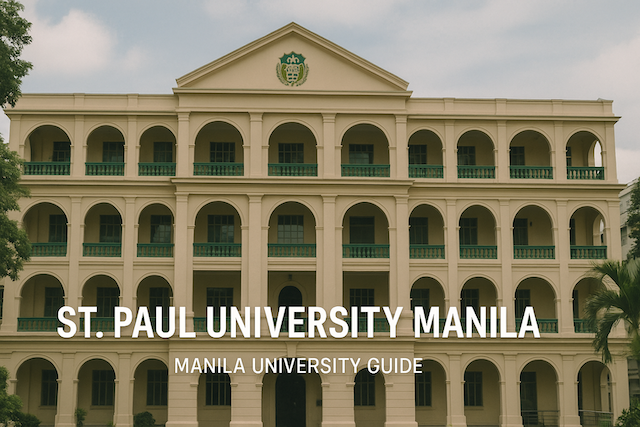
St. Paul University Manila: Manila University Guide
Contents
- St. Paul University Manila: Manila University Guide
- Overview of St. Paul University Manila
- History and Mission
- Location and Campus Environment
- Academic Programs
- Admission Requirements
- Tuition Fees
- Facilities and Campus Resources
- Campus Life and Organizations
- Online Learning and Digital Tools
- Why Choose St. Paul University Manila?
- Conclusion
- FAQs (Frequently Asked Questions)
- What type of university is St. Paul University Manila?
- Is St. Paul University Manila only for Catholic students?
- What are the most popular courses at St. Paul University Manila?
- Does St. Paul University Manila have a strong Nursing program?
- What are the basic admission requirements for new college students?
- Can transfer students and second coursers apply?
- How much is the tuition at St. Paul University Manila?
- Are there scholarships or financial assistance programs available?
- Does St. Paul University Manila accept international students?
- Is there on-campus housing or dormitory for students?
- What is campus life like at St. Paul University Manila?
- Is the campus safe for students?
- Does St. Paul University Manila offer online or blended learning?
- How can I get more updated information about St. Paul University Manila?
St. Paul University Manila: Manila University Guide
Overview of St. Paul University Manila
St. Paul University Manila (SPU Manila) is one of the most well-established private Catholic universities in the Philippines, known for its strong academic tradition, values-centered education, and commitment to forming globally competent graduates. Founded in 1911 by the Sisters of St. Paul of Chartres (SPC), the university has grown into a respected institution offering a wide range of undergraduate and graduate programs in arts, sciences, health sciences, business, education, and music.
Located in the heart of Manila, specifically in Malate, SPU Manila provides students with a balance of academic excellence, character formation, community engagement, and campus life—all within a safe and spiritually grounded environment.
This guide provides a detailed look at SPU Manila’s academic offerings, campus environment, admission requirements, tuition fees, facilities, and student life to help prospective students and parents understand what to expect from this well-regarded university.
History and Mission
St. Paul University Manila traces its beginnings to the early 1900s when the SPC Sisters established a school for young women in Malate. Originally named St. Paul College Manila, the institution transitioned into a full university and eventually adopted its current name, reflecting broader program offerings and expansion.
SPU Manila remains guided by its mission to form responsible leaders and compassionate individuals rooted in Christian and Pauline values. The university emphasizes academic excellence, social responsibility, and holistic development.
Its core values include:
-
Charity — Commitment to service and kindness
-
Community — Strong relationships among students, faculty, and administrators
-
Commitment — Dedication to academic and moral excellence
-
Christ-centeredness — A Catholic foundation integrated into education and campus culture
Location and Campus Environment
SPU Manila is strategically located in Malate, Manila, an area known for its blend of educational institutions, historical landmarks, residential communities, and commercial establishments.
Key advantages of SPU Manila’s location:
-
Accessible from major roads like Taft Avenue and Quirino Avenue
-
Close to LRT-1 and key transportation routes
-
Near hospitals, churches, malls, and restaurants
-
Safe and student-friendly area within university belt surroundings
The campus itself features a peaceful, green, and orderly environment—ideal for learners seeking an organized and values-centric atmosphere.
Academic Programs
Undergraduate Programs
SPU Manila offers strong undergraduate programs across various disciplines. Popular courses include:
-
Bachelor of Science in Nursing (BSN)
-
Bachelor of Science in Medical Technology
-
Bachelor of Science in Psychology
-
Bachelor of Business Administration (Major in Financial Management, Marketing Management, or Operations Management)
-
Bachelor of Science in Tourism Management
-
Bachelor of Science in Hospitality Management
-
Bachelor of Arts in Communication
-
Bachelor of Arts in English Language Studies
-
Bachelor of Music
-
Bachelor of Education programs (Elementary and Secondary Education)
SPU Manila is especially recognized for its health sciences programs such as Nursing and Medical Technology, which are among the most reputable in the region.
Graduate Programs
The university also offers various Master’s and Doctorate degrees, such as:
-
Master of Arts in Education
-
Master in Business Administration
-
Master of Arts in Nursing
-
Doctor of Education
-
Doctor of Philosophy in Nursing
These programs attract working professionals aiming to advance their credentials and careers.
Admission Requirements
Admission procedures may vary per program, but general requirements include:
For Freshmen
-
Accomplished application form
-
High school report card (Form 138)
-
Certificate of Good Moral Character
-
PSA Birth Certificate
-
Recent ID photos
-
Entrance exam (if required for certain programs)
-
Interview for selected courses such as Nursing, Tourism, and Education
For Transfer Students
-
Transcript of Records or evaluation copy
-
Honorable Dismissal
-
Good Moral Certificate
-
IDs and photos
-
Program head evaluation
For Graduate Students
-
Completed application form
-
Transcript of Records
-
Recommendation letters
-
Resume or CV
-
Interview (depending on program)
SPU Manila also accepts international students, who need to submit additional documents such as passport copy, student visa requirements, and English proficiency certifications as needed.
Tuition Fees
Tuition fees at St. Paul University Manila vary by program. Health sciences programs such as Nursing and Medical Technology tend to have higher fees due to laboratory and clinical requirements.
As an estimate:
-
Undergraduate programs: Approximately ₱40,000–₱65,000 per semester
-
Nursing and MedTech: ₱60,000–₱80,000 per semester
-
Graduate studies: ₱2,300–₱3,000 per unit
Additional fees may include laboratory charges, uniform fees, and miscellaneous fees. SPU Manila offers scholarships and financial aid such as academic scholarships, athletic grants, artistic scholarships (music), SPC grants, and assistance programs for deserving students.
Facilities and Campus Resources
SPU Manila provides well-maintained facilities to support both academic and extracurricular activities:
Academic and Learning Facilities
-
Modern classrooms with air-conditioning
-
Advanced laboratories for Nursing and Medical Technology
-
Multimedia rooms and smart classrooms
-
Music studios and practice rooms
-
Library with digital archives
-
Computer laboratories
Student Life Facilities
-
Chapel for spiritual formation
-
Student lounges
-
Cafeteria and food hubs
-
Multipurpose hall and auditorium
-
Gym and fitness areas
-
Safe walkways and landscaped gardens
The university is known for its orderly, peaceful, and student-centered environment, making it ideal for learners who prefer discipline and structure.
Campus Life and Organizations
SPU Manila promotes holistic development through numerous student organizations, including:
-
Academic clubs
-
Performing arts groups
-
Music ensembles
-
Student Council
-
Campus Ministry and religious groups
-
Community outreach organizations
Students can join volunteer programs, cultural events, leadership seminars, and community immersion activities.
Online Learning and Digital Tools
SPU Manila integrates technology into its academic framework. Students use digital platforms for assignments, virtual lectures, and assessments. The university adapted blended learning methods, especially for programs that require both classroom and practical exposure.
Why Choose St. Paul University Manila?
Prospective students choose SPU Manila because of its:
-
Strong Catholic and values-oriented education
-
Reputable Nursing and allied health programs
-
Safe and well-kept campus environment
-
Academic excellence and dedicated instructors
-
Central location accessible to Manila residents
-
Holistic development through music, arts, and outreach programs
SPU Manila is ideal for students who want quality education with moral grounding within a structured and supportive learning environment.
Conclusion
St. Paul University Manila continues to be a strong educational institution in the Philippines. With its student-focused academic programs, Catholic foundation, modern facilities, and holistic development approach, the university remains a preferred choice among students pursuing careers in health sciences, business, arts, music, and education. Whether you are a local applicant or an international student looking for a reputable institution in Manila, SPU Manila offers an enriching academic journey rooted in values and excellence.
FAQs (Frequently Asked Questions)
What type of university is St. Paul University Manila?
St. Paul University Manila is a private Catholic university run by the Sisters of St. Paul of Chartres (SPC). It offers basic education, undergraduate, and graduate programs with a strong focus on values formation, academic excellence, and service. The campus is located in Malate, Manila, and is known for its safe, orderly, and community-oriented environment.
Is St. Paul University Manila only for Catholic students?
No. While St. Paul University Manila is a Catholic institution and integrates Christian and Pauline values into its education system, it welcomes students from different religious backgrounds. Non-Catholic students may join spiritual and formation activities according to their comfort level and beliefs. Respect for diversity and mutual understanding is encouraged on campus.
What are the most popular courses at St. Paul University Manila?
Some of the most popular programs at St. Paul University Manila include Nursing, Medical Technology, Psychology, Business Administration, Tourism Management, Hospitality Management, Education, Communication, and Music. The university is especially well known for its strong health sciences programs and its long-standing reputation in Nursing and allied health fields.
Does St. Paul University Manila have a strong Nursing program?
Yes. St. Paul University Manila is widely recognized for its Nursing program. The curriculum combines rigorous academic training, skills laboratory work, and hospital or community-based clinical exposure. The program also emphasizes ethical practice, compassion, and service. Many graduates pursue careers locally and abroad, particularly in hospitals, clinics, and other healthcare institutions.
What are the basic admission requirements for new college students?
For incoming freshmen, typical requirements include an accomplished application form, high school report card (Form 138 or its equivalent), Certificate of Good Moral Character, PSA birth certificate, ID photos, and any program-specific requirements. Some courses may require an entrance examination, interview, or additional documents. Applicants should always check the latest admission guidelines from the official university channels.
Can transfer students and second coursers apply?
Yes. St. Paul University Manila accepts transfer students and second coursers, subject to evaluation. Requirements often include a Transcript of Records for evaluation, Honorable Dismissal or Transfer Credentials, Certificate of Good Moral Character, and other documents requested by the registrar or program department. Subjects from previous schools may be credited upon assessment.
How much is the tuition at St. Paul University Manila?
Tuition fees vary depending on the program and the number of units enrolled. Health-related courses such as Nursing and Medical Technology usually have higher total fees due to laboratory and clinical components. Other programs may have more moderate tuition ranges. Since fees can change over time, prospective students and parents should always refer to the most recent schedule of fees provided by the university.
Are there scholarships or financial assistance programs available?
Yes. St. Paul University Manila offers various forms of financial assistance, such as academic scholarships, grants for student leaders and athletes, music or arts-related scholarships, and institutional or SPC-related grants. Some external scholarships and government programs may also be accepted. Each scholarship has its own eligibility criteria, application process, and retention requirements.
Does St. Paul University Manila accept international students?
Yes. International students are welcome to apply to St. Paul University Manila. In addition to the usual admission requirements, foreign applicants may need to submit passport copies, proof of English proficiency (if applicable), and documents required for student visa processing. The university may provide guidance on visa procedures, but students are responsible for complying with immigration regulations.
Is there on-campus housing or dormitory for students?
Availability of on-campus or nearby dormitory options may vary depending on the academic year and current arrangements. Some students choose to stay in boarding houses, apartments, or dormitories around Malate and nearby districts. Because housing options can change, it is best to inquire directly with the university or explore recommended accommodations near the campus.
What is campus life like at St. Paul University Manila?
Campus life at St. Paul University Manila is generally disciplined yet friendly and community-oriented. Students can join academic organizations, performing arts groups, music ensembles, student government, and outreach or campus ministry activities. Events such as institutional celebrations, cultural shows, formation programs, and seminars provide opportunities for leadership, creativity, and personal growth.
Is the campus safe for students?
The university maintains security measures such as controlled entry points, security personnel, ID checks, and campus regulations to promote a safe environment. The surrounding Malate area includes other schools, offices, and residential buildings, which helps create a student-friendly neighborhood. However, like any urban setting, students are encouraged to observe common safety practices, especially when commuting.
Does St. Paul University Manila offer online or blended learning?
St. Paul University Manila has incorporated digital tools and learning management systems to support online and blended learning, especially in recent years. Depending on the program and current guidelines, students may experience a mix of face-to-face classes, virtual lectures, online assessments, and digital submissions. The exact mode of delivery may change in response to educational policies and institutional planning.
How can I get more updated information about St. Paul University Manila?
For the most accurate and updated information about programs, tuition fees, admission schedules, and requirements, it is best to visit the official website of St. Paul University Manila or contact the admissions/registrar office directly. Social media pages and official announcements are also useful sources for news, deadlines, and upcoming events.
Philippines University Guide
Manila University Guide
Manila Province All Universities Lists

How to Register for eTravel Philippines (2025 Guide)
Step-by-step guide to completing your eTravel registration before arriving in the Philippines, with images and tips.

Night Market in Cebu – Things You Don’t Know About Cebu Life
Discover the hidden charm of Cebu’s night markets, from street food stalls to local life tips you won’t find in tourist guides.

How to Use ChatGPT for IELTS Preparation: A Complete Guide
Learn how to prepare for IELTS using ChatGPT — including strategies for Writing, Reading, Listening, Speaking, and grammar support.

How to Build a Website Without Coding Using ChatGPT
Discover how to build your own website using AI—no coding skills needed. From structure planning to SEO and design, let ChatGPT guide you.