2026年4月5日
3D ACADEMY offers affordable English study programs in Cebu, Philippines – perfect for beginners, professionals, and exam takers.

3D UNIVERSAL ENGLISH INSTITUTE INC
info.3d-universal.com
8:00-17:00(Mon-Fri)
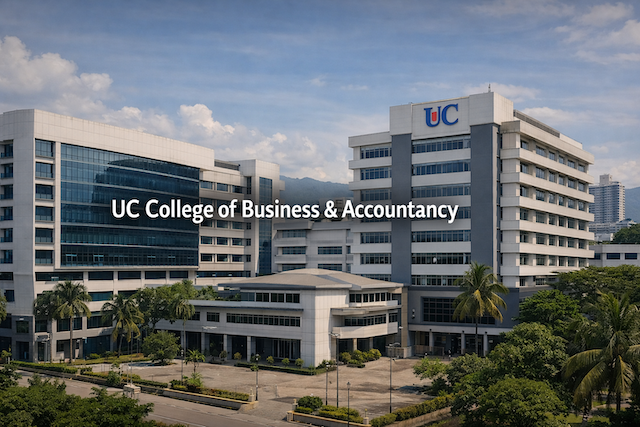
University of Cebu (UC) College of Business and Accountancy: Cebu University Guide
Contents
- University of Cebu (UC) College of Business and Accountancy: Cebu University Guide
- Overview of UC College of Business and Accountancy
- Why Choose UC for Business or Accountancy in Cebu
- Programs and Tracks You Can Expect
- What You’ll Study in the First Two Years
- Accountancy Track: What Makes It Different
- Business Administration Track: Choosing the Right Major
- Learning Environment, Faculty, and Campus Support
- Student Organizations and Professional Exposure
- Internships, Career Outcomes, and Cebu Job Paths
- Admissions and What to Prepare
- Tips to Succeed in UC Business and Accountancy
- Final Thoughts: Is UC College of Business and Accountancy Worth It?
- FAQs (Frequently Asked Questions)
- Is the University of Cebu (UC) College of Business and Accountancy a good choice for practical, job-ready skills?
- What is the main difference between Accountancy and Business Administration at UC?
- Which major should I pick if I’m not sure yet?
- Do I need to be “good at math” to succeed in Business or Accountancy?
- How can I prepare for Accountancy if I’m aiming for CPA-related pathways?
- Are internships important for UC business/accountancy students in Cebu?
- What skills should I prioritize if I want to get hired quickly after graduation?
- What is student life like for business and accountancy students at UC?
- How do I choose the best campus setup or routine if I commute?
- If I want to start a business someday, is Business Administration better than Accountancy?
University of Cebu (UC) College of Business and Accountancy: Cebu University Guide
Overview of UC College of Business and Accountancy
The University of Cebu (UC) is one of the biggest private, non-sectarian universities in Cebu, known for practical, career-oriented programs and a large multi-campus student community.
Within UC, the College of Business and Accountancy (often referred to as Business & Accountancy or similar naming depending on campus) is a popular choice for students who want a clear path into corporate careers, entrepreneurship, banking, accounting, and management. UC’s business-facing programs are typically designed to match real workplace expectations: reporting, presentations, teamwork, deadlines, and performance-based outputs—not just written exams.
UC also highlights that it has been granted CHED deregulated status and is recognized through PACUCOA accreditation activity across its programs, reflecting an institutional focus on quality assurance and program standards.
This guide explains what to expect from UC’s business and accountancy track, what students usually study, how to choose the right program, and how to maximize your college years for employability in Cebu and beyond.
Why Choose UC for Business or Accountancy in Cebu
Choosing a business school isn’t just about the course title. It’s about the environment, the network, and how well the program prepares you for the real world. UC’s strengths for business/accountancy students usually come down to:
Practical orientation. Business and accounting careers reward people who can deliver outputs—financial statements, reports, feasibility studies, audits, sales plans, and operations systems. UC programs tend to emphasize applied learning and skills that translate directly into internships and entry-level roles.
Cebu-centered career relevance. Cebu is a major hub for BPO/IT-BPM, shared services, banking, retail, hospitality, logistics, and entrepreneurship. A business/accountancy education in Cebu gives students direct exposure to local business realities: fast-growing companies, competitive job markets, and expanding professional networks.
Multi-campus presence and large student community. UC operates across multiple urban campuses in Cebu, creating a wide student network and plenty of opportunities to meet peers from different tracks and industries.
Programs and Tracks You Can Expect
UC’s published academic program listings include Commerce and Accountancy, reflecting its long-running business education track.
Depending on campus and year-level offerings, business/accountancy students commonly look at programs such as:
Accountancy-related paths
-
BS Accountancy (BSA) – the traditional track for students aiming to become CPAs and work in audit, tax, and corporate accounting.
-
Management Accounting–type programs (where available) – often aligned with internal accounting, cost control, budgeting, and analytics inside organizations.
Business administration paths
-
BS Business Administration (BSBA) with typical specializations (varies by campus), such as:
-
Marketing Management
-
Financial Management
-
Human Resource Management
-
Operations/Business Management
-
Entrepreneurship or similar business development tracks
-
If you’re deciding between Accountancy and Business Administration, a simple way to think about it is this:
-
Accountancy is more rules-based and technical, with heavy emphasis on financial reporting, standards, auditing concepts, and compliance discipline.
-
Business Administration is broader, usually more flexible, and can lead into marketing, HR, sales, management, entrepreneurship, and corporate roles across many industries.
Campus note: UC program availability and how they label majors can vary by campus (for example, UC Main vs. UC Banilad vs. UC Lapu-Lapu and Mandaue). If you already know your campus, align your plan with the specific offering list for that campus.
What You’ll Study in the First Two Years
Most business and accountancy programs share a foundation before specialization kicks in. Your early years typically focus on core skills that become essential later:
Business foundations
-
Fundamentals of Management
-
Microeconomics and Macroeconomics
-
Business Mathematics and basic analytics
-
Introduction to Business Finance
-
Basic Marketing concepts
Accounting and finance foundations
-
Basic financial accounting concepts
-
Cost and management accounting basics (intro level)
-
Business law fundamentals (intro level)
Communication and professional skills
-
Business writing and presentations
-
Research methods and report writing
-
Team-based case studies and projects
Even if your end goal is to be a CPA or a finance manager, these “foundation years” matter because they shape how you think: how to explain numbers clearly, how to defend decisions with evidence, and how to operate in team environments.
Accountancy Track: What Makes It Different
If you choose BS Accountancy, expect a heavier technical load and a structured sequence of subjects. Accountancy programs are often designed so that advanced subjects require strong mastery of earlier topics—so consistency matters.
You’ll typically encounter:
-
Intermediate and advanced accounting
-
Auditing concepts and applications
-
Taxation principles and practice
-
Accounting information systems basics
-
Regulatory and ethics-focused discussions
Accountancy is a great fit if you are:
-
Detail-oriented and consistent
-
Comfortable with rules, standards, and structured problem-solving
-
Willing to do repeated practice (problem sets, computations, cases)
-
Motivated by professional pathways such as corporate accounting, audit firms, tax practice, government finance, or business compliance roles
Even if you do not pursue the CPA route, accountancy training can still open doors to corporate finance operations, internal audit support roles, bookkeeping supervision, and accounting systems work—especially if you build strong software and reporting skills.
Business Administration Track: Choosing the Right Major
BSBA is often chosen by students who want flexibility and multiple career directions. Your major should match not only your interests, but also how you want to work day-to-day.
Marketing Management fits students who enjoy branding, market research, content strategy, sales, and customer behavior.
Financial Management fits students who are comfortable with numbers and want careers in banking, corporate finance, treasury, or financial planning roles.
Human Resource Management fits students interested in people systems: hiring, training, performance management, workplace culture, and labor relations basics.
Operations or Management-focused tracks fit students who like systems: process improvement, logistics, quality control thinking, and running day-to-day business functions.
Entrepreneurship-oriented tracks fit students who want to build a business, manage risk, and learn feasibility planning, pricing, and go-to-market execution.
If you’re unsure, choose the major that you can imagine practicing consistently for years. A “cool-sounding” major is less useful if you hate the daily tasks that come with it.
Learning Environment, Faculty, and Campus Support
Your college experience is shaped by people as much as subjects. In UC’s business/accountancy ecosystem, you’ll typically interact with instructors who combine teaching with professional experience, and you’ll see structured departments within the college.
For example, UC Lapu-Lapu and Mandaue’s listing shows formal leadership roles such as a Dean for the College of Business & Accountancy, plus departmental chairpersons for business and accountancy—evidence of a defined academic structure.
Support areas students often rely on include:
-
Registrar and enrollment systems
-
Campus libraries and learning resources
-
Student organizations and academic communities
-
Career guidance activities (varies by campus)
The best strategy is to treat campus support like part of your toolkit: learn how the registrar works, how to request documents early, where to access references, and how to communicate with departments professionally.
Student Organizations and Professional Exposure
For business/accountancy students, organizations matter because they:
-
Improve confidence through events and leadership roles
-
Build communication skills through hosting, presenting, and coordinating
-
Create peer networks that often become your early career network
Accountancy students often participate in groups tied to the profession (such as JPIA chapters depending on campus), which can help build discipline and professional identity early. (Availability and activity level varies by campus and year.)
Even if you’re not “org type,” joining one serious organization can be a strong career move—especially if you take a role that proves you can coordinate projects and deliver outcomes.
Internships, Career Outcomes, and Cebu Job Paths
A business/accountancy degree becomes much more valuable when paired with proof of skills. Employers care about what you can do, not only what you finished.
Common early career directions in Cebu include:
-
Accounting staff, junior bookkeeper, payroll assistant, audit associate support
-
Finance operations, billing, procurement, and reporting roles
-
Sales, marketing assistant, brand support, and customer success paths
-
HR assistant, recruitment support, training coordination
-
Operations roles in retail, logistics, hospitality, and services
-
Entrepreneurial ventures and family business management
To maximize employability, build a “proof portfolio” while you study:
-
Excel/Sheets competency (reporting, pivot tables, clean dashboards)
-
Writing samples (business memo, feasibility study, case analysis)
-
Presentation ability (clear slides, confident delivery, structured thinking)
-
Basic financial analysis (costing, simple forecasting, variance explanations)
Admissions and What to Prepare
Admissions processes change over time, but your preparation is usually consistent:
-
Collect your academic records early
-
Prepare valid IDs and required forms
-
Be ready for interviews or basic screenings depending on program/campus
-
Plan your budget for fees, transportation, and supplies
If you are aiming for Accountancy, it’s wise to ask about:
-
Any screening or retention policies
-
Typical study load per term
-
Recommended preparation for math/accounting fundamentals
Tips to Succeed in UC Business and Accountancy
Treat studying like training. Especially in accountancy and finance subjects, repetition matters.
Build a weekly system. Don’t cram; work in small, consistent blocks.
Get serious about communication. Strong writing and speaking separates average graduates from high-potential hires.
Use Cebu as your classroom. Observe real businesses, pricing strategies, customer behavior, and operations.
Choose classmates wisely. Your groupmates affect your outcomes. Find people who deliver, not just people who talk.
Final Thoughts: Is UC College of Business and Accountancy Worth It?
For students who want a practical, career-aligned education in Cebu, UC’s business and accountancy track can be a strong choice—especially if you actively build skills, networks, and real outputs alongside your classes. UC positions itself around accessible education and broad program offerings, and it highlights institutional quality recognition such as CHED deregulated status and PACUCOA-linked accreditation activity.
At the end of the day, the biggest factor isn’t only the school—it’s how you use the environment. If you treat UC as a platform (skills + experience + network), a business/accountancy degree can translate into real options in Cebu’s job market and beyond.
FAQs (Frequently Asked Questions)
Is the University of Cebu (UC) College of Business and Accountancy a good choice for practical, job-ready skills?
Yes. UC is widely known in Cebu for career-oriented education, and business/accountancy students typically benefit most when they treat classes as skills training, not just academic requirements. You will usually encounter report-based outputs, presentations, group projects, and case-style tasks that mirror real workplace expectations. To get the most value, build practical competencies alongside your subjects—especially spreadsheets, basic financial analysis, professional writing, and presentation delivery. If you consistently produce clean outputs and learn how to communicate results clearly, you will be more competitive for internships and entry-level roles in Cebu.
What is the main difference between Accountancy and Business Administration at UC?
Accountancy is more technical and structured. It focuses heavily on accounting standards, financial reporting, auditing concepts, taxation fundamentals, and disciplined problem-solving. Business Administration is broader and more flexible, often leading to careers in marketing, sales, HR, operations, and general management. If you enjoy rules, computations, and accuracy, Accountancy is usually the better fit. If you prefer strategy, people management, customer behavior, and business growth, Business Administration may suit you more. Many students decide based on their comfort with numbers, reading load, and the type of work they want to do every day after graduation.
Which major should I pick if I’m not sure yet?
If you are undecided, choose a direction based on your daily working preference rather than what sounds impressive. Marketing fits students who enjoy branding, communication, sales activity, and customer psychology. Financial Management fits students who like numbers, budgeting, banking concepts, and corporate finance processes. HR fits students who like people systems such as hiring, training, and performance management. Operations/management-focused tracks fit students who enjoy systems, efficiency, and running day-to-day business functions. Entrepreneurship tracks fit students who want to build or manage a business and learn feasibility planning and execution. If possible, speak with higher-year students and review the subject sequence before finalizing.
Do I need to be “good at math” to succeed in Business or Accountancy?
You do not need to be a math genius, but you do need discipline and consistency. Most business programs rely more on basic quantitative skills, logic, and interpretation than advanced math. Accountancy requires more structured computation and accuracy, but success comes from practice rather than talent. Students who improve fastest are those who work weekly, redo problem sets, ask questions early, and treat mistakes as feedback. If you build strong fundamentals in spreadsheets and basic financial computations, you can dramatically reduce stress in higher-level subjects.
Start by strengthening foundations: basic accounting concepts, reading comprehension (for problem statements and standards), and time management. Accountancy subjects often stack, meaning later topics assume mastery of earlier ones. Avoid cramming and build a routine that includes weekly practice, summary notes, and timed exercises. Also train your professional habits: organize files, label computations clearly, and explain conclusions in words, not just numbers. If you can translate computations into clear explanations, you will be ahead in both exams and internships.
Are internships important for UC business/accountancy students in Cebu?
Very important. Internships turn your course into evidence of employability. Cebu has strong demand across BPO/shared services, banking, retail, hospitality, logistics, and corporate support roles. An internship helps you learn workplace communication, reporting standards, and team expectations. It also strengthens your resume faster than grades alone. Aim to leave your internship with measurable outputs: reports you helped build, dashboards you contributed to, or documented processes you improved. Even small achievements become powerful interview talking points if you can explain them clearly.
What skills should I prioritize if I want to get hired quickly after graduation?
Prioritize skills that employers can immediately use. First, become strong in Excel or Google Sheets: formulas, pivot tables, basic dashboards, and clean formatting. Second, improve business writing: concise emails, memos, and short reports with clear recommendations. Third, practice presentations and structured speaking, because many entry-level roles require explaining results to supervisors or clients. Fourth, build teamwork and reliability—meeting deadlines, documenting tasks, and communicating progress. Finally, develop a small portfolio: sample reports, simple financial analyses, or project summaries that show what you can actually do.
What is student life like for business and accountancy students at UC?
Student life is usually busy and output-heavy, especially for Accountancy. Expect periods with simultaneous quizzes, reporting deadlines, and group requirements. Many students balance commuting, part-time work, and organization activities. Joining at least one organization can help you build confidence, networks, and leadership experience—especially if you take a role that involves organizing events, managing budgets, or coordinating teams. If you are not an “org person,” you can still benefit by joining professional seminars and practicing real skills with classmates through study groups or project collaborations.
How do I choose the best campus setup or routine if I commute?
Plan around consistency. Commuters should build a weekly schedule that protects study time and reduces unnecessary travel. Keep a checklist for requirements and submit documents early to avoid last-minute campus trips. If you have long gaps between classes, use that time for problem sets, readings, or drafting reports rather than waiting until you get home. Bring a lightweight system: a laptop or tablet (if possible), a folder for printed materials, and a clear calendar for deadlines. Strong routines matter more than motivation, especially during midterms and finals.
If I want to start a business someday, is Business Administration better than Accountancy?
Not always, but often. Business Administration tracks like Entrepreneurship, Marketing, or Management can be more directly aligned with launching and growing a venture. However, Accountancy can also be excellent for entrepreneurs because it builds discipline in cash flow thinking, costing, compliance awareness, and financial decision-making. The best option depends on the type of business you want to run and your personal strengths. If you dislike technical accounting but love sales and product growth, Business Administration may be the better fit. If you want strong financial control and long-term stability, Accountancy can be a powerful foundation.
University of Cebu (UC) Guide: Courses, Campuses, and Admissions

How to Register for eTravel Philippines (2025 Guide)
Step-by-step guide to completing your eTravel registration before arriving in the Philippines, with images and tips.

Night Market in Cebu – Things You Don’t Know About Cebu Life
Discover the hidden charm of Cebu’s night markets, from street food stalls to local life tips you won’t find in tourist guides.

How to Use ChatGPT for IELTS Preparation: A Complete Guide
Learn how to prepare for IELTS using ChatGPT — including strategies for Writing, Reading, Listening, Speaking, and grammar support.

How to Build a Website Without Coding Using ChatGPT
Discover how to build your own website using AI—no coding skills needed. From structure planning to SEO and design, let ChatGPT guide you.