2026年4月5日
3D ACADEMY offers affordable English study programs in Cebu, Philippines – perfect for beginners, professionals, and exam takers.

3D UNIVERSAL ENGLISH INSTITUTE INC
info.3d-universal.com
8:00-17:00(Mon-Fri)
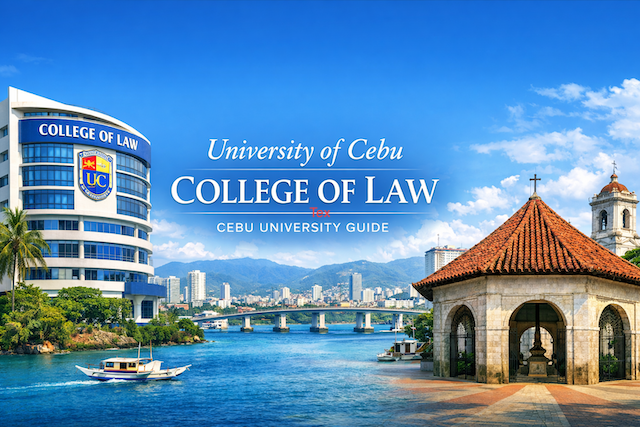
University of Cebu (UC) College of Law: Cebu University Guide
Contents
- University of Cebu (UC) College of Law: Cebu University Guide
- Overview of the University of Cebu College of Law
- Academic Philosophy and Legal Education Approach
- Juris Doctor (JD) Program Structure
- Core Law Subjects and Curriculum
- Legal Writing, Research, and Advocacy Training
- Faculty and Teaching Staff
- Admission Requirements and Application Process
- Facilities and Learning Environment
- Student Life and Law School Culture
- Bar Examination Preparation and Performance
- Career Opportunities for Graduates
- Why Study Law in Cebu City
- Who Should Consider UC College of Law
- Conclusion
- FAQs (Frequently Asked Questions)
- Where is the University of Cebu (UC) College of Law located?
- What degree do I earn from UC College of Law?
- How long does the JD program usually take to finish?
- What are the admission requirements to apply?
- Do I need a specific undergraduate major to enter law school?
- What subjects will I study in the first year?
- Is UC College of Law suitable for working students?
- How are classes conducted in law school?
- Does UC College of Law have moot court or advocacy training?
- What is the workload like, and how can I survive the first semester?
- How does UC College of Law support Bar Exam preparation?
- What careers can I pursue after earning a JD from UC?
- Can international students enroll in the JD program?
- How do I confirm the latest tuition, schedules, and enrollment steps?
University of Cebu (UC) College of Law: Cebu University Guide
The University of Cebu (UC) College of Law is one of the established law schools in Cebu City, Philippines, providing accessible and practical legal education for aspiring lawyers in the Visayas and Mindanao. Known for its commitment to academic rigor, community engagement, and professional ethics, the UC College of Law plays a significant role in shaping future members of the Philippine legal profession.
This guide offers a comprehensive overview of the UC College of Law, including its academic philosophy, curriculum structure, admission requirements, facilities, career prospects, and student life. It is designed for local and international students who are considering Cebu as a destination for legal studies.
Overview of the University of Cebu College of Law
The University of Cebu is a private educational institution with multiple campuses across Cebu City and nearby areas. Its College of Law operates primarily at the UC Main Campus, strategically located in downtown Cebu, providing students with convenient access to courts, government offices, and legal institutions.
The UC College of Law was established to respond to the growing demand for competent and socially responsible legal professionals in the region. The college emphasizes a balance between theoretical foundations of law and practical legal training, ensuring that graduates are well-prepared for the Philippine Bar Examination and legal practice.
Academic Philosophy and Legal Education Approach
The academic philosophy of the UC College of Law centers on three core principles: competence, integrity, and service. The program is designed not only to train students to pass the bar exam but also to instill ethical responsibility, critical thinking, and a strong sense of justice.
Instruction focuses on case-based learning, statutory interpretation, and legal reasoning. Professors encourage active classroom participation, debates, and the application of legal doctrines to real-world scenarios. This approach helps students develop analytical skills essential for litigation, corporate law, public service, and judicial careers.
Juris Doctor (JD) Program Structure
The UC College of Law offers a Juris Doctor (JD) program, which is the standard law degree required to take the Philippine Bar Examination. The program typically spans four years for full-time students, although flexible schedules are available for working professionals.
The JD curriculum is divided into foundational, core, and advanced law subjects, progressively building students’ legal knowledge and skills.
Core Law Subjects and Curriculum
The curriculum of the UC College of Law follows the guidelines set by the Legal Education Board (LEB) of the Philippines. Key subject areas include:
- Political Law and Constitutional Law
- Civil Law (Persons, Property, Obligations, Contracts, and Family Law)
- Criminal Law
- Commercial and Corporate Law
- Labor Law and Social Legislation
- Taxation Law
- Remedial Law (Civil Procedure, Criminal Procedure, Evidence)
- Legal Ethics and Professional Responsibility
- Public International Law
Advanced courses and electives may include environmental law, intellectual property law, banking law, and special commercial laws, allowing students to explore specific legal interests.
Legal Writing, Research, and Advocacy Training
Strong emphasis is placed on legal writing and research at the UC College of Law. Students are trained to draft pleadings, legal memoranda, contracts, and case digests using proper legal language and citation formats.
Advocacy training includes moot court exercises, mock trials, and oral arguments. These activities help students build confidence, courtroom presence, and persuasive communication skills—essential qualities for litigation and trial practice.
Faculty and Teaching Staff
The faculty of the UC College of Law is composed of experienced lawyers, judges, prosecutors, and legal practitioners. Many professors are actively engaged in law practice or public service, bringing real-world insights into classroom discussions.
This practitioner-based teaching model allows students to gain practical perspectives on how legal theories are applied in courts, government agencies, and private law firms. Faculty mentorship also plays a role in guiding students toward career paths aligned with their strengths and interests.
Admission Requirements and Application Process
Admission to the UC College of Law requires applicants to have completed a bachelor’s degree from a recognized higher education institution. While no specific undergraduate major is required, degrees in political science, legal management, economics, or humanities are commonly held by law students.
Typical admission requirements include:
- Completed application form
- Official transcript of records
- Certificate of graduation
- Birth certificate
- Recent passport-sized photographs
- Interview and/or entrance assessment (if applicable)
The college may conduct interviews to assess an applicant’s motivation, communication skills, and readiness for legal education.
Facilities and Learning Environment
The UC College of Law provides students with access to essential academic facilities, including law libraries, study areas, and lecture rooms. The law library contains Philippine statutes, jurisprudence, legal textbooks, and reference materials necessary for coursework and research.
Classrooms are designed to support discussion-based learning, and students are encouraged to use nearby legal institutions such as courts and government offices for observation and practical exposure.
Student Life and Law School Culture
Life at the UC College of Law is academically demanding, reflecting the rigorous nature of legal education. Students often balance heavy reading loads, case digests, recitations, and examinations.
Despite the intensity, the college fosters a supportive community where students collaborate through study groups and academic organizations. Law student associations may organize seminars, bar exam forums, legal aid activities, and community outreach programs.
Bar Examination Preparation and Performance
Preparation for the Philippine Bar Examination is a central focus of the UC College of Law. The curriculum is aligned with bar subjects, and review-oriented teaching methods are integrated into upper-year courses.
The college may offer bar review lectures, refresher courses, and mock bar examinations to help graduates strengthen their readiness. Faculty members often provide guidance on study strategies, time management, and exam techniques.
Career Opportunities for Graduates
Graduates of the UC College of Law pursue diverse career paths in both the public and private sectors. Common career options include:
- Private law practice
- Corporate legal counsel
- Prosecution and public defense
- Judiciary and court administration
- Government service and regulatory agencies
- Legal education and academic research
The college’s practical training and professional orientation help graduates transition smoothly into legal practice after passing the bar.
Why Study Law in Cebu City
Cebu City is one of the major legal and commercial hubs outside Metro Manila. Studying law in Cebu provides students with exposure to active courts, regional government offices, and a growing business environment.
The cost of living in Cebu is generally more affordable compared to Manila, making it an attractive option for law students. The city also offers a balance between academic life and lifestyle amenities, including cultural sites, beaches, and modern urban conveniences.
Who Should Consider UC College of Law
The UC College of Law is well-suited for students who are looking for accessible, practice-oriented legal education in the Visayas region. It is particularly appealing to working professionals seeking flexible schedules and students who value mentorship from experienced legal practitioners.
Aspiring lawyers who are committed to public service, ethical practice, and continuous professional development will find the UC College of Law aligned with their goals.
Conclusion
The University of Cebu (UC) College of Law stands as a reputable institution for legal education in Cebu City. Through its comprehensive JD program, experienced faculty, and emphasis on ethics and practical skills, the college prepares students for the challenges of the Philippine legal profession.
For those seeking a solid foundation in law within a dynamic urban environment, the UC College of Law offers an academically rigorous and professionally rewarding path toward becoming a lawyer.
FAQs (Frequently Asked Questions)
Where is the University of Cebu (UC) College of Law located?
The University of Cebu (UC) College of Law is generally associated with the University of Cebu’s main operations in Cebu City, Philippines. Most law school activities are typically conducted in or near the UC Main Campus area in downtown Cebu, which is convenient for students who need access to courts, government offices, and legal institutions. Because campuses and room assignments can change by term, it is best to confirm the exact building and classroom locations through the university’s official announcements or the College of Law office before enrollment.
What degree do I earn from UC College of Law?
Students who complete the law program earn a Juris Doctor (JD) degree. In the Philippines, the JD is the standard professional law degree required before a graduate can take the Philippine Bar Examination. The program is designed to build strong foundations in legal principles, statutory interpretation, and jurisprudence, while also developing practical skills in legal research, writing, and advocacy.
How long does the JD program usually take to finish?
The JD program typically takes four years to complete for students who follow a regular academic load. However, many law schools in Cebu, including programs designed for working students, may offer scheduling options that allow learners to take lighter course loads per term. This can extend the total time to graduation but can be helpful for those balancing employment, family responsibilities, or other commitments.
What are the admission requirements to apply?
Applicants are generally required to have completed a bachelor’s degree from a recognized college or university. Common documentary requirements include an accomplished application form, transcript of records, proof of graduation, and basic civil documents. Some schools may also require an interview or an entrance assessment to evaluate readiness for law school. Because requirements can be updated, applicants should verify the most current list directly with UC’s admissions or the College of Law office.
Do I need a specific undergraduate major to enter law school?
No specific undergraduate major is required to enter law school in the Philippines. Students come from diverse academic backgrounds such as political science, business, psychology, education, engineering, communications, or the humanities. What matters most is your readiness for heavy reading, critical thinking, and disciplined study habits. If you did not take pre-law subjects, you can still succeed by strengthening your reading comprehension and writing skills before the semester begins.
What subjects will I study in the first year?
First-year law subjects commonly focus on foundational areas such as Persons and Family Relations, Constitutional Law, Criminal Law, and basic legal research and writing. Students also begin extensive case reading and recitation-based classes, where professors may call on students to explain facts, issues, rulings, and legal doctrines from assigned cases. The first year is often the adjustment period when students develop their core study system and time management routines.
Is UC College of Law suitable for working students?
Many law students in Cebu are working professionals, and universities often provide class schedules that fit evening or weekend availability. If UC College of Law offers flexible scheduling, it can be a good option for students who need to balance work and study. That said, law school remains demanding even with flexible hours. Working students should plan for consistent daily reading time, structured weekly review, and reduced non-essential commitments during major exam periods.
How are classes conducted in law school?
Philippine law schools commonly use a combination of lecture, Socratic discussion, and case recitation. Students are expected to read assigned cases and laws before class, then participate in discussions that test understanding and legal reasoning. Grading may depend heavily on midterm and final exams, which are often essay-based and require clear legal analysis. Some subjects may also include written outputs such as pleadings, contracts, or research papers.
Does UC College of Law have moot court or advocacy training?
Many JD programs include activities such as moot court, mock trials, or oral argument exercises, especially in upper years when students have already built doctrinal foundations. Advocacy training helps students develop courtroom communication skills, logical structuring of arguments, and professional presentation. If you are interested in litigation, joining moot court-related activities can be a valuable way to practice speaking under pressure and receiving feedback from professors and practitioners.
What is the workload like, and how can I survive the first semester?
Law school workload is known for heavy readings, case digests, recitations, and high-stakes exams. To survive the first semester, focus on building a repeatable system: schedule daily reading blocks, write concise case digests, and maintain a weekly review routine. Many students also form small study groups to clarify difficult doctrines and share notes responsibly. The key is consistency. Even two to three hours of focused reading daily often beats a last-minute cram routine.
How does UC College of Law support Bar Exam preparation?
Bar Exam readiness typically starts from day one because the JD curriculum aligns with bar subjects. In later years, students usually take review-oriented courses that integrate exam-style questions, issue spotting, and timed essay practice. Some schools also offer mock bar exams or refresher sessions. Students preparing for the bar should also invest in good review materials, track weak areas, and practice writing structured answers under time pressure.
What careers can I pursue after earning a JD from UC?
After earning a JD, graduates may work in law firms, corporate legal departments, government agencies, compliance roles, or non-government organizations. After passing the Philippine Bar Examination, they can become licensed attorneys and practice law, represent clients in court, or pursue careers in prosecution, public defense, and the judiciary over time. Some graduates also enter legal research, policy work, or teaching after gaining professional experience.
Can international students enroll in the JD program?
International applicants may be able to enroll, but they should confirm specific admission rules, document authentication requirements, and visa-related processes with the university. Philippine legal education is primarily oriented toward Philippine law and the Philippine Bar Examination, which is generally intended for those seeking to practice locally. International students should clarify their goals—whether academic enrichment, comparative legal study, or long-term practice in the Philippines—before committing to the program.
How do I confirm the latest tuition, schedules, and enrollment steps?
Because tuition rates, enrollment dates, and class schedules can change each academic year, the most reliable approach is to contact the UC admissions office or the UC College of Law directly. Ask for the latest fee breakdown, semester calendar, required documents, and class timetable options. If you are currently in Cebu, visiting the campus can also help you understand commuting routes, nearby housing, and the overall learning environment before you enroll.
University of Cebu (UC) Guide: Courses, Campuses, and Admissions

How to Register for eTravel Philippines (2025 Guide)
Step-by-step guide to completing your eTravel registration before arriving in the Philippines, with images and tips.

Night Market in Cebu – Things You Don’t Know About Cebu Life
Discover the hidden charm of Cebu’s night markets, from street food stalls to local life tips you won’t find in tourist guides.

How to Use ChatGPT for IELTS Preparation: A Complete Guide
Learn how to prepare for IELTS using ChatGPT — including strategies for Writing, Reading, Listening, Speaking, and grammar support.

How to Build a Website Without Coding Using ChatGPT
Discover how to build your own website using AI—no coding skills needed. From structure planning to SEO and design, let ChatGPT guide you.