2026年4月5日
3D ACADEMY offers affordable English study programs in Cebu, Philippines – perfect for beginners, professionals, and exam takers.

3D UNIVERSAL ENGLISH INSTITUTE INC
info.3d-universal.com
8:00-17:00(Mon-Fri)
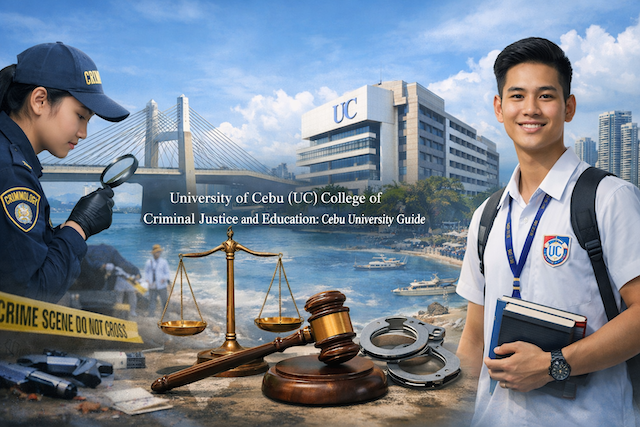
University of Cebu (UC) College of Criminal Justice and Education: Cebu University Guide
Contents
- University of Cebu (UC) College of Criminal Justice and Education: Cebu University Guide
- Overview of the College
- Who This College Is Best For
- Academic Programs and Areas of Study
- Learning Environment and Training Culture
- Facilities, Skills Labs, and Practical Components
- Internships, Fieldwork, and Community Engagement
- Licensure, Exams, and Professional Readiness
- Student Life, Organizations, and Leadership Opportunities
- Career Paths After Graduation
- Admissions, Requirements, and Preparation Tips
- How to Decide If UC Is the Right Fit
- FAQs (Frequently Asked Questions)
- What programs are included under UC’s College of Criminal Justice and Education?
- Is this college suitable for international students or expats living in Cebu?
- What is the difference between criminology-focused study and other law-related courses?
- How practical is the training, and what kinds of activities should students expect?
- Does UC provide internships, fieldwork, or practicum placements?
- What skills should students develop early to succeed in these programs?
- Are there licensure exams or certifications students should plan for?
- What career options are realistic after graduation?
- How can applicants check the latest requirements and choose the right UC campus?
University of Cebu (UC) College of Criminal Justice and Education: Cebu University Guide
Overview of the College
The University of Cebu (UC) is one of the most established private universities in the Philippines, known for career-focused programs and practical training. Within UC, the College of Criminal Justice and Education serves students who want to work in public service, law enforcement, corrections, security, teaching, and community development. The college is designed for learners who want a clear professional pathway, strong discipline, and training that connects classroom theory with real-world skills.
Criminal justice and education may look like separate fields, but both share a core mission: building safer, more capable communities. Criminal justice graduates often work directly with public safety systems, while education graduates shape future citizens through learning and values formation. UC’s approach emphasizes outcomes, professional readiness, and competence in communication, ethics, leadership, and problem-solving.
This guide explains what students can expect from UC’s College of Criminal Justice and Education, including academic focus, training environment, typical coursework, and career options. If you are choosing a university in Cebu, the goal is to help you quickly understand whether this college matches your strengths and long-term plans.
Who This College Is Best For
This college is a good fit for students who thrive in structured environments and prefer programs with clear professional direction. Criminal justice students typically enjoy teamwork, physical training, community engagement, investigation-oriented tasks, and policy discussions. They are often motivated by service, leadership, and a desire to contribute to public order.
Education students are often drawn to teaching, mentoring, communication, and curriculum planning. Many are motivated by helping others learn, designing classroom experiences, and building strong relationships with learners. Education also suits students who want a stable profession with opportunities to specialize in different grade levels and subject areas.
If you prefer hands-on learning, performance-based assessments, internships, and training that builds employable competencies, this college’s programs can be a strong match. If you are still undecided, it helps to ask yourself a practical question: do you want to work in public safety systems, or do you want to teach and develop learners in schools and training institutions? UC provides pathways in both directions, with a strong emphasis on professionalism.
Academic Programs and Areas of Study
The College of Criminal Justice and Education commonly includes programs centered on criminology and teacher education, depending on the campus offerings and current academic structure. Criminal justice-related programs focus on the Philippine criminal justice system, law enforcement fundamentals, criminal law and procedure basics, investigation methods, forensic concepts, ethics, and community relations. Teacher education programs focus on learning theories, pedagogy, classroom management, curriculum development, assessment, and practice teaching.
Within criminal justice, students often study topics such as crime causation, criminal behavior, public safety administration, police operations, correctional systems, and private security frameworks. Coursework aims to build both knowledge and applied skills, including observation, report writing, evidence handling concepts, and decision-making under pressure.
Within education, students commonly explore teaching strategies for different learners, lesson planning, educational technology, child and adolescent development, assessment design, and professional ethics. Education programs also emphasize communication and adaptability, since teaching is both a technical skill and a human-centered profession.
Because program names and structures can be updated by universities over time, students are encouraged to confirm the exact degree offerings and specializations available at their intended UC campus. Even so, the general direction is consistent: practical training, professional standards, and readiness for licensure requirements where applicable.
Learning Environment and Training Culture
Students often choose UC because it offers a learning environment that pushes them to be prepared for real workplaces. In criminal justice programs, the training culture typically includes discipline, teamwork, and performance tasks that simulate real operational demands. You may encounter drills, demonstrations, scenario-based activities, and structured routines that reflect the professional expectations of public safety fields.
In education programs, the training culture emphasizes communication, planning, and reflective practice. Students are expected to produce teaching demonstrations, microteaching sessions, lesson plans, assessment tools, and classroom management strategies. Teaching is not only about knowing content; it is about delivering it clearly, evaluating learning fairly, and adapting to students’ needs.
Across both fields, professional behavior is taken seriously. Students benefit when they treat training as preparation for their future workplaces: punctuality, respectful communication, teamwork, and ethical conduct matter.
Facilities, Skills Labs, and Practical Components
Practical training is central to both criminal justice and education. In criminal justice programs, students may have access to training spaces that support demonstrations, physical conditioning, and applied learning. Depending on the campus and facilities, there may also be simulation activities connected to investigative procedures, crime scene concepts, and operational readiness. The goal is to move beyond memorization and develop skills that are usable in real settings.
In education programs, practical components often include teaching laboratories or classrooms where students practice instruction. Students typically do teaching demonstrations and participate in supervised training that prepares them for practice teaching in real schools. Educational technology tools, presentation practice, and assessment creation are also common parts of the program.
Students should ask about the practicum requirements early, including when fieldwork begins, how placements are assigned, and what documentation or performance standards are required. This helps you plan your time and avoid surprises as you move toward your final-year requirements.
Internships, Fieldwork, and Community Engagement
Field exposure is one of the most important strengths of professional programs. Criminal justice students often undergo field training or related activities that connect them to real systems such as local community safety programs, public safety awareness initiatives, and supervised exposure to justice-related environments. These experiences help students understand how policies and procedures work in real life, not just in textbooks.
Education students typically undergo practice teaching or internship periods in partner schools. This is where many students experience the reality of teaching: handling diverse learners, managing time, coordinating with mentors, and delivering lessons under observation. Practice teaching can be challenging, but it is also the part of the program that most directly builds professional confidence.
Community engagement matters in both fields. Criminal justice students benefit from understanding the communities they serve, including communication, conflict resolution, and prevention-focused thinking. Education students benefit from learning how community contexts affect learning, behavior, and family support systems. Students who take community engagement seriously often stand out in internships and job applications.
Licensure, Exams, and Professional Readiness
Many students choose UC because they want a clear route to professional qualification. In criminal justice, students often aim for careers that require training standards, screening processes, and competitive recruitment. The program’s structure and performance expectations can help build the discipline needed for these pathways.
In education, graduates commonly aim for licensure requirements and professional standards connected to teaching practice. Education programs typically include outcomes aligned with competencies needed for classroom instruction, assessment, and professional ethics. Success depends on consistent skill development over time, not only last-minute review.
Students can prepare by building strong study habits early, improving writing and communication skills, and treating major projects as portfolio materials. Even if you change career paths later, a portfolio of strong outputs can help you shift into training, HR, corporate education, government roles, or community development work.
Student Life, Organizations, and Leadership Opportunities
University life is not only about classes. Students in this college often join organizations that match their professional interests. Criminal justice students may prefer organizations that develop leadership, teamwork, community service, and training discipline. Education students may join groups focused on teaching practice, tutoring, outreach programs, and learning development.
Leadership opportunities are especially valuable in these fields. In criminal justice pathways, leadership experience can show readiness for responsibility and command structures. In education, leadership experience demonstrates communication skills, mentoring ability, and project management. Students should consider joining events that strengthen public speaking, planning skills, and ethical decision-making.
Cebu City also provides a practical environment for students: it is urban, active, and connected to many institutions. Students who build networks early through internships and community engagement tend to gain clearer career direction and better opportunities after graduation.
Career Paths After Graduation
Graduates of criminal justice-focused programs can pursue careers in law enforcement, corrections, investigation-related roles, security management, compliance-related work, and other public safety fields. Some graduates enter government agencies, private security firms, corporate safety departments, or community-based safety programs. Others pursue further studies in law, public administration, criminology, or forensic-related fields depending on their interests and academic performance.
Graduates of education programs often pursue teaching roles in public or private schools, learning centers, tutorial institutions, and training organizations. Some go into curriculum development, school administration support, education technology, corporate training, or academic services roles. Education graduates also have flexibility to specialize over time through graduate studies, certifications, and experience.
In both pathways, communication skills and professional reputation matter. Employers look for reliability, ethical behavior, competence, and teamwork. Students who invest in internships, build a clean professional record, and develop strong writing skills often have an advantage.
Admissions, Requirements, and Preparation Tips
Admissions processes vary by campus and may change depending on academic year policies. In general, students should prepare their basic academic documents, identification requirements, and any entrance or placement procedures required by the university. Because criminal justice and education programs both demand professionalism, students should also prepare mentally for a structured training environment and consistent performance expectations.
If you are preparing for criminal justice studies, focus on improving reading comprehension, writing clarity, and basic fitness habits. Being able to write clear reports and communicate calmly is just as important as physical readiness. If you are preparing for education studies, focus on communication skills, confidence in speaking, patience, and early practice with lesson planning. You can start by tutoring younger students or practicing short teaching explanations of topics you already know well.
It also helps to talk to current students or alumni when possible. Ask specific questions: what is the weekly workload like, how are practical activities graded, what are the most challenging subjects, and what support systems exist for students who struggle in certain areas?
How to Decide If UC Is the Right Fit
Choosing a university is not only about the program name. It is about whether the training environment matches your learning style and whether the campus can support your goals. UC is often chosen by students who want a practical, career-oriented education with clear expectations. If you perform well in structured settings, stay consistent with attendance and training, and value real-world preparation, UC can be a strong option.
Before enrolling, identify your target outcome. If your goal is public safety work, make sure you understand the discipline requirements, performance standards, and training expectations. If your goal is teaching, make sure you are comfortable with public speaking, frequent demonstrations, and feedback-based improvement. In both cases, success is built through steady effort.
The University of Cebu’s College of Criminal Justice and Education is a practical pathway for students who want to serve communities, either by strengthening safety systems or by shaping learners through education. With the right mindset and consistent preparation, graduates can build meaningful careers in Cebu, across the Philippines, or in broader professional environments that value discipline and communication.
FAQs (Frequently Asked Questions)
What programs are included under UC’s College of Criminal Justice and Education?
The college generally covers degree pathways connected to criminal justice (often centered on criminology and public safety foundations) and teacher education (focused on professional preparation for classroom teaching). Exact program names, majors, and available specializations can vary by campus and may change over time, so the best step is to check the current list of offerings for your intended UC campus. As a student, you can expect curricula that combine core theory with applied requirements such as skills-based performance tasks, field exposure, and professional practice. If you are choosing between the two tracks, it helps to compare the work environments: criminal justice roles are often operational and system-based, while education roles are classroom-centered and learner-focused.
Is this college suitable for international students or expats living in Cebu?
It can be suitable, but the fit depends on your goals and eligibility. UC is a Philippine university, so coursework and requirements are aligned with local professional standards. Some career pathways in criminal justice may involve citizenship-related restrictions or government hiring rules, while education roles can also have licensure and regulatory requirements depending on where you plan to work. International students who want the academic experience, research exposure, or general professional skills may still benefit, especially from education-related training in communication and instructional design. If your plan is employment in the Philippines, confirm legal and licensure requirements early. If your plan is to return overseas, check whether your intended country recognizes the degree or whether additional steps are needed.
Criminology and criminal justice programs focus on understanding crime, public safety systems, law enforcement operations, corrections, and prevention strategies. While students study legal concepts, the emphasis is usually broader than “law school style” legal analysis. Instead of preparing you to become a lawyer directly, the curriculum typically prepares you to work within criminal justice institutions or pursue related postgraduate training later. You will likely encounter topics such as crime causation, criminal behavior, policing, community relations, ethics, and basic investigative principles. If your long-term goal is law school, a criminal justice degree can still be a useful foundation, but you should also build strong reading, writing, and critical thinking skills along the way.
How practical is the training, and what kinds of activities should students expect?
Students often choose UC because programs tend to include practical components, not just lectures. In criminal justice tracks, you may experience structured routines, discipline-oriented expectations, and activities that build operational readiness, teamwork, and clear communication. Depending on the campus and facilities, you might participate in scenario-based learning, demonstrations, or training sessions that reflect professional environments. In education tracks, practice is usually centered on lesson planning, microteaching, teaching demonstrations, classroom observation, and eventually supervised practice teaching. These activities are designed to build confidence, improve delivery, and develop reflective teaching habits. In both tracks, consistent attendance, preparation, and professionalism matter because many assessments are performance-based.
Does UC provide internships, fieldwork, or practicum placements?
Professional programs typically require some form of fieldwork. Education students commonly complete supervised practice teaching or internship placements in partner schools, where they teach under guidance and receive feedback from mentors. Criminal justice students may engage in field exposure or related activities that connect learning with real systems and community contexts, depending on program structure and partner institutions. Because fieldwork schedules and placement rules vary, it is important to ask about timelines, documentation requirements, and evaluation standards early. Clarify how many hours are required, what activities count toward completion, and what happens if a student needs to repeat or extend a placement.
What skills should students develop early to succeed in these programs?
For criminal justice students, strong written communication is essential. Many roles require clear reports, accurate documentation, and professional communication under pressure. Physical readiness can matter, but so do discipline, teamwork, ethics, and emotional control. For education students, communication is also central, especially speaking confidence, lesson planning, and the ability to explain concepts clearly. Classroom management skills are built over time, so students benefit from practicing structured delivery and learning how to respond to different learner behaviors. Across both tracks, time management is a major factor. Treat projects as real professional outputs and maintain a personal system for scheduling, reviewing, and improving your work.
Are there licensure exams or certifications students should plan for?
Education graduates commonly aim for professional licensure aligned with teaching standards. Preparation is not only about review materials; it also depends on years of building practical teaching skills, understanding assessment methods, and developing professional ethics. Criminal justice graduates may aim for careers that involve screening, training standards, and competitive recruitment. Requirements differ by employer and role, so students should research their target career path early and ask advisers about recommended preparation. If you plan to work outside the Philippines, confirm whether your degree and credentials will be recognized and what bridging steps might be required.
What career options are realistic after graduation?
Criminal justice-related graduates may pursue careers in law enforcement, corrections, investigation support, security operations, compliance-related work, community safety programs, or further study in public administration, criminology, or law. Education graduates may work as teachers in public or private schools, tutors, learning support specialists, curriculum assistants, education coordinators, or corporate trainers. Many education graduates also move into education technology or academic services roles as they gain experience. Your career outcomes will depend on performance, practicum results, communication ability, and professional reputation. Building a portfolio of outputs and securing strong references during fieldwork can significantly improve your opportunities.
How can applicants check the latest requirements and choose the right UC campus?
Because admission procedures and program availability can change, applicants should confirm requirements through UC’s official channels or campus admissions offices. Ask about current documents needed, enrollment timelines, fees, campus-specific offerings, and any placement tests or screening processes. When choosing a campus, consider commuting time, schedule flexibility, availability of facilities, and how fieldwork placements are managed. It also helps to speak with current students if possible. Ask practical questions about workload, training routines, grading style, and support systems. A good fit is not only about program reputation; it is about whether the training structure matches your strengths and lifestyle in Cebu.
University of Cebu (UC) Guide: Courses, Campuses, and Admissions

How to Register for eTravel Philippines (2025 Guide)
Step-by-step guide to completing your eTravel registration before arriving in the Philippines, with images and tips.

Night Market in Cebu – Things You Don’t Know About Cebu Life
Discover the hidden charm of Cebu’s night markets, from street food stalls to local life tips you won’t find in tourist guides.

How to Use ChatGPT for IELTS Preparation: A Complete Guide
Learn how to prepare for IELTS using ChatGPT — including strategies for Writing, Reading, Listening, Speaking, and grammar support.

How to Build a Website Without Coding Using ChatGPT
Discover how to build your own website using AI—no coding skills needed. From structure planning to SEO and design, let ChatGPT guide you.