2026年4月5日
3D ACADEMY offers affordable English study programs in Cebu, Philippines – perfect for beginners, professionals, and exam takers.

3D UNIVERSAL ENGLISH INSTITUTE INC
info.3d-universal.com
8:00-17:00(Mon-Fri)
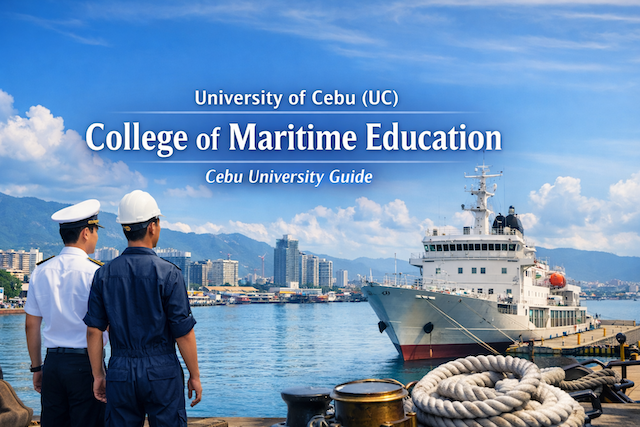
University of Cebu (UC) College of Maritime Education: Cebu University Guide
Contents
- University of Cebu (UC) College of Maritime Education: Cebu University Guide
- Why Study Maritime Education in Cebu
- Overview of UC College of Maritime Education
- Programs and Learning Pathways
- What You Typically Study
- Training Culture, Discipline, and Professional Standards
- Facilities and Practical Learning Environment
- Student Experience and Daily Life
- Skills and Traits That Help You Succeed
- Career Direction and Industry Context
- How to Evaluate if UC Maritime Education Is Right for You
- Tips for New Students
- Final Thoughts
- Frequently Asked Questions (FAQs)
- What is the UC College of Maritime Education?
- Who should consider enrolling in a maritime education program?
- What are the common study tracks in maritime education?
- What subjects should students expect in the first year?
- Is maritime education more strict than other college programs?
- Do students need strong math and science skills to succeed?
- What kind of training and practical learning is involved?
- How can students prepare before starting the program?
- What is student life like for maritime students in Cebu?
- What careers can graduates pursue after maritime education?
- How do I know if UC College of Maritime Education is the right fit?
University of Cebu (UC) College of Maritime Education: Cebu University Guide
The University of Cebu (UC) is one of the most recognized private universities in the city, known for offering a wide range of practical, career-focused programs. Among its most distinctive options is the UC College of Maritime Education, a track designed for students who want a professional pathway toward the global maritime industry. Cebu is historically connected to seafaring and trade, and today it remains a strategic hub for students who want access to training, port activity, and a strong maritime learning culture.
This guide explains what the UC College of Maritime Education is, what students typically study, how training is structured, what student life can feel like, and how to evaluate whether this college is a fit for your goals—whether you are a local student, a returnee, or an international reader trying to understand Cebu’s academic landscape.
Why Study Maritime Education in Cebu
Maritime careers are often described as global by default. Ships travel across continents, crews are multinational, and seafarers follow international standards for safety, operations, and discipline. Cebu is one of the major educational centers in the Philippines, and it attracts students who want structured programs and a campus environment that supports professional training. For maritime students, the city’s relevance is practical: Cebu has an active maritime ecosystem, including shipping activity, maritime-related services, and a strong tradition of maritime education across multiple institutions.
Studying in Cebu can also be an advantage in terms of personal development. Many maritime students are preparing for a life that requires independence, resilience, teamwork, and cultural adaptability. Living in a busy urban environment like Cebu can help students develop those skills early—learning how to manage schedules, commuting, budgeting, and time discipline while handling academic and training requirements.
Overview of UC College of Maritime Education
The UC College of Maritime Education is designed to provide students with academic foundations and training aligned with modern maritime requirements. While each institution has its own approach, maritime colleges generally aim to prepare students for shipboard responsibilities and the professional expectations of maritime employment. This usually means combining classroom instruction with practical training, simulation activities, safety education, and assessment-driven progression.
Students in maritime education typically choose between pathways that lead toward deck operations (navigation and ship handling) or engine operations (marine engineering systems). The college environment tends to be more structured than many other degree programs because maritime training emphasizes discipline, compliance, and standard procedures—qualities that are essential on board a vessel.
Programs and Learning Pathways
Maritime education commonly offers two major directions:
- Deck pathway – Focuses on navigation, seamanship, cargo handling, ship stability, communication, and bridge operations.
- Engine pathway – Focuses on marine engineering fundamentals, propulsion systems, electrical systems, maintenance, and engine-room operations.
In a structured maritime program, students gradually move from basic concepts (terminology, safety, fundamental operations) to more complex applications (route planning, machinery troubleshooting, emergency response protocols). A strong program typically encourages students to understand both the “how” and the “why” behind procedures—because decision-making under pressure is a real part of shipboard life.
Even if you already have a preferred pathway, it can be helpful to understand the overlap: deck and engine teams must coordinate constantly. A maritime college environment often builds that collaboration mindset early, reinforcing that safety and efficiency depend on communication between departments.
What You Typically Study
Although course titles vary by institution, maritime education often includes a mix of theoretical and applied learning. Students commonly encounter subjects such as:
- Maritime safety and emergency procedures – Risk awareness, emergency drills, and safety culture.
- Navigation and watchkeeping fundamentals – Rules of the road, situational awareness, voyage planning, and watch responsibilities.
- Seamanship and ship operations – Practical shipboard tasks, ropework concepts, and operational routines.
- Marine engineering basics – Core mechanical principles for ship systems, maintenance thinking, and engine-room structure (especially for engine-focused students).
- Maritime communications – Standard communication practices, professional reporting, and coordination protocols.
- Maritime law and regulations – A foundational understanding of compliance and professional obligations.
Students should expect a learning style that rewards consistency. Maritime programs often involve frequent assessments, skill demonstrations, and training components that require repetition. If you prefer last-minute study methods, maritime education may push you to build a more disciplined routine—because competence is tested through performance, not only written exams.
Training Culture, Discipline, and Professional Standards
One of the most noticeable differences between maritime education and many other university programs is the professional training culture. In maritime environments, habits matter. Punctuality, uniform standards (when required), respectful communication, and compliance with training rules are usually emphasized.
This is not only about formality. On a vessel, small mistakes can have serious consequences. Maritime education tries to build a mindset where students learn to follow procedures, check details, and remain calm under instruction. If you thrive in structured environments, maritime education can be a good match. If you prefer completely flexible learning, you may need time to adapt.
That said, many students grow significantly in this environment. The structure can build confidence, improve communication skills, and develop leadership qualities—especially for students who commit to the process and treat training seriously.
Facilities and Practical Learning Environment
Maritime education is strongly connected to hands-on learning. Many programs include training tools that simulate real operations, allowing students to practice skills in controlled conditions. Depending on the resources available, students may encounter learning environments such as:
- Simulation-based exercises for operational decision-making
- Safety and emergency response training sessions
- Equipment familiarization and procedural drills
- Structured laboratory or workshop learning (especially for engine-related topics)
When evaluating a maritime college, it’s useful to think beyond brochures. Consider how much practice time students typically get, how training is assessed, and how feedback is provided. Practical competence is not just exposure—it is repetition, correction, and improvement.
Student Experience and Daily Life
Student life in a maritime program can feel different from other colleges. Schedules may be more demanding, and training requirements can add pressure during certain parts of the term. Many students develop a routine that looks like:
- Early start times and structured class blocks
- Regular quizzes or performance checks
- Group-based tasks that require coordination
- Time dedicated to fitness, discipline, or readiness (depending on program culture)
In Cebu, lifestyle factors can also shape your experience. Commuting patterns, traffic, weather, and budgeting all matter. Students who live closer to campus often find it easier to manage early schedules and training requirements. If you plan to commute, it helps to build buffer time so you are not rushing—especially on days with assessments or training sessions.
Many maritime students also form strong peer networks. Because the program can be intense, students often rely on each other for study planning, practice, and mutual accountability. If you are the type who performs better with a team, you may find the community aspect motivating.
Skills and Traits That Help You Succeed
Maritime education rewards a specific set of traits more than pure academic talent. Students who succeed often share these characteristics:
- Consistency – Small daily effort matters more than occasional bursts of study.
- Attention to detail – Procedures, measurements, and checklists are part of the training mindset.
- Composure under pressure – Practical tasks can be evaluated in real time.
- Team orientation – Coordination is essential in shipboard operations.
- Respect for structure – Training culture can be strict, and adaptability helps.
If you are considering UC College of Maritime Education, ask yourself a simple question: do you want a program that shapes your habits and professional discipline, not just your knowledge? If yes, maritime education can be a strong pathway.
Career Direction and Industry Context
Graduates of maritime education generally aim for careers that involve shipboard roles and maritime-related professions. The industry is competitive, and career progression usually depends on performance, ongoing certification, and practical sea experience. Many students enter maritime education because they want a career with international exposure and a structured promotion pathway.
However, it’s important to be realistic: maritime careers involve time away from home, demanding work conditions, and a strong emphasis on physical and mental resilience. Students should think carefully about lifestyle fit, not only salary potential. A strong maritime program helps students understand these realities early so they can make informed decisions.
Some students also use maritime education as a foundation for related shore-based roles later, such as maritime operations, logistics support, port-related services, or maritime training. Understanding that the maritime world includes both sea and shore opportunities can help you plan a longer-term career strategy.
How to Evaluate if UC Maritime Education Is Right for You
If you are choosing between schools or considering whether maritime education matches your goals, use a practical checklist:
- Training structure – Do you learn well in disciplined, procedure-based environments?
- Support system – Do you have family, financial, and personal support for a demanding program?
- Long-term lifestyle – Are you comfortable with work that may involve long periods away from home?
- Personal motivation – Are you pursuing maritime education because you understand the career, not only the idea of it?
- Willingness to improve – Are you open to coaching, correction, and repeated skill practice?
Maritime education is not only about passing exams. It is about building professional readiness. If you are strongly motivated by growth, structure, and a clear career pathway, the program can be deeply rewarding.
Tips for New Students
If you are about to start at UC College of Maritime Education (or any maritime program in Cebu), these tips can make your first term smoother:
- Build a routine early – Your schedule will likely be busy; establish study hours in the first two weeks.
- Prioritize fundamentals – Strong basics make advanced topics easier, especially in navigation and engineering subjects.
- Use peer study wisely – Study groups work best when they have a clear goal and time limit.
- Take training seriously – Treat practical sessions as professional preparation, not just school requirements.
- Protect your health – Sleep, nutrition, and stress management matter in performance-based programs.
Students who treat the program like a professional track—rather than a standard college major—often adapt faster and gain more confidence over time.
Final Thoughts
The University of Cebu (UC) College of Maritime Education is a pathway for students who want structured preparation for a demanding and international industry. Cebu provides a fitting environment for maritime learners: an active city with strong educational networks, a practical culture, and the energy of a place that has long been connected to travel and trade.
If you want a program that builds discipline, teamwork, and real-world readiness—along with academic foundations—maritime education can be a strong choice. The best approach is to be honest about your goals and your preferred learning style. If you commit to the training culture, the experience can shape you into a more capable, confident, and professional version of yourself, ready for the responsibilities that come with maritime work.
Frequently Asked Questions (FAQs)
What is the UC College of Maritime Education?
The University of Cebu (UC) College of Maritime Education is an academic unit focused on preparing students for maritime careers through a combination of classroom instruction and practice-oriented training. In general, maritime education programs aim to build knowledge and skills aligned with professional standards used in the global shipping industry. Students typically learn about safety culture, operational procedures, shipboard responsibilities, and the discipline required for maritime work. While specific offerings can vary by year, the overall goal is to develop graduates who are ready for maritime training pathways and future employment in sea-based or related shore-based roles.
Who should consider enrolling in a maritime education program?
A maritime program is a strong fit for students who want a structured learning environment and who can commit to consistent routines. If you prefer step-by-step training, clear procedures, and performance-based evaluation, maritime education may match your learning style. Students who do well often enjoy teamwork and can accept correction and coaching during practical sessions. Because maritime careers can involve long periods away from home and demanding working conditions, it also helps to think about lifestyle compatibility, not only academic interest. If you are motivated by professional growth and international career possibilities, maritime education can be worth exploring.
What are the common study tracks in maritime education?
Most maritime colleges provide two major directions: a deck-focused pathway and an engine-focused pathway. The deck pathway is commonly associated with navigation, seamanship, communication, cargo operations, and watchkeeping responsibilities. The engine pathway usually emphasizes marine engineering fundamentals, ship machinery systems, maintenance routines, and engine-room operations. Students often ask which track is “better,” but the best choice depends on your interests, strengths, and long-term career plan. Both tracks require discipline, safety awareness, and strong coordination skills because deck and engine teams must work together on board a vessel.
What subjects should students expect in the first year?
First-year maritime students commonly start with foundational subjects that build a base for later training. These topics may include maritime safety concepts, basic seamanship principles, introductory navigation concepts, communication fundamentals, and general education courses required by the university. Engine-track students may also encounter early mechanical or engineering concepts, while deck-track students may focus more on nautical terminology and basic operational planning. The first year often emphasizes forming good habits: punctuality, attention to detail, study consistency, and the ability to follow procedures—skills that will matter even more as training becomes more technical.
Is maritime education more strict than other college programs?
Maritime education is often perceived as stricter because it is closely linked to professional standards and safety-oriented behavior. Many programs place strong emphasis on discipline, proper conduct, and compliance with training rules. This structure is not simply about formality; maritime work depends on clear procedures and teamwork, and small mistakes can have serious consequences at sea. Students who adapt well typically treat training as professional preparation rather than normal classroom learning. If you are comfortable with organized routines and clear expectations, you may find the structure helpful rather than stressful.
Do students need strong math and science skills to succeed?
Math and science can be important, especially for topics like navigation calculations, basic physics concepts, engineering systems, and problem-solving tasks. However, success is not only about being naturally strong in technical subjects. Many students improve significantly through consistent study habits and by asking questions early. Maritime education rewards repetition, accuracy, and steady progress. If you feel weak in math or science, a practical approach is to build a routine, review fundamentals regularly, and use peer study groups for practice. The key is not perfection on day one, but willingness to improve.
What kind of training and practical learning is involved?
Maritime education typically includes practical learning components designed to build real-world competence. Depending on the program’s facilities and structure, students may participate in simulation-based activities, procedural drills, safety training sessions, and equipment familiarization. Practical learning is often evaluated through performance, not only written tests. This means students may be assessed on how well they follow steps, respond to instructions, and apply standards under time limits. Students should expect that practice and feedback are central to improvement. The more seriously you treat training sessions, the faster you are likely to grow.
How can students prepare before starting the program?
Preparation is less about memorizing advanced topics and more about building habits that support training success. Before classes begin, students can improve readiness by practicing time management, strengthening study routines, and developing basic fitness and wellness habits. Reading introductory materials about maritime careers and understanding the realities of shipboard work can also help align expectations. If possible, prepare your daily schedule around consistent sleep and study blocks. Students who start with a stable routine often handle the first term better, especially when early assessments and training requirements begin.
What is student life like for maritime students in Cebu?
Student life can be busy because maritime programs often have structured schedules and frequent assessments. Many students spend significant time on review, practice, and group-based tasks. Cebu’s city environment also influences lifestyle factors such as commuting time, budgeting, and time planning around traffic. Students who live closer to campus may find it easier to manage early schedules. Maritime students often develop strong peer relationships because they share similar challenges and training demands. A supportive study group can help with motivation, practice, and accountability, especially during heavy assessment periods.
What careers can graduates pursue after maritime education?
Graduates commonly aim for professional maritime roles related to ship operations, depending on their track. Deck-focused graduates often work toward navigation and watchkeeping responsibilities, while engine-focused graduates pursue roles related to machinery operation and maintenance. Career progression in maritime fields typically depends on ongoing training, competency standards, and real-world experience. Some graduates also transition into shore-based maritime-related roles later, such as operations support, maritime services, logistics coordination, or training environments. The maritime industry is global, and many students choose this path for its international scope and structured career development.
How do I know if UC College of Maritime Education is the right fit?
A good fit comes down to learning style, motivation, and long-term lifestyle preference. If you want a structured program that emphasizes discipline, teamwork, and procedural thinking, maritime education can match your goals. If you are comfortable with a training culture that includes strict standards and performance-based evaluation, you may adapt well. It also helps to reflect on future work realities such as time away from home and physically demanding routines. The best approach is to evaluate your personal readiness, talk with current students when possible, and choose the path that aligns with both your interests and your long-term plan.
University of Cebu (UC) Guide: Courses, Campuses, and Admissions

How to Register for eTravel Philippines (2025 Guide)
Step-by-step guide to completing your eTravel registration before arriving in the Philippines, with images and tips.

Night Market in Cebu – Things You Don’t Know About Cebu Life
Discover the hidden charm of Cebu’s night markets, from street food stalls to local life tips you won’t find in tourist guides.

How to Use ChatGPT for IELTS Preparation: A Complete Guide
Learn how to prepare for IELTS using ChatGPT — including strategies for Writing, Reading, Listening, Speaking, and grammar support.

How to Build a Website Without Coding Using ChatGPT
Discover how to build your own website using AI—no coding skills needed. From structure planning to SEO and design, let ChatGPT guide you.