3D UNIVERSAL ENGLISH INSITUTE INC
info.3duniversal.com@gmail.com
8:00-17:00(Mon-Fri)

University of Northern Philippines College of Law: Complete Guide for Prospective Students
Contents

University of Northern Philippines College of Law: Complete Guide for Prospective Students

Introduction

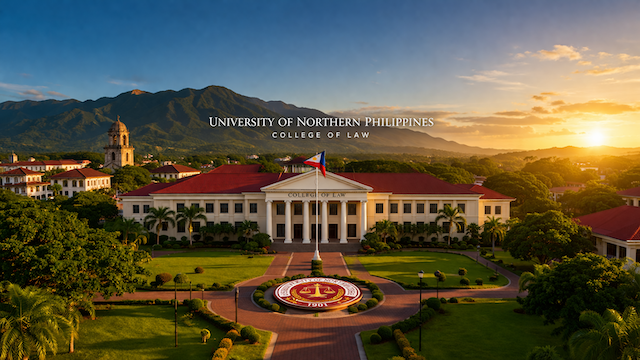
The University of Northern Philippines (UNP) College of Law is one of the most established public law schools in Northern Luzon. Located in Vigan City, Ilocos Sur—a UNESCO World Heritage Site known for its preserved Spanish colonial architecture—the institution provides a unique academic environment that blends tradition, public service, and legal education.

As a state university, UNP offers affordable legal education while maintaining a strong commitment to producing competent, ethical, and socially responsible lawyers. The College of Law has built a reputation for serving students who aim to practice law not only in urban centers but also in provincial communities, where access to legal services is often limited.

This guide explores everything prospective students need to know about the University of Northern Philippines College of Law, including its history, academic programs, admission process, facilities, career opportunities, and overall student experience.

History and Institutional Background

The University of Northern Philippines traces its origins back to 1911 as a trade school before evolving into a comprehensive state university. Over the decades, it expanded its academic offerings to include various professional programs, including law.

The College of Law was established to address the growing need for legal professionals in Northern Luzon. Unlike many elite law schools concentrated in Metro Manila, UNP focuses on regional development and public service. Its mission is deeply rooted in providing accessible education while promoting justice and legal awareness in underserved communities.

Being a government-funded institution, UNP plays a critical role in democratizing legal education in the Philippines. This mission continues to shape its policies, curriculum, and community engagement initiatives.

Location and Campus Environment

UNP is located in Vigan City, Ilocos Sur, a historic and culturally rich destination in the Philippines. The city is known for its cobblestone streets, Spanish-era buildings, and calm provincial atmosphere.

For law students, this setting offers several advantages:

  • Peaceful study environment: Unlike busy urban areas, Vigan provides fewer distractions, allowing students to focus on their studies.
  • Lower cost of living: Accommodation, food, and transportation are significantly more affordable compared to Metro Manila.
  • Cultural immersion: Students experience a strong sense of Filipino heritage, which enriches their understanding of law in a local context.

However, students should also consider that the provincial setting may have fewer networking opportunities compared to major cities. Nevertheless, for those who prioritize affordability and focus, UNP’s location is highly beneficial.

Academic Program: Juris Doctor (JD)

The primary program offered by the UNP College of Law is the Juris Doctor (JD), which is the standard law degree in the Philippines.

Curriculum Structure

The JD program typically spans four years and includes a combination of foundational, core, and elective law subjects.

First Year: Foundations of Law

  • Legal Research and Writing
  • Constitutional Law I
  • Criminal Law I
  • Persons and Family Relations

Second Year: Core Legal Subjects

  • Constitutional Law II
  • Criminal Law II
  • Obligations and Contracts
  • Property Law

Third Year: Advanced Legal Studies

  • Commercial Law
  • Civil Procedure
  • Evidence
  • Administrative Law

Fourth Year: Practice and Specialization

  • Legal Ethics
  • Taxation Law
  • Labor Law
  • Trial Practice and Internship

The curriculum is designed to prepare students for the Philippine Bar Examination while also equipping them with practical legal skills.

Teaching Methodology

Like most Philippine law schools, UNP follows the Socratic method, where professors engage students through questioning rather than traditional lectures.

Students are expected to:

  • Read assigned cases thoroughly
  • Analyze legal principles
  • Participate actively in class discussions

This approach develops critical thinking, analytical skills, and confidence—essential qualities for future lawyers.

Admission Requirements and Process

Admission to the UNP College of Law is competitive but generally more accessible compared to top-tier private law schools.

Basic Requirements

Applicants are typically required to submit:

  • Bachelor’s degree (any field)
  • Transcript of Records
  • Certificate of Good Moral Character
  • Entrance examination results
  • Interview assessment

Entrance Examination

The law admission test evaluates:

  • English proficiency
  • Logical reasoning
  • Reading comprehension

Interview

Qualified applicants undergo an interview to assess their motivation, communication skills, and readiness for legal education.

Tuition and Fees

As a state university, UNP offers significantly lower tuition fees compared to private institutions. This makes it an attractive option for students who want to pursue law without incurring heavy financial burdens.

Faculty and Academic Excellence

The UNP College of Law boasts a faculty composed of experienced legal practitioners, judges, and academics.

Many professors:

  • Actively practice law
  • Serve in government positions
  • Bring real-world insights into the classroom

This combination of theory and practice ensures that students receive a well-rounded legal education.

While UNP may not always rank among the top law schools in national bar exam statistics, it consistently produces competent graduates who succeed in both public and private legal sectors.

Facilities and Learning Resources

UNP provides essential facilities to support law students:

Law Library

The university maintains a law library with:

  • Philippine jurisprudence
  • Legal textbooks
  • Reference materials

While not as extensive as libraries in major universities, it provides sufficient resources for academic study.

Classrooms

Classrooms are functional and conducive to learning, although they may not be as modern as those in private institutions.

Digital Resources

Students have access to online legal databases, although availability may vary.

Student Life and Culture

Life at the UNP College of Law is academically demanding but also community-oriented.

Academic Rigor

Law students are expected to:

  • Read hundreds of pages weekly
  • Prepare case digests
  • Participate in recitations

Time management and discipline are crucial for success.

Student Organizations

Students can join:

  • Law student councils
  • Debate teams
  • Legal aid groups

These organizations provide opportunities for leadership and networking.

Community Engagement

UNP emphasizes public service. Students often participate in:

  • Legal aid missions
  • Community outreach programs
  • Public legal education initiatives

This exposure helps students understand real-world legal issues.

Bar Examination Preparation

Preparing students for the Philippine Bar Examination is a central focus of the College of Law.

Review Programs

The university offers:

  • Bar review classes
  • Mock bar exams
  • Faculty mentoring

Study Culture

Students develop strong study habits due to the rigorous academic environment. Peer support and group study sessions are common.

Performance

While UNP may not dominate national rankings, it consistently produces bar passers, particularly among students who demonstrate strong dedication and discipline.

Career Opportunities After Graduation

Graduates of the UNP College of Law pursue diverse career paths:

Legal Practice

Many graduates become:

  • Private practitioners
  • Public attorneys
  • Prosecutors

Government Service

Given its public institution background, many alumni work in:

  • Local government units
  • National agencies
  • Judiciary

Corporate Sector

Some graduates enter:

  • Corporate legal departments
  • Compliance roles

Academia

Others pursue teaching careers or further studies in law.

Advantages of Studying at UNP College of Law

Affordable Education

Low tuition fees make legal education accessible to a wider population.

Strong Public Service Orientation

The institution emphasizes serving communities, particularly in rural areas.

Focused Learning Environment

The provincial setting minimizes distractions and promotes academic focus.

Experienced Faculty

Professors bring practical legal experience into the classroom.

Challenges and Considerations

Limited Resources

Facilities and library resources may not match those of top private universities.

Provincial Location

Networking opportunities and exposure to major law firms may be limited compared to Metro Manila.

Self-Driven Success

Students must be proactive in seeking opportunities and building their careers.

Who Should Consider UNP College of Law?

The University of Northern Philippines College of Law is ideal for:

  • Students seeking affordable legal education
  • Individuals committed to public service
  • Those who prefer a quieter, focused study environment
  • Aspiring lawyers from Northern Luzon

It may be less suitable for those aiming for immediate entry into top-tier corporate law firms in major cities.

Conclusion

The University of Northern Philippines College of Law stands as a valuable institution for aspiring lawyers who prioritize accessibility, public service, and practical legal education. While it may not offer the prestige or resources of elite law schools in Metro Manila, it provides a solid foundation for a successful legal career.

For students who are disciplined, motivated, and committed to making a difference—especially in regional communities—UNP College of Law represents an excellent choice.

Ultimately, success in law school depends less on the institution and more on the student’s dedication. At UNP, those willing to put in the effort can achieve their goals and contribute meaningfully to the legal profession in the Philippines.

FAQs (Frequently Asked Questions)

What is the University of Northern Philippines College of Law known for?

The University of Northern Philippines College of Law is known for offering accessible and affordable legal education in Northern Luzon. As part of a public university, it attracts students who want to pursue a law degree without the very high tuition costs often associated with private law schools. It is also recognized for serving students from Ilocos Sur and nearby provinces who want to become lawyers while staying closer to home. The school is especially appealing to those who value public service, regional development, and the opportunity to study law in a more focused provincial environment rather than in the crowded and expensive setting of Metro Manila.

Where is the University of Northern Philippines College of Law located?

The College of Law is located within the University of Northern Philippines in Vigan City, Ilocos Sur, Philippines. Vigan is one of the country’s most historic cities and is widely known for its preserved heritage district and quieter pace of life. For law students, this location can be a major advantage because it provides a calmer academic setting that supports concentration and disciplined study. It also tends to offer a lower cost of living than larger urban centers, which can make a law education more financially manageable for many students and their families.

What degree does the University of Northern Philippines College of Law offer?

The College of Law offers the Juris Doctor, commonly known as the JD degree. This is the standard professional law degree in the Philippines and is designed to prepare students for legal practice and for the Philippine Bar Examination. The program generally takes four years to complete, assuming the student follows the regular load and successfully passes all required subjects. The JD curriculum includes both theoretical and practical components, helping students develop legal reasoning, case analysis skills, research ability, writing competence, and a solid understanding of Philippine laws and jurisprudence.

Is the University of Northern Philippines College of Law a good option for aspiring lawyers?

Yes, it can be a very good option, especially for students who are looking for an affordable legal education and a serious academic environment. It may not always be the first name mentioned when people discuss elite law schools in the Philippines, but that does not mean it lacks value. A motivated and disciplined student can build a strong legal foundation there. Law school success depends heavily on consistency, reading habits, analytical skills, and preparation for class. Students who take their training seriously can use the College of Law as a stepping stone toward the bar exam and a meaningful legal career.

How much is the tuition at the University of Northern Philippines College of Law?

Tuition and fees at the University of Northern Philippines College of Law are generally lower than those charged by most private law schools in the Philippines because UNP is a state university. The exact amount may vary depending on university policies, year level, miscellaneous fees, and possible updates in government education rules. Prospective students should always verify the latest tuition structure directly with the university. Even so, one of the institution’s strongest selling points is affordability. For many students, this makes the school an attractive choice because they can pursue a law degree with less financial pressure while still receiving formal legal training.

What are the admission requirements for the University of Northern Philippines College of Law?

Applicants are typically expected to hold a bachelor’s degree before applying to the law program. They are also usually required to submit standard academic and personal documents such as a transcript of records, proof of graduation, and a certificate of good moral character. In many cases, applicants must also take an entrance examination and go through an interview. The exact requirements may change from one admission cycle to another, so students should confirm the latest details with the university. Preparing early is important because complete documentation and readiness for the interview can improve an applicant’s chances.

Does the University of Northern Philippines College of Law require an entrance exam?

In many cases, yes, applicants may be required to take an entrance examination as part of the admission process. This examination is generally intended to assess the applicant’s readiness for law school, particularly in areas such as reading comprehension, English proficiency, and logical reasoning. Since law study involves extensive reading and analytical thinking, these areas are especially important. Some applicants focus only on credentials and overlook exam preparation, but it is wise to review beforehand. Because admission procedures can be updated, prospective students should always check the latest official admissions guidelines from the university before applying.

What is student life like at the University of Northern Philippines College of Law?

Student life at the College of Law is usually demanding, disciplined, and centered on academic survival and growth. Like other law schools in the Philippines, students can expect heavy reading loads, classroom recitations, case digests, written work, and major examinations. At the same time, the environment can feel more close-knit because of the provincial setting and the public university culture. Many students build strong support systems through classmates, study groups, and student organizations. While law school is stressful almost anywhere, some students appreciate the quieter atmosphere in Vigan because it allows them to focus more seriously on their studies.

Does studying at the University of Northern Philippines College of Law help with bar exam preparation?

Yes, the JD program is fundamentally designed to prepare students for the Philippine Bar Examination. The curriculum covers the major areas of law that bar candidates are expected to master, including civil law, criminal law, labor law, taxation, remedial law, political law, commercial law, and legal ethics. In addition to academic coursework, students usually develop habits that are essential for bar preparation, such as disciplined reading, case analysis, note organization, and exam writing. While passing the bar ultimately depends on the student’s own effort and consistency, the law school provides the academic framework needed for serious preparation.

Who should consider applying to the University of Northern Philippines College of Law?

This law school is a strong option for students who want a more affordable path to becoming a lawyer, especially those from Northern Luzon or nearby regions. It is also suitable for students who prefer a quieter learning environment and who may be interested in public service, local legal practice, government work, or community-based legal careers. Those who are highly self-motivated and willing to maximize available resources can do well in this setting. Students who expect luxury facilities or immediate access to the biggest law firm networks in Metro Manila may prefer a different school, but many others will find UNP a practical and meaningful choice.

Complete List of Law Schools in the Philippines



