2026年4月5日
3D ACADEMY offers affordable English study programs in Cebu, Philippines – perfect for beginners, professionals, and exam takers.

3D UNIVERSAL ENGLISH INSTITUTE INC
info.3d-universal.com
8:00-17:00(Mon-Fri)
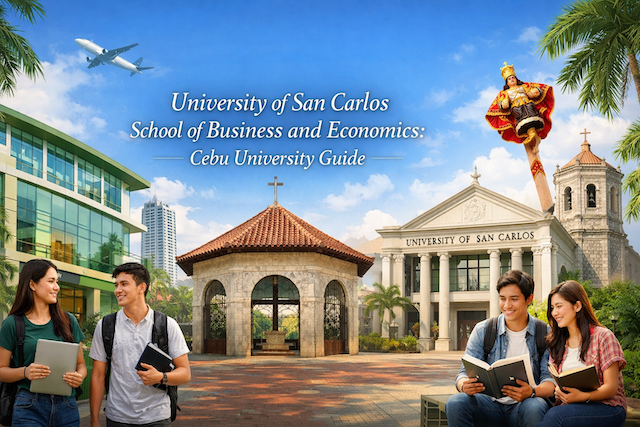
University of San Carlos (USC) School of Business and Economics: Cebu University Guide
Contents
- University of San Carlos (USC) School of Business and Economics: Cebu University Guide
- Overview of the USC School of Business and Economics
- Why Study Business and Economics in Cebu
- Academic Programs You Can Expect
- Learning Style and Classroom Environment
- Skills You Build at USC SBE
- Internships, Industry Exposure, and Career Preparation
- Student Life and Organizations
- Who This School Is Best For
- How to Choose Between Business and Economics Tracks
- Practical Tips for Incoming Students
- Summary: Is USC School of Business and Economics Worth Considering?
- Frequently Asked Questions (FAQs)
- What is the USC School of Business and Economics known for?
- What programs are typically available under the School of Business and Economics?
- Is economics harder than business?
- What skills will I develop as a student in this school?
- Does the school emphasize group work and presentations?
- What kind of careers do graduates commonly pursue in Cebu?
- How important are internships for USC business and economics students?
- Can I succeed if I am not naturally good at math?
- What should I prepare before starting as a freshman?
- How do I choose between a business major and an economics track?
- Is USC School of Business and Economics a good option for future MBA plans?
University of San Carlos (USC) School of Business and Economics: Cebu University Guide
Overview of the USC School of Business and Economics
The University of San Carlos (USC) is one of the most established and academically respected universities in Cebu, known for strong programs across the sciences, humanities, engineering, and professional fields. Within USC, the School of Business and Economics (often referred to as SBE) plays a central role in producing graduates for Cebu’s fast-moving economy—especially in finance, entrepreneurship, marketing, management, and the growing professional services sector.
The School of Business and Economics is designed for students who want a practical education backed by solid theory. You will typically find an emphasis on analytical thinking, communication, teamwork, and business ethics. Many students are drawn to the school because of its reputation, its competitive environment, and the fact that Cebu is a city where business opportunities are visible and accessible—ranging from small family enterprises and startups to multinational companies and large shared services operations.
While business education can sometimes feel overly textbook-driven, USC’s general reputation suggests a more structured academic approach, with expectations for research, presentations, case discussions, and applied projects. For students who want a degree that can lead to corporate employment, entrepreneurship, or professional certifications, the School of Business and Economics is often considered a serious option in Cebu.
Why Study Business and Economics in Cebu
Cebu is one of the Philippines’ most dynamic regional economies. The city is known for its strong commercial districts, expanding real estate development, thriving tourism ecosystem, and a mature outsourcing and shared services industry. This environment naturally supports business education. Students can observe real business operations in real time—pricing strategies in retail districts, customer experience management in malls, supply chain realities in logistics hubs, and service quality standards in hospitality areas.
Studying business and economics in Cebu also has a practical advantage: internships, part-time work opportunities, and networking events are more accessible compared to smaller cities. Many students build early career momentum by joining student organizations, attending entrepreneurship events, and connecting with alumni. For international students or students from other regions, Cebu provides a blend of city-level career opportunities with a more manageable pace than Metro Manila.
Economics, in particular, benefits from Cebu’s regional development challenges and growth patterns. Students can connect classroom concepts—like inflation, labor markets, and investment flows—to the real discussions happening in business circles and local media.
Academic Programs You Can Expect
The specific programs available can vary by year and curriculum updates, but a typical business school structure includes degrees focused on management, marketing, finance, human resource management, entrepreneurship, and business analytics. Economics programs commonly include microeconomics, macroeconomics, econometrics, development economics, and policy-focused coursework.
If you are the type of student who likes flexible career options, a management or marketing program can be attractive because it provides broad exposure to business functions. Finance-oriented students usually prefer tracks that emphasize accounting fundamentals, corporate finance, investments, and financial analysis. Students interested in entrepreneurship may look for programs with feasibility studies, business plan development, innovation-focused subjects, and project-based requirements.
Economics-oriented students often pursue roles in research, analytics, government-related planning, think tanks, consulting, banking, and corporate strategy. An economics program can also serve as a strong foundation for graduate studies, including MBA programs or specialized master’s degrees.
In most business schools, students can also expect general education requirements and foundational courses such as business communication, quantitative methods, statistics, and information systems. Many programs integrate capstone projects where students apply their learning to a real or simulated business scenario.
Learning Style and Classroom Environment
Business and economics education tends to be interactive by design. You should be prepared for group projects, presentations, debates, and case studies. Many courses evaluate not only exams, but also participation, written reports, and project outputs. This structure reflects real workplace conditions where communication and teamwork matter.
Expect a mix of theory-heavy and application-heavy subjects. For example, economics courses may require more mathematical reasoning and careful reading of data, while marketing and management courses often focus on strategy development and customer behavior. Accounting and finance courses are typically structured and technical, requiring disciplined practice and attention to detail.
Students who do well in this environment usually have three characteristics: consistency, willingness to collaborate, and readiness to accept feedback. If you are shy about speaking in class, you can still succeed, but you will likely need to gradually build confidence for reporting and presentations.
Skills You Build at USC SBE
A good business school does more than teach definitions. It trains students to think like decision-makers. At USC’s School of Business and Economics, students typically develop a skill package that can be valuable across many industries:
- Analytical thinking: breaking down business problems, evaluating options, and using data to support decisions.
- Communication: writing clear reports, presenting recommendations, and explaining complex ideas simply.
- Teamwork: learning how to manage conflict, collaborate under deadlines, and deliver group outcomes.
- Business literacy: understanding how departments connect—finance, operations, marketing, HR, and strategy.
- Ethics and professionalism: learning responsible decision-making, especially in finance, leadership, and governance.
These skills matter because many entry-level roles do not require you to be a specialist immediately. Companies often hire business graduates who can learn quickly, communicate well, and handle responsibility. Over time, specialization becomes easier once you have strong fundamentals.
Internships, Industry Exposure, and Career Preparation
One of the main reasons students choose a business school is employability. In Cebu, business students often aim for corporate roles in banking, retail management, sales, marketing, logistics, hospitality management, and the shared services sector. Others pursue entrepreneurship or join family businesses.
Internships can be a major turning point. Students who treat internships seriously—showing up on time, asking good questions, completing tasks carefully—often receive strong recommendations, job referrals, or even pre-employment offers. A business school environment typically encourages internships because they bridge theory and practice.
Career preparation can also come from student organizations, competitions, and research or consulting-style projects. If available, case competitions help students learn how to analyze a company situation, propose strategy, and defend their ideas. Students who enjoy pressure and public speaking tend to benefit greatly from these activities.
Even if your goal is not corporate employment, career readiness is still useful. Entrepreneurship requires discipline and planning. Economics-focused work requires careful analysis and the ability to present insights to decision-makers. A strong business school environment supports both directions.
Student Life and Organizations
Student life at a business school can be active because many students are ambitious, social, and interested in leadership. Business-related student organizations often focus on events, seminars, networking, competitions, and community outreach. Joining organizations can help you build friendships and professional confidence, especially if you are new to Cebu.
Leadership roles in organizations can also strengthen your resume. Employers tend to value students who can demonstrate initiative, project management, and teamwork. If you are balancing academics and extracurriculars, the best approach is to choose one or two organizations you genuinely care about and commit consistently, instead of joining too many groups.
Who This School Is Best For
The USC School of Business and Economics is a strong match for students who want a structured education with long-term career flexibility. It is especially suitable if you:
- Want to work in business roles in Cebu or in major Philippine cities after graduation.
- Are interested in entrepreneurship and want to learn planning, finance, and strategy fundamentals.
- Like problem-solving, data interpretation, and decision-making.
- Want a degree that can connect to graduate school options such as an MBA later on.
- Prefer a learning style that includes projects, presentations, and teamwork.
It may feel challenging if you strongly dislike group work or if you prefer purely technical tasks with minimal communication. However, even technical roles require communication over time, so many students grow into these requirements with practice.
How to Choose Between Business and Economics Tracks
If you are deciding between business programs and an economics program, focus on your preferred day-to-day work style. Business programs usually prepare you for organizational roles—managing teams, planning strategy, driving sales, overseeing operations, or handling finance functions. Economics often leans more toward analysis, research, and policy or strategy work, especially when paired with strong quantitative skills.
If you like working with numbers and models, economics can be very rewarding. If you want a more direct pathway into corporate departments like marketing, HR, or operations, a business degree may be more straightforward. Finance and accounting can be a middle ground: structured and numbers-focused, but still very connected to corporate operations.
Another factor is your comfort level with math and statistics. Economics can be more quantitative depending on the curriculum. If you enjoy statistics and data work, that can be a major advantage.
Practical Tips for Incoming Students
- Build strong study habits early: business courses can pile up readings, group tasks, and deadlines quickly.
- Take writing seriously: reports and proposals are a major part of business education.
- Improve presentation skills: even small improvements in speaking can make a big difference over four years.
- Learn spreadsheet skills: basic Excel or Google Sheets abilities help in finance, analytics, and research tasks.
- Network with intention: make friends, join one meaningful organization, and keep professional connections respectful.
- Use Cebu as your classroom: observe businesses in malls, cafés, and service centers and connect them to what you learn.
Many students underestimate how much soft skills matter. The earlier you practice writing, speaking, and teamwork, the more confident you become by internship season.
Summary: Is USC School of Business and Economics Worth Considering?
If you want to study business or economics in Cebu with a strong university brand behind you, USC’s School of Business and Economics is an option that many students take seriously. It fits students who want practical outcomes—employment, entrepreneurship, or graduate study—while also learning the fundamentals that make business decisions sound and defensible.
The value of a business education depends heavily on what you do with it. Students who combine strong academic performance with internships, organization involvement, and skill-building (especially communication and analysis) tend to get the best results. Cebu’s economy provides real-world exposure, and USC’s academic environment can provide the structure and credibility that employers recognize.
For students who are ready to work hard, collaborate, and build both technical and interpersonal skills, the USC School of Business and Economics can be a strong platform for long-term career growth in Cebu, the Philippines, and beyond.
Frequently Asked Questions (FAQs)
What is the USC School of Business and Economics known for?
The University of San Carlos (USC) School of Business and Economics is generally recognized for offering business-focused and economics-focused education within a long-established university environment in Cebu. Many students choose it for its structured academic approach and for the practical value of studying in a city with an active commercial ecosystem. The school is commonly associated with programs that build foundational business literacy, analytical thinking, communication skills, and professional discipline. Because Cebu has strong sectors in retail, banking, tourism, real estate, and shared services, students often see clear connections between classroom concepts and real-world operations.
What programs are typically available under the School of Business and Economics?
Exact offerings can change over time, but students usually expect business programs in areas such as management, marketing, finance, entrepreneurship, and related business fields, as well as economics tracks that focus on policy, research, and quantitative analysis. Many curricula include foundation subjects like business communication, statistics, accounting basics, and management principles, followed by specialized major courses and a capstone or culminating requirement. If you want the most accurate list for the current academic year, it is best to check USC’s official program pages and admissions materials directly.
Is economics harder than business?
Neither is universally “harder,” but they can feel different. Economics often involves more abstract models, analytical frameworks, and quantitative methods, especially in subjects like econometrics and statistics-heavy courses. Business programs, meanwhile, may involve more group projects, presentations, and applied problem-solving across functional areas such as marketing, operations, human resources, and finance. Students who enjoy math, data, and logical modeling may find economics more natural, while students who prefer practical decision-making and organizational leadership topics may prefer business programs.
What skills will I develop as a student in this school?
Students typically build a mix of practical and transferable skills. These commonly include analytical thinking, report writing, presentation skills, teamwork, and the ability to evaluate business scenarios with structured reasoning. Students in finance or accounting-related subjects may also develop numerical accuracy, spreadsheet competency, and basic financial interpretation skills. Economics students often strengthen data handling and research capabilities. Across both tracks, students generally learn professional habits such as meeting deadlines, communicating clearly, and working responsibly in teams.
Does the school emphasize group work and presentations?
Business education usually includes collaborative projects and presentation-based assessments because these tasks reflect real workplace conditions. Many courses rely on group case studies, reports, and class presentations to evaluate how well students can apply concepts and communicate recommendations. If you are not comfortable speaking in front of others, it does not mean you will fail, but you should expect to practice and improve over time. Students often find that repeated exposure makes presentations less intimidating and more manageable.
What kind of careers do graduates commonly pursue in Cebu?
Business and economics graduates in Cebu often pursue roles in banking, sales, marketing, retail management, business process services, corporate administration, logistics, hospitality, and entry-level analyst positions. Some graduates join family businesses or pursue entrepreneurship. Economics-oriented pathways can also include research, policy-related work, planning, and analytics roles, depending on additional skills and experience. Your outcomes are influenced by internships, organization involvement, portfolio projects, and how well you develop communication and analytical competence while studying.
How important are internships for USC business and economics students?
Internships can be extremely important because they provide evidence of workplace readiness and help students translate classroom learning into professional performance. Internships also help clarify career direction. A student who thinks they want marketing might discover they prefer operations or analytics after real exposure. Many students also gain references, networking connections, and practical skills through internships. Even if an internship does not lead directly to a job offer, it often strengthens a resume and improves interview confidence.
Can I succeed if I am not naturally good at math?
Yes, but you may need a structured plan. Many business programs require quantitative subjects such as statistics, basic finance math, or accounting. Economics programs may require stronger quantitative comfort, especially if the curriculum includes econometrics and data analysis. If math is a weakness, focus on building fundamentals early: attend review sessions if available, practice consistently, and learn how to use spreadsheets for calculations and organization. Discipline and repetition matter more than talent in most university-level quantitative courses.
What should I prepare before starting as a freshman?
It helps to strengthen writing and communication skills, because reports and presentations are common in business education. You can also start learning basic spreadsheet skills (Excel or Google Sheets), since they are useful for statistics, finance, and project work. Time management is another key preparation area. Business students often balance multiple deadlines from different subjects, so using a planner and building weekly routines can reduce stress. If possible, read beginner materials on business fundamentals and economics concepts to feel more confident in early lectures.
How do I choose between a business major and an economics track?
Choose based on your preferred work style and long-term interests. If you want roles directly connected to company operations—such as management, marketing, HR, or sales—business majors can be a direct match. If you enjoy research, data analysis, and understanding broader market or policy forces, economics may be a better fit. You can also consider hybrid paths: some students pursue business degrees while building analytics skills, while others pursue economics and gain practical experience through internships and leadership roles.
Is USC School of Business and Economics a good option for future MBA plans?
Many students pursue business degrees as preparation for an MBA later, and a structured undergraduate foundation can be helpful. The strongest preparation is not only the degree title, but also the skills you build: clear writing, confident speaking, analytical reasoning, and practical experience through internships or projects. If you plan to pursue an MBA in the future, try to build a strong academic record, seek leadership opportunities, and develop measurable achievements you can explain clearly in applications and interviews.
University of San Carlos (USC) Guide: Courses, Campuses, and Admissions

How to Register for eTravel Philippines (2025 Guide)
Step-by-step guide to completing your eTravel registration before arriving in the Philippines, with images and tips.

Night Market in Cebu – Things You Don’t Know About Cebu Life
Discover the hidden charm of Cebu’s night markets, from street food stalls to local life tips you won’t find in tourist guides.

How to Use ChatGPT for IELTS Preparation: A Complete Guide
Learn how to prepare for IELTS using ChatGPT — including strategies for Writing, Reading, Listening, Speaking, and grammar support.

How to Build a Website Without Coding Using ChatGPT
Discover how to build your own website using AI—no coding skills needed. From structure planning to SEO and design, let ChatGPT guide you.