2026年4月5日
3D ACADEMY offers affordable English study programs in Cebu, Philippines – perfect for beginners, professionals, and exam takers.

3D UNIVERSAL ENGLISH INSTITUTE INC
info.3d-universal.com
8:00-17:00(Mon-Fri)
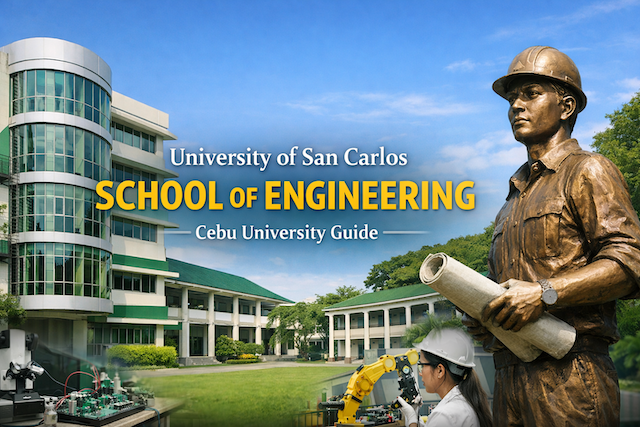
University of San Carlos (USC) School of Engineering: Cebu University Guide
Contents
- University of San Carlos (USC) School of Engineering: Cebu University Guide
- Quick Overview: What Makes USC Engineering Stand Out
- Campus Environment and Where Engineering Students Usually Spend Time
- Common Engineering Disciplines You Can Expect
- Typical Curriculum Structure: From Fundamentals to Capstone
- Laboratories, Workshops, and Hands-On Learning
- Academic Culture: Rigor, Support, and Expectations
- Professional Preparation: Licensure, Skills, and Employability
- Industry Links and Cebu-Based Opportunities
- Student Life: Organizations, Competitions, and Community
- Admissions, Requirements, and What to Prepare
- Tuition, Scholarships, and Budgeting Realistically
- Practical Tips for Future USC Engineering Students
- Who Is USC School of Engineering Best For?
- Final Thoughts
- FAQs (Frequently Asked Questions)
- Is the University of San Carlos (USC) School of Engineering a good choice for international students?
- What engineering programs are commonly associated with USC’s School of Engineering?
- How difficult is engineering at USC, and what kind of workload should I expect?
- Do I need a strong math background before entering USC engineering?
- Are laboratories and hands-on projects important in USC’s engineering culture?
- Does USC engineering offer internship opportunities in Cebu?
- Do engineering graduates from USC usually take licensure exams in the Philippines?
- What skills should I focus on while studying engineering at USC?
- What kind of student is most likely to thrive in USC School of Engineering?
University of San Carlos (USC) School of Engineering: Cebu University Guide
The University of San Carlos (USC) is one of the best-known private universities in Cebu City, Philippines, with a long academic tradition and a reputation for strong programs in science and technology. Within USC, the School of Engineering is a major pathway for students who want a practical, industry-aligned education that can lead to careers in the Philippines and abroad. This guide explains what to expect from USC’s engineering environment—its academic culture, typical program structure, student life, facilities, and career preparation—so you can decide if it fits your goals.
Quick Overview: What Makes USC Engineering Stand Out
USC’s engineering culture tends to be rigorous and systems-oriented. Students are usually trained to solve real constraints—budget, safety, materials, schedule, people—and not just textbook problems. In many Philippine engineering programs, you will also see a strong emphasis on math, physics, and foundational sciences early on, followed by laboratory work, design courses, and capstone projects. At USC, engineering students often experience a structured, outcomes-based approach: you learn fundamentals, practice them repeatedly, then apply them through projects that resemble real engineering workflows.
Another major strength is Cebu City itself. Cebu is one of the country’s main economic centers, with active industries in construction and real estate development, manufacturing, energy, water utilities, IT-BPM, electronics, shipping and logistics, and infrastructure projects. Engineering students in Cebu often benefit from internships, site exposure, and professional networks that come from being close to an active city economy.
Campus Environment and Where Engineering Students Usually Spend Time
USC has multiple campuses across Cebu City, and different colleges may be distributed across these sites. Engineering students typically spend a lot of time where laboratories, workshops, and engineering classrooms are concentrated. The overall campus feel is urban-academic: you’re studying in a busy city with real traffic, real construction projects, and real business districts nearby. That can be an advantage, especially for students who learn best through exposure—seeing building sites, transport systems, ports, and utilities in action makes many engineering concepts feel more concrete.
Because USC is a long-established university, many students also describe a “structured” school rhythm. Expect regular assessments, lab reports, problem sets, and project deliverables. If you thrive on routine and clear requirements, engineering at USC can feel manageable even when it is challenging.
Common Engineering Disciplines You Can Expect
The exact list of degree programs can change over time, but a comprehensive School of Engineering typically includes several core disciplines. At USC, you can generally expect some combination of the following engineering tracks (or closely related specializations):
Civil Engineering – Focuses on structures, construction materials, geotechnical fundamentals, surveying, transportation systems, water resources, and project management. In Cebu, civil engineering is especially relevant due to continuous development in roads, bridges, buildings, and infrastructure.
Mechanical Engineering – Covers mechanics, thermodynamics, machine design, manufacturing processes, HVAC basics, and energy systems. Students often build strong analytical and design skills that can apply to manufacturing, building systems, and maintenance-heavy industries.
Electrical Engineering – Emphasizes circuits, power systems, control systems, and electrical safety. Cebu’s growth in buildings, industrial facilities, and energy needs keeps demand steady for electrical skills.
Electronics Engineering / Communications-related fields – Typically includes analog/digital electronics, microcontrollers, signals, and communications concepts. This can align well with electronics manufacturing and tech-adjacent industries.
Chemical Engineering – Involves process design, fluid mechanics, thermodynamics, mass and energy balances, and industrial safety. Chemical engineering can connect to manufacturing, water treatment, food and beverage production, and process industries.
Computer Engineering or Engineering programs with computing focus – Often bridges hardware, embedded systems, and software fundamentals. Cebu’s tech sector can make this path attractive for students who want both engineering and computing options.
Even if you are unsure which engineering track fits you, many programs share a common early foundation. You may take similar first-year and second-year courses before specializing later.
Typical Curriculum Structure: From Fundamentals to Capstone
Engineering degrees in the Philippines are usually structured around a progression:
1) Foundation Phase (early years)
Expect calculus, differential equations, physics, chemistry (depending on the discipline), basic engineering drawing, introductory programming or computing (sometimes), and general education subjects. These years can feel heavy because they build the “language” of engineering. Your ability to handle math and apply it to physical systems will strongly affect your confidence later.
2) Core Engineering Phase (middle years)
This is where discipline-specific courses begin to dominate. Civil students shift toward structural analysis and materials; mechanical students move into machine design and thermofluids; electrical students dive into circuits and power; chemical engineers begin process calculations and design logic. Laboratory classes become more frequent. You’ll also see project courses that require reports, presentations, and teamwork.
3) Application and Professional Phase (later years)
Upper-year engineering usually includes design electives, plant visits or site exposure (depending on requirements), internship or practicum elements, and a capstone or thesis-like project. The capstone is important: it demonstrates whether you can integrate what you learned, define constraints, document a process, and communicate results clearly.
Across all phases, time management matters. Engineering students often succeed not because they are “geniuses,” but because they consistently practice problem-solving and keep up with deliverables.
Laboratories, Workshops, and Hands-On Learning
Engineering education becomes real in labs and applied classes. While the exact facilities vary by discipline, students typically work with measurement tools, simulation software, equipment for material testing, electronics benches, or basic manufacturing/workshop tools. The most valuable habit you can develop is not just “doing the lab,” but learning how to interpret results, identify sources of error, and write professional-style reports.
If you are comparing universities, ask yourself this: do you want an engineering program that is purely theoretical, or one that pushes you to build, test, debug, and redesign? USC’s engineering environment is generally known for being structured enough to develop professional habits: documentation, teamwork, safety thinking, and consistent technical communication.
Academic Culture: Rigor, Support, and Expectations
Engineering programs have a reputation for being demanding, and USC is no exception. The workload typically includes quizzes, exams, lab reports, group projects, and long problem sets. Success is often about building a system:
Study rhythm: short daily review beats weekend cramming.
Practice: engineering is learned through repetition and application.
Documentation: clear reports and calculations reduce mistakes.
Teamwork: group projects reward communication as much as technical skill.
Support usually comes through instructors, classmates, student organizations, and tutoring culture among peers. If you are the type who asks questions early and seeks feedback, you’ll likely find ways to keep improving even during difficult semesters.
Professional Preparation: Licensure, Skills, and Employability
Many engineering graduates in the Philippines aim to take professional licensure examinations (depending on discipline). Even if you plan to work abroad or shift into tech or management, the licensure mindset can still help: it encourages mastery of fundamentals and a disciplined review process.
Employability is not only about the degree name. It’s also about the skill set you graduate with. Strong engineering students usually develop:
Analytical skills – decomposing problems, choosing assumptions, verifying results.
Software literacy – spreadsheets, CAD or modeling tools, simulation basics (varies by field).
Communication – reports, presentations, and explaining decisions to non-engineers.
Project discipline – scheduling tasks, tracking progress, documenting changes.
Professional behavior – safety awareness, ethics, teamwork, reliability.
In Cebu, internships and early site exposure can also improve readiness. If you can connect your coursework to real applications—buildings, machines, electrical systems, water and energy—you’ll become more confident in interviews and early job roles.
Industry Links and Cebu-Based Opportunities
One advantage of studying engineering in Cebu is proximity to active industries. Civil engineering students may find the city’s continuous development relevant; mechanical engineering students may connect with manufacturing, facilities, or maintenance roles; electrical and electronics students may find opportunities tied to building systems, utilities, or electronics-related work. Cebu also has a strong logistics and maritime ecosystem, which can be indirectly relevant to industrial engineering concepts and operations-focused roles.
When evaluating USC, look for signals that the program encourages industry engagement: internships, guest lectures, seminars, student competitions, and capstone projects that solve real problems. These experiences can become your portfolio and your professional story.
Student Life: Organizations, Competitions, and Community
Engineering student life is often centered on academic support and skill-building. Many students join organizations related to their discipline. These groups can offer review sessions, peer mentoring, technical workshops, outreach programs, and opportunities to lead projects. If you are aiming for scholarships, internships, or leadership growth, student organizations can be surprisingly influential because they provide documented experience beyond grades.
Competitions and design challenges are another key aspect of engineering culture. Even if you don’t win, participating teaches you real constraints: limited time, limited parts, failures, troubleshooting, and presenting your work. Employers often value these experiences because they show you can execute, not just study.
Admissions, Requirements, and What to Prepare
Admissions processes can vary by year and may involve entrance exams, senior high school academic records, and other requirements. Because engineering is math- and science-heavy, it helps to prepare early in these areas:
Math readiness: algebra fluency, functions, trigonometry, and pre-calculus habits.
Physics comfort: forces, energy, motion, basic electricity concepts (depending on track).
Study habits: consistent practice, not only reading notes.
Time management: engineering students often juggle multiple deadline-based tasks.
If you are coming from a background that was not very strong in math, you can still succeed—but you should treat the first year as a “skill-building year” and actively practice basics until they become automatic.
Tuition, Scholarships, and Budgeting Realistically
Tuition and fees vary over time and may differ by program and lab requirements. Engineering can sometimes cost more than other majors because of lab components and specialized courses. If you are budgeting, consider:
Lab and project costs – materials, printing, prototyping, safety equipment, and transportation for site work.
Daily living – commuting costs, meals, and time spent traveling in Cebu traffic.
Software and tools – sometimes you may need a capable laptop for engineering applications.
Scholarships may be available based on academic performance, financial need, or specific categories, but details change. A practical approach is to plan for a conservative budget and treat any scholarship as a bonus rather than a guarantee.
Practical Tips for Future USC Engineering Students
Build your math system early. A daily 30–60 minute practice routine can change your entire engineering experience.
Learn how to write clean solutions. Engineers communicate through calculations and documentation. If your work is organized, you’ll lose fewer points and make fewer mistakes.
Take labs seriously. Treat lab classes like professional training: safety, accuracy, documentation, and accountability.
Use office hours and peer groups. Engineering becomes much easier when you share problem-solving approaches and get feedback early.
Create a portfolio mindset. Save your best projects, designs, reports, and presentations. These become your proof of competence.
Think long-term: skills > grades alone. High grades help, but strong practical skills and communication often determine early career success.
Who Is USC School of Engineering Best For?
USC School of Engineering can be a strong match if you want a rigorous education, you can commit to consistent study habits, and you like solving problems that connect to real-world systems. It can also fit students who plan to work in Cebu’s active industries, or those who want an engineering foundation that can be used in management, entrepreneurship, research, or even tech-adjacent careers.
On the other hand, if you dislike structured workloads, repeated practice, or long-term projects, engineering may feel overwhelming—regardless of the university. In that case, you might still succeed, but you would need to build a strong support system and time-management routine.
Final Thoughts
Choosing an engineering school is not only about a name. It’s about whether the program’s environment will help you develop the habits, discipline, and practical competence needed in the profession. USC’s School of Engineering, positioned in a growing and active city like Cebu, can offer a strong combination of academic rigor and real-world relevance. If you prepare your fundamentals, embrace hands-on learning, and treat projects as professional practice, you can graduate with both credibility and confidence—and a clear direction for your next step.
FAQs (Frequently Asked Questions)
Is the University of San Carlos (USC) School of Engineering a good choice for international students?
USC can be a practical choice for international students who want to study engineering in Cebu because the university is based in a major city with strong industry activity. Cebu’s environment makes it easier to see how engineering concepts connect to real systems such as buildings, transportation, utilities, and manufacturing. International students should still confirm current admission rules, document requirements, and whether their chosen program aligns with long-term plans such as licensure in the Philippines or employment abroad. If you are planning to return to your home country, it also helps to check how your USC degree will be evaluated by employers or professional bodies there.
What engineering programs are commonly associated with USC’s School of Engineering?
Many School of Engineering structures in the Philippines typically include disciplines such as Civil Engineering, Mechanical Engineering, Electrical Engineering, Electronics Engineering (or a closely related track), Chemical Engineering, and sometimes programs with strong computing or systems components. The specific list can change over time, so the best approach is to confirm the most current program offerings directly through USC’s official sources. When choosing a track, focus on your interests (design, systems, problem solving) and the industries you want to enter (construction, energy, manufacturing, electronics, infrastructure, or tech-adjacent roles).
How difficult is engineering at USC, and what kind of workload should I expect?
Engineering is usually demanding at any major university, and USC is generally viewed as academically rigorous. Expect frequent assessments (quizzes and exams), problem sets, laboratory requirements, technical reports, and group projects with deadlines. The workload can feel heavy because engineering courses often require both concept learning and repeated practice. Students who succeed typically develop a routine: regular review, consistent problem-solving practice, and early preparation for exams. If you tend to procrastinate, engineering can become stressful quickly, so planning and time management are essential.
Do I need a strong math background before entering USC engineering?
A strong math foundation is a major advantage because early engineering subjects rely heavily on algebra, trigonometry, functions, and calculus. However, students do not need to be “naturally good” at math to succeed. What matters more is whether you can practice consistently and ask for help early. If you feel weak in math, it is smart to review basics before the semester starts and treat the first year as a skill-building phase. Improving fundamentals early will reduce stress when you reach advanced courses like differential equations, physics-based problem solving, and design analysis.
Are laboratories and hands-on projects important in USC’s engineering culture?
Yes. Laboratories and applied projects are usually central to engineering education because they train students to measure, test, document, and interpret results under real constraints. Lab work also develops professional habits such as safety awareness, accuracy, and clear reporting. In many engineering programs, students who treat labs seriously gain an advantage later in internships and capstone projects. Even if you are more comfortable with theory, hands-on work helps you build confidence and practical competence—two qualities employers often value as much as grades.
Does USC engineering offer internship opportunities in Cebu?
Cebu’s economy can support a range of internship opportunities connected to construction, facilities management, utilities, manufacturing, logistics, and technology-related sectors. Internship availability varies by discipline and by year, and students’ chances improve when they have strong fundamentals and professional communication skills. A practical strategy is to build a simple portfolio of class projects, reports, and technical outputs, then use that portfolio when applying for internships. Joining engineering organizations and attending seminars can also improve networking and awareness of opportunities.
Do engineering graduates from USC usually take licensure exams in the Philippines?
Many engineering graduates in the Philippines aim for professional licensure, depending on their discipline and career plans. Licensure can be useful for local practice and can strengthen credibility in certain roles. However, not every graduate needs licensure immediately, especially if they plan to work in research, technology, business, or international pathways where licensure requirements differ. If licensure is part of your plan, you should choose electives and study habits that build strong fundamentals, because licensure exams often emphasize core concepts rather than narrow specializations.
What skills should I focus on while studying engineering at USC?
Strong engineering students typically develop five core skill areas: analytical problem solving, technical communication, software and tool literacy, teamwork, and project discipline. Analytical skills come from repeated practice and checking assumptions. Communication comes from writing clean solutions, reports, and presentations. Tool literacy may include spreadsheets, basic modeling, design software, or simulation tools depending on the program. Teamwork matters because many projects require coordination. Project discipline means managing time, tracking deliverables, and documenting changes—habits that directly translate to professional work.
What kind of student is most likely to thrive in USC School of Engineering?
Students who thrive usually enjoy structured learning, consistent practice, and practical problem solving. They are willing to spend time on fundamentals and they don’t rely on last-minute study. They also tend to ask questions early and use peer support, because engineering often becomes easier with collaborative learning. If you like building things, testing ideas, and improving through feedback, USC engineering can be a good fit. If you strongly dislike repetitive practice or deadline-driven project work, you may still succeed, but you will need a disciplined routine and a reliable support system.
University of San Carlos (USC) Guide: Courses, Campuses, and Admissions

How to Register for eTravel Philippines (2025 Guide)
Step-by-step guide to completing your eTravel registration before arriving in the Philippines, with images and tips.

Night Market in Cebu – Things You Don’t Know About Cebu Life
Discover the hidden charm of Cebu’s night markets, from street food stalls to local life tips you won’t find in tourist guides.

How to Use ChatGPT for IELTS Preparation: A Complete Guide
Learn how to prepare for IELTS using ChatGPT — including strategies for Writing, Reading, Listening, Speaking, and grammar support.

How to Build a Website Without Coding Using ChatGPT
Discover how to build your own website using AI—no coding skills needed. From structure planning to SEO and design, let ChatGPT guide you.