2026年4月5日
3D ACADEMY offers affordable English study programs in Cebu, Philippines – perfect for beginners, professionals, and exam takers.

3D UNIVERSAL ENGLISH INSTITUTE INC
info.3d-universal.com
8:00-17:00(Mon-Fri)
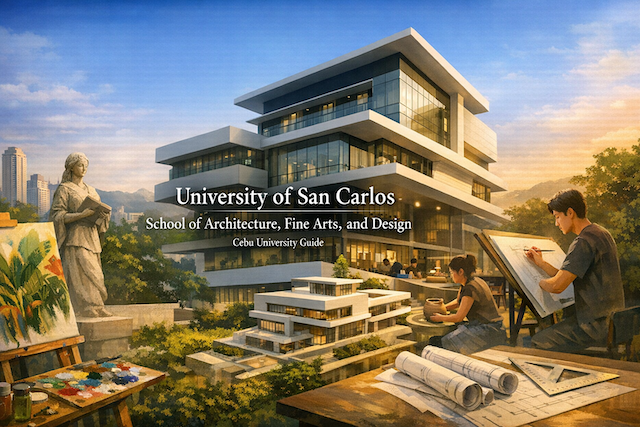
University of San Carlos (USC) School of Architecture, Fine Arts, and Design: Cebu University Guide
Contents
- University of San Carlos (USC) School of Architecture, Fine Arts, and Design: Cebu University Guide
- Overview: Why USC for Architecture, Fine Arts, and Design in Cebu
- What Makes This School a Good Fit
- Programs and Areas of Study
- Learning Style: Studio Culture, Critiques, and Project Work
- Skills You’ll Build (Beyond “Being Creative”)
- Facilities and Creative Resources
- Portfolio Development: The Real Currency of Design Schools
- Student Life and Workload: What to Expect Realistically
- Career Paths After Graduation
- How to Prepare Before You Enroll
- Practical Tips for Success at USC School of Architecture, Fine Arts, and Design
- Conclusion: Is USC the Right Choice for You?
- FAQs (Frequently Asked Questions)
- What is the USC School of Architecture, Fine Arts, and Design known for?
- Is architecture more difficult than fine arts or design?
- What is “studio culture,” and how should I prepare for it?
- Do I need to be good at drawing to succeed?
- What kinds of projects should I expect in the first year?
- Which software tools should I learn early?
- How important is a portfolio, and when should I start building one?
- What are common challenges students face, and how can I avoid them?
- Can I work part-time while studying in this school?
- What career paths are realistic after graduation?
University of San Carlos (USC) School of Architecture, Fine Arts, and Design: Cebu University Guide
Overview: Why USC for Architecture, Fine Arts, and Design in Cebu
The University of San Carlos (USC) is one of Cebu’s most established private universities, known for its long academic tradition, strong alumni network, and a learning environment that blends theory with practical, industry-facing work. For students who want to pursue architecture, fine arts, or design in Cebu, USC’s School of Architecture, Fine Arts, and Design offers a pathway that is both creative and professional. It is a school where drawing, ideation, research, and technical skills are treated as equally important, and where students are encouraged to build a personal design voice while meeting rigorous academic standards.
In Cebu, creative programs are often judged not only by classroom instruction but by how well students can produce portfolios, handle critiques, and adapt to real project constraints. USC’s design culture tends to reflect those expectations: students learn to communicate ideas visually, work within deadlines, and improve through iteration. Whether your goal is licensure in architecture, a career in visual arts, or a design-focused role in creative industries, the school aims to prepare you for both local opportunities in Cebu and broader pathways in the Philippines and beyond.
What Makes This School a Good Fit
Architecture and design education is demanding by nature. If you are considering USC, it helps to know what kind of student typically thrives there. This school is often a good fit if you:
- Enjoy learning through projects, critiques, and revisions rather than only exams.
- Want structured training in fundamentals (drawing, design thinking, technical skills) before specializing.
- Are willing to invest time in building a portfolio consistently across semesters.
- Prefer an environment where feedback can be direct, and improvement is expected through iteration.
It may feel challenging if you are looking for a “lighter” workload. Creative programs usually involve long hours, and architecture in particular is known for intensive studio requirements. Success often depends on time management, resilience, and a willingness to learn from critique without taking it personally.
Programs and Areas of Study
USC’s School of Architecture, Fine Arts, and Design typically supports disciplines that revolve around creative production, design research, and technical execution. While the exact program list can change over time, students generally choose tracks aligned with:
- Architecture: design studios, building technology, structures, architectural history and theory, and professional practice.
- Fine Arts: foundations in drawing and composition, exploration of media, conceptual development, and exhibition-oriented work.
- Design: visual communication, layout, branding, creative strategy, and applied design outputs suited for industry roles.
A key feature of strong creative schools is progressive difficulty. Early years often emphasize fundamentals—line, form, space, proportion, color, and composition—then move toward complex design problems where students must combine creativity with research, constraints, and clarity of communication.
Learning Style: Studio Culture, Critiques, and Project Work
If you are new to architecture or design education, “studio culture” is one of the biggest differences compared with many other university programs. Studios are typically where the bulk of learning happens: students develop concepts, produce drawings or models, and present work regularly. This approach teaches you how to defend design decisions and how to communicate ideas clearly to different audiences.
Critiques are central to growth. You may present early sketches, partial iterations, or final boards, and instructors (and sometimes peers) will respond. The goal is not to criticize you as a person, but to strengthen the work. Students who improve fastest are often those who can separate ego from output and treat feedback as part of the process.
Expect a rhythm of deadlines. Many creative courses require weekly or biweekly submissions, and some studio outputs may demand late nights. Planning ahead—especially for printing, model-making, and file exports—can prevent last-minute stress.
Skills You’ll Build (Beyond “Being Creative”)
A strong architecture, fine arts, or design education is not only about talent. It is about developing repeatable skills that allow you to produce quality work under real constraints. At USC, students generally work toward competencies such as:
- Visual communication: drawing, composition, hierarchy, layout, and presentation structure.
- Design thinking: research, ideation, prototyping, iteration, and evaluation.
- Technical literacy: materials, construction logic, basic structural concepts, and accuracy in technical drawings (especially for architecture).
- Digital workflow: drafting/modeling software, rendering tools, and presentation formats.
- Professional habits: time management, file organization, collaboration, and responding to clients or stakeholders (in advanced courses).
Even in fine arts, where personal expression is a major component, professional practice still matters: documenting work, creating coherent series, writing artist statements, and learning how to present and exhibit.
Facilities and Creative Resources
For creative programs, facilities can shape your experience. Students often need spaces for drafting, model-making, studio work, and production. While the exact resources can vary by campus and semester, architecture and design students typically rely on:
- Studio classrooms designed for extended working sessions
- Computer labs or access to digital tools for drafting, editing, and rendering
- Spaces for critique and presentation
- Work areas where physical models and hand-crafted outputs can be produced
In creative schools, a major “facility” is actually the community: peers who share references, techniques, and feedback. The people you work alongside can influence your growth as much as the equipment you use.
Portfolio Development: The Real Currency of Design Schools
For architecture, fine arts, and design, your portfolio often matters as much as your diploma. It is the most direct proof of skill and potential. If you plan strategically from your first year, you can graduate with a portfolio that is not just a collection of class outputs, but a curated narrative of your strengths.
A good approach is to document everything: sketches, process photos, iterations, drafts, and final outputs. Many students only keep the final boards or polished pieces, but recruiters and studios often want to see how you think. Process can differentiate you.
As you progress, you can also shape your portfolio around a goal. If you want architectural firms, emphasize studio projects, plans/sections, and a clear design rationale. If you want branding or visual design roles, highlight identity systems, layout work, typography, and campaign thinking. If you want fine arts opportunities, focus on cohesive bodies of work and a recognizable style, supported by strong documentation.
Student Life and Workload: What to Expect Realistically
Creative programs are rewarding, but they demand consistent effort. Most students experience weeks where multiple projects overlap. Printing deadlines, group presentations, and technical requirements can accumulate quickly. A realistic strategy is to treat your week like a production schedule:
- Start projects early, even if the first step is messy sketches.
- Break large outputs into daily milestones (research, concept, draft, finalize, prepare presentation).
- Plan for “hidden time costs” like exporting files, waiting for printing, or sourcing materials for models.
Cebu also offers an environment that can support creative growth outside class. Museums, galleries, cafés with creative communities, and design-related events (when available) can help you expand your references and meet collaborators. Even observing the city—its neighborhoods, heritage buildings, informal spaces, and evolving urban issues—can become part of your design education.
Career Paths After Graduation
Graduates from architecture and design-oriented programs often branch into multiple pathways, not just the most obvious roles. Depending on your specialization and skill set, possible directions include:
- Architecture track: architectural firms, design studios, construction-related roles, visualization, and eventual licensure pathway (subject to national requirements).
- Design track: graphic design, branding, UI/UX (with additional skill development), marketing creative roles, content design, and freelance work.
- Fine arts track: studio practice, exhibitions, creative entrepreneurship, teaching support roles (depending on qualifications), and multidisciplinary art projects.
Many graduates combine employment with freelance work. Cebu’s growing business environment can create opportunities for branding, design services, and creative collaboration—especially for students who build strong portfolios and professional networks early.
How to Prepare Before You Enroll
If you are planning to apply or you want to enter strong from the first semester, preparation matters. You do not need to be perfect, but you should build habits:
- Practice fundamentals: daily sketching (even 15–20 minutes), perspective basics, composition studies, and observational drawing.
- Learn basic tools: start with one or two software tools aligned with your track (drafting/modeling for architecture; layout/graphics tools for design).
- Create a simple portfolio folder: keep your best works, but also keep your process files. Organize them by date and project.
- Study references: architecture case studies, design systems, typography basics, and art history references can improve your visual vocabulary.
Most importantly, build consistency. Creative skill grows from repetition and reflection, not from one big burst of motivation.
Practical Tips for Success at USC School of Architecture, Fine Arts, and Design
- Use critique strategically: ask specific questions when you present (clarity, composition, concept, feasibility).
- Protect your health: late nights happen, but chronic sleep loss reduces design quality and learning speed.
- Be organized with files: messy file naming and lost versions create stress during finals.
- Invest in basics: reliable storage (cloud + external), decent tools for your track, and printing planning.
- Build relationships: peers become collaborators; instructors can become mentors; both can shape your career direction.
Conclusion: Is USC the Right Choice for You?
If you want a Cebu-based creative education that balances structured learning with project-driven growth, USC’s School of Architecture, Fine Arts, and Design can be a strong option. The most important factor is not only the school’s name, but how you use the environment: your willingness to show up consistently, learn from critique, and treat your work as a craft that improves through practice. If you commit to building a portfolio, strengthening fundamentals, and engaging with studio culture, you can graduate with skills that translate into real opportunities in architecture, design, and the broader creative industries.
FAQs (Frequently Asked Questions)
What is the USC School of Architecture, Fine Arts, and Design known for?
The USC School of Architecture, Fine Arts, and Design is generally associated with project-based learning, studio culture, and portfolio-driven outcomes. Students typically spend a large portion of their time producing design outputs—drawings, boards, models, visual studies, and presentations—rather than relying only on written exams. The school environment often emphasizes critique, iteration, and professional communication, which are essential in architecture and creative industries. If you thrive in a setting where feedback is frequent and improvement is expected through revisions, the program can be a good match. Students who do well often build strong fundamentals first (composition, design thinking, and technical accuracy) and then develop a distinct style over time.
Is architecture more difficult than fine arts or design?
“Difficulty” depends on your strengths, but architecture is often described as time-intensive because of studio requirements, technical drafting, and coordination between design concepts and building logic. Fine arts can be equally demanding in a different way, especially when courses require consistent production, conceptual depth, and sustained practice across multiple mediums. Design programs may involve high output as well—branding systems, layouts, campaigns, and digital deliverables—often with tight deadlines and real-world constraints. The best way to think about it is that each track has a different type of workload: architecture tends to combine creativity with technical precision, fine arts emphasizes personal expression and mastery of materials, and design focuses on communication clarity and problem-solving for audiences or users.
What is “studio culture,” and how should I prepare for it?
Studio culture is the learning environment where students build projects over time, present work, receive critique, and revise repeatedly. In many creative programs, this is the core of your education. You should prepare by building habits, not just skills. Start practicing sketching regularly, even in short daily sessions, because consistency matters more than occasional long study. Also practice organizing your workflow: save versions of files, document progress, and learn to break large projects into milestones. If you are new to critique, remember that comments are aimed at improving the work, not judging you as a person. Students who adapt quickly treat feedback as information and respond with iterations rather than explanations.
Do I need to be good at drawing to succeed?
Drawing helps, but you do not need to start as an expert. What matters most is your willingness to practice and improve. For architecture, drawing supports conceptual development, spatial thinking, and communication. For fine arts, it can be a foundation skill, but programs often teach it progressively. For design, drawing may matter less than your ability to create clear visual systems, typography, and layouts, although sketching is still useful for brainstorming. If your drawing skills are weak, you can still succeed by practicing fundamentals (line quality, perspective basics, proportion) and using drawing as a tool for thinking. Improvement comes faster when you draw often, review your work, and learn from references.
What kinds of projects should I expect in the first year?
First-year courses in architecture, fine arts, and design typically focus on foundations. You may work on exercises that train your eye—composition studies, form-making, space and proportion, color theory, and basic design principles. Architecture students often begin with design problems that explore spatial concepts and representation techniques, sometimes including physical models. Fine arts students may work on observational drawing, studies of light and shadow, and experiments with materials. Design students may start with typography, layout, and visual communication basics. These early projects may feel simple, but they create the discipline and vocabulary needed for more complex work later.
Which software tools should I learn early?
It depends on your track, but starting with a few essential tools can reduce stress later. Architecture students often benefit from learning a drafting or modeling tool and a basic presentation workflow. Design students usually need layout and image-editing tools, plus an understanding of typography and grid systems. Fine arts students may use digital tools for documentation and presentation, even if their core work is physical. The key is not to learn everything at once. Choose one or two tools, learn the basics well, and build confidence through small projects. A clean workflow—organized files, consistent naming, and version control—often matters as much as advanced features.
How important is a portfolio, and when should I start building one?
Your portfolio is extremely important because it shows what you can do, how you think, and how you solve problems visually. You should start building it from the first semester, but not by saving everything. Instead, document all projects (including process), then curate selectively. Many recruiters, studios, and clients want to see development: sketches, iterations, and final outputs. Over time, you can shape your portfolio based on your goals. Architecture portfolios often emphasize studio projects, technical drawings, and design rationale. Design portfolios highlight branding systems, typography, layout, and clear communication for audiences. Fine arts portfolios focus on cohesive bodies of work and high-quality documentation of pieces.
What are common challenges students face, and how can I avoid them?
A common challenge is time management, especially during weeks when multiple deadlines overlap. Another is underestimating “hidden time costs,” such as printing, exporting files, sourcing materials, or building models. To avoid these issues, plan backward from deadlines, create weekly milestones, and start early even if your first drafts are rough. Another challenge is taking critique personally. The solution is to separate identity from output and focus on improvement. Finally, burnout is real in creative programs. Protect your health by building sustainable routines, sleeping when possible, and using early progress to reduce last-minute pressure.
Can I work part-time while studying in this school?
Some students do, but it depends on your schedule, your track, and your ability to manage time. Architecture studio requirements can be especially demanding, and some weeks may require significant hours outside class. Fine arts and design can also become heavy during production periods. If you plan to work part-time, choose flexible hours, avoid shifts that conflict with studio productivity, and be realistic about peak weeks like midterms and finals. A practical approach is to treat your academic workload like a job first, then fit work around it. If you attempt both, strong planning and early starts become non-negotiable.
What career paths are realistic after graduation?
Career outcomes depend on your specialization and the portfolio you build. Architecture graduates may work in architectural firms, design studios, visualization roles, or construction-related positions, and may later pursue licensure based on national requirements. Design graduates commonly enter branding, graphic design, marketing creative roles, content production, or digital design pathways, sometimes adding UI/UX skills through focused learning. Fine arts graduates may pursue studio practice, exhibitions, creative entrepreneurship, teaching support roles (depending on qualifications), or multidisciplinary creative projects. Many graduates combine employment with freelance work, especially if they build networks and produce consistent, high-quality portfolio pieces during university.
University of San Carlos (USC) Guide: Courses, Campuses, and Admissions

How to Register for eTravel Philippines (2025 Guide)
Step-by-step guide to completing your eTravel registration before arriving in the Philippines, with images and tips.

Night Market in Cebu – Things You Don’t Know About Cebu Life
Discover the hidden charm of Cebu’s night markets, from street food stalls to local life tips you won’t find in tourist guides.

How to Use ChatGPT for IELTS Preparation: A Complete Guide
Learn how to prepare for IELTS using ChatGPT — including strategies for Writing, Reading, Listening, Speaking, and grammar support.

How to Build a Website Without Coding Using ChatGPT
Discover how to build your own website using AI—no coding skills needed. From structure planning to SEO and design, let ChatGPT guide you.