2026年4月5日
3D ACADEMY offers affordable English study programs in Cebu, Philippines – perfect for beginners, professionals, and exam takers.

3D UNIVERSAL ENGLISH INSTITUTE INC
info.3d-universal.com
8:00-17:00(Mon-Fri)
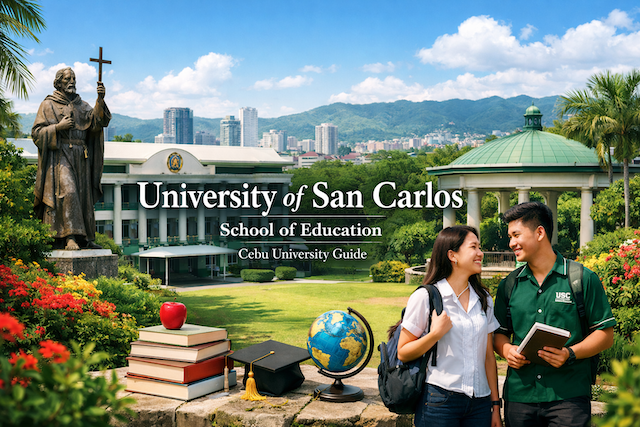
University of San Carlos (USC) School of Education: Cebu University Guide
Contents
- University of San Carlos (USC) School of Education: Cebu University Guide
- Overview of USC School of Education
- Campus Location and Learning Environment
- Academic Structure and Departments
- Undergraduate Programs in Education
- Graduate Programs and Advanced Studies
- Teaching Methods and Learning Approach
- Practicum and Field Experience
- Student Life and Academic Culture
- Career Opportunities After Graduation
- Admissions and Application Considerations
- Living in Cebu as an Education Student
- Tips for Succeeding in USC School of Education
- Who Should Consider USC School of Education
- FAQs (Frequently Asked Questions)
- Where is the University of San Carlos (USC) School of Education located?
- What programs can I study under the USC School of Education?
- Is USC School of Education a good choice if I want to become a licensed teacher in the Philippines?
- How does the teaching practicum usually work for education students?
- Do education students have opportunities for specialization?
- What is the workload like in the USC School of Education?
- Can education graduates work outside traditional classroom teaching?
- What should I prepare before applying to USC School of Education?
- How can I succeed as an education student once classes begin?
University of San Carlos (USC) School of Education: Cebu University Guide
The University of San Carlos (USC) is one of Cebu’s most established and respected private universities, known for its strong academic tradition, values-based education, and long history of teacher formation. Within USC, the School of Education plays a vital role in preparing future educators, school leaders, curriculum developers, and education professionals who will serve in schools, training institutions, and learning organizations across the Philippines and abroad.
For students who want to pursue a career in teaching, early childhood education, special education, educational leadership, or related learning and training fields, USC School of Education is widely regarded as one of the solid options in Cebu. This guide provides a comprehensive overview of the school’s academic focus, learning environment, campus life, and career pathways, helping you decide whether it aligns with your educational and professional goals.
Overview of USC School of Education
The School of Education at the University of San Carlos is designed to support both pre-service teachers (students preparing to become licensed teachers) and in-service educators who want to upgrade their qualifications or move into leadership and specialist roles. As part of a comprehensive university, the School of Education benefits from close connections with other academic departments, allowing students to strengthen both pedagogical skills and subject-matter expertise.
Education at USC is not treated merely as a technical profession. The school emphasizes the idea that teaching is a social responsibility, combining academic rigor, ethical formation, and community engagement. This philosophy is reflected in the structure of the programs, the practicum requirements, and the overall culture of the institution.
Campus Location and Learning Environment
USC operates multiple campuses in Cebu City, with the Talamban Campus commonly associated with many collegiate programs, including education-related departments. The Talamban Campus is known for its spacious layout, quieter environment, and concentration of academic facilities, making it suitable for focused study and campus-based activities.
Students may occasionally need to access services or attend activities at other USC campuses, depending on their program requirements. However, most education students organize their schedules around their primary campus to minimize travel and manage time effectively.
The learning environment at USC is generally structured and academically focused. Classes combine lectures, group discussions, presentations, and applied teaching exercises. Education students are expected to actively participate, reflect on learning experiences, and demonstrate professional behavior throughout their studies.
Academic Structure and Departments
At the core of USC’s education programs is the Department of Teacher Education, which handles professional education courses, teaching methodology, classroom management, assessment, and practicum coordination. This department supports undergraduate teacher education programs and works closely with partner schools for field experiences.
Beyond teacher education, USC also offers graduate-level education programs that focus on leadership, curriculum development, educational research, and specialized education fields. This structure allows students to progress from undergraduate studies into advanced degrees within the same institution, maintaining continuity in academic standards and expectations.
Undergraduate Programs in Education
The undergraduate education programs at USC are designed to prepare students for teaching roles at different levels of the education system. Common pathways include:
-
Elementary Education, focusing on teaching young learners across multiple subject areas
-
Secondary Education, allowing students to specialize in specific subjects such as English, Mathematics, Science, or Social Studies
-
Early Childhood Education, centered on child development, play-based learning, and early intervention
-
Special Education, emphasizing inclusive education and strategies for learners with diverse needs
These programs combine general education subjects, major or specialization courses, and professional education courses. Students gradually move from theory-based learning to applied teaching practice as they advance through the curriculum.
Graduate Programs and Advanced Studies
For educators who want to deepen their expertise or move into leadership roles, USC offers graduate programs in education. These programs are typically pursued by licensed teachers, school administrators, or education professionals working in training and development.
Graduate-level education programs often focus on areas such as:
-
Educational leadership and management
-
Curriculum and instruction
-
Educational research and evaluation
-
Guidance and counseling
-
Specialized education fields depending on institutional offerings
Graduate students are expected to engage in research, case analysis, and advanced professional practice, making these programs suitable for those aiming for supervisory, administrative, or academic roles.
Teaching Methods and Learning Approach
USC School of Education emphasizes a student-centered and outcomes-based approach to learning. Instead of relying solely on lectures, education courses integrate activities that simulate real classroom situations. These include lesson planning workshops, microteaching sessions, peer feedback, and reflective teaching journals.
Students are trained to design lesson plans aligned with learning objectives, select appropriate instructional strategies, and use assessment tools that measure both knowledge and skills. This practical orientation helps bridge the gap between theory and real classroom practice.
Technology integration is also part of the learning process. Students are introduced to educational technologies, digital teaching tools, and online learning platforms that are increasingly relevant in modern classrooms.
Practicum and Field Experience
One of the most critical components of any education program is the teaching practicum. At USC, education students typically undergo a structured progression of field experiences, starting with classroom observation and moving toward supervised teaching practice.
During practicum, students are assigned to partner schools where they apply their learning under the guidance of cooperating teachers and supervising instructors. They are evaluated on lesson preparation, classroom management, instructional delivery, assessment techniques, and professional conduct.
This hands-on experience is essential for building confidence and competence as a future teacher. It also allows students to experience real classroom challenges, adapt to diverse learners, and develop professional teaching habits.
Student Life and Academic Culture
Education students at USC often form close-knit academic communities due to shared coursework, group teaching activities, and practicum experiences. Collaboration is a central part of the learning culture, as many tasks require teamwork, peer evaluation, and collective reflection.
Beyond academics, students can participate in university-wide organizations, academic clubs, and community outreach programs. These activities complement classroom learning by exposing students to leadership roles, service-oriented projects, and real-world educational settings.
The academic culture encourages responsibility, professionalism, and continuous improvement. Education students are expected to meet deadlines, accept constructive feedback, and demonstrate ethical behavior consistent with the teaching profession.
Career Opportunities After Graduation
Graduates of USC School of Education have diverse career options, depending on their specialization and long-term goals.
Many pursue the Licensed Professional Teacher (LPT) pathway and work in public or private schools at the elementary or secondary level. Others focus on early childhood education, working in preschools, child development centers, or learning hubs.
Special education graduates may work in inclusive schools, specialized learning centers, or support programs for learners with special needs. Education graduates also find opportunities outside traditional classrooms, such as:
-
Corporate training and human resource development
-
Instructional design and e-learning development
-
Academic coordination and school administration
-
Educational research and curriculum development
Those who continue to graduate studies often move into leadership, supervisory, or academic roles over time.
Admissions and Application Considerations
Admission requirements for USC School of Education depend on the level and type of program. Undergraduate applicants typically need to meet general university admission criteria, while graduate applicants may be required to submit additional documents such as transcripts, recommendation letters, or proof of teaching experience.
Prospective students are advised to check the latest admission guidelines, deadlines, and program availability directly through USC’s official channels. Requirements may change depending on academic year and institutional policies.
International and transfer students should also clarify credit evaluation, language requirements, and program placement early in the application process.
Living in Cebu as an Education Student
Cebu City offers a wide range of accommodation options for students, from dormitories and shared apartments to private rentals. Many education students choose housing based on proximity to campus, affordability, and transportation access.
Because teaching practicum and early classes can start in the morning, living near the primary campus can significantly improve daily routines and reduce commuting stress. Cebu’s public transportation system is widely used by students, but travel time should always be considered when choosing accommodation.
Tips for Succeeding in USC School of Education
To make the most of your time at USC School of Education:
-
Take practicum and teaching demonstrations seriously, as they build real classroom skills
-
Develop a personal system for lesson planning and time management
-
Keep copies of lesson plans, evaluations, and reflection papers for future portfolios
-
Be open to feedback and view teaching as a continuous learning process
-
Balance academic performance with professional conduct and ethical responsibility
Education is a profession that demands both competence and character, and success often depends on how well students integrate these elements.
Who Should Consider USC School of Education
USC School of Education is a strong choice for students who want a well-rounded education degree within a structured university environment. It is particularly suitable for those who value academic discipline, practical teaching experience, and long-term career flexibility within the education and training sectors.
If your goal is to become a teacher, school leader, curriculum specialist, or education professional in Cebu or beyond, USC School of Education offers a pathway that combines theory, practice, and professional formation in a single academic journey.
FAQs (Frequently Asked Questions)
Where is the University of San Carlos (USC) School of Education located?
USC operates multiple campuses in Cebu City, and many education-related programs are commonly associated with the Talamban Campus. However, specific class locations can vary by program, year level, and subject requirements. Some general university services or special activities may also take place in other campuses. If your schedule includes practicum coordination, seminars, or university-wide events, you may occasionally travel between campuses. For the most accurate information, check your program advisement details and official enrollment documents each term so you can plan commuting time and housing choices accordingly.
What programs can I study under the USC School of Education?
The School of Education generally focuses on teacher preparation and professional education training. Students typically choose undergraduate pathways such as elementary education, secondary education with a subject specialization, early childhood education, or special education, depending on what is offered in the current academic year. There are also graduate-level education pathways for those who want to move into leadership roles, curriculum development, guidance-related work, or research-focused tracks. Because program offerings can change, you should confirm the latest list of degrees, majors, and study plans through USC’s official academic announcements and admissions materials.
Is USC School of Education a good choice if I want to become a licensed teacher in the Philippines?
USC is often considered a serious academic institution, and the School of Education is structured around professional preparation for teaching. If your goal is to become a licensed teacher, your priorities should include strong professional education coursework, structured field experiences, and a well-managed teaching practicum. In general, an education program is a good fit if it trains you in lesson planning, classroom management, assessment design, inclusive education strategies, and teaching ethics. You should also consider how the school supports exam preparation habits, such as building content mastery, developing writing and communication skills, and improving confidence in demonstration teaching.
How does the teaching practicum usually work for education students?
In many education programs, practicum is designed as a step-by-step progression. Students often begin with observation hours to understand classroom routines, learner behavior, and teaching styles. After that, they move into limited teaching tasks such as assisting a cooperating teacher, preparing learning materials, or delivering short lesson segments. Finally, students complete a full practice teaching phase where they plan and teach lessons under supervision. During this stage, you are typically evaluated on lesson objectives, instructional methods, classroom management, assessment practices, and professional behavior. Practicum can be demanding, so time management and consistency are essential.
Do education students have opportunities for specialization?
Yes. Education is a broad field, and specialization helps you align your degree with your target learners and career path. If you want to teach in secondary schools, you usually select a major area such as English, mathematics, science, or social studies. If you want to work with younger learners, early childhood education may fit better. If you are interested in inclusive education and intervention strategies, special education may be a stronger match. Even within one program, students can build specialization through electives, research topics, practicum experiences, and volunteer or outreach activities that focus on a specific learner group.
What is the workload like in the USC School of Education?
Education programs can be heavy, especially in years that include teaching methods courses and practicum. Beyond exams, students spend substantial time creating lesson plans, instructional materials, demonstration teaching outputs, reflection papers, and group projects. Microteaching and practice sessions also require preparation and peer feedback. The workload tends to increase when you start doing field-based requirements because you must balance campus deadlines with schedules in partner schools. To manage the workload well, many students build reusable templates for lesson planning, set weekly goals, and keep a calendar that tracks practicum tasks and submission dates.
Can education graduates work outside traditional classroom teaching?
Yes. While many graduates pursue classroom teaching and licensure, education skills transfer well to other careers. Graduates may work in corporate training, learning and development, instructional design, tutoring services, educational content creation, academic coordination, or education-related community programs. Some also move into education technology roles, especially if they develop strong digital teaching skills. If you think you might shift away from classroom teaching later, you can still maximize your degree by focusing on communication, facilitation, assessment design, and curriculum planning, which are valued in many industries.
What should I prepare before applying to USC School of Education?
Start with basic academic preparation: organize your transcript records, identify the program you want, and confirm the current admission requirements and deadlines. If you are a transfer student, clarify how your previous credits may be evaluated and what bridging subjects may be required. If you are an international applicant, check document authentication rules and any language or eligibility requirements. It also helps to reflect on your personal teaching goals, because having a clear direction makes it easier to choose a specialization and build a strong portfolio once you begin your education training.
How can I succeed as an education student once classes begin?
Successful education students treat teaching as both a craft and a professional mindset. Practically, you should learn how to write clear objectives, design lesson sequences, and create fair assessments. Professionally, you should practice punctuality, respectful communication, and openness to feedback. Keep a file of your best lesson plans and reflection papers so you can track improvement and build a portfolio. If you struggle with public speaking, practice early through microteaching and small-group presentations. Most importantly, approach practicum as a learning laboratory: mistakes are normal, but improvement should be consistent and visible.
University of San Carlos (USC) Guide: Courses, Campuses, and Admissions

How to Register for eTravel Philippines (2025 Guide)
Step-by-step guide to completing your eTravel registration before arriving in the Philippines, with images and tips.

Night Market in Cebu – Things You Don’t Know About Cebu Life
Discover the hidden charm of Cebu’s night markets, from street food stalls to local life tips you won’t find in tourist guides.

How to Use ChatGPT for IELTS Preparation: A Complete Guide
Learn how to prepare for IELTS using ChatGPT — including strategies for Writing, Reading, Listening, Speaking, and grammar support.

How to Build a Website Without Coding Using ChatGPT
Discover how to build your own website using AI—no coding skills needed. From structure planning to SEO and design, let ChatGPT guide you.