2026年4月5日
3D ACADEMY offers affordable English study programs in Cebu, Philippines – perfect for beginners, professionals, and exam takers.

3D UNIVERSAL ENGLISH INSTITUTE INC
info.3d-universal.com
8:00-17:00(Mon-Fri)
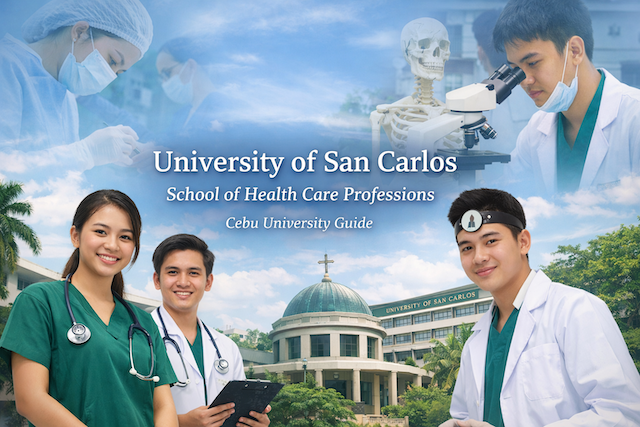
University of San Carlos (USC) School of Health Care Professions: Cebu University Guide
Contents
- University of San Carlos (USC) School of Health Care Professions: Cebu University Guide
- Introduction to the University of San Carlos
- Overview of the School of Health Care Professions
- Campus Location: USC Talamban
- Academic Structure of the School
- Department of Nursing
- Department of Nutrition and Dietetics
- Department of Pharmacy
- Accreditation and Academic Quality
- Research and Professional Development
- Admissions and Enrollment Process
- Student Life and Academic Demands
- Choosing the Right Health Care Program
- Living and Studying in Cebu City
- Final Thoughts
- FAQs (Frequently Asked Questions)
- Where is the USC School of Health Care Professions located?
- What programs are offered under the School of Health Care Professions?
- Is the workload heavy in healthcare programs at USC?
- Do students get practical or clinical exposure while studying?
- What skills should I build before starting a health program?
- Which program should I choose: Nursing, Nutrition and Dietetics, or Pharmacy?
- Is USC a good option for students who want to work abroad later?
- What is student life like for health care students at USC Talamban?
- How can I prepare for the admissions and enrollment process?
- What should I do if I am worried about stress and burnout?
University of San Carlos (USC) School of Health Care Professions: Cebu University Guide
Introduction to the University of San Carlos
The University of San Carlos (USC) is one of the most established and respected private universities in Cebu City, Philippines. Founded in the late 16th century, USC has built a strong reputation for academic excellence, research, and professional education. With multiple campuses across Cebu, the university serves thousands of students from different regions of the Philippines and abroad.
Among its key academic units, the School of Health Care Professions (SHCP) stands out as a major pillar for students aiming to pursue careers in healthcare. The school focuses on producing competent, ethical, and service-oriented professionals who are prepared for both local practice and international opportunities.
This guide provides a comprehensive overview of the USC School of Health Care Professions, covering its academic structure, departments, campus environment, student life, and career prospects.
Overview of the School of Health Care Professions
The USC School of Health Care Professions is designed to provide structured, science-based, and practice-oriented healthcare education. It integrates classroom learning with laboratory training and real-world exposure, ensuring that students develop both technical knowledge and professional values.
The school emphasizes:
-
Strong foundations in science and healthcare principles
-
Ethical and patient-centered practice
-
Community engagement and public service
-
Preparation for licensure and professional work
Healthcare education at USC is demanding, and the School of Health Care Professions is known for maintaining rigorous academic standards. Students are expected to demonstrate discipline, consistency, and professionalism throughout their academic journey.
Campus Location: USC Talamban
The School of Health Care Professions is primarily located at USC Talamban Campus, the university’s largest and most spacious campus. Situated in the northern part of Cebu City, Talamban offers a quieter and more academic-focused environment compared to downtown areas.
Talamban Campus features:
-
Large academic buildings and lecture halls
-
Science laboratories and skills training facilities
-
Libraries and study spaces
-
Cafeterias and food outlets
-
Open areas suitable for student activities
For healthcare students, the Talamban setting is particularly advantageous. Programs under the School of Health Care Professions often require long hours on campus for lectures, laboratory sessions, group work, and skills practice. The campus environment supports focused study while still offering access to basic student amenities.
Academic Structure of the School
The School of Health Care Professions is composed of three main departments:
-
Department of Nursing
-
Department of Nutrition and Dietetics
-
Department of Pharmacy
Each department follows a structured curriculum that progresses from general education and foundational sciences to specialized professional courses and practical training. While each program has its own focus, they share a common commitment to patient safety, ethical standards, and evidence-based practice.
Department of Nursing
The Department of Nursing is one of the most popular and competitive departments under the School of Health Care Professions. Nursing is a highly respected profession in the Philippines, and USC’s nursing program is designed to prepare students for the realities of modern healthcare practice.
Curriculum and Training
Nursing students typically begin with core subjects such as anatomy, physiology, microbiology, and basic nursing concepts. As they advance, the curriculum expands to include:
-
Medical-surgical nursing
-
Maternal and child health nursing
-
Mental health and psychiatric nursing
-
Community and public health nursing
-
Nursing research and leadership
Practical training is a central component of the program. Students develop hands-on skills through laboratory simulations and supervised clinical exposure. Emphasis is placed on patient assessment, communication, teamwork, and ethical decision-making.
Career Paths in Nursing
Graduates of the nursing program may pursue careers as:
-
Hospital staff nurses
-
Community and public health nurses
-
Specialized nurses after additional training
-
Healthcare professionals working overseas, subject to licensure requirements
Nursing is suitable for students who are comfortable with direct patient care, fast-paced environments, and collaborative work settings.
Department of Nutrition and Dietetics
The Department of Nutrition and Dietetics focuses on the relationship between food, nutrition, and health. This program prepares students to address nutritional needs across different populations and health conditions.
Areas of Study
Students in Nutrition and Dietetics are trained in:
-
Human nutrition and metabolism
-
Nutritional biochemistry
-
Food science and food safety
-
Clinical nutrition for disease management
-
Community nutrition and public health
-
Food service systems and management
The program combines scientific theory with practical application, enabling students to translate nutritional knowledge into effective dietary guidance and health programs.
Career Opportunities
Graduates may find employment in:
-
Hospitals and healthcare institutions
-
Community health and government programs
-
Food service and quality assurance roles
-
Wellness centers, schools, and corporate health initiatives
Nutrition and Dietetics is ideal for students interested in preventive healthcare, education, and long-term health improvement.
Department of Pharmacy
The Department of Pharmacy offers a science-intensive program focused on medications, drug safety, and pharmaceutical systems. Pharmacy education requires strong analytical skills, attention to detail, and a solid foundation in chemistry and biology.
Academic Focus
Pharmacy students study:
-
Pharmaceutical and medicinal chemistry
-
Pharmacology and therapeutics
-
Drug formulation and compounding
-
Dosage calculations and patient safety
-
Pharmacy law, ethics, and regulation
The program trains students to understand how medications work, how they interact with the body, and how to ensure their safe and effective use.
Career Paths in Pharmacy
Graduates of the pharmacy program may pursue careers in:
-
Community pharmacy practice
-
Hospital pharmacy services
-
Pharmaceutical manufacturing and quality control
-
Regulatory and compliance roles
-
Research and academic support positions
Pharmacy is well suited for students who prefer structured, detail-oriented work within the healthcare system.
Accreditation and Academic Quality
USC places strong emphasis on academic quality and continuous improvement. Programs under the School of Health Care Professions follow structured curricula, faculty development plans, and assessment systems designed to meet national educational standards.
While accreditation and institutional reputation are important indicators, students are also encouraged to take personal responsibility for their learning. Success in healthcare professions depends not only on the institution but also on individual dedication, skill development, and ethical conduct.
Research and Professional Development
The School of Health Care Professions promotes a culture of research and lifelong learning. Students are exposed to research concepts, academic writing, and evidence-based practice throughout their studies.
Research activities help students:
-
Develop critical thinking skills
-
Understand current healthcare trends
-
Evaluate scientific evidence
-
Apply research findings to clinical practice
These skills are essential in modern healthcare environments where guidelines and best practices continuously evolve.
Admissions and Enrollment Process
Admission to USC varies depending on the applicant category, which may include:
-
Incoming freshmen
-
Transferees
-
Second-degree applicants
-
International students
Healthcare programs often have limited slots and may require additional screening. Applicants are advised to prepare academic documents early and carefully follow official enrollment procedures and deadlines.
Transferring students should also consider subject crediting policies, as not all previously completed courses may be credited toward the new program.
Student Life and Academic Demands
Life as a healthcare student at USC is academically intensive. Students under the School of Health Care Professions often experience:
-
Heavy reading and study requirements
-
Laboratory and skills training beyond lecture hours
-
Group projects and case-based discussions
-
Practical exposure in healthcare or community settings
Time management, resilience, and professionalism are critical for success. Many students develop strong discipline and work ethics that serve them well beyond graduation.
Choosing the Right Health Care Program
Selecting the appropriate program within the School of Health Care Professions should be based on personal interests and long-term goals.
-
Nursing is suitable for those who enjoy patient interaction and dynamic clinical environments.
-
Nutrition and Dietetics is ideal for students interested in wellness, prevention, and education.
-
Pharmacy is best for individuals who prefer science-focused roles involving medications and systems.
Understanding the daily responsibilities of each profession can help students make informed decisions.
Living and Studying in Cebu City
Studying at USC also means living in Cebu City, one of the Philippines’ major urban centers. Cebu offers a balance of city convenience and cultural richness, with access to healthcare facilities, transportation, and recreational options.
For students, Cebu provides:
-
Relatively affordable living costs compared to Manila
-
Access to hospitals and healthcare institutions
-
A diverse and student-friendly environment
These factors contribute to a well-rounded university experience.
Final Thoughts
The University of San Carlos School of Health Care Professions offers comprehensive and structured healthcare education in Cebu City. With its strong academic foundation, dedicated departments, and supportive campus environment at Talamban, it provides students with the tools needed to pursue meaningful careers in healthcare.
For those seeking a reputable Cebu-based university with clear pathways in nursing, nutrition and dietetics, or pharmacy, the USC School of Health Care Professions remains a strong and practical choice.
FAQs (Frequently Asked Questions)
Where is the USC School of Health Care Professions located?
The University of San Carlos (USC) School of Health Care Professions is primarily based at the USC Talamban Campus in Cebu City. Talamban is known for having a more spacious campus environment compared with more central urban areas. For students, this matters because health programs often require long hours for lectures, laboratory sessions, and skills practice. When planning your daily routine, consider transportation time, peak-hour traffic, and the availability of nearby housing options such as dormitories, boarding houses, or apartments around the Talamban area.
What programs are offered under the School of Health Care Professions?
The School of Health Care Professions typically includes major health-focused departments such as Nursing, Nutrition and Dietetics, and Pharmacy. Each program has its own professional pathway and training emphasis. Nursing centers on direct patient care and clinical skills. Nutrition and Dietetics focuses on nutrition science, food service systems, and community wellness. Pharmacy emphasizes medications, drug safety, and pharmaceutical sciences. Program availability and curriculum details can change over time, so applicants should review the latest information released by USC during the admissions and enrollment period.
Is the workload heavy in healthcare programs at USC?
Yes. Healthcare programs are widely known for demanding schedules and intensive academic requirements. Students often balance multiple lecture courses with laboratory work, practical exercises, group case discussions, and frequent quizzes or performance-based assessments. Success usually depends on steady study habits rather than last-minute cramming. Many students find it helpful to build a weekly routine that includes regular review sessions, skills practice time, and breaks for rest. Consistency is especially important in subjects that require cumulative learning, such as anatomy, pharmacology, and clinical reasoning.
Do students get practical or clinical exposure while studying?
Healthcare education is designed to move beyond theory, so students generally experience practical training as they progress through the program. Nursing students develop clinical skills through laboratory simulations and supervised exposure in healthcare settings. Nutrition and Dietetics students typically train through applied activities such as meal planning, nutrition counseling practice, community-related projects, and food service management exposure. Pharmacy students often build competencies through laboratory work, calculations, compounding-related practice, and medication safety exercises. The timing and structure of practical components vary by program year level and academic policies.
What skills should I build before starting a health program?
Strong study discipline is a major advantage, but certain skills can make your transition smoother. First, build solid habits in reading comprehension and note-taking, because health courses involve dense textbooks and technical language. Second, practice basic math skills for dosage calculations, measurements, and data interpretation. Third, develop communication skills: healthcare education involves teamwork, presentations, and patient-centered communication training. Finally, work on time management. Even a simple system—like planning weekly tasks, setting daily study blocks, and using spaced repetition—can significantly reduce stress and improve performance.
Which program should I choose: Nursing, Nutrition and Dietetics, or Pharmacy?
The best choice depends on your interests and the type of work you can imagine doing long-term. Nursing is a good fit if you want direct patient care and can handle fast-paced clinical environments. Nutrition and Dietetics suits students interested in preventive health, education, lifestyle improvement, and long-term disease management support. Pharmacy is ideal if you enjoy science-heavy subjects, accuracy, and the systems behind medication therapy and patient safety. A practical approach is to compare the daily work of each profession, not only the course titles. If possible, talk to current students or professionals to understand real responsibilities and work environments.
Is USC a good option for students who want to work abroad later?
Many students consider long-term international opportunities when choosing a healthcare program. USC can provide a strong academic foundation, but working abroad typically depends on additional requirements beyond graduation, such as local licensure, work experience, language proficiency, credential evaluation, and destination-country exams. Students who aim for overseas pathways often benefit from developing excellent English communication skills, professional documentation habits, and a strong clinical knowledge base early. It also helps to build professionalism and reliability, because recommendation letters and performance during training can matter when applying for jobs or further studies.
What is student life like for health care students at USC Talamban?
Student life for health care students tends to be structured and busy. Many spend long hours on campus for lectures, lab sessions, and group work. Study routines often extend into evenings and weekends, especially during exam periods. However, Talamban’s campus environment can be supportive for focused learning, and students typically form close peer groups because they share intense schedules. Managing energy is important. Students who do well usually protect their sleep, plan meals and transportation, and maintain a sustainable study pace rather than overworking in short bursts.
How can I prepare for the admissions and enrollment process?
Start by identifying your applicant category (freshman, transferee, second-degree applicant, or international student) because requirements can differ. Prepare your academic documents early and keep both physical and digital copies when possible. Pay attention to deadlines and instructions for testing, screening, or interviews if these apply. If you are transferring, review how subject crediting may work, because curriculum alignment affects which courses can be credited. Finally, plan your finances in advance, including tuition, transportation, uniforms or supplies (if required), printing, and daily living expenses in Cebu.
What should I do if I am worried about stress and burnout?
Healthcare programs can be stressful, so planning for wellbeing is part of academic success. Create a realistic weekly schedule that includes study blocks, rest, and meal planning. Use active study methods—practice questions, flashcards, and teaching concepts aloud—so you learn efficiently. Build a support system with classmates, mentors, and family. If you feel overwhelmed, address issues early rather than waiting for exams to pile up. Many students improve their performance simply by fixing sleep patterns, reducing distractions, and studying consistently. Remember that training for healthcare is a long journey, so sustainable habits are more effective than extreme routines.
University of San Carlos (USC) Guide: Courses, Campuses, and Admissions

How to Register for eTravel Philippines (2025 Guide)
Step-by-step guide to completing your eTravel registration before arriving in the Philippines, with images and tips.

Night Market in Cebu – Things You Don’t Know About Cebu Life
Discover the hidden charm of Cebu’s night markets, from street food stalls to local life tips you won’t find in tourist guides.

How to Use ChatGPT for IELTS Preparation: A Complete Guide
Learn how to prepare for IELTS using ChatGPT — including strategies for Writing, Reading, Listening, Speaking, and grammar support.

How to Build a Website Without Coding Using ChatGPT
Discover how to build your own website using AI—no coding skills needed. From structure planning to SEO and design, let ChatGPT guide you.