2026年4月3日
3D ACADEMY offers affordable English study programs in Cebu, Philippines – perfect for beginners, professionals, and exam takers.

3D UNIVERSAL ENGLISH INSTITUTE INC
info.3d-universal.com
8:00-17:00(Mon-Fri)
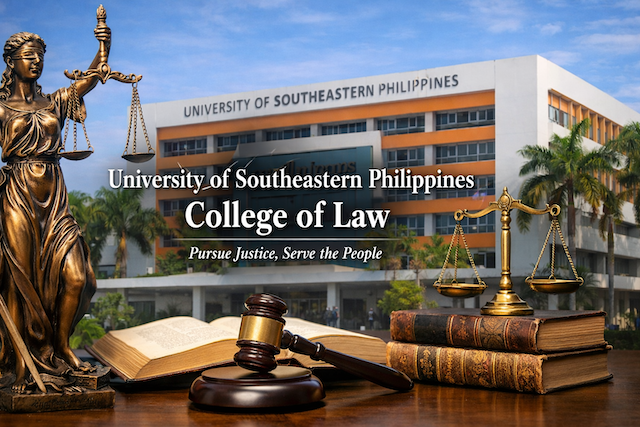
University of Southeastern Philippines College of Law: Complete Guide for Prospective Students
Contents
- University of Southeastern Philippines College of Law: Complete Guide for Prospective Students
- Introduction
- Overview of University of Southeastern Philippines
- About the College of Law
- Juris Doctor Program
- Admission Requirements
- Tuition and Fees
- Faculty and Teaching Approach
- Campus Life and Learning Environment
- Bar Exam Preparation
- Career Opportunities
- Advantages of Studying at USeP College of Law
- Challenges to Consider
- Who Should Apply?
- Application Tips
- Conclusion
- FAQs (Frequently Asked Questions)
- What is the University of Southeastern Philippines College of Law known for?
- What degree does the college offer?
- How long does it usually take to complete the Juris Doctor program?
- Is the University of Southeastern Philippines College of Law a good option for students in Mindanao?
- What are the basic admission requirements?
- Is it difficult to get into the college?
- How much is the tuition at the University of Southeastern Philippines College of Law?
- Can working students study at the college?
- What kind of careers can graduates pursue after finishing law school?
- Why should prospective students consider this college?
University of Southeastern Philippines College of Law: Complete Guide for Prospective Students
Introduction
The University of Southeastern Philippines (USeP) College of Law is one of the emerging institutions for legal education in Mindanao. Located in Davao City, USeP is a respected public university known for its commitment to academic excellence, accessibility, and nation-building. Its College of Law reflects these values by offering a rigorous yet practical legal education designed to produce competent, ethical, and socially responsible lawyers.
For students who are considering pursuing a Juris Doctor (JD) degree in the Philippines—particularly in Mindanao—USeP College of Law presents a compelling option. This guide will walk you through everything you need to know, including programs, admission requirements, tuition, campus life, and career prospects.
Overview of University of Southeastern Philippines
Established in 1978, the University of Southeastern Philippines is a state university with multiple campuses across the Davao Region. It has built a reputation for offering quality education in fields such as engineering, business, education, and agriculture.
As a public institution, USeP is committed to making higher education more accessible. This is especially important in legal education, where private law schools can often be financially out of reach for many students. The College of Law is part of this mission, providing a more affordable path to becoming a lawyer without compromising academic standards.
About the College of Law
The USeP College of Law was established to address the growing demand for legal professionals in Mindanao. It aims to develop lawyers who are not only skilled in legal theory but also deeply aware of social realities and committed to public service.
The college emphasizes:
-
Strong foundational knowledge of Philippine law
-
Critical thinking and legal analysis
-
Ethical responsibility and integrity
-
Community engagement and public service
Being located in Davao City, students are exposed to real-world legal issues relevant to the region, including land disputes, business law, environmental concerns, and local governance.
Juris Doctor Program
Program Structure
The primary program offered by USeP College of Law is the Juris Doctor (JD), which typically takes four years to complete. The curriculum follows the standards set by the Legal Education Board (LEB) and prepares students for the Philippine Bar Examination.
The program includes:
-
Core law subjects (e.g., Civil Law, Criminal Law, Political Law)
-
Procedural law (e.g., Remedial Law)
-
Legal writing and research
-
Clinical legal education (CLE)
-
Elective subjects for specialization
Curriculum Highlights
Students will encounter a comprehensive curriculum designed to build both theoretical knowledge and practical skills:
First Year
-
Introduction to Law
-
Persons and Family Relations
-
Constitutional Law I
-
Criminal Law I
-
Legal Writing
Second Year
-
Obligations and Contracts
-
Constitutional Law II
-
Criminal Law II
-
Property Law
Third Year
-
Commercial Law
-
Evidence
-
Taxation Law
-
Administrative Law
Fourth Year
-
Remedial Law Review
-
Legal Ethics
-
Practice Court
-
Clinical Legal Education (CLE)
The inclusion of CLE ensures that students gain hands-on experience through legal aid work, court simulations, and real client interactions.
Admission Requirements
Admission to USeP College of Law is competitive but accessible compared to many private institutions. Applicants must meet both academic and character requirements.
Basic Requirements
-
Bachelor’s degree from a recognized institution
-
Transcript of Records (TOR)
-
Certificate of Good Moral Character
-
Birth certificate (PSA-issued)
Entrance Process
Applicants typically go through:
-
Entrance Examination – Tests analytical reasoning, reading comprehension, and basic legal aptitude
-
Interview – Assesses motivation, communication skills, and readiness for law school
-
Evaluation of Academic Records
Some applicants may also be required to submit additional documents depending on their academic background.
Tuition and Fees
One of the biggest advantages of studying at USeP College of Law is affordability.
Estimated Costs
-
Tuition: Significantly lower than private law schools
-
Miscellaneous fees: Minimal compared to urban private universities
Because USeP is a public university, it may also fall under government subsidy programs such as the Universal Access to Quality Tertiary Education Act (RA 10931), which can reduce or eliminate tuition fees for qualified students.
Financial Assistance
Students may also apply for:
-
Government scholarships
-
Academic grants
-
Student assistantship programs
This makes USeP an excellent option for students who want quality legal education without heavy financial burden.
Faculty and Teaching Approach
The faculty at USeP College of Law consists of experienced legal practitioners, judges, and academics. Many professors actively practice law, bringing real-world insights into the classroom.
Teaching Style
-
Socratic method (question-and-answer format)
-
Case-based discussions
-
Legal writing exercises
-
Mock trials and simulations
This approach trains students to think critically, argue effectively, and apply legal principles in real scenarios.
Campus Life and Learning Environment
Location Advantage
USeP is located in Davao City, one of the most progressive and livable cities in the Philippines. Students benefit from:
-
A relatively low cost of living
-
Safe and clean environment
-
Access to courts, law firms, and government offices
Student Community
Law school is demanding, but USeP fosters a supportive academic environment. Students often form study groups, participate in organizations, and engage in community outreach programs.
Facilities
-
Law library with updated legal resources
-
Classrooms equipped for discussions and presentations
-
Moot court and practice court facilities
While facilities may not be as luxurious as private institutions, they are functional and conducive to learning.
Bar Exam Preparation
Passing the Philippine Bar Examination is the ultimate goal of any law student. USeP College of Law integrates bar preparation into its curriculum.
Preparation Strategies
-
Review subjects in the final year
-
Mock bar exams
-
Faculty mentoring
-
Access to review materials
The emphasis on fundamentals and practical application helps students build a strong foundation for the bar exam.
Career Opportunities
Graduates of USeP College of Law have a wide range of career paths available to them.
Common Career Paths
-
Private law practice
-
Government service (e.g., prosecutor, public attorney)
-
Corporate legal counsel
-
Judiciary (after gaining experience)
-
Academia
Public Service Focus
Given its mission, many graduates pursue careers in public service, contributing to legal aid, governance, and community development in Mindanao.
Advantages of Studying at USeP College of Law
Affordability
One of the most affordable law schools in the region, making legal education accessible to more students.
Public Service Orientation
Strong emphasis on producing lawyers who serve society, not just private interests.
Regional Relevance
Curriculum and exposure tailored to real legal issues in Mindanao.
Supportive Environment
Collaborative student culture and approachable faculty.
Challenges to Consider
Limited Resources
Compared to top-tier private law schools, facilities and resources may be more modest.
Competitive Bar Preparation
Students may need to supplement their studies with external review programs.
Academic Rigor
Like any law school, the program is demanding and requires strong discipline and time management.
Who Should Apply?
USeP College of Law is ideal for:
-
Students seeking affordable legal education
-
Individuals committed to public service
-
Those planning to practice law in Mindanao
-
Working students looking for accessible programs
If you are motivated, disciplined, and passionate about law, USeP can provide a solid foundation for your legal career.
Application Tips
To improve your chances of admission:
-
Prepare thoroughly for the entrance exam
-
Demonstrate clear motivation during the interview
-
Maintain strong academic records
-
Show commitment to legal and social issues
Conclusion
The University of Southeastern Philippines College of Law offers a valuable opportunity for aspiring lawyers, particularly those in Mindanao. With its affordable tuition, strong academic foundation, and commitment to public service, it stands as a practical and meaningful choice for legal education.
While it may not have the prestige or resources of elite private institutions, USeP provides what truly matters: a solid legal education, real-world exposure, and the opportunity to make a difference in society.
For students who are determined to become lawyers and contribute to nation-building, USeP College of Law is a path worth considering.
FAQs (Frequently Asked Questions)
What is the University of Southeastern Philippines College of Law known for?
The University of Southeastern Philippines College of Law is known for offering a more accessible and affordable legal education in Mindanao. As part of a public university, it aims to provide quality instruction to students who want to pursue law without the high tuition costs often associated with private law schools. It is also recognized for its public-service orientation, which encourages students to use legal education not only for personal advancement but also for community development, justice, and nation-building. For many aspiring lawyers in Davao and nearby areas, it represents a practical and meaningful option.
What degree does the college offer?
The college primarily offers the Juris Doctor program, which is the standard professional law degree in the Philippines. This program is designed to prepare students for the Philippine Bar Examination and for careers in legal practice, government service, business, and other law-related fields. The Juris Doctor curriculum generally combines theoretical study with practical legal training. Students are expected to develop legal reasoning, research skills, oral advocacy, and a strong understanding of major fields of Philippine law such as civil law, criminal law, political law, labor law, taxation, and remedial law.
How long does it usually take to complete the Juris Doctor program?
In most cases, the Juris Doctor program takes four years to complete. This assumes that the student follows the standard academic load and successfully passes the required subjects each semester. However, the actual duration may vary depending on the student’s circumstances. Working students, for example, may need a lighter load, which can extend the total number of years needed to finish the degree. Law school is academically demanding, so students should be prepared for a long-term commitment that requires discipline, time management, and sustained effort from the first year until graduation.
Is the University of Southeastern Philippines College of Law a good option for students in Mindanao?
Yes, it can be a very good option for students in Mindanao, especially for those who want to study law in a public university setting. Its location in Davao City makes it accessible to students from different parts of the region, and its overall cost is usually more manageable than many private alternatives. It is especially appealing to students who want to stay closer to home, reduce living expenses, and build their future legal careers in Mindanao. The college also gives students exposure to legal and social issues that are particularly relevant to the region, which can be an advantage later in practice.
What are the basic admission requirements?
Applicants usually need to submit a bachelor’s degree credential from a recognized institution, along with academic records such as the Transcript of Records. They may also be required to present a certificate of good moral character, a birth certificate, identification documents, and other school-specific forms. In addition to documentary requirements, applicants commonly go through an entrance examination and an interview. These steps help the college assess whether the applicant has the academic readiness, communication skills, and motivation needed for legal education. Since requirements may change, applicants should always confirm the latest details directly with the university.
Is it difficult to get into the college?
Admission can be competitive, but it is generally viewed as more accessible than some highly selective private law schools. That said, applicants should not underestimate the process. Law school admissions are meant to screen for students who can handle demanding reading loads, legal analysis, and long-term academic pressure. A strong undergraduate record, good performance on any required entrance examination, and a clear reason for wanting to study law can improve an applicant’s chances. The interview may also matter, especially in showing seriousness, maturity, and a realistic understanding of what legal education requires.
How much is the tuition at the University of Southeastern Philippines College of Law?
One of the main reasons students consider USeP College of Law is affordability. Because it is part of a state university, tuition and school fees are generally much lower than those in many private law schools. The exact amount may vary by academic year, subject load, and applicable government policies. Some students may also benefit from subsidy programs or other forms of financial support, depending on eligibility. Even so, students should still prepare for other expenses beyond tuition, such as books, case materials, transportation, food, and personal study needs throughout law school.
Can working students study at the college?
Many law schools in the Philippines attract working students, and public institutions are often especially appealing to them because of affordability and accessibility. Whether a student can realistically balance work and law school depends on class schedules, commute time, job demands, and personal discipline. Law school requires extensive reading, class preparation, and exam review, so working students need a clear time-management strategy. While it is possible, it is not easy. Students considering this path should be honest about their capacity and prepare for sacrifices in their routine, free time, and overall lifestyle during their years in law school.
What kind of careers can graduates pursue after finishing law school?
Graduates who complete the Juris Doctor degree and eventually pass the Bar Examination can pursue a wide range of careers. They may enter private legal practice, work in law firms, or become solo practitioners. Others may choose government service as prosecutors, public attorneys, legal officers, or staff in various agencies. Some graduates move into corporate work as in-house counsel or compliance specialists. Legal training can also be useful in politics, public administration, education, and policy work. For students who value service, the college’s orientation toward community and public interest can also encourage careers focused on access to justice and social impact.
Why should prospective students consider this college?
Prospective students should consider the University of Southeastern Philippines College of Law if they want a legal education that is affordable, regionally relevant, and grounded in public service values. It can be especially suitable for students in Davao and the broader Mindanao area who want to build their legal careers locally. While it may not always have the same visibility as older or more elite private law schools, it offers a serious academic path toward becoming a lawyer. For students who are committed, practical, and motivated by both professional growth and social responsibility, it can be a strong and worthwhile choice.

How to Register for eTravel Philippines (2025 Guide)
Step-by-step guide to completing your eTravel registration before arriving in the Philippines, with images and tips.

Night Market in Cebu – Things You Don’t Know About Cebu Life
Discover the hidden charm of Cebu’s night markets, from street food stalls to local life tips you won’t find in tourist guides.

How to Use ChatGPT for IELTS Preparation: A Complete Guide
Learn how to prepare for IELTS using ChatGPT — including strategies for Writing, Reading, Listening, Speaking, and grammar support.

How to Build a Website Without Coding Using ChatGPT
Discover how to build your own website using AI—no coding skills needed. From structure planning to SEO and design, let ChatGPT guide you.