2025年12月23日
3D ACADEMY offers affordable English study programs in Cebu, Philippines – perfect for beginners, professionals, and exam takers.

3D UNIVERSAL ENGLISH INSTITUTE INC
info.3d-universal.com
8:00-17:00(Mon-Fri)
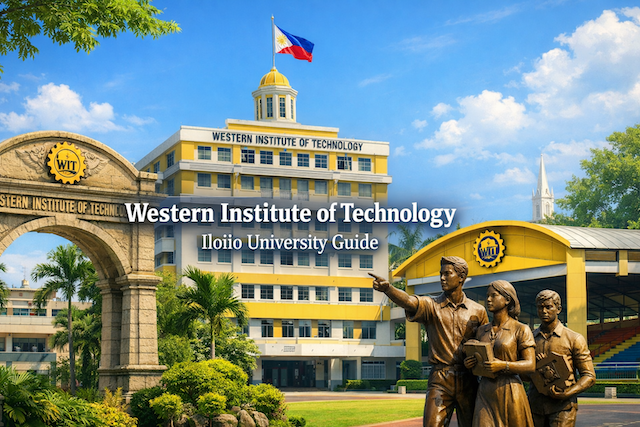
Western Institute of Technology (WIT): Iloilo University Guide
Contents
- Western Institute of Technology (WIT): Iloilo University Guide
- Overview of Western Institute of Technology
- Location and Campus Environment
- History and Institutional Background
- Academic Philosophy and Learning Approach
- Academic Programs and Fields of Study
- Admissions and Enrollment Process
- Tuition, Fees, and Financial Planning
- Scholarships and Discounts
- Facilities and Learning Resources
- Student Life and Campus Culture
- Housing and Living Arrangements
- Transportation and Daily Commute
- Career Preparation and Employability
- Challenges and Realistic Expectations
- Who Should Consider Western Institute of Technology
- Final Thoughts
- FAQs (Frequently Asked Questions)
- What is Western Institute of Technology (WIT) known for?
- Where is WIT located, and is the area convenient for students?
- Is WIT a good choice for students who want an “industry-ready” education?
- What kind of student tends to succeed at WIT?
- What challenges should new students prepare for?
- How do admissions usually work, and what documents should I prepare?
- Can transferees or shifters graduate on time?
- How should I budget for studying at WIT?
- Are there scholarships or discounts available?
- What should I do during my first semester to set myself up for success?
Western Institute of Technology (WIT): Iloilo University Guide
Overview of Western Institute of Technology
Western Institute of Technology (WIT) is a private higher education institution located in Iloilo City, Philippines. It is best known for offering practical, skills-oriented programs that are closely aligned with industry needs, particularly in engineering and other technical fields. Many students choose WIT not because of prestige branding, but because of its clear focus on employability, applied learning, and structured academic pathways.
WIT attracts students who prefer learning by doing rather than relying purely on lectures and theory. From early semesters, students are expected to engage in projects, laboratory work, and performance-based assessments. This makes WIT especially appealing to students who already have a specific career goal in mind and want an education that prepares them directly for professional work.
Location and Campus Environment
WIT is located in La Paz, Iloilo City, an urban district known for accessibility and everyday convenience. Being in a city-based location means students are close to public transportation routes, food establishments, boarding houses, and essential services. This setup is practical for students who want to minimize long commutes and focus more on their studies.
The campus itself is functional rather than resort-style. Buildings, classrooms, and facilities are designed primarily for instruction and training. For many students, this environment helps reduce distractions and keeps academic priorities clear. Campus life blends naturally with city life, and students often manage errands, meals, and commuting efficiently between classes.
History and Institutional Background
Western Institute of Technology developed from earlier educational institutions in Iloilo and evolved with a strong emphasis on technical and professional education. Over time, it positioned itself as a school that responds to workforce demands, particularly in engineering and applied sciences.
This historical focus continues to influence how programs are structured today. Rather than centering on abstract academic research, WIT emphasizes competency, discipline, and readiness for employment. The institution’s identity is shaped by the goal of producing graduates who can function effectively in real-world work environments immediately after graduation.
Academic Philosophy and Learning Approach
WIT follows a practical and outcome-driven academic philosophy. Courses are designed to build concrete skills, not just academic knowledge. Students are frequently evaluated through projects, lab exercises, technical outputs, and applied problem-solving tasks.
This approach requires consistency and responsibility from students. Attendance, participation, and timely submission of requirements matter. For students who enjoy hands-on work and structured expectations, this learning environment can be highly effective. However, it also means that students must be prepared to manage their time carefully and stay organized throughout the semester.
Academic Programs and Fields of Study
Western Institute of Technology offers a range of undergraduate and graduate programs, with particular strength in engineering and technology-related disciplines. These programs typically include a strong foundation in mathematics, science, and technical subjects, followed by advanced coursework that focuses on application and professional practice.
When choosing a program at WIT, students are encouraged to think in terms of career outcomes rather than general interest alone. Many programs are designed to align with specific industries or professions, making it important to understand the type of work graduates commonly pursue after completion.
Students who are uncertain about their long-term goals may need to spend extra time evaluating program requirements, subject sequences, and potential career paths before enrolling.
Admissions and Enrollment Process
Admissions at WIT generally follow standard procedures for private higher education institutions in the Philippines. Applicants are required to submit academic records, identification documents, and other basic requirements set by the registrar.
Enrollment periods can become busy, especially close to the start of a semester. Applying early helps reduce delays and allows students more flexibility in class scheduling. Transferees and shifters should be especially proactive, as subject crediting and prerequisite evaluation can affect how quickly they progress in their chosen program.
For students transferring from another institution, it is important to understand that not all completed subjects may be credited, particularly if the curriculum structure differs significantly.
Tuition, Fees, and Financial Planning
Tuition and fees at WIT vary depending on the program, year level, and number of units taken per semester. Like many private institutions, costs are not limited to tuition alone. Students should also account for miscellaneous fees, laboratory fees, and other academic-related expenses.
Beyond school fees, students should plan for daily living costs such as transportation, food, internet access, and academic supplies. Technical programs may involve additional expenses for printing, project materials, and tools. Creating a realistic monthly budget helps students avoid financial stress during the semester.
Some students manage costs by living close to campus, sharing accommodations, or planning meals carefully to reduce daily expenses.
Scholarships and Discounts
WIT offers scholarships, grants, and tuition discounts under specific conditions. These may include academic merit-based assistance or discounts for early or full payment of tuition. Availability and requirements can change from year to year, so students are advised to confirm details during enrollment.
Students interested in scholarships should prepare required documents early and maintain good academic standing. Even partial discounts can significantly reduce overall expenses across multiple semesters.
Facilities and Learning Resources
Facilities at WIT are designed to support applied learning. Classrooms, laboratories, and technical spaces are integral parts of the academic experience, especially for students in engineering and technology programs. Access to proper facilities plays a major role in how effectively students develop skills.
Students should take full advantage of laboratory sessions, practice opportunities, and faculty guidance. The quality of learning often depends on how actively students engage with available resources rather than simply attending classes.
Student Life and Campus Culture
Student life at WIT tends to be focused and goal-oriented. Many students balance academics with part-time work, family responsibilities, or long-term career planning. While extracurricular activities and student organizations exist, the overall campus culture emphasizes discipline and academic responsibility.
Joining organizations related to one’s field of study can be beneficial. These groups provide opportunities for leadership, teamwork, and exposure to seminars or competitions. Even limited involvement can help students build confidence and professional networks.
Housing and Living Arrangements
Because WIT is located in an urban district, students have access to various housing options, including boarding houses, dormitories, and shared apartments. Many students choose accommodations within walking or short commuting distance to reduce transportation costs and save time.
When selecting housing, students should prioritize safety, cleanliness, reliable utilities, and a study-friendly environment. Noise levels and house rules can greatly affect academic performance, especially during exam periods.
Transportation and Daily Commute
Transportation in Iloilo City is generally manageable for students. Public transport options are widely used, but commute time can vary depending on distance and weather conditions. Students are encouraged to test their daily commute before classes begin to identify potential issues.
Having a predictable commute helps students arrive on time and reduces daily stress. Some students also budget for occasional alternative transport during heavy rain or emergencies.
Career Preparation and Employability
One of WIT’s strengths is its focus on preparing students for employment. However, employability depends not only on the curriculum but also on how students approach their education. Internships, practicum experiences, and project work should be treated as opportunities to demonstrate professionalism and competence.
Students are encouraged to document their work, maintain portfolios, and build relationships with instructors and classmates. These efforts can significantly improve job prospects after graduation.
Challenges and Realistic Expectations
Like any institution, WIT presents challenges. The workload in technical programs can be demanding, and students who fall behind may struggle to catch up. Time management, self-discipline, and consistency are essential.
Students who expect a relaxed or purely theoretical academic experience may find WIT’s approach challenging. However, those who are prepared to engage actively and meet expectations often develop strong practical skills by the time they graduate.
Who Should Consider Western Institute of Technology
WIT is well suited for students who:
-
Prefer hands-on, applied learning
-
Have clear career goals in technical or professional fields
-
Are willing to follow structured academic requirements
-
Value practical skills over purely theoretical study
Students who prefer highly research-oriented or flexible academic environments may need to consider whether WIT aligns with their learning style.
Final Thoughts
Western Institute of Technology offers a practical and career-focused educational pathway in Iloilo City. Its strength lies in applied instruction, structured programs, and a learning environment that emphasizes responsibility and skill development.
For students who are serious about preparing for professional work and are willing to commit to consistent effort, WIT can be a solid choice. The key to success is planning ahead, managing time and finances carefully, and fully engaging with the learning opportunities the institution provides.
FAQs (Frequently Asked Questions)
What is Western Institute of Technology (WIT) known for?
Western Institute of Technology (WIT) in Iloilo City is widely recognized for its practical, career-oriented approach, especially in technology-focused and engineering-related programs. Many students choose WIT because the learning style is strongly applied: you are expected to develop real skills through projects, laboratory work, and performance-based requirements rather than relying only on theory. For students who prefer hands-on learning, WIT can feel like a good match because your progress is often measured by outputs—designs, problem sets, reports, or lab results—similar to how you will be evaluated in the workplace.
Where is WIT located, and is the area convenient for students?
WIT is located in La Paz, Iloilo City, along Luna Street. La Paz is generally considered a practical district for students because it has common transport routes and everyday services nearby. Convenience depends on your housing location and schedule, but many students find it manageable to commute from nearby areas. If you want to reduce stress during the semester, it is smart to do a “test commute” before classes start, check walking routes during daylight and evening hours, and budget for rainy-day transportation when travel tends to slow down.
Is WIT a good choice for students who want an “industry-ready” education?
It can be, especially if you take advantage of every requirement that builds employable skills. “Industry-ready” is not only about the school; it’s about how you use the school. Students who treat projects seriously, document their outputs, and seek internships early usually graduate with stronger portfolios and better confidence. If your program includes laboratory work, shop practice, software training, or practicum, those are the parts that often translate most directly into job readiness. The key is to avoid doing the minimum—use requirements to build proof of competence.
What kind of student tends to succeed at WIT?
Students who succeed at WIT are usually consistent and practical. They show up, follow instructions, meet deadlines, and improve steadily. In applied programs, discipline matters because missing a lab session or delaying a project can create a chain reaction: you fall behind on skills, you rush outputs, and your confidence drops. If you are someone who learns by doing and you’re willing to practice repeatedly (especially in math, drafting, design, or technical problem-solving), you’ll likely find WIT’s environment supportive of that mindset.
What challenges should new students prepare for?
The most common challenge is adjusting to the pace and requirements, especially in technical majors where workload is not only reading and exams but also deliverables—projects, lab reports, and group tasks. Another challenge is budgeting for course-related expenses such as printing, materials, or minor project costs that appear throughout the term. Time management is also critical: technical courses often stack requirements across multiple subjects, so you need a weekly system (planner, checklist, or calendar) to avoid last-minute overload.
How do admissions usually work, and what documents should I prepare?
Admissions processes can vary depending on program and intake period, but you should generally prepare standard school records (such as transcripts or report cards), valid identification, and common personal documents requested by the registrar. If you are applying as a transferee, you should also prepare course descriptions or proof of completed subjects, because crediting depends on equivalencies and prerequisites. A practical approach is to assemble a complete folder early and apply ahead of peak enrollment weeks, when offices are busiest and processing can slow down.
Can transferees or shifters graduate on time?
It depends on how many subjects can be credited and whether your new program has prerequisite “sequence” subjects. In many programs, especially technical ones, some subjects must be taken in order (for example, foundational math or major courses that unlock higher-level classes). If you transfer late or shift after completing many unrelated subjects, graduation may be delayed. To protect your timeline, ask early about credited units, subject mapping, and the earliest semester you can enter major subjects. Planning your schedule with an adviser can prevent costly missteps.
How should I budget for studying at WIT?
Think beyond tuition. A realistic student budget includes daily transportation, meals, internet or data, school supplies, and recurring academic expenses like printing and project requirements. If your course is lab-heavy, set aside a monthly “course materials” fund so small costs do not disrupt you. It also helps to keep a small emergency buffer for unexpected needs such as extra photocopies, replacement materials, medical costs, or commuting alternatives during heavy rain. Budgeting reduces stress and makes your study routine more stable.
Are there scholarships or discounts available?
WIT has published scholarship and grant information, including a tuition discount for students who pay in full within a specified period. Availability and conditions can change, so you should confirm the current rules directly with the school during your application or enrollment period. If you are aiming for any scholarship or discount, apply early, keep copies of requirements, and clarify whether the benefit applies to your program, your unit load, or only certain terms. Even smaller discounts can be meaningful over multiple semesters.
What should I do during my first semester to set myself up for success?
Start with systems. Create a weekly schedule that includes study blocks for difficult subjects, project time, and rest. Treat lab and project requirements as ongoing work rather than “end-of-term tasks.” If you are in an applied program, begin building a simple portfolio from day one: save reports, take photos of outputs, keep digital files, and write short notes about what you learned. Also, build relationships—find classmates who are serious about studying and don’t be afraid to consult instructors during office hours. Early consistency is often the difference between a smooth year and a stressful one.
Iloilo University Guide: Best Schools, Admissions, Tuition Fees, and Student Life
Iloilo Universities & Colleges — Complete List (City & Province)

How to Register for eTravel Philippines (2025 Guide)
Step-by-step guide to completing your eTravel registration before arriving in the Philippines, with images and tips.

Night Market in Cebu – Things You Don’t Know About Cebu Life
Discover the hidden charm of Cebu’s night markets, from street food stalls to local life tips you won’t find in tourist guides.

How to Use ChatGPT for IELTS Preparation: A Complete Guide
Learn how to prepare for IELTS using ChatGPT — including strategies for Writing, Reading, Listening, Speaking, and grammar support.

How to Build a Website Without Coding Using ChatGPT
Discover how to build your own website using AI—no coding skills needed. From structure planning to SEO and design, let ChatGPT guide you.