2026年1月12日
3D ACADEMY offers affordable English study programs in Cebu, Philippines – perfect for beginners, professionals, and exam takers.

3D UNIVERSAL ENGLISH INSTITUTE INC
info.3d-universal.com
8:00-17:00(Mon-Fri)
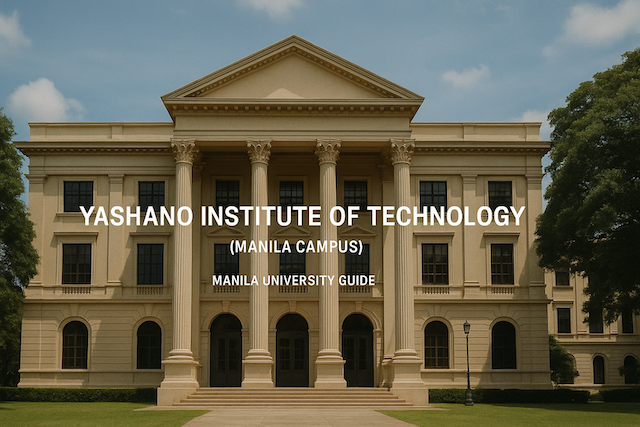
Yashano Institute of Technology (Manila Campus): Manila University Guide
Contents
- Yashano Institute of Technology (Manila Campus): Manila University Guide
- Overview of Yashano Institute of Technology
- Location and Campus Environment
- Academic Programs Offered
- Admission Requirements and Process
- Tuition Fees and Payment Options
- Facilities and Student Resources
- Student Life and Campus Culture
- Career Opportunities and Industry Linkages
- Why Choose Yashano Institute of Technology Manila Campus?
- FAQs (Frequently Asked Questions)
- What type of institution is Yashano Institute of Technology (Manila Campus)?
- Is Yashano Institute of Technology (Manila Campus) suitable for first-time college students?
- What kinds of programs and courses are usually offered?
- How does the admission process generally work?
- Are tuition fees affordable for most students?
- Does the school offer scholarships or financial assistance?
- Is it possible to work while studying at Yashano Institute of Technology?
- What is the teaching and learning environment like on campus?
- Does Yashano Institute of Technology provide OJT or internship opportunities?
- What kind of jobs can graduates expect after completing their program?
- How can prospective students get the most accurate and updated information?
Yashano Institute of Technology (Manila Campus): Manila University Guide
Overview of Yashano Institute of Technology
Yashano Institute of Technology (YIT) Manila Campus is a private technical–vocational and higher education institution known for offering practical, job-focused programs tailored to the needs of Manila’s fast-growing industries. With a strong emphasis on technology, business, and hands-on training, the school attracts students who want an affordable yet skill-oriented education that leads directly to employment.
The Manila campus is part of the wider Yashano Education System, whose mission is to provide accessible and industry-aligned programs for Filipino youth. YIT has established itself as a provider of TESDA-accredited courses, diploma programs, and selected baccalaureate degrees that integrate technical competency with workplace readiness. Because of its focus on employability, many students choose YIT as a stepping stone toward careers in IT, business process outsourcing (BPO), engineering-related fields, and service-oriented industries.
For students seeking a school with strong practical training, flexible schedules, and affordable tuition fees, the Yashano Institute of Technology Manila Campus offers a compelling option within Metro Manila.
Location and Campus Environment
The Manila Campus of Yashano Institute of Technology is located in a highly accessible area surrounded by commercial establishments, public transportation routes, and student-friendly amenities. The school’s location makes it convenient for daily commuters coming from various parts of Manila and nearby cities.
The campus environment is designed to support technical and vocational training, featuring computer laboratories, skills training rooms, and lecture halls. While not as large as a traditional university campus, YIT focuses on providing functional and well-equipped learning spaces suited for skills-based education.
Nearby, students can easily find affordable dormitories, eateries, convenience stores, and study areas. The urban setting also offers access to internship opportunities, especially in retail, BPO companies, small businesses, service providers, and government offices.
Academic Programs Offered
Yashano Institute of Technology Manila Campus provides a mix of TESDA programs, technical-vocational certifications, diploma courses, and selected college degrees. These programs are crafted to equip students with in-demand skills and practical competencies.
TESDA-Accredited Courses
The school is known for offering TESDA programs that prepare students for immediate employment. These may include:
-
Computer Systems Servicing NC II
-
Information and Communications Technology (ICT) courses
-
Bookkeeping NC III
-
Contact Center Services NC II
-
Visual Graphic Design NC III
-
Office Management NC II
TESDA courses usually include hands-on laboratory work, competency-based assessments, and certification exams that help students become job-ready.
Diploma Programs
YIT also offers diploma-level programs designed for students who want more extensive training than short courses. These programs generally run for one to two years and combine classroom instruction with practical exercises.
Examples include:
-
Diploma in Information Technology
-
Diploma in Business Office Administration
-
Diploma in Computer Electronics Technology
-
Diploma in Hospitality Services
Baccalaureate Degree Programs
Some YIT campuses also offer selected college degrees, though availability may vary by branch. Common programs include:
-
Bachelor of Science in Information Technology (BSIT)
-
Bachelor of Science in Business Administration (BSBA)
These programs prepare students for professional-level roles and often include OJT, capstone projects, and industry partnerships.
Admission Requirements and Process
Yashano Institute of Technology maintains a straightforward and accessible admission process designed to accommodate both first-time college students and working learners.
Basic Requirements
Applicants typically need to submit:
-
Form 138 / Senior High School Report Card
-
PSA Birth Certificate
-
2×2 or passport-size photos
-
Good Moral Certificate
-
ALS Certificate (if applicable)
For TESDA courses, some requirements may differ, especially for short-course enrollees.
Enrollment Steps
-
Visit the Admissions Office – Submit the necessary documents and fill out an application form.
-
Program Counseling – Admissions staff help students choose a course that aligns with their goals.
-
Assessment or Screening – Some programs may require an initial evaluation or orientation.
-
Payment of Fees – Settle the initial down payment.
-
Attend Orientation – Students receive course guidelines, schedules, and school policies.
Because YIT caters to diverse learners, the school often offers flexible enrollment dates and multiple intake periods throughout the year.
Tuition Fees and Payment Options
One of the strongest advantages of studying at YIT Manila Campus is its affordability. Tuition fees vary depending on the course and program length, but they are generally lower compared to larger private universities. TESDA courses may also come with scholarship opportunities or government financial assistance.
Scholarship Options
Students may apply for:
-
TESDA Scholarship Grants (TWSP, STEP, PESFA)
-
Institutional scholarships for qualified applicants
-
Discounts for working students
-
Payment installment schemes
These financial options make YIT accessible to students from various backgrounds.
Facilities and Student Resources
Although modest in size, the campus provides essential facilities that support technical and practical learning:
Computer and IT Laboratories
Equipped with updated software and hardware, these labs allow students to practice computer servicing, programming, and ICT tasks.
Skills Training Rooms
For vocational courses like animation, hospitality services, and electronics, YIT maintains specialized spaces for hands-on learning.
Library and Study Areas
The campus library provides reference materials, textbooks, and digital resources. Quiet study corners are also available for group or individual work.
Student Services
-
Career and job placement assistance
-
Academic advising
-
Student affairs office
-
Extracurricular clubs and activities
These services help students develop holistically, not just academically.
Student Life and Campus Culture
The campus culture at YIT Manila is often described as practical, supportive, and community-oriented. Many students balance part-time work while studying, making it a diverse environment with various backgrounds and age groups.
YIT promotes discipline, respect, and professionalism, values that align with the school’s goal of preparing students for the workforce. Activities such as seminars, competitions, recognition day ceremonies, and community outreach programs contribute to a fulfilling student life.
Because the school prioritizes training for employability, students often participate in OJT, skills assessments, and real-world simulations. This focus creates a learning environment where students can immediately apply what they learn in actual work settings.
Career Opportunities and Industry Linkages
Graduates of Yashano Institute of Technology Manila Campus have strong prospects for employment in industries that require technical competency and hands-on skills.
Common Career Paths
-
IT support technician
-
Service desk representative
-
Customer service agent (BPO)
-
Office clerk / administrative assistant
-
Graphics designer
-
Hospitality assistant
-
Electronics technician
-
Bookkeeper or accounting assistant
TESDA certifications also enable students to work abroad, particularly in countries that recognize NC-level competencies.
OJT and Internship Programs
YIT partners with:
-
Local businesses
-
BPO companies
-
Tech service centers
-
Hotels and hospitality groups
-
SMEs and retail companies
These partnerships improve students’ exposure to real-world work environments.
Why Choose Yashano Institute of Technology Manila Campus?
Students choose YIT for several reasons:
-
Affordable tuition and flexible payment plans
-
TESDA-aligned, industry-focused programs
-
Hands-on training with modern equipment
-
Convenient urban location
-
Supportive student services and job placement assistance
-
Fast-track vocational options for immediate employment
For learners who value practical skills and career-oriented training, YIT Manila Campus delivers strong benefits at an accessible cost.
FAQs (Frequently Asked Questions)
What type of institution is Yashano Institute of Technology (Manila Campus)?
Yashano Institute of Technology (Manila Campus) is a private technical–vocational and higher education institution that focuses on practical, skills-based learning. It offers TESDA-accredited programs, diploma courses, and selected college degrees that prepare students for real workplace scenarios. Instead of emphasizing purely theoretical subjects, the school prioritizes hands-on training, industry-relevant competencies, and job readiness. This makes it a suitable choice for students who want an affordable, career-oriented education that connects directly to employment opportunities in Metro Manila and beyond.
Is Yashano Institute of Technology (Manila Campus) suitable for first-time college students?
Yes. The Manila campus is designed to be accessible to first-time college students, senior high school graduates, and ALS passers who want to begin their higher education journey in a supportive, skills-focused environment. The admission process is generally straightforward, and the staff often assist applicants with course selection, document completion, and orientation. Because programs are built around employable skills, first-time college students can gradually build confidence through structured lessons, lab activities, and guided practice rather than being overwhelmed by purely academic requirements.
What kinds of programs and courses are usually offered?
Yashano Institute of Technology typically offers a mix of TESDA qualifications, diploma programs, and selected baccalaureate courses. Common specializations include Information Technology, office administration, business-related programs, computer systems servicing, and other technical–vocational fields. Many courses are designed to match the needs of industries such as IT support, business process outsourcing (BPO), retail, hospitality, and office-based services. Program availability may change over time, so prospective students are encouraged to contact the Manila campus directly or visit its official channels for the most accurate and updated course list.
How does the admission process generally work?
The admission process usually starts with visiting the campus or contacting the admissions office to inquire about available programs and requirements. Applicants prepare basic documents such as their senior high school report card or equivalent credential, birth certificate, ID photos, and a certificate of good moral character. After submitting documents, students may receive course counselling, fill out forms, and proceed to assessment or orientation. Once accepted, they settle the initial fees and receive their schedules. Exact steps can vary slightly by term or program, so it is always best to confirm with the school before applying.
Are tuition fees affordable for most students?
Tuition fees at Yashano Institute of Technology (Manila Campus) are generally designed to be more affordable than those of large private universities, especially for technical–vocational and diploma programs. The school often structures its fees to remain accessible to students from a wide range of backgrounds. However, the total cost still depends on the specific course, number of units, and length of study. Because tuition rates can change over time, students should always request an official assessment or quotation from the cashier or admissions office rather than relying on unofficial information from third parties or social media.
Does the school offer scholarships or financial assistance?
In many cases, students may have access to different forms of financial support such as TESDA scholarship programs, government grants (when available), or institutional discounts, particularly for deserving or low-income students. Some campuses may also provide flexible payment schemes that allow installment payments within the semester. The availability of scholarships and assistance can change depending on government policies, funding, and school initiatives, so interested applicants should inquire directly with the registrar, scholarship office, or guidance office for the latest details and application procedures.
Is it possible to work while studying at Yashano Institute of Technology?
Many students at technical–vocational and diploma institutions work part-time while studying, and Yashano Institute of Technology is generally aware of this reality. Class schedules for some programs may be arranged in ways that make it easier for working learners to attend, such as afternoon or evening sessions. However, the feasibility of balancing work and study depends on the course load, job type, and the student’s personal time management. Before enrolling, it is a good idea to discuss your situation with the school so they can recommend a schedule or program that realistically fits your responsibilities.
What is the teaching and learning environment like on campus?
The learning environment at the Manila campus is usually practical, supportive, and focused on skill development. Class sizes are often more manageable than in large universities, allowing instructors to provide closer guidance during lab activities and hands-on exercises. Students can expect a mix of lectures, demonstrations, assessments, and practice sessions that mimic real-life workplace tasks. The campus culture tends to be friendly and community-oriented, with a mix of fresh high school graduates, transferees, and working adults sharing the same learning spaces and contributing different perspectives.
Does Yashano Institute of Technology provide OJT or internship opportunities?
Yes, most technical–vocational and diploma programs include on-the-job training (OJT) or practicum components as part of their curriculum. These experiences allow students to apply their skills in real workplaces such as offices, call centers, IT shops, hotels, and small businesses. The school typically coordinates with partner companies or organizations to place students in suitable roles. While placements are not guaranteed in a specific company, the goal is to give each student meaningful exposure to professional environments, work habits, and employer expectations before graduation.
What kind of jobs can graduates expect after completing their program?
Career opportunities depend on the student’s chosen course, performance, and willingness to keep learning after graduation. Graduates from IT-related programs may pursue roles such as computer technician, IT support staff, or help desk agent. Those in business and office programs can work as office clerks, administrative assistants, receptionists, or customer service representatives. TESDA qualifications may also open doors to employment abroad, especially in countries that recognize Philippine national certificates. While the school strives to align its programs with industry needs, job hunting success still depends on each student’s initiative, attitude, and skills.
How can prospective students get the most accurate and updated information?
Because details such as tuition fees, program lists, schedules, and scholarship availability can change over time, the most reliable way to get accurate information is to contact Yashano Institute of Technology (Manila Campus) directly. Prospective students should refer to the school’s official website, verified social media pages, or on-site offices rather than relying solely on third-party blogs or old posts. Visiting the campus in person, attending orientations, or joining official online briefings can also help applicants understand the school’s culture, requirements, and expectations before they make a final decision.
Philippines University Guide
Manila University Guide
Manila Province All Universities Lists

How to Register for eTravel Philippines (2025 Guide)
Step-by-step guide to completing your eTravel registration before arriving in the Philippines, with images and tips.

Night Market in Cebu – Things You Don’t Know About Cebu Life
Discover the hidden charm of Cebu’s night markets, from street food stalls to local life tips you won’t find in tourist guides.

How to Use ChatGPT for IELTS Preparation: A Complete Guide
Learn how to prepare for IELTS using ChatGPT — including strategies for Writing, Reading, Listening, Speaking, and grammar support.

How to Build a Website Without Coding Using ChatGPT
Discover how to build your own website using AI—no coding skills needed. From structure planning to SEO and design, let ChatGPT guide you.