
目次
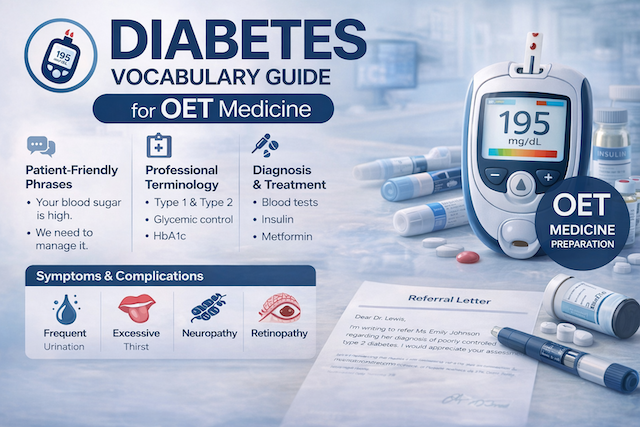
Diabetes(糖尿病)ボキャブラリー完全ガイド【OET for Medicine対策】
はじめに
Diabetes(糖尿病)は、OET Medicineにおいて非常に重要な頻出テーマの一つです。
理由は以下の通りです:
- 慢性疾患として非常に一般的
- 患者教育(Speaking)で出題されやすい
- Writing(紹介状・フォローアップ)で使いやすい
- 合併症の説明が必要になる
このガイドでは、OETで必要な糖尿病関連の英語をすべて網羅します。
Diabetesとは何か(基本定義)
Diabetes mellitus(糖尿病)
Diabetes is a chronic condition in which the body cannot properly regulate blood glucose levels.
糖尿病とは、血糖値を適切にコントロールできなくなる慢性疾患です。
糖尿病の種類(超重要)
1. Type 1 Diabetes(1型糖尿病)
- Insulin deficiency(インスリン欠乏)
- Autoimmune condition(自己免疫)
例文:
- “The patient has type 1 diabetes and requires insulin therapy.”
患者は1型糖尿病でインスリン治療が必要です
2. Type 2 Diabetes(2型糖尿病)
- Insulin resistance(インスリン抵抗性)
- Lifestyle-related(生活習慣)
例文:
- “He was diagnosed with type 2 diabetes.”
2型糖尿病と診断されました
3. Gestational Diabetes(妊娠糖尿病)
- Occurs during pregnancy(妊娠中に発症)
患者向け説明(Speaking対策)
分かりやすい説明
- “You have high blood sugar levels.”
血糖値が高い状態です - “Your body is not using insulin properly.”
インスリンがうまく働いていません - “We need to manage your blood sugar.”
血糖管理が必要です
医療者向け表現(Writing対策)
- “The patient has poorly controlled diabetes.”
- “Blood glucose levels remain elevated.”
- “HbA1c is significantly increased.”
- “Lifestyle modification is recommended.”
症状(Symptoms)
初期症状
- Frequent urination(頻尿)
- Excessive thirst(多飲)
- Fatigue(疲労)
進行症状
- Blurred vision(視力低下)
- Weight loss(体重減少)
例文
- “The patient reports excessive thirst and frequent urination.”
診断(Diagnosis)
主な検査
- Blood glucose test(血糖測定)
- HbA1c(長期血糖指標)
例文
- “HbA1c levels are elevated.”
- “Fasting glucose is high.”
治療(Treatment)
基本治療
- Diet control(食事療法)
- Exercise(運動療法)
薬物療法
- Metformin
- Insulin
例文
- “The patient is on metformin.”
- “Insulin therapy has been initiated.”
合併症(Complications)
短期
- Hypoglycemia(低血糖)
長期
- Neuropathy(神経障害)
- Nephropathy(腎症)
- Retinopathy(網膜症)
例文
- “The patient has diabetic neuropathy.”
リスク因子
- Obesity(肥満)
- Sedentary lifestyle(運動不足)
- Family history(家族歴)
OET Writingで使える表現
- “The patient presented with…”
- “He has a history of diabetes.”
- “Glycemic control is suboptimal.”
実戦用サンプル
“The patient has poorly controlled type 2 diabetes, with elevated HbA1c levels. Lifestyle modification and medication adjustment are required.”
ハイレベル表現(Band A)
- “glycemic control”
- “insulin resistance”
- “long-term complications”
- “requires ongoing management”
よくあるミス
1. 簡単すぎる
❌ high sugar
✅ elevated blood glucose
2. 医療表現不足
❌ diabetes
✅ poorly controlled diabetes
まとめ
Diabetes対策のポイント:
- type 1 / type 2の区別
- 症状・検査・治療の流れ
- glycemic controlの表現
これができれば、
OET Writing・Speakingともに安定して高得点が狙える。
FAQs (Frequently Asked Questions)
糖尿病(Diabetes)とは何ですか?
What is diabetes?
糖尿病とは、血糖値(blood glucose levels)が慢性的に高くなる疾患で、インスリンの働きが不足または低下することで起こります。
Diabetes is a chronic condition in which blood glucose levels remain high due to insufficient or ineffective insulin.
1型糖尿病と2型糖尿病の違いは何ですか?
What is the difference between type 1 and type 2 diabetes?
1型糖尿病はインスリンがほとんど分泌されない自己免疫疾患です。
2型糖尿病はインスリン抵抗性や生活習慣が関係して発症します。
Type 1 diabetes is an autoimmune condition with little or no insulin production.
Type 2 diabetes is mainly caused by insulin resistance and lifestyle factors.
HbA1cとは何ですか?
What is HbA1c?
HbA1cは過去2〜3ヶ月の平均血糖値を示す指標です。糖尿病の管理状況を評価するために使われます。
HbA1c reflects the average blood glucose level over the past 2–3 months and is used to assess diabetes control.
糖尿病の初期症状は何ですか?
What are the early symptoms of diabetes?
主な症状:
- 頻尿(Frequent urination)
- 多飲(Excessive thirst)
- 疲労(Fatigue)
Common symptoms include:
- Frequent urination
- Excessive thirst
- Fatigue
糖尿病はどのように診断されますか?
How is diabetes diagnosed?
血液検査により診断されます:
- 空腹時血糖(Fasting glucose)
- HbA1c
Diabetes is diagnosed using blood tests such as:
- Fasting blood glucose
- HbA1c
糖尿病の治療方法は何ですか?
What are the treatments for diabetes?
主な治療方法:
- 食事療法(Diet control)
- 運動療法(Exercise)
- 薬物療法(Medication)
- インスリン治療(Insulin therapy)
Treatment includes:
- Diet control
- Exercise
- Medication
- Insulin therapy
Metforminとは何ですか?
What is metformin?
Metforminは2型糖尿病の第一選択薬で、血糖値を下げるために使用されます。
Metformin is a first-line medication for type 2 diabetes used to lower blood glucose levels.
低血糖(Hypoglycemia)とは何ですか?
What is hypoglycemia?
低血糖とは血糖値が異常に低くなる状態で、めまい、発汗、意識障害などを引き起こします。
Hypoglycemia is a condition where blood sugar drops too low, causing symptoms such as dizziness, sweating, and confusion.
糖尿病の合併症には何がありますか?
What are the complications of diabetes?
主な合併症:
- 神経障害(Neuropathy)
- 腎症(Nephropathy)
- 網膜症(Retinopathy)
Common complications include:
- Neuropathy
- Nephropathy
- Retinopathy
糖尿病のリスク因子は何ですか?
What are the risk factors for diabetes?
- 肥満(Obesity)
- 運動不足(Sedentary lifestyle)
- 家族歴(Family history)
Risk factors include:
- Obesity
- Sedentary lifestyle
- Family history
OETで糖尿病はどう表現すればいいですか?
How should diabetes be described in OET?
OETでは以下の表現が効果的です:
- “The patient has poorly controlled diabetes.”
- “HbA1c levels are elevated.”
- “Lifestyle modification is recommended.”
Common OET expressions include:
- “The patient has poorly controlled diabetes.”
- “HbA1c levels are elevated.”
- “Lifestyle modification is recommended.”
患者に糖尿病を説明する際のポイントは?
How should you explain diabetes to a patient?
専門用語を避けて分かりやすく説明することが重要です。
例:
“Your blood sugar levels are high, and we need to manage them.”
Avoid technical language and explain clearly:
“Your blood sugar levels are high, and we need to manage them.”