
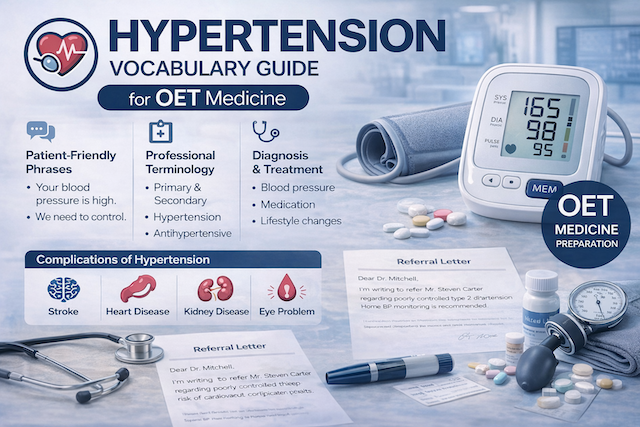
Hypertension(高血圧)ボキャブラリー完全ガイド【OET for Medicine対策】
はじめに
Hypertension(高血圧)は、OET Medicineにおいて非常に重要な基本疾患です。
理由は以下の通り:
- 慢性疾患として非常に頻出
- 無症状だが重篤な合併症につながる
- Writing(紹介状・フォロー)で使いやすい
- DiabetesやStrokeと強く関連する
このガイドでは、OETで必要な高血圧の英語表現を完全網羅します。
Hypertensionとは何か(基本定義)
Hypertension(高血圧)
Hypertension is a chronic condition in which blood pressure in the arteries is consistently elevated.
高血圧とは、血管内の血圧が慢性的に高い状態を指します。
Blood Pressure(血圧)の基本
- Systolic pressure(収縮期血圧)
- Diastolic pressure(拡張期血圧)
例:
120/80 mmHg
例文
- “The patient has elevated blood pressure.”
血圧が高い状態です - “Blood pressure is poorly controlled.”
血圧コントロールが不良です
高血圧の分類(重要)
1. Primary (Essential) Hypertension(本態性高血圧)
- 原因不明(most common)
2. Secondary Hypertension(二次性高血圧)
- 原因あり(腎疾患など)
例文
- “The patient has essential hypertension.”
- “Secondary causes should be considered.”
患者向け説明(Speaking対策)
わかりやすい表現
- “Your blood pressure is high.”
血圧が高いです - “This can increase your risk of heart disease.”
心臓病のリスクが高まります - “We need to manage it.”
管理が必要です
ポイント
- 難しい用語を避ける
- リスクを説明
- 改善可能であることを伝える
医療者向け表現(Writing対策)
- “The patient has poorly controlled hypertension.”
- “Blood pressure remains elevated.”
- “Antihypertensive therapy has been initiated.”
- “Lifestyle modification is advised.”
症状(Symptoms)
※重要:多くは無症状
無症状
- “Hypertension is often asymptomatic.”
高血圧は無症状のことが多い
重症時
- Headache(頭痛)
- Dizziness(めまい)
- Blurred vision(視力低下)
診断(Diagnosis)
測定
- Blood pressure monitoring
- Home BP monitoring
例文
- “Repeated measurements confirm hypertension.”
- “Home monitoring is recommended.”
治療(Treatment)
生活習慣改善
- Reduce salt intake(減塩)
- Exercise(運動)
- Weight loss(減量)
薬物療法
- ACE inhibitors(ACE阻害薬)
- Beta-blockers(β遮断薬)
- Calcium channel blockers(カルシウム拮抗薬)
例文
- “The patient is on antihypertensive medication.”
- “ACE inhibitors have been prescribed.”
合併症(Complications)
重要
- Stroke(脳卒中)
- Heart disease(心疾患)
- Kidney disease(腎疾患)
例文
- “Hypertension increases the risk of stroke.”
リスク因子
- Obesity(肥満)
- Smoking(喫煙)
- Stress(ストレス)
- Family history(家族歴)
OET Writingで使える表現
- “The patient has a history of hypertension.”
- “Blood pressure control is suboptimal.”
- “Medication adjustment is required.”
実戦用サンプル
“The patient has poorly controlled hypertension despite medication. Blood pressure remains elevated, and further management is required.”
ハイレベル表現(Band A)
- “suboptimal blood pressure control”
- “cardiovascular risk factors”
- “long-term management is essential”
よくあるミス
1. simpleすぎる
❌ high blood pressure
✅ hypertension
2. 抽象的
❌ needs treatment
✅ requires antihypertensive therapy
Diabetes・Strokeとの関連(重要)
- Hypertension → Strokeリスク
- Hypertension → Heart attack
- Diabetesとの併存が多い
まとめ
Hypertension対策のポイント:
- 無症状である点を理解
- 合併症を説明できる
- lifestyle + medicationをセットで使う
FAQs (Frequently Asked Questions)
高血圧(Hypertension)とは何ですか?
What is hypertension?
高血圧とは、血管内の血圧が慢性的に高い状態を指し、心臓や血管に負担をかける疾患です。
Hypertension is a condition in which blood pressure in the arteries remains consistently elevated, putting strain on the heart and blood vessels.
正常な血圧の値はどれくらいですか?
What is a normal blood pressure level?
一般的に120/80 mmHg前後が正常とされています。これを超えると高血圧の可能性があります。
A normal blood pressure is typically around 120/80 mmHg. Values above this may indicate hypertension.
高血圧にはどのような種類がありますか?
What are the types of hypertension?
主に2種類あります:
- 本態性高血圧(Primary hypertension):原因不明
- 二次性高血圧(Secondary hypertension):他の疾患が原因
There are two main types:
- Primary (essential) hypertension (no clear cause)
- Secondary hypertension (caused by another condition)
高血圧の症状は何ですか?
What are the symptoms of hypertension?
多くの場合、症状はありません。ただし重症の場合は以下が見られます:
- 頭痛(Headache)
- めまい(Dizziness)
- 視力低下(Blurred vision)
Hypertension is often asymptomatic. However, severe cases may cause:
- Headache
- Dizziness
- Blurred vision
なぜ高血圧は危険なのですか?
Why is hypertension dangerous?
放置すると以下のリスクが高まります:
- 脳卒中(Stroke)
- 心疾患(Heart disease)
- 腎疾患(Kidney disease)
If untreated, hypertension increases the risk of:
- Stroke
- Heart disease
- Kidney disease
高血圧はどのように診断されますか?
How is hypertension diagnosed?
血圧測定を繰り返し行い、継続的に高い場合に診断されます。
Hypertension is diagnosed through repeated blood pressure measurements showing consistently elevated levels.
家庭で血圧を測る必要はありますか?
Is home blood pressure monitoring necessary?
はい、家庭での測定は非常に重要で、日常の血圧変動を把握できます。
Yes, home monitoring is important as it helps track daily blood pressure variations.
高血圧の治療方法は何ですか?
What are the treatments for hypertension?
主な治療:
- 生活習慣改善(Lifestyle changes)
- 薬物療法(Medication)
Treatment includes:
- Lifestyle modification
- Medication
生活習慣で何を改善すべきですか?
What lifestyle changes are recommended?
- 減塩(Reduce salt intake)
- 運動(Exercise)
- 減量(Weight loss)
Recommended changes include:
- Reducing salt intake
- Regular exercise
- Weight loss
高血圧の薬にはどのようなものがありますか?
What medications are used for hypertension?
- ACE阻害薬(ACE inhibitors)
- β遮断薬(Beta-blockers)
- カルシウム拮抗薬(Calcium channel blockers)
Common medications include:
- ACE inhibitors
- Beta-blockers
- Calcium channel blockers
OETで高血圧はどう表現すればいいですか?
How should hypertension be described in OET?
OETでは以下の表現がよく使われます:
- “The patient has poorly controlled hypertension.”
- “Blood pressure remains elevated.”
- “Antihypertensive therapy has been initiated.”
Common OET expressions include:
- “The patient has poorly controlled hypertension.”
- “Blood pressure remains elevated.”
- “Antihypertensive therapy has been initiated.”
患者に高血圧を説明する際のポイントは?
How should you explain hypertension to a patient?
分かりやすく、リスクと対策をセットで説明することが重要です。
例:
“Your blood pressure is high, and we need to manage it to reduce your risk of heart disease.”
Explain clearly and include risks and management:
“Your blood pressure is high, and we need to manage it to reduce your risk of heart disease.”