2026年4月5日
3D ACADEMY offers affordable English study programs in Cebu, Philippines – perfect for beginners, professionals, and exam takers.

3D UNIVERSAL ENGLISH INSTITUTE INC
info.3d-universal.com
8:00-17:00(Mon-Fri)
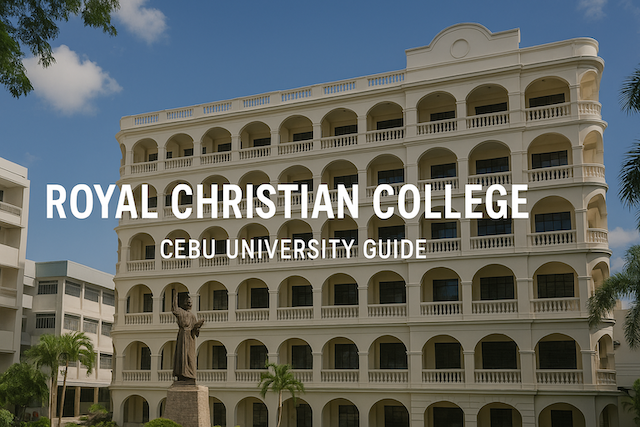
Royal Christian College: Cebu University Guide
Contents
- Royal Christian College: Cebu University Guide
- Overview of Royal Christian College
- Academic Programs Offered
- Campus Location and Accessibility
- Campus Facilities
- Student Life and Culture
- Tuition Fees and Scholarships
- Admissions Process
- Why Choose Royal Christian College?
- Career Opportunities for Graduates
- Final Thoughts
- FAQs (Frequently Asked Questions)
- Where is Royal Christian College located in Cebu?
- What type of school is Royal Christian College?
- What degree programs are offered at Royal Christian College?
- Does Royal Christian College offer technical-vocational (tech-voc) or TESDA programs?
- Is Royal Christian College affordable compared to bigger universities in Cebu?
- Are scholarships or discounts available for students?
- What are the typical admission requirements for new college students?
- Does Royal Christian College accept transferees and second coursers?
- Is Royal Christian College open to international or foreign students?
- What is campus life like at Royal Christian College?
- Are there dormitories or boarding houses near the campus?
- Does Royal Christian College offer online or blended classes?
- Can students work part-time while studying at RCC?
- How can I contact Royal Christian College for more information?
Royal Christian College: Cebu University Guide
Overview of Royal Christian College
Royal Christian College (RCC) in Cebu is a private educational institution dedicated to providing faith-based, holistic, and affordable education to students in the Visayas region. Known for its strong Christian foundation, RCC integrates academic excellence with moral development, aiming to produce graduates who are not only skilled in their fields but also grounded in values and good character.
Located within Cebu, the college serves both local and provincial students, offering a selection of undergraduate and diploma programs aligned with community needs. RCC maintains a close-knit campus environment, making it an excellent choice for learners who prefer personalized attention, smaller class sizes, and a supportive Christian academic culture.
This guide explores RCC’s programs, campus life, admissions, tuition expectations, facilities, and overall student experience.
Academic Programs Offered
Royal Christian College provides a range of degree and non-degree programs designed to develop career-ready skills while reinforcing ethical standards. While program availability may vary per school year, RCC commonly offers:
Education Programs
The Education department is one of RCC’s strongest areas, preparing future teachers for both public and private schools. Programs typically include:
-
Bachelor of Elementary Education (BEEd)
-
Bachelor of Secondary Education (BSEd) with possible majors in English, Math, or Science
These programs emphasize teaching methodologies, student assessment, lesson planning, and classroom management. Graduates often pursue careers in basic education or tutorial centers.
Business and Management Programs
Designed for students interested in corporate or entrepreneurial careers, RCC may offer:
-
Bachelor of Science in Business Administration (BSBA)
-
Majors such as Marketing Management or Financial Management
These courses provide foundational knowledge in business operations, economics, accounting, and strategic planning.
Information Technology and Computer Studies
With demand rising in IT-related fields, RCC often includes technology programs such as:
-
Bachelor of Science in Information Technology (BSIT)
-
Diploma in Information Technology
Students gain skills in programming, database management, hardware servicing, and network systems.
Technical-Vocational Programs
RCC also supports TESDA-accredited short courses and diploma programs focused on practical skills. These may include:
-
Computer Systems Servicing
-
Bookkeeping NC III
-
Caregiving
-
Administrative Services
Tech-voc courses offer an accessible pathway for students who prefer shorter, skill-based training aligned with industry standards.
Campus Location and Accessibility
Royal Christian College is situated in Cebu, making it easily accessible to students from nearby barangays, cities, and island provinces. Transportation options such as jeepneys, buses, and motorcycle taxis (habal-habal) allow for convenient commuting.
Students can expect a safe, community-friendly neighborhood with access to essentials like affordable eateries, convenience stores, boarding houses, and study cafés. Being located in a well-connected area ensures that students can travel between school, home, and key Cebu hubs with ease.
Campus Facilities
RCC may not be as large as major universities in Cebu City, but it maintains functional and student-oriented facilities. These include:
Classrooms and Learning Spaces
Well-ventilated classrooms support an effective learning environment. Some rooms may be equipped with projectors, televisions, or digital tools depending on the course requirements.
Computer Laboratories
Programs such as IT and BSBA benefit from computer labs that allow students to practice programming, documentation, research, and systems applications.
Library
The school library provides textbooks, references, and a quiet space for academic study. Students can make use of both printed and digital resources for research and assignments.
Multipurpose and Activity Areas
RCC often hosts seminars, worship activities, campus ministry programs, and student gatherings. Multipurpose halls support extracurricular and faith-related events.
Nearby Amenities
Students can easily find affordable food stalls (carinderias), boarding houses, internet cafés, and small shops surrounding the campus. The area is generally budget-friendly for typical student lifestyles.
Student Life and Culture
Royal Christian College maintains a Christian-centered educational philosophy, creating a nurturing and values-focused environment. Students experience:
Faith-Centered Activities
Chapel services, devotionals, and spiritual formation programs encourage moral development. The school integrates Christian teachings into subjects and campus events.
Small Community Atmosphere
RCC’s modest campus size allows students, faculty, and staff to build close relationships. This strengthens mentorship, guidance, and student support.
Extracurricular and Organizational Life
Student organizations, academic clubs, community outreach initiatives, and leadership programs form an important part of campus life. RCC encourages holistic development through involvement in both academic and social activities.
Supportive Faculty
The instructors at RCC are known for being approachable and dedicated. Their teaching style often incorporates personal guidance and value-based education.
Tuition Fees and Scholarships
Royal Christian College is categorized as an affordable higher education institution. Tuition varies by program but generally falls within lower ranges compared to larger universities in Cebu.
Estimated Tuition Range
-
Bachelor’s programs: Typically affordable, suitable for budget-conscious students
-
Tech-voc programs: Lower cost due to shorter duration
Exact fees may vary based on year level, laboratory use, and additional miscellaneous charges.
Financial Aid and Discounts
RCC may offer:
-
Academic scholarships
-
Christian scholarship programs
-
Sibling discounts
-
Financial assistance for low-income students
TESDA courses may also be eligible for government subsidies, depending on availability.
Admissions Process
Applying to Royal Christian College typically involves straightforward requirements:
Basic Requirements
-
High school report card (Form 138 or SHS report card)
-
Birth certificate (PSA)
-
Two to four ID photos
-
Good moral certificate
-
Completed application form
Transferees should also prepare their transcript of records (TOR) and honorable dismissal.
Admission Steps
-
Visit the registrar or admissions office.
-
Submit application documents.
-
Wait for evaluation and schedule of enrollment.
-
Pay the required down payment or fees.
-
Attend orientation or initial advising sessions.
Some programs may require an interview, depending on department guidelines.
Why Choose Royal Christian College?
RCC is ideal for students seeking value-driven education at an affordable price. Key advantages include:
Affordable Tuition
RCC is suited for families looking for cost-effective college options without sacrificing educational quality.
Christian Foundation
Students gain academic knowledge alongside character development grounded in biblical principles.
Supportive Learning Environment
Smaller class sizes allow for more personalized instruction, guidance, and mentoring.
Practical Program Offerings
Courses in education, IT, business, and tech-voc fields meet current job market needs.
Accessible Location
Well-connected to transport routes and essential student conveniences.
Career Opportunities for Graduates
Graduates of Royal Christian College may pursue careers in:
-
Public and private school teaching
-
IT support, programming, and systems administration
-
Business roles such as sales, accounting support, or administration
-
Entrepreneurship
-
Tech-voc professions such as caregiving or computer servicing
RCC aims to produce graduates who are competent, ethical, and ready to serve both the community and their chosen industries.
Final Thoughts
Royal Christian College in Cebu offers a balanced educational experience focused on Christian values, practical knowledge, and accessible tuition. For students seeking a supportive, community-centered academic environment, RCC represents a strong option among Cebu’s private colleges. Whether pursuing education, business, IT, or skill-based training, learners will find programs tailored to their strengths and long-term goals.
FAQs (Frequently Asked Questions)
Where is Royal Christian College located in Cebu?
Royal Christian College (RCC) is located within Cebu, in an accessible urban area that can usually be reached by jeepney, bus, or motorcycle taxi.
The exact campus address, nearby landmarks, and updated directions may change over time, so it is best to check the school’s official Facebook page, website,
or contact numbers for the most current location details and commuting routes.
What type of school is Royal Christian College?
Royal Christian College is a private Christian institution that combines higher education with faith-based formation.
The school focuses on developing both academic competence and strong moral values, emphasizing character, integrity, and service.
RCC is suitable for students and families who prefer a campus culture guided by Christian principles and a close-knit community atmosphere.
What degree programs are offered at Royal Christian College?
RCC typically offers a mix of undergraduate and non-degree programs aligned with community and industry needs.
Common offerings may include Education degrees (such as Elementary or Secondary Education), Business-related programs (such as Business Administration),
and Information Technology courses, along with selected technical-vocational programs.
However, exact programs, majors, and specializations may change, so applicants should always confirm the latest list of offerings with the registrar or official school channels.
Does Royal Christian College offer technical-vocational (tech-voc) or TESDA programs?
Yes, Royal Christian College is known to offer skill-focused technical-vocational courses, which may include areas like computer systems servicing, bookkeeping,
or caregiving, depending on the current curriculum. Some of these may be aligned with TESDA qualifications.
Since course availability and TESDA accreditations can be updated or revised, it is important to verify directly with the school which tech-voc programs are open
for the upcoming enrollment period.
Is Royal Christian College affordable compared to bigger universities in Cebu?
In general, Royal Christian College is considered more affordable than many larger private universities in Cebu.
Tuition fees are usually budget-friendly for families seeking value-based education at a lower cost.
However, exact amounts depend on the program, year level, and any laboratory or miscellaneous fees.
Because tuition structures may change every academic year, prospective students should request an updated schedule of fees directly from the cashier or registrar.
Are scholarships or discounts available for students?
RCC often provides different forms of financial support, which may include academic scholarships, Christian or ministry-related grants, and family discounts such as sibling incentives.
Some students may also benefit from government-related assistance if available for certain programs.
The criteria, coverage, and application process for scholarships and discounts are set by the school and can change, so students should inquire at the registrar or guidance office
for the latest scholarship guidelines.
What are the typical admission requirements for new college students?
For incoming first-year college students, the common requirements include a senior high school report card, a birth certificate, certificate of good moral character,
ID photos, and a filled-out application or registration form. Some programs may conduct interviews or require additional documents.
Transfer students will usually need their transcript of records and honorable dismissal from their previous school.
Because policies differ by program and year, applicants should always check RCC’s current admission checklist before preparing their documents.
Does Royal Christian College accept transferees and second coursers?
Yes, RCC generally accepts transferees and second coursers, subject to evaluation of their previous academic records.
Crediting of subjects, assessment of grades, and program availability are handled by the registrar or department heads.
Since each case is evaluated individually, students who want to transfer or shift courses should bring their complete documents for proper assessment
and confirm the latest transfer policies with the school.
Is Royal Christian College open to international or foreign students?
Royal Christian College may admit foreign students as long as they comply with government regulations and the school’s internal requirements.
This can involve additional documents such as valid passports, visas, and permits set by Philippine authorities.
Because immigration rules and school policies for foreign students can change, international applicants should coordinate directly with the admissions or registrar’s office
for the most accurate and updated instructions.
What is campus life like at Royal Christian College?
Student life at RCC is generally community-oriented and faith-centered.
Learners can expect chapel services, devotionals, and Christian formation activities, along with academic clubs, student organizations, and outreach programs.
The relatively small-campus environment helps create a more personal atmosphere where students can easily interact with teachers, staff, and classmates.
Culture and activities may evolve each year, so new students can look forward to updated events and organizations.
Are there dormitories or boarding houses near the campus?
While RCC may not manage its own large dormitory complex, there are usually numerous boarding houses, apartments, and rented rooms in the surrounding area.
These options accommodate different budgets, from simple shared rooms to more private spaces.
Because availability, rental rates, and conditions depend on private landlords, students are advised to visit the area, compare options, and prioritize safe,
well-managed boarding houses close to the school.
Does Royal Christian College offer online or blended classes?
Depending on national guidelines and school policy, RCC may implement different modes of delivery, such as fully face-to-face, blended (combination of online and on-campus),
or enhanced traditional classes with digital components.
The teaching modality can shift based on government regulations, technology readiness, and internal planning.
For the current academic year’s mode of instruction, students should check RCC’s official announcements or ask their department directly.
Can students work part-time while studying at RCC?
Some students choose to work part-time while studying, especially in nearby shops, call centers, or online jobs.
However, RCC encourages students to balance their workload so that employment does not negatively affect academic performance or spiritual formation.
Work rules and visa conditions are especially important for foreign students, who must follow Philippine immigration and labor guidelines.
It is always wise to consult the guidance office and review relevant laws before committing to any work arrangement.
How can I contact Royal Christian College for more information?
For the most accurate and updated information about programs, tuition fees, schedules, and requirements,
it is best to contact Royal Christian College directly through its official phone numbers, email, website, or verified social media pages.
This FAQ is intended only as a general guide and may not reflect recent changes in policies, fees, or course offerings.
Always rely on the school’s official communications for final confirmation.
Philippines University Guide
Cebu University Guide
Cebu Province All Universities Lists

How to Register for eTravel Philippines (2025 Guide)
Step-by-step guide to completing your eTravel registration before arriving in the Philippines, with images and tips.

Night Market in Cebu – Things You Don’t Know About Cebu Life
Discover the hidden charm of Cebu’s night markets, from street food stalls to local life tips you won’t find in tourist guides.

How to Use ChatGPT for IELTS Preparation: A Complete Guide
Learn how to prepare for IELTS using ChatGPT — including strategies for Writing, Reading, Listening, Speaking, and grammar support.

How to Build a Website Without Coding Using ChatGPT
Discover how to build your own website using AI—no coding skills needed. From structure planning to SEO and design, let ChatGPT guide you.