2025年12月31日
3D ACADEMY offers affordable English study programs in Cebu, Philippines – perfect for beginners, professionals, and exam takers.

3D UNIVERSAL ENGLISH INSTITUTE INC
info.3d-universal.com
8:00-17:00(Mon-Fri)
Are Jeepneys Safe for First-Time Visitors? :Manila Transportation Guide
Contents
- Are Jeepneys Safe for First-Time Visitors? :Manila Transportation Guide
- Introduction: Why Safety Is a Common Concern for First-Time Visitors
- What Exactly Is a Jeepney?
- General Safety Overview: Are Jeepneys Dangerous?
- Traffic Safety: The Biggest Risk for Visitors
- Crime and Personal Safety on Jeepneys
- Daytime vs Nighttime Jeepney Safety
- Jeepneys vs Other Transport Options for Tourists
- Route Familiarity: A Major Safety Factor
- Language and Communication Challenges
- Comfort, Hygiene, and Health Considerations
- Are Jeepneys Safe for Solo Travelers?
- Common Myths About Jeepney Safety
- When First-Time Visitors Should Avoid Jeepneys
- When Jeepneys Are a Good Choice
- Final Verdict: Are Jeepneys Safe for First-Time Visitors?
- FAQs (Frequently Asked Questions)
- Are jeepneys safe for first-time visitors in Manila?
- What are the most common safety issues on jeepneys?
- Is it safe to ride a jeepney at night?
- How can I avoid pickpocketing while riding a jeepney?
- Where should I sit on a jeepney for safety?
- How do I know if a jeepney route is safe?
- Are modern jeepneys safer than traditional jeepneys?
- What should I do if I miss my stop or get lost?
- Is it safe to ride jeepneys with luggage?
- Should solo travelers, including solo female travelers, use jeepneys?
- What is the best alternative if I do not feel comfortable riding a jeepney?
Are Jeepneys Safe for First-Time Visitors? :Manila Transportation Guide
Introduction: Why Safety Is a Common Concern for First-Time Visitors
For many first-time visitors to Manila, jeepneys are one of the most confusing—and intimidating—forms of transportation. They are loud, crowded, colorful, and seemingly chaotic. Unlike trains or ride-hailing apps, jeepneys do not follow a system that is immediately obvious to outsiders. This often leads travelers to ask a very reasonable question: are jeepneys safe for first-time visitors?
The short answer is yes, jeepneys can be safe, but only if you understand how they work, when to use them, and what precautions to take. This guide is designed specifically for first-time visitors who want a realistic, honest assessment of jeepney safety in Metro Manila, without exaggeration or unnecessary fear.
By the end of this article, you will understand:
-
The real safety risks associated with jeepneys
-
When jeepneys are safe to use and when to avoid them
-
How tourists and locals experience jeepney travel differently
-
Practical safety tips to minimize problems
-
Whether jeepneys are suitable for you on your first visit
What Exactly Is a Jeepney?
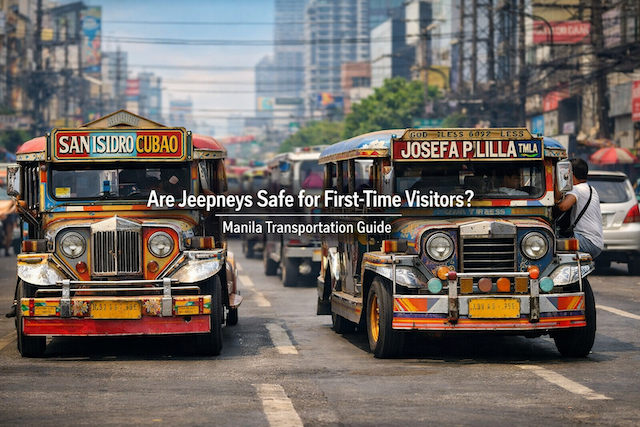
Jeepneys are the most iconic form of public transportation in the Philippines. Originally converted from surplus U.S. military jeeps after World War II, they evolved into long, customized vehicles that operate on fixed routes across Metro Manila and beyond.
Jeepneys are:
-
Privately operated
-
Route-based (not point-to-point)
-
Very affordable
-
Used mainly by locals for daily commuting
They stop almost anywhere to pick up or drop off passengers, and payment is done in cash, handed forward to the driver through other passengers.
Understanding this informal structure is essential when evaluating safety.
General Safety Overview: Are Jeepneys Dangerous?
Jeepneys are not inherently dangerous, but they are less controlled and less regulated compared to trains, buses, or ride-hailing services. Safety issues typically fall into four categories:
-
Traffic-related risks
-
Petty crime (pickpocketing, snatching)
-
Comfort and hygiene concerns
-
Navigation and communication difficulties
Serious violent crime involving jeepney passengers is rare, especially during daytime and on busy routes. Most safety issues involve inconvenience or minor theft rather than physical harm.
Traffic Safety: The Biggest Risk for Visitors
Driving Style in Manila
The most significant risk when riding jeepneys is Manila traffic itself, not crime. Jeepney drivers operate in a highly competitive environment and often:
-
Stop suddenly to pick up passengers
-
Change lanes without signaling
-
Drive close to other vehicles
-
Compete for space on narrow roads
For first-time visitors, this can feel chaotic and stressful.
Vehicle Condition
Traditional jeepneys often lack:
-
Seat belts
-
Proper doors (many are open at the back)
-
Modern safety features
Sudden braking can cause passengers to lose balance, especially when standing or sitting near the edge.
How to Reduce Traffic Risk
-
Sit as far inside the jeepney as possible
-
Avoid standing unless absolutely necessary
-
Hold onto rails or supports at all times
-
Avoid riding during heavy rain or late-night hours
Crime and Personal Safety on Jeepneys
Pickpocketing and Theft
The most common crime affecting jeepney passengers is petty theft, not violent crime. This includes:
-
Pickpocketing in crowded jeepneys
-
Bag slashing in rare cases
-
Phone snatching near open entrances
Tourists may be targeted more often simply because they look unfamiliar or distracted.
Violent Crime: How Common Is It?
Violent incidents involving jeepney passengers are very uncommon, especially during:
-
Daytime
-
Rush hours
-
Busy commercial routes
Most locals, including office workers and students, ride jeepneys daily without incident.
Practical Anti-Theft Tips
-
Keep bags zipped and worn in front
-
Avoid using your phone near the entrance
-
Do not display expensive jewelry
-
Keep small bills accessible to avoid opening your wallet
Daytime vs Nighttime Jeepney Safety
Daytime: Generally Safe
For first-time visitors, daytime jeepney travel (6:00 AM–8:00 PM) is generally safe on major routes. These jeepneys are:
-
Crowded with commuters
-
Highly visible
-
Less likely to attract criminal activity
Nighttime: Higher Risk
Late-night jeepney travel carries more risk due to:
-
Fewer passengers
-
Poor lighting
-
Reduced police presence
If you are unfamiliar with Manila, it is best to avoid jeepneys after 9:00 PM, especially in unfamiliar neighborhoods.
Jeepneys vs Other Transport Options for Tourists
Jeepneys vs Trains (MRT/LRT)
Trains are:
-
More predictable
-
More secure
-
Easier to understand for foreigners
However, they are extremely crowded during rush hours.
Jeepneys vs Buses
Modern city buses offer:
-
Air-conditioning
-
Fixed stops
-
More regulated operations
They are safer and more comfortable but slower in traffic.
Jeepneys vs Grab or Taxis
Ride-hailing apps are:
-
The safest option for first-time visitors
-
More expensive
-
Less immersive
Jeepneys offer cultural experience but require more awareness.
Route Familiarity: A Major Safety Factor
Jeepneys are safest when:
-
You already know your route
-
You can recognize landmarks
-
You know where to get off
They become risky when:
-
You rely entirely on signs you cannot read
-
You are unsure whether the jeepney goes where you need
-
You hesitate or look confused while onboard
For your first few days in Manila, it is advisable to observe jeepneys before riding them.
Language and Communication Challenges
Most jeepney drivers and passengers speak some English, but instructions are often shouted in Tagalog. Common commands include:
-
“Para” (stop)
-
“Bayad po” (payment)
-
Route names shouted quickly
Miscommunication can lead to:
-
Missing your stop
-
Overpaying
-
Stress in crowded situations
This is not dangerous, but it can be overwhelming for first-time visitors.
Comfort, Hygiene, and Health Considerations
Jeepneys are not designed for comfort. Expect:
-
Tight seating
-
High noise levels
-
Heat and poor ventilation
-
Strong smells during peak hours
For travelers sensitive to heat, noise, or crowds, discomfort can feel unsafe even if there is no real danger.
Are Jeepneys Safe for Solo Travelers?
Yes, especially for:
-
Confident travelers
-
Daytime travel
-
Short distances
Extra caution is advised if:
-
You are carrying luggage
-
You appear lost
-
You are riding late at night
Solo female travelers generally report safe experiences during the day but often prefer other transport at night.
Common Myths About Jeepney Safety
“Jeepneys Are Extremely Dangerous”
This is exaggerated. Millions of Filipinos use jeepneys daily without incident.
“Tourists Are Always Targeted”
Tourists are not automatically targeted, but distracted behavior increases risk.
“Only Locals Can Ride Jeepneys Safely”
With preparation and awareness, first-time visitors can ride jeepneys safely.
When First-Time Visitors Should Avoid Jeepneys
Avoid jeepneys if:
-
It is your first day in Manila
-
You are tired or jet-lagged
-
You are traveling late at night
-
You are carrying large bags
-
You are unsure of the route
There is no shame in choosing safer, simpler transport options.
When Jeepneys Are a Good Choice
Jeepneys are a good option when:
-
You want an authentic local experience
-
You are traveling during the day
-
You already understand the route
-
You want to save money
-
You are traveling short distances
Final Verdict: Are Jeepneys Safe for First-Time Visitors?
Jeepneys can be safe for first-time visitors, but they are not beginner-friendly. Safety depends less on crime and more on:
-
Situational awareness
-
Route familiarity
-
Time of day
-
Personal comfort with crowds and chaos
For your first visit to Manila:
-
Start with trains, buses, or Grab
-
Observe jeepney routes first
-
Ride jeepneys during the day on busy routes
-
Follow basic safety precautions
Jeepneys are not dangerous by default, but they demand attention and confidence. If you respect their limitations and understand how they work, they can be a safe and memorable part of your Manila experience.
FAQs (Frequently Asked Questions)
Are jeepneys safe for first-time visitors in Manila?
Jeepneys can be safe for first-time visitors, especially in the daytime and on busy routes where many commuters are riding. The most common risks are not violent crimes but petty theft and travel-related issues such as sudden braking, heavy traffic, and confusion about routes. If you keep your valuables secure, stay alert, and avoid late-night rides in unfamiliar areas, jeepney travel is generally manageable for beginners. If you feel uncertain, try riding with a friend or starting with short trips before using jeepneys for longer routes.
What are the most common safety issues on jeepneys?
The most common issues are pickpocketing, phone snatching near open entrances, and discomfort caused by crowding and heat. Another important concern is road safety: jeepneys may stop suddenly, weave through traffic, or load passengers in busy streets. These factors can feel stressful if you are not used to Manila’s driving culture. Serious incidents are less common than minor theft or inconvenience, but it is still smart to treat jeepneys like any crowded public transport system and take basic precautions.
Is it safe to ride a jeepney at night?
Nighttime jeepney travel is riskier than daytime travel because there are fewer passengers, visibility is lower, and some routes become less predictable. While many locals still ride at night, first-time visitors are generally better off using Grab, metered taxis from reputable stands, or modern buses when it is late. If you must ride at night, choose well-lit main roads, avoid empty jeepneys, keep your phone hidden, and sit closer to other passengers rather than near the entrance.
How can I avoid pickpocketing while riding a jeepney?
Keep your bag zipped and positioned in front of your body, not on your back. Avoid placing phones or wallets in easy-to-reach pockets. If you are carrying a backpack, consider holding it on your lap. Do not openly count cash or display large bills. When paying, prepare small bills in advance so you can hand payment forward quickly without showing the contents of your wallet. Also avoid standing near the entrance when the jeepney is crowded, since that area is more exposed.
Where should I sit on a jeepney for safety?
For most riders, the safest seat is inside the cabin, away from the rear opening. Seats near the entrance are convenient for getting off quickly, but they are also where you are most exposed to sudden movement, traffic, and opportunistic snatching. If the jeepney is very crowded, sit where you can keep your bag on your lap and maintain awareness of your surroundings. If you feel uncomfortable, you can always get off at a busy point and switch to another jeepney.
How do I know if a jeepney route is safe?
Safety is influenced by route environment and time of day. Routes that pass through major commercial districts, university areas, and business zones tend to be busy and safer during daylight hours. Routes that go through isolated streets or poorly lit areas late at night may feel less safe, especially for visitors. A practical rule: if you see many locals—including students and office workers—using the jeepney at that time, it is usually a good sign. If the jeepney is almost empty and the area feels quiet, consider another option.
Are modern jeepneys safer than traditional jeepneys?
Modern jeepneys typically have more safety and comfort features, such as higher ceilings, more consistent seating, clearer entry and exit points, and sometimes better maintenance standards. Traditional jeepneys can be safe too, but they often have open rear entrances and older vehicle conditions, which may increase exposure to traffic and weather. From a first-time visitor’s perspective, modern jeepneys often feel easier and more secure, though availability depends on the area and route.
What should I do if I miss my stop or get lost?
If you miss your stop, stay calm. Many jeepney routes have frequent stops, and you can get off at the next busy area and re-orient yourself. Avoid jumping off quickly in moving traffic. Instead, say “Para” clearly, wait for the jeepney to stop fully, then step down carefully. If you are unsure where you are, move to a safe spot like a convenience store, mall entrance, or transport terminal. You can also use map apps discreetly, but avoid holding your phone near the road where snatching is possible.
Is it safe to ride jeepneys with luggage?
Jeepneys are not ideal for luggage, especially large suitcases. The seating is tight, aisles are narrow, and your bags may attract attention or create discomfort for other passengers. If you only have a small backpack or day bag, it is usually fine, but keep it secured and in front of you. If you are traveling from the airport, moving between hotels, or carrying valuables, Grab or a metered taxi from an official queue is usually the safer and more practical choice.
Should solo travelers, including solo female travelers, use jeepneys?
Solo travelers can use jeepneys safely with the right approach: ride during the day, pick busy routes, stay alert, and avoid isolated areas. Many solo female travelers ride jeepneys without problems in daylight, but may prefer alternatives at night or when traveling to unfamiliar neighborhoods. Trust your instincts. If a jeepney feels uncomfortable—too empty, poorly lit, or chaotic—step off in a populated area and choose another mode of transport. Comfort and confidence matter for safety.
What is the best alternative if I do not feel comfortable riding a jeepney?
If jeepneys feel overwhelming, your best alternatives are Grab, modern city buses, and rail lines (MRT/LRT) depending on your destination. Grab is often the easiest and safest choice for first-time visitors because routes are direct and pricing is shown in the app. Trains are efficient for major corridors but can be extremely crowded during rush hours. Modern buses may be slower in traffic but feel more structured. Choosing an alternative is not “missing out”; it is simply picking the option that fits your comfort level.

How to Register for eTravel Philippines (2025 Guide)
Step-by-step guide to completing your eTravel registration before arriving in the Philippines, with images and tips.

Night Market in Cebu – Things You Don’t Know About Cebu Life
Discover the hidden charm of Cebu’s night markets, from street food stalls to local life tips you won’t find in tourist guides.

How to Use ChatGPT for IELTS Preparation: A Complete Guide
Learn how to prepare for IELTS using ChatGPT — including strategies for Writing, Reading, Listening, Speaking, and grammar support.

How to Build a Website Without Coding Using ChatGPT
Discover how to build your own website using AI—no coding skills needed. From structure planning to SEO and design, let ChatGPT guide you.