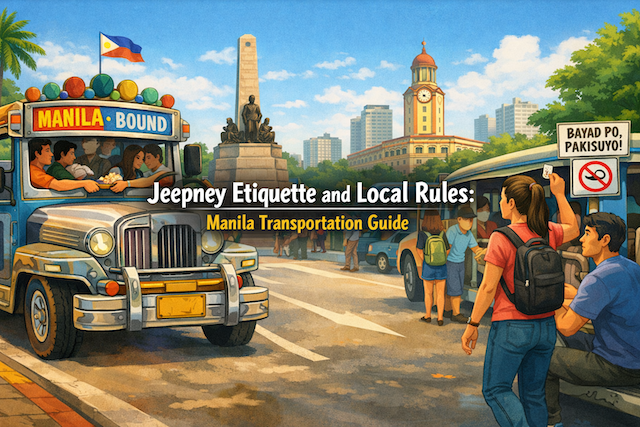
Jeepney Etiquette and Local Rules: Manila Transportation Guide
Jeepneys are more than just a way to get around Manila—they are a cultural symbol and an everyday part of local life. For first-time visitors, expats, or even long-term residents who are new to public transport, understanding jeepney etiquette and unwritten rules is essential. Riding a jeepney is simple once you know how it works, but small actions—how you pay, where you sit, how you signal—can make a big difference in your experience.
This guide explains jeepney etiquette and local rules in detail, helping you ride confidently, respectfully, and smoothly in Metro Manila.
Why Jeepney Etiquette Matters
Jeepneys operate on cooperation rather than strict systems. There are no fixed seats, no automated payment machines, and often no clear signage. Instead, everything runs on shared understanding between drivers and passengers.
Good etiquette helps:
-
Keep the ride efficient and orderly
-
Avoid misunderstandings with drivers and locals
-
Make your trip safer and more comfortable
-
Show respect for Filipino culture
Even small gestures, like passing fares properly or saying “thank you,” are appreciated and often reciprocated.
Boarding a Jeepney the Right Way
Flagging Down a Jeepney
To board a jeepney:
-
Stand near the roadside, preferably at common pickup points
-
Raise your hand or nod slightly when the jeepney approaches
-
Make eye contact with the driver if possible
Jeepneys do not always stop automatically. Clear body language helps signal your intention to ride.
Entering the Jeepney
Most jeepneys are boarded from the back:
-
Step up carefully; the floor can be high
-
Watch your head when entering—space is limited
-
Move inside quickly to make room for others
Avoid lingering at the entrance, as this blocks boarding and slows down traffic.
Seating Etiquette Inside the Jeepney
Where to Sit
Seating is informal and based on availability:
-
Move inward to allow others to sit
-
Sit knee-to-knee with other passengers when space is tight
-
Avoid occupying extra space with bags
If the jeepney is not full, passengers usually spread out. As it fills, everyone adjusts to accommodate more riders.
Priority Seating
While jeepneys do not have marked priority seats, local etiquette applies:
-
Give up your seat for elderly passengers
-
Offer space to pregnant women or passengers with children
-
Be considerate of people with disabilities
These gestures are not legally enforced but are socially expected.
Understanding the Jeepney Fare System
How to Pay
Payment is entirely manual:
-
Prepare small bills or coins before boarding
-
Hand your fare to the driver through other passengers
-
Say your destination when passing your fare
Example phrases:
Passengers will pass your money forward until it reaches the driver, and change will be passed back the same way.
Handling Change Properly
-
Wait patiently for your change
-
Keep an eye on it as it is passed back
-
Say “Salamat” (Thank you) when receiving it
Do not rush or complain loudly if change takes time—it is normal, especially during busy hours.
Passing Fares: A Key Local Rule
Passing fares is one of the most important jeepney etiquettes:
-
Always help pass fares, even if you are not paying
-
Pass money forward and change backward
-
Use one hand and be attentive
Ignoring a fare being passed is considered rude. Cooperation keeps the system working smoothly.
Communicating With the Driver
Telling the Driver Your Destination
When boarding or paying, clearly state your destination:
Drivers rely on verbal cues, not electronic stops.
Asking the Driver to Stop
To get off, say:
Say it loudly enough for the driver to hear, usually a few seconds before your stop. Some jeepneys also have bells or strings—use them if available.
Getting Off the Jeepney
Exiting Safely
When getting off:
-
Make sure the jeepney has slowed down or stopped
-
Watch for traffic before stepping onto the road
-
Exit quickly to avoid delaying others
In busy areas, jeepneys may stop briefly. Be alert and ready.
Common Courtesy When Alighting
These small gestures are part of everyday jeepney culture.
Behavior and Manners Inside the Jeepney
Noise and Conversations
Jeepneys are social spaces, but moderation is key:
-
Keep phone calls short and quiet
-
Avoid loud music without headphones
-
Respect others’ personal space
Chatting is normal, especially among locals, but excessive noise can be disruptive.
Eating and Drinking
Eating inside jeepneys is generally discouraged:
-
Avoid strong-smelling food
-
Be careful not to spill drinks
-
Small snacks are tolerated but not encouraged
Cleanliness is a shared responsibility.
Personal Belongings and Space
Managing Bags and Backpacks
This helps maximize space and reduce inconvenience.
Respecting Shared Space
Jeepneys are cramped by design:
-
Avoid spreading legs too wide
-
Adjust seating as new passengers board
-
Be patient during crowded rides
Flexibility is part of the experience.
Safety Etiquette and Local Awareness
Staying Alert
While jeepneys are generally safe:
-
Keep phones and wallets secure
-
Avoid displaying expensive items
-
Stay aware of your surroundings
Pickpocketing can happen, especially during rush hours.
Nighttime Riding Etiquette
At night:
-
Sit closer to the driver if possible
-
Avoid sleeping during the ride
-
Get off at well-lit areas
Being cautious is considered smart, not rude.
Rules About Standing and Overloading
Traditional jeepneys often allow standing when full:
-
Stand only if there is space and handholds
-
Hold onto rails or seatbacks securely
-
Be prepared to move when others get off
Overloading is common, but safety should always come first. If you feel uncomfortable, it is acceptable to wait for another jeepney.
Dealing With Jeepney Conductors (When Present)
Some routes have conductors who collect fares:
-
Pay the conductor instead of passing money forward
-
Follow their instructions on seating or stops
-
Respond politely if asked to move
Conductors help manage crowded jeepneys, especially on busy routes.
Cultural Sensitivity and Respect
Politeness Goes a Long Way
Filipino culture values respect and friendliness:
-
Use “po” when speaking to elders or drivers
-
Smile or nod when interacting
-
Avoid confrontational behavior
Even if misunderstandings occur, calm communication usually resolves them.
Understanding Local Norms
Jeepney culture may feel chaotic at first, but it runs on shared understanding:
Accepting this mindset makes the experience more enjoyable.
Common Mistakes to Avoid
Many first-time riders make similar mistakes:
-
Not preparing small bills
-
Forgetting to say “para po” in time
-
Blocking the entrance or aisle
-
Ignoring passed fares
Being aware of these helps you blend in more easily.
Jeepney Etiquette for Tourists and Expats
Blending In as a Non-Local
You do not need to speak perfect Filipino:
Locals are generally patient with foreigners who show effort and respect.
When to Choose Alternatives
Jeepneys are not always ideal:
In these cases, taxis or ride-hailing apps may be more practical.
Modern Jeepneys and Changing Etiquette
Modern jeepneys are becoming more common:
However, basic etiquette—respect, cooperation, and awareness—still applies.
Final Thoughts: Riding Jeepneys With Confidence
Jeepney etiquette is not about strict rules—it is about understanding shared responsibility. By observing how locals behave, being polite, and staying aware, you can ride jeepneys confidently and comfortably.
For many visitors, riding a jeepney becomes a memorable part of their Manila experience. It offers a glimpse into everyday life, local culture, and the rhythm of the city. With the right etiquette and mindset, jeepneys are not just transportation—they are a window into Manila itself.
FAQs (Frequently Asked Questions)
Is there a “right” way to say thank you on a jeepney?
Yes. A simple “Salamat” is widely understood and appreciated. Many riders also add “po” (“Salamat po”) to sound more polite, especially when addressing older drivers or fellow passengers. You do not need perfect pronunciation—what matters is the respectful intention. If you are shy about speaking, a small nod and friendly expression still communicates gratitude, but using “Salamat” is the easiest way to blend in with local etiquette.
What does “Bayad po” mean, and when should I say it?
“Bayad po” means “Here’s my payment.” You say it when handing your fare forward. If you want to be extra clear, add your destination: “Bayad po, Quiapo,” or “Bayad po, Cubao.” This helps the driver know how much you should pay and reduces confusion. Say it clearly but politely, and pass your coins or bills in a way that is easy for the next passenger to grab.
Do I have to help pass fares even if I’m not paying?
In practice, yes. Passing fares (and returning change) is a core part of how jeepneys function. Even if you are not paying, it is normal to help move money forward and change backward. Ignoring a fare being passed can be seen as rude or uncooperative. If your hands are full, you can politely gesture or say “Sandali” (one moment) and pass it as soon as you can.
How do I ask the driver to stop if I don’t know the area?
The standard phrase is “Para po,” meaning “Please stop.” Say it a few seconds before your preferred drop-off point. If you are unsure where to get off, you can tell the driver or nearby passengers your landmark when you board, then ask for help: “Dito po?” (Here?) or “Pakisabi po kung malapit na sa…” (Please tell me when we’re near…). Many locals are willing to assist if you ask politely.
Is it okay to sit near the entrance if I’m getting off soon?
It is understandable, but you should still try not to block people. If the jeepney is not crowded, sitting near the entrance is fine, especially if you will alight soon. If it becomes busy, move inward to make room for boarding passengers. A good compromise is to sit near the entrance but keep your knees and bags out of the way so others can enter and exit smoothly.
What should I do if the jeepney is already full?
Jeepneys often squeeze in more passengers than you might expect, especially during rush hour. If you feel unsafe or uncomfortable, it is completely acceptable to wait for the next one. If you decide to board, secure your belongings and hold onto rails or seatbacks. Avoid standing near the open rear entrance if traffic is fast. Your comfort and safety are more important than following the crowd.
Are there rules about giving seats to elderly passengers or pregnant women?
There are no strict posted rules on most jeepneys, but socially, yes—offering your seat is strongly expected. If you see an elderly passenger, a pregnant rider, or someone carrying a small child, it is polite to shift and create space or stand if you can. Even a small gesture, like scooting closer to the person beside you, can make a meaningful difference in a crowded ride.
Is it rude to eat or drink inside a jeepney?
It is not always “forbidden,” but it is generally discouraged. Jeepneys can be crowded, and spills or strong food smells can bother others. If you must eat, keep it small, tidy, and odor-free, and avoid messy items. Drinking water is usually fine if you do it carefully. When in doubt, wait until you arrive at your destination—locals often choose that option.
How can I avoid looking like an easy target for pickpockets?
Keep your phone and wallet secure and avoid placing valuables in back pockets or open bags. Hold your bag on your lap or keep it in front of you, especially when the jeepney is packed. Avoid flashing expensive devices near the entrance. Stay aware when boarding and alighting, since those moments can be distracting. Being calm and alert is the most effective “local” habit you can adopt.
What if I only have a large bill—can I still ride?
You can, but it may cause delays. Drivers and passengers often struggle to make change early in the route or during busy hours. If possible, buy something small at a convenience store to break your bill before boarding. If you must pay with a larger bill, hand it forward and clearly state your destination, then wait patiently for change. Avoid showing frustration—delays are common and not considered unusual.
Should I talk to other passengers, or is it better to stay quiet?
Either is fine. Many riders keep to themselves, while others casually chat. The key is volume and respect. Keep calls short, avoid loud conversations, and use headphones for music. If you need help with directions, asking politely is normal and often welcomed. A friendly tone is usually received well in Manila, especially if you show basic courtesy.
Do modern jeepneys have different etiquette than traditional jeepneys?
Some modern jeepneys have more structured seating, different fare collection methods, or designated pickup and drop-off practices. However, the basics remain: be considerate, avoid blocking aisles, pay properly, and follow the driver’s instructions. If there is a conductor, pay them instead of passing money forward. If there are posted rules inside, follow them first, then apply general local courtesy.
What’s the biggest etiquette mistake tourists make on jeepneys?
The most common issues are not preparing small change, blocking the rear entrance, and forgetting to help pass fares or change. Another frequent mistake is waiting too long to say “Para po,” which can lead to awkward stops. If you remember these three habits—prepare coins, move inward, and cooperate with fare passing—you will already be riding with good local manners.