2026年1月23日
3D ACADEMY offers affordable English study programs in Cebu, Philippines – perfect for beginners, professionals, and exam takers.

3D UNIVERSAL ENGLISH INSTITUTE INC
info.3d-universal.com
8:00-17:00(Mon-Fri)
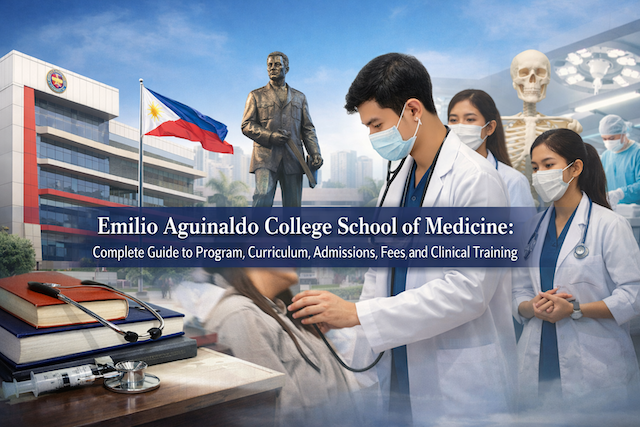
Emilio Aguinaldo College School of Medicine: Complete Guide to Program, Curriculum, Admissions, Fees, and Clinical Training
Contents
- Emilio Aguinaldo College School of Medicine: Complete Guide to Program, Curriculum, Admissions, Fees, and Clinical Training
- Overview
- Campus Location and Learning Environment
- Training Philosophy and Learning Outcomes
- MD Program Structure: What the Timeline Usually Looks Like
- Clinical Training and Rotations
- Community-Based Training and Social Accountability
- Admissions Requirements: What You Should Prepare
- How to Strengthen Your Application
- Tuition, Fees, and Cost Planning
- International Students: Licensure and Career Path Considerations
- Student Life, Support Systems, and Daily Routine
- Who This School May Be a Good Fit For
- How to Evaluate the School Before You Commit
- Summary
- FAQs (Frequently Asked Questions)
- Is Emilio Aguinaldo College School of Medicine recognized by CHED in the Philippines?
- Is the school listed in the World Directory of Medical Schools (WDOMS), and why does that matter?
- What is the basic admission requirement for the MD program?
- Can international students apply, and what additional documents are usually required?
- How long does it take to complete medical training at EAC, including internship?
- Where do students complete their clinical training and rotations?
- Does the program provide USMLE preparation or support for international licensing exams?
- How much does it cost to study, and what expenses should I budget for beyond tuition?
Emilio Aguinaldo College School of Medicine: Complete Guide to Program, Curriculum, Admissions, Fees, and Clinical Training
Overview
Emilio Aguinaldo College School of Medicine (often called EAC School of Medicine) is a private medical school in Metro Manila, Philippines, offering a Doctor of Medicine (MD) program designed to develop clinically competent and socially responsible physicians. The school’s approach highlights structured learning outcomes, strong exposure to patient care in an urban setting, and a mix of hospital-based and community-based training. For many applicants, the appeal is practical: Manila can provide wide clinical case exposure, and the school aims to prepare students for real clinical work through step-by-step progression from foundational sciences to full clinical rotations.
This guide explains what you should know before applying: how the program is typically structured, what the admissions process looks like, what kinds of training experiences you can expect, and how to evaluate the school in a realistic way—especially if you are an international applicant planning a long-term pathway toward licensure and residency.
Campus Location and Learning Environment
The School of Medicine is associated with Emilio Aguinaldo College in Manila, placing students in a dense and highly active city environment. Manila-based medical education can be an advantage if you want consistent exposure to diverse patient populations and a wide range of clinical conditions. This often becomes more visible during the clinical years, when you encounter a broad spectrum of cases that can sharpen clinical reasoning and bedside communication.
At the same time, an urban setting requires realistic planning: transportation time, traffic, and the pace of city life can affect your daily routine. Students who thrive in Manila settings typically build disciplined habits early—stable sleep schedules where possible, structured study blocks, and a sustainable routine for commuting, meals, and exercise.
Training Philosophy and Learning Outcomes
Medical schools often look similar from the outside—everyone teaches anatomy, physiology, pathology, and clinical medicine—but the difference is how the curriculum is organized and what competencies are emphasized. EAC School of Medicine describes its curriculum as outcomes-based. In an outcomes-based approach, the program aims to ensure students can demonstrate measurable competencies, not only complete a list of subjects.
Practical competencies usually include: clinical reasoning, patient interviewing, physical examination skills, communication, teamwork, professionalism, ethical decision-making, and an understanding of health systems. Outcomes-based programs tend to use repeated assessments and feedback loops—written exams, practical exams, case discussions, and clinical evaluations—so that students improve steadily rather than relying on one “final test” at the end.
For students, this means the best strategy is consistency. Regular review, active recall, and case-based learning habits will help you keep up with an outcomes-driven structure, especially when you transition from pre-clinical to clinical learning.
MD Program Structure: What the Timeline Usually Looks Like
In the Philippines, the typical path to becoming a physician includes completing the Doctor of Medicine (MD) program followed by a post-graduate internship. The MD program is commonly described as a four-year professional degree after a bachelor’s degree, and then a one-year internship in an accredited hospital. Your total timeline should be planned as “MD years + internship year + licensure steps” depending on where you intend to practice.
While exact subject sequencing can differ by school, most MD programs follow a general progression:
- Early phase (pre-clinical foundation): foundational biomedical sciences and early clinical skills training.
- Middle phase (integrated systems and clinical reasoning):</strong organ-system blocks, pathology integration, pharmacology, and case-based discussions.
- Later phase (clinical clerkship):</strong rotations in major departments such as internal medicine, surgery, pediatrics, obstetrics and gynecology, psychiatry, and family/community medicine.
The purpose of this progression is to move you from knowledge acquisition to applying knowledge safely in real patient settings. The best indicator of program quality is not only “what subjects exist,” but how well the school supports your transition into clinical decision-making.
Clinical Training and Rotations
Clinical training is the most important part of medical education because it is where you learn to function as a real clinician: taking histories, performing examinations, presenting cases, writing notes, forming differential diagnoses, and creating management plans under supervision.
EAC School of Medicine’s training model is built around hospital exposure and community-oriented learning. In many Philippine programs, students complete clerkship rotations at teaching hospitals and affiliated hospitals, then proceed to internship after completing the MD curriculum. Your daily experience in the clinical years will depend on rotation schedules, department expectations, patient volume, supervision style, and evaluation methods.
When you evaluate the clinical component, focus on these practical questions:
- Which rotations are guaranteed, and for how many weeks each?
- How are students assigned to hospitals and departments?
- How many students share one team, and what is the level of supervision?
- How is performance assessed (logbooks, mini-evaluations, OSCEs, written exams, case presentations)?
- What happens if a student needs remediation or must repeat a rotation?
A strong clinical program provides structured objectives, consistent feedback, and clear expectations for professionalism and patient safety.
Community-Based Training and Social Accountability
Many medical schools in the Philippines integrate community health exposure so that students understand the realities of primary care, prevention, public health, and healthcare access. Community-oriented training can include activities such as health education, basic screening programs, maternal and child health support, and local public health initiatives.
This aspect is valuable for two reasons. First, it expands your understanding of medicine beyond the hospital setting—many health outcomes are determined by social and environmental factors. Second, it strengthens core clinical communication skills, especially when learning how to counsel patients, explain plans in clear language, and practice culturally sensitive care. Even students aiming for specialist careers benefit from community training because it builds fundamentals: empathy, communication, and practical problem-solving.
Admissions Requirements: What You Should Prepare
Admissions requirements can vary by intake year and student category (freshman entrant, transferee, or international applicant). In general, applicants to MD programs in the Philippines typically need:
- A completed bachelor’s degree (often BS or AB) prior to entry
- NMAT results meeting the school’s threshold
- Academic transcripts and proof of graduation
- Certificates of good moral character or recommendation letters
- Identity documents and photos
- Completed application forms and fees
If you are a transferee, you may be asked for additional documents such as honorable dismissal/transfer credentials, and the school may evaluate your previous coursework. Some programs require validating exams if certain subjects do not meet their internal standards.
If you are an international applicant, additional steps may include passport and immigration documentation, and potentially English assessment requirements depending on the school’s process. International students should treat the application process as two parallel workflows: academic admission and immigration compliance. Delays often happen because applicants focus on academic requirements but underestimate visa timelines.
How to Strengthen Your Application
For medical school applications, “minimum requirements” are not always the same as “competitive profile.” To strengthen your application:
- Take NMAT preparation seriously: Start early and use timed practice tests to improve score stability.
- Organize documents early: Transcripts, certificates, and recommendation letters often take time.
- Show consistent academic performance: A steady record matters more than one strong semester.
- Be ready to explain your motivation: In interviews, clarity and maturity stand out.
- Demonstrate service orientation: Volunteer work or healthcare exposure can help, but be honest and specific about what you learned.
Even if you are not applying to a highly selective school, medical education is demanding everywhere. Schools prefer students who can show discipline, resilience, and a realistic understanding of what medicine requires.
Tuition, Fees, and Cost Planning
Medical school costs are more than tuition. Your real budget should include living expenses and program-related costs that appear gradually throughout the year.
Typical categories to budget for include:
- Tuition and school fees: registration, miscellaneous fees, lab fees, student activity fees
- Housing: rent, utilities, deposits, internet
- Daily living: food, transportation, phone, basic supplies
- Academic costs: books, printing, devices, subscriptions, exam resources
- Clinical requirements: uniforms, shoes, ID-related fees, medical clearances, vaccinations, insurance
- Rotation-related costs: commuting to hospitals, meals during duty, occasional accommodation needs
If you are an international student, you should also plan for immigration-related fees and document processing. The best practice is to request an itemized fee schedule from the school for your intake year and confirm what is included and what is not included. This reduces “hidden cost surprises” later.
International Students: Licensure and Career Path Considerations
If you plan to practice medicine outside the Philippines after graduation, your decision should be based on a detailed pathway plan, not only the campus experience. International pathways often involve:
- Verification of medical school credentials
- Language requirements (depending on country)
- National licensing examinations
- Clinical experience documentation and logbooks
- Residency matching or internship equivalency processes
Even if a school promotes international exam support, your outcome will still depend heavily on your own study plan and your performance. A realistic strategy is to build a multi-year timeline: when you will take major exams, when you will collect documents, and when you will schedule electives that support your target specialty or residency application.
If your goal includes exams such as the USMLE, you should also be realistic about time constraints during medical school. You will need consistent study habits and a plan to integrate exam preparation into your weekly schedule without sacrificing core clinical performance.
Student Life, Support Systems, and Daily Routine
Medical school is a marathon. Student life is not only about clubs and campus activities—it is about whether you can sustain your health while maintaining academic performance.
A sustainable routine usually includes:
- Daily review (short sessions are better than occasional long sessions)
- Active recall methods (practice questions, flashcards, case discussions)
- Sleep protection (as much as possible, especially pre-clinical years)
- Basic exercise and stress management
- Peer support and study groups that are productive, not distracting
If you are relocating to Manila, consider practical quality-of-life factors: housing distance to school or rotation sites, safe commuting routes, access to groceries, and whether you can maintain a consistent routine. These factors directly affect your performance over years of training.
Who This School May Be a Good Fit For
EAC School of Medicine may be a good match if you:
- Prefer a Manila-based environment with broad patient exposure
- Want a structured, competency-driven approach to training
- Value both hospital-based learning and community health exposure
- Are willing to maintain consistent study discipline in a fast-paced city setting
It may be less ideal if you:
- Strongly prefer a quiet campus-town lifestyle
- Need a program where all clinical rotations occur in a single consolidated hospital system
- Are uncomfortable with urban commuting and logistical complexity
How to Evaluate the School Before You Commit
Before choosing any medical school, gather concrete, decision-making information:
- Request the latest curriculum outline and academic calendar
- Ask for rotation schedules and lists of training hospitals for your year level
- Clarify policies on remediation, leave of absence, and repeating subjects
- Ask how internship placement works and what support is provided
- Speak with current students if possible and ask about real workload and teaching quality
If you are an international applicant, also ask:
- What is the step-by-step visa and registration process?
- Are there required arrival dates for orientation or document processing?
- What are the recommended housing areas, and what is typical monthly cost?
- What documents will you need for future credential verification?
Summary
Emilio Aguinaldo College School of Medicine offers a Manila-based MD pathway aimed at developing clinically competent, socially responsible physicians through structured learning outcomes, hospital exposure, and community-oriented training. For applicants, the key is to look beyond the name and confirm practical details: how clinical rotations are scheduled, what support systems exist, how progression and assessment work, and what your full cost of study will be.
If you are planning an international career pathway, build your timeline early and make sure your study plan aligns with both your medical school curriculum and your target country’s licensure requirements. A strong start—good routines, consistent review, and clear documentation habits—can make your medical school journey smoother and your career options wider after graduation.
FAQs (Frequently Asked Questions)
Is Emilio Aguinaldo College School of Medicine recognized by CHED in the Philippines?
Emilio Aguinaldo College School of Medicine states that it is recognized by the Commission on Higher Education (CHED) in the Philippines. In general, CHED recognition indicates that a higher education institution is authorized to operate and to offer its academic programs under Philippine regulations. However, recognition alone is not the only factor students should evaluate. If your long-term plan is to practice medicine in the Philippines, you should also understand the typical pathway after graduation, such as internship requirements, licensure examinations, and any additional professional steps. If you plan to practice outside the Philippines, you should confirm which international verification documents you will need and which authorities will evaluate your credentials. The most practical approach is to request the school’s current official recognition documentation and confirm that the specific program you are entering is covered for your intake year.
Is the school listed in the World Directory of Medical Schools (WDOMS), and why does that matter?
EAC School of Medicine appears in the World Directory of Medical Schools (WDOMS), which is widely used as a baseline verification resource by many international processes. This matters because some licensing and certification pathways (for example, certain steps toward ECFMG-related processes in the United States) commonly require that your medical school is properly listed at the time you graduate. Listing is not the same as “automatic eligibility for residency,” but it can be a necessary administrative prerequisite. Applicants should confirm the listing details, including the school name format and any notes about graduate eligibility years, because small mismatches in documentation can cause delays later. If your goal is an international career path, it is wise to keep screenshots or PDFs of the listing status close to your graduation period and to maintain consistent name spelling across your passport, school records, and application documents.
What is the basic admission requirement for the MD program?
For the Doctor of Medicine (MD) program, EAC states that applicants must hold a baccalaureate degree (BS/AB) and must meet an NMAT requirement (the school indicates at least the 40th percentile for incoming freshmen). In practice, “basic eligibility” and “competitive admission” can be different. Even if you meet the minimum NMAT threshold, your overall profile still matters, including academic history, prerequisite subjects (if applicable), documentation completeness, and performance during interviews or evaluations. If you are applying from overseas, you should also factor in the time needed to obtain authenticated transcripts and certificates. The safest plan is to prepare your NMAT early, finalize your document checklist months in advance, and ask the admissions office for the latest intake calendar and deadlines for your target start date.
Can international students apply, and what additional documents are usually required?
EAC indicates that international (non-Filipino) applicants may need additional documents such as a passport, student visa/permit documentation, and verification related to an Alien Certificate of Registration (ACR), along with an English placement test administered by its language institute. International students should treat these requirements as a “two-track” process: academic admission plus immigration compliance. Even if the school accepts you academically, your ability to start classes on time depends on the accuracy and timing of visa and registration steps. To avoid delays, request a written list of immigration-related documents and confirm whether you must arrive before orientation to complete in-country processes. Also ask about housing guidance, local medical insurance expectations, and whether there are any required clearances you must submit after arriving in the Philippines.
How long does it take to complete medical training at EAC, including internship?
EAC describes a four-year MD curriculum, followed by a one-year internship in an APMC-accredited hospital. Many students misunderstand the timeline by focusing only on “four years of school.” In reality, your total time to reach the next professional step includes the internship year and then the licensing or credentialing steps required by your target country. If you intend to practice in the Philippines, you should plan around local internship placement processes and licensure examination schedules. If you plan to return to your home country, you should map your graduation and internship dates to your country’s exam calendar and credential evaluation process. Building a timeline early helps you avoid gaps where you are waiting months for the next exam cycle or document verification.
Where do students complete their clinical training and rotations?
EAC identifies ManilaMed as its base teaching and training hospital and also lists affiliations that include major institutions and medical centers such as UP–Philippine General Hospital and Ospital ng Maynila Medical Center, plus community rotation sites through Family and Community Medicine. This suggests a clinical environment with both hospital-based exposure and community-health experience. When choosing a medical school, do not only ask “Which hospitals are affiliated?” Also ask “How are students scheduled into those hospitals?” You should confirm which rotations are guaranteed, how long each rotation lasts, how performance is evaluated, and what supervision looks like in each department. The best clinical experience is structured, feedback-rich, and aligned with the competencies you must demonstrate for graduation and licensure.
Does the program provide USMLE preparation or support for international licensing exams?
EAC’s international-facing materials state that tuition includes preparation/coaching for USMLE Step 1, Step 2, and CSA during certain weekends in the program. If you are planning for US licensing pathways, coaching can be helpful, but outcomes depend on your study habits, baseline science foundation, and the amount of protected time you can realistically dedicate to exam preparation during medical school. Before you rely on any coaching claim, ask for specific details: how many hours of instruction are provided, who teaches it, whether it is mandatory or optional, what resources are included, and how students’ readiness is assessed. Also remember that exam policies and requirements can change, so you should regularly verify the current requirements of the licensing bodies and plan your study timeline accordingly.
How much does it cost to study, and what expenses should I budget for beyond tuition?
Cost depends on your track, year level, and what is included in your fee structure. EAC’s international tuition page shows published figures such as an enrollment fee and semester-by-semester tuition, plus an additional fee for elective clerkships outside the Philippines. Beyond tuition, students should budget for housing, food, transportation, uniforms, books, devices, clinical requirements, and exam-related resources. A realistic budget should include a buffer for unexpected costs, such as document processing, medical clearances, and potential changes in rotation schedules that affect commuting. The most reliable way to avoid financial surprises is to request a complete, itemized fee schedule for your intake year and confirm in writing which services are included (and which are not).
Complete List of Medical Schools in the Philippines (All 78 MD Programs)
Best Medical Schools in the Philippines (Local & International Rankings)
Recommend
2026年1月23日
Sultan Kudarat State University College of Medicine: Complete Guide for Aspiring MD Students
2026年1月23日
University of Southern Mindanao College of Medicine: Complete Guide for Aspiring MD Students
2026年1月23日
Mindanao State University – General Santos College of Medicine: Complete Guide for Future MD Students

How to Register for eTravel Philippines (2025 Guide)
Step-by-step guide to completing your eTravel registration before arriving in the Philippines, with images and tips.

Night Market in Cebu – Things You Don’t Know About Cebu Life
Discover the hidden charm of Cebu’s night markets, from street food stalls to local life tips you won’t find in tourist guides.

How to Use ChatGPT for IELTS Preparation: A Complete Guide
Learn how to prepare for IELTS using ChatGPT — including strategies for Writing, Reading, Listening, Speaking, and grammar support.

How to Build a Website Without Coding Using ChatGPT
Discover how to build your own website using AI—no coding skills needed. From structure planning to SEO and design, let ChatGPT guide you.