2026年1月23日
3D ACADEMY offers affordable English study programs in Cebu, Philippines – perfect for beginners, professionals, and exam takers.

3D UNIVERSAL ENGLISH INSTITUTE INC
info.3d-universal.com
8:00-17:00(Mon-Fri)
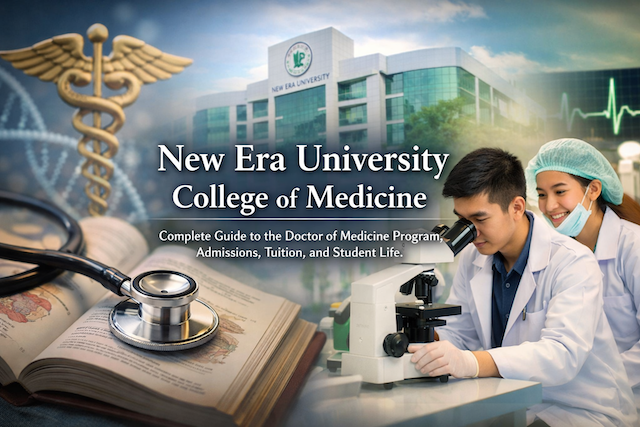
New Era University College of Medicine: Complete Guide to the Doctor of Medicine Program, Admissions, Tuition, and Student Life
Contents
- New Era University College of Medicine: Complete Guide to the Doctor of Medicine Program, Admissions, Tuition, and Student Life
- Overview of New Era University College of Medicine
- Why Students Consider NEU for Medicine
- Doctor of Medicine Program Structure in the Philippines
- Curriculum and Learning Style
- Clinical Training and Hospital Exposure
- Admissions Requirements and Application Process
- Tuition, Fees, and Typical Cost Considerations
- Campus Environment and Student Life
- Who NEU College of Medicine May Be Best For
- Tips for Succeeding in Medical School at NEU
- Career Path After Graduation
- Final Checklist Before You Apply
- FAQs (Frequently Asked Questions)
- Does New Era University College of Medicine offer a Doctor of Medicine (MD) program?
- What are the usual admission requirements for NEU College of Medicine?
- Is the NMAT required, and what NMAT score should I aim for?
- Can international students apply to New Era University College of Medicine?
- How long is the MD program, and what does each year usually focus on?
- What is clinical clerkship like, and where do students train?
- How much is tuition, and what additional costs should I budget for?
- Does NEU College of Medicine offer scholarships or financial assistance?
- What is student life like, and how demanding is the workload?
- After graduating, can I take the Physician Licensure Examination (PLE) and proceed to residency?
New Era University College of Medicine: Complete Guide to the Doctor of Medicine Program, Admissions, Tuition, and Student Life
Overview of New Era University College of Medicine
New Era University (NEU) is a private, non-profit university in Quezon City, Metro Manila, known for its broad academic offerings and its large campus environment compared with many city-based schools. The New Era University College of Medicine is part of the university’s health and science-focused programs and is designed for students who want to pursue the Doctor of Medicine (MD) degree in the Philippines.
Like most Philippine medical schools, NEU’s medical education pathway typically follows a pre-medical bachelor’s degree (or equivalent) and then a professional medical curriculum that combines classroom-based learning, laboratory work, clinical skills training, and hospital-based clerkship. The goal is to prepare students to take the Physician Licensure Examination (PLE) after graduation and to develop practical skills for residency training and long-term medical practice.
This guide explains what prospective students usually want to know: program structure, curriculum style, admissions requirements, tuition expectations, campus environment, and what student life may look like at NEU.
Why Students Consider NEU for Medicine
Students evaluate medical schools differently depending on budget, lifestyle, learning preferences, and long-term goals. Here are common reasons applicants look at New Era University College of Medicine:
- Metro Manila location: Quezon City is a major educational hub with access to hospitals, review centers, and professional networks.
- University campus setting: NEU is known for having a relatively expansive campus, which can appeal to students who prefer a more “campus” environment rather than scattered city buildings.
- Structured learning environment: Many students look for a school culture that supports discipline, clear policies, and consistent academic scheduling.
- Potential cost positioning: Private medical schools vary widely in fees. Some applicants explore NEU as an option that may be more manageable than the most expensive private institutions (actual tuition depends on the year level and official fee schedule).
Because medical school is a long-term commitment, it’s best to evaluate NEU not only based on admissions acceptance, but also on how well the training style matches your study habits, your ability to handle clinical workloads, and your financial plan.
Doctor of Medicine Program Structure in the Philippines
Although each institution has its own academic calendar and course sequencing, the Philippines generally follows a four-year MD program structure:
- Years 1–2: Strong focus on foundational medical sciences (anatomy, physiology, biochemistry, microbiology, pathology, pharmacology) plus early clinical exposure and basic patient interviewing skills.
- Year 3: More clinically oriented classroom learning (internal medicine, surgery, pediatrics, OB-GYN, psychiatry, community medicine) and hands-on skills practice, sometimes with case-based discussions.
- Year 4: Clinical clerkship/internship-style rotations under supervision in partner hospitals, applying medical knowledge directly to patient care.
At NEU College of Medicine, you should expect a combination of lectures, small-group sessions, laboratory work, and clinical skills activities. The details may change depending on curriculum updates, CHED guidance, and institutional improvements, but the overall goal remains consistent: build competence step-by-step from theory to bedside.
Curriculum and Learning Style
Medical students often underestimate how much learning style affects their daily life. Some schools emphasize traditional lectures, while others use more problem-based learning (PBL), team-based learning (TBL), or integrated organ-system approaches. NEU’s approach typically aims to balance structured instruction with practical application.
In many Philippine medical schools, early years can feel intense due to the volume of memorization and frequent exams. Students should prepare for:
- Weekly or frequent assessments: Quizzes, long exams, practical exams, and lab evaluations.
- Skills labs: Vital signs, basic physical exam techniques, history taking, and communication practice.
- Case discussions: Applying theory to clinical scenarios to develop diagnostic reasoning.
- Community exposure: Public health, preventive medicine, and community-oriented programs often appear throughout the curriculum.
If you learn best with clear schedules and defined expectations, a structured environment can be an advantage. If you prefer a self-directed format, you should ask how much independent learning and case-based learning is used.
Clinical Training and Hospital Exposure
Clinical training is one of the biggest deciding factors when choosing a medical school. A strong medical program should provide sufficient patient exposure, competent supervision, and diverse case experience across core specialties.
For NEU College of Medicine, your clerkship experience depends on the school’s affiliated hospitals and training sites. In clinical years, students typically rotate through:
- Internal Medicine
- Surgery
- Pediatrics
- Obstetrics and Gynecology
- Psychiatry
- Family and Community Medicine
- Emergency Medicine (depending on site availability)
When you are comparing options, ask specific questions such as: How many hospitals are available? What is the student-to-clinical-instructor ratio? Are rotations primarily in public hospitals, private hospitals, or a mix? How far are the training sites from campus? These factors shape your daily schedule and your real-world experience.
Admissions Requirements and Application Process
Admissions for Philippine medical schools generally include academic eligibility, an entrance test score, and an interview. Requirements vary slightly per institution, but applicants to NEU College of Medicine commonly prepare the following:
- Bachelor’s degree transcript: Any pre-med course may be accepted, but science-related backgrounds often help with first-year subjects.
- NMAT score: The National Medical Admission Test is a standard requirement for most MD programs.
- Application forms and documents: Birth certificate, identification, photos, good moral certificate, and other school-specific forms.
- Interview: Many schools use interviews to assess readiness, communication skills, and professional motivation.
International applicants may need additional requirements such as equivalency of credentials, proof of English proficiency (if requested), passport documents, and compliance with CHED and immigration-related requirements. Always confirm the latest admissions rules directly with the school, because NMAT policies and document requirements can change.
Tuition, Fees, and Typical Cost Considerations
Tuition and fees in medical school are a major deciding factor, and students should plan beyond the posted tuition figure. Your actual cost may include:
- Tuition and miscellaneous fees: Often increase as you progress into clinical years due to training-related costs.
- Uniforms and equipment: Lab gown/coat, stethoscope, sphygmomanometer, and other tools.
- Books and learning resources: Some students use digital subscriptions, review materials, and practice question banks.
- Transportation: Especially important during clerkship rotations when training sites may be off-campus.
- Board exam preparation: Review centers, mock exams, and extra materials are common expenses in later years.
If you are budgeting, plan for a multi-year commitment and prepare for possible increases. Ask NEU for the official fee schedule per year level and whether there are installment options. Also check if there are scholarships, academic discounts, or financial assistance programs.
Campus Environment and Student Life
Medical school life is demanding everywhere, but a supportive environment makes a noticeable difference. At NEU, being part of a larger university can offer a broader campus community, student organizations, and structured student services.
Typical aspects of student life include:
- Heavy weekly study routine: Most students develop a disciplined schedule combining lectures, review sessions, and group discussions.
- Peer support: Study groups are common and often essential for passing major exams.
- Student organizations: Medical student councils, interest groups, outreach programs, and academic teams may be available.
- Wellness management: Time management, sleep, and mental health support become critical, especially during exam-heavy months.
One practical tip: if possible, visit the campus or do a virtual tour, then evaluate your likely daily rhythm—commute time, access to food options, study spaces, and comfort in the environment. These details matter more than many applicants expect.
Who NEU College of Medicine May Be Best For
While every student’s situation is different, NEU College of Medicine may be a good match if you:
- Want to study medicine in Metro Manila with access to major hospitals and professional networks.
- Prefer a structured academic environment with clear policies and consistent scheduling.
- Value being in a university campus setting rather than a small standalone building.
- Are looking for a private medical school option and want to compare cost, location, and training sites with other Manila schools.
On the other hand, you should research carefully if you have a strong preference for a highly PBL-heavy curriculum, a specific hospital exposure type (e.g., large tertiary public hospital training), or if you need a very specific scholarship arrangement. The best approach is to compare NEU with 2–4 other schools using the same criteria: NMAT competitiveness, tuition, hospital rotations, and student support systems.
Tips for Succeeding in Medical School at NEU
Whether you study at NEU or another institution, success usually comes down to habits more than talent. Here are practical tips many medical students find useful:
- Build a weekly system: Schedule review blocks right after lectures rather than waiting for exam week.
- Use active recall: Flashcards, practice questions, and teaching concepts to peers work better than re-reading notes.
- Track weak areas early: Identify subjects you struggle with (often anatomy or biochemistry early on) and seek help quickly.
- Protect your health: Sleep, hydration, and basic exercise improve memory and endurance.
- Prepare for clinical years: Practice communication and patient interviewing early; clinical confidence is built gradually.
In clerkship, professionalism matters as much as knowledge. Consistency, punctuality, respectful communication, and willingness to learn will shape your evaluations and mentorship opportunities.
Career Path After Graduation
Graduating from an MD program in the Philippines typically leads to several pathways:
- Physician Licensure Examination (PLE): Most graduates focus on board preparation soon after finishing the program requirements.
- Residency training: Specialization through residency programs in hospitals (e.g., internal medicine, surgery, pediatrics, anesthesiology, radiology, etc.).
- General practice or community work: Some doctors work in clinics, community health programs, or public health roles.
- International pathways: Some graduates explore licensing routes abroad, which usually require additional exams and credential verification.
If your long-term plan includes practicing outside the Philippines, research licensing requirements early. Some paths require exams, clinical experience, language proficiency, and lengthy processing times.
Final Checklist Before You Apply
Before applying to New Era University College of Medicine, it helps to do a quick checklist:
- Confirm the latest NMAT score requirement and admissions timeline.
- Ask for the official tuition and fees per year level, including clinical year charges.
- Clarify affiliated hospitals and rotation logistics (distance, schedule, student support).
- Evaluate commute and living costs in Quezon City.
- Check scholarship or installment options if needed.
- Talk to current students or alumni if possible to understand day-to-day reality.
New Era University College of Medicine can be a strong option for students who want a Metro Manila-based medical education within a structured university environment. The best decision comes from matching the program’s training style and practical realities with your personal goals, finances, and preferred learning environment.
FAQs (Frequently Asked Questions)
Does New Era University College of Medicine offer a Doctor of Medicine (MD) program?
Yes. New Era University College of Medicine offers a Doctor of Medicine (MD) program designed to prepare students for medical practice in the Philippines. The program generally follows the standard Philippine medical education structure: foundational medical sciences in the early years, followed by more clinically oriented coursework and supervised clinical rotations in the later years. The exact course sequencing and training sites can change over time, so it is best to confirm the latest curriculum outline and clinical affiliation details directly with the college.
What are the usual admission requirements for NEU College of Medicine?
Most applicants should expect to submit a completed application form, official academic records (transcript of records from a bachelor’s degree), and other supporting documents such as identification materials and certificates required by the school. In the Philippines, a valid NMAT (National Medical Admission Test) score is commonly required for MD admissions. Many medical schools also conduct interviews to assess motivation, communication skills, readiness for the academic load, and overall fit for the profession. Because requirements may be updated, applicants should verify the latest checklist and deadlines on NEU’s official channels.
Is the NMAT required, and what NMAT score should I aim for?
In many Philippine medical schools, the NMAT is a standard requirement. The target score varies by institution and can differ from one admissions cycle to another. If you are applying to NEU College of Medicine, you should aim for the strongest NMAT score you can achieve, because it improves competitiveness and can be helpful if you apply to multiple schools. If your score is below your target, consider retaking the NMAT and strengthening your overall profile through strong grades, relevant experiences, and a convincing personal statement or interview performance (if applicable).
Can international students apply to New Era University College of Medicine?
International students may be able to apply, but requirements are typically more detailed than for local applicants. You may need credential evaluation or equivalency documents, passport and visa-related paperwork, and proof of ability to meet language and academic requirements. Some applicants may also need to comply with Philippine regulations for foreign students, including documentation required by government agencies. Because international admissions policies can change, you should contact the admissions office early and request a clear step-by-step process, estimated timelines, and a full list of documents.
How long is the MD program, and what does each year usually focus on?
In the Philippines, the MD program is commonly completed in four years. The first two years usually emphasize foundational sciences such as anatomy, physiology, biochemistry, microbiology, pathology, and pharmacology, alongside early clinical skills training. The third year often focuses more on clinical disciplines (internal medicine, surgery, pediatrics, obstetrics and gynecology, psychiatry, and community medicine) through lectures, case discussions, and skills practice. The fourth year is typically clinical clerkship, where students rotate through hospital departments under supervision and apply their learning to real patient care.
What is clinical clerkship like, and where do students train?
Clinical clerkship is the most hands-on part of medical school and usually involves rotating across major departments. Students take histories, perform basic physical exams under supervision, assist with documentation, attend rounds, and participate in case discussions. Training locations depend on the school’s affiliated hospitals and clinical partners. Because hospital affiliations and rotation logistics can change, you should ask NEU directly about the current training sites, daily schedules, transportation considerations, and how the school ensures adequate supervision and learning opportunities during rotations.
How much is tuition, and what additional costs should I budget for?
Tuition varies by year level and can change based on institutional policies. In addition to tuition and standard miscellaneous fees, students should budget for uniforms, medical instruments (such as a stethoscope and blood pressure cuff), books and digital resources, printing, transportation, and meals during long campus or hospital days. In later years, costs may increase due to clinical training needs, rotation-related logistics, and review materials for the Physician Licensure Examination (PLE). For accurate planning, request the official fee schedule for each year level and ask whether installment payment options are available.
Does NEU College of Medicine offer scholarships or financial assistance?
Some private universities provide scholarships or discounts based on academic performance, financial need, or specific institutional programs. Availability and eligibility can vary by year and may require maintaining a certain grade threshold. If you need financial support, ask about scholarship categories, deadlines, required documents, renewal conditions, and whether scholarships apply to both tuition and miscellaneous fees. Also ask about payment plans, because an installment option can be an important part of financial feasibility even without a scholarship.
What is student life like, and how demanding is the workload?
Medical school is demanding regardless of institution, and students should expect frequent exams, heavy reading requirements, laboratory work, and practical assessments. Many students rely on structured weekly schedules and peer study groups. Student life often becomes more focused and routine-based than in undergraduate years, but having access to a broader university environment can still provide study spaces, student services, and a sense of campus community. Success typically comes from consistent review habits, good time management, and maintaining basic health habits such as sleep and nutrition.
After graduating, can I take the Physician Licensure Examination (PLE) and proceed to residency?
Graduates of Philippine MD programs generally aim to take the Physician Licensure Examination (PLE) after completing the required academic and clinical components. After passing the PLE, many doctors pursue residency training to specialize, while others may work in general practice or community-based settings depending on goals and opportunities. If your long-term plan includes residency in a specific hospital or specialty, it helps to build a strong academic record, develop professional habits during clerkship, and seek mentorship early, because these factors can influence training opportunities after graduation.
Complete List of Medical Schools in the Philippines (All 78 MD Programs)
Best Medical Schools in the Philippines (Local & International Rankings)
Recommend
2026年1月23日
Sultan Kudarat State University College of Medicine: Complete Guide for Aspiring MD Students
2026年1月23日
University of Southern Mindanao College of Medicine: Complete Guide for Aspiring MD Students
2026年1月23日
Mindanao State University – General Santos College of Medicine: Complete Guide for Future MD Students

How to Register for eTravel Philippines (2025 Guide)
Step-by-step guide to completing your eTravel registration before arriving in the Philippines, with images and tips.

Night Market in Cebu – Things You Don’t Know About Cebu Life
Discover the hidden charm of Cebu’s night markets, from street food stalls to local life tips you won’t find in tourist guides.

How to Use ChatGPT for IELTS Preparation: A Complete Guide
Learn how to prepare for IELTS using ChatGPT — including strategies for Writing, Reading, Listening, Speaking, and grammar support.

How to Build a Website Without Coding Using ChatGPT
Discover how to build your own website using AI—no coding skills needed. From structure planning to SEO and design, let ChatGPT guide you.