2026年1月23日
3D ACADEMY offers affordable English study programs in Cebu, Philippines – perfect for beginners, professionals, and exam takers.

3D UNIVERSAL ENGLISH INSTITUTE INC
info.3d-universal.com
8:00-17:00(Mon-Fri)
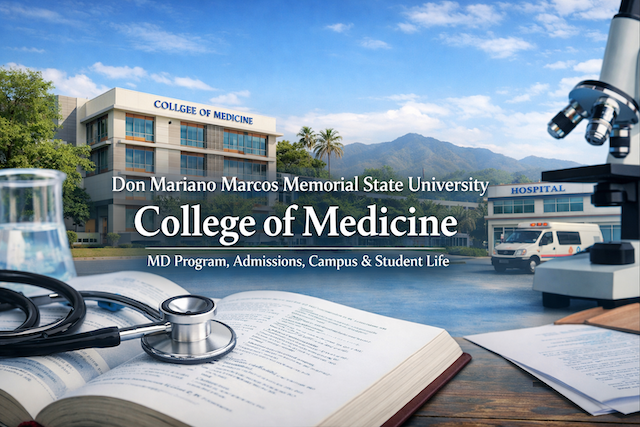
Don Mariano Marcos Memorial State University College of Medicine: Complete Guide to the MD Program, Admissions, Campus, and Student Life
Contents
- Don Mariano Marcos Memorial State University College of Medicine: Complete Guide to the MD Program, Admissions, Campus, and Student Life
- Overview of DMMMSU and Its College of Medicine
- Location and Campus Environment (South La Union Campus – Agoo)
- Program Offered: Doctor of Medicine (MD)
- Integrated Liberal Arts and Medicine Pathway (If Available)
- Curriculum and Learning Approach: What to Expect
- Clinical Training and Hospital Exposure
- Admissions: Common Requirements for Philippine Medical Schools
- How to Build a Strong Application
- Tuition, Fees, and Financial Planning
- Student Life: Workload, Culture, and Support Systems
- Housing and Cost of Living in Agoo / La Union
- Career Path After Graduation
- Who Should Consider DMMMSU College of Medicine?
- Practical Next Steps for Applicants
- FAQs (Frequently Asked Questions)
- Is Don Mariano Marcos Memorial State University (DMMMSU) College of Medicine a public medical school?
- Where is the DMMMSU College of Medicine located?
- What degree does DMMMSU College of Medicine offer?
- Is the program suitable for students who want to practice in Northern Luzon?
- What are the typical admissions requirements for medical schools in the Philippines?
- What NMAT score do I need for DMMMSU College of Medicine?
- Does DMMMSU College of Medicine accept non-traditional pre-med degrees?
- How challenging is the MD program workload?
- What clinical exposure can students expect during training?
- Is DMMMSU College of Medicine good for students aiming for residency training later?
- How much does it cost to study medicine at DMMMSU?
- What is student life like in Agoo, La Union?
- What should I prepare before applying?
Don Mariano Marcos Memorial State University College of Medicine: Complete Guide to the MD Program, Admissions, Campus, and Student Life
Overview of DMMMSU and Its College of Medicine
Don Mariano Marcos Memorial State University (DMMMSU) is a public state university system in La Union, Northern Luzon, with multiple campuses serving different parts of the province. In recent years, the university took a major step in strengthening healthcare education in the region through the establishment of a dedicated College of Medicine under the DMMMSU–South La Union Campus (SLUC), located in Agoo, La Union. The creation of this college matters for two reasons: first, it expands access to medical education outside Metro Manila and other major urban centers; second, it supports the long-term goal of developing more locally trained physicians who understand the health needs of communities in La Union and nearby provinces.
Because the DMMMSU College of Medicine is relatively new, some program details may evolve as the college builds its facilities, partnerships, and academic systems. For prospective applicants, the most practical approach is to understand how medical education in the Philippines typically works, then map those expectations onto DMMMSU’s regional mission and developing ecosystem. This guide explains what you can reasonably expect from the Doctor of Medicine pathway at DMMMSU, how admissions generally work for Philippine medical schools, what student life might look like in Agoo/La Union, and how to plan your timeline.
Location and Campus Environment (South La Union Campus – Agoo)
The DMMMSU College of Medicine is associated with the South La Union Campus (SLUC), which is based in Agoo, La Union. Agoo is a growing municipality with a mix of local commerce, student-oriented services, and relatively easy access to other parts of La Union. This can be an advantage for medical students who prefer a quieter environment than large cities, while still having the essentials needed for academic life—housing options, food establishments, transportation routes, and community resources.
Studying medicine outside a megacity can also be a strategic advantage. Clinical learning is not only about large tertiary hospitals; it is also about understanding primary care realities, rural health challenges, patient education, and continuity of care. A regional medical school often has stronger ties to local public health initiatives, community clinics, and provincial healthcare priorities. If your long-term goal includes working in Northern Luzon or serving communities outside the capital, DMMMSU’s location can align well with that path.
Program Offered: Doctor of Medicine (MD)
The primary degree offered by the DMMMSU College of Medicine is the Doctor of Medicine (MD). In the Philippines, the MD is typically a professional graduate program entered after completing a bachelor’s degree. The standard structure in many Philippine medical schools includes:
- Years 1–2 (Pre-clinical years): Classroom and laboratory-heavy training in foundational medical sciences such as anatomy, physiology, biochemistry, histology, pathology, microbiology, pharmacology, and introductory clinical skills.
- Year 3 (Clinical transition): More systems-based learning, integrated case discussions, and expanded clinical exposure. Students begin to connect disease mechanisms to diagnosis and management, with more patient-facing activities.
- Year 4 (Clinical clerkship): Rotations in major hospital departments such as internal medicine, surgery, pediatrics, obstetrics and gynecology, psychiatry, family and community medicine, and emergency medicine.
After the MD proper, graduates proceed to the Postgraduate Internship (PGI) year in an accredited hospital. Following internship, graduates may take the Physician Licensure Examination to become licensed physicians. Specific rotation schedules and academic policies can vary by institution, but the overall arc is consistent across the country.
Integrated Liberal Arts and Medicine Pathway (If Available)
Alongside the MD program, the establishment framework for DMMMSU’s College of Medicine includes the possibility of an Integrated Liberal Arts and Medicine pathway. In the Philippines, “integrated” medicine tracks often aim to streamline the pipeline by aligning undergraduate preparation with medical school readiness. Depending on how the university implements it, an integrated pathway may:
- Provide a structured pre-med curriculum designed specifically for medical school entry
- Offer earlier clinical exposure or health systems learning during the undergraduate phase
- Set academic benchmarks that qualify students for progression into the MD phase
If you are considering an integrated option, treat it as a separate admissions track with its own requirements and academic expectations. In many universities, integrated programs are competitive and may prioritize applicants with strong science backgrounds and clear commitment to medicine.
Curriculum and Learning Approach: What to Expect
Modern medical education increasingly emphasizes integration and competency-based learning. Even in traditional medical schools, students commonly encounter:
- Case-based discussions: Learning topics through patient scenarios rather than isolated subjects.
- Clinical skills training: History-taking, physical exams, communication skills, and basic procedures introduced early.
- Community and public health exposure: Projects or rotations in community settings to understand population health needs.
- Assessment variety: Written exams, practical exams, OSCE-style stations, research outputs, and clinical performance evaluations.
For a developing medical school, you can also expect the curriculum to be shaped by partnerships—with hospitals, local government units, and community health programs—because these relationships determine training sites and clinical volume. Over time, as affiliations expand, students usually gain access to a wider range of patient cases and specialty services.
Clinical Training and Hospital Exposure
Clinical exposure is a major factor when evaluating any medical school. At regional universities, clinical training often involves a combination of:
- Affiliated public hospitals: High patient volume and broad pathology; strong exposure to real-world healthcare constraints.
- Partner private hospitals: Additional specialty exposure and different hospital workflows.
- Community health centers and rural health units: Preventive medicine, maternal and child health, chronic disease management, and public health programs.
When evaluating DMMMSU, focus on how clinical placements are structured and how students are supervised. Good signs include clear rotation objectives, organized clinical teaching schedules, active mentorship, and strong patient safety culture. Because medical training is hands-on, your learning quality depends heavily on the consistency of clinical teaching and the maturity of training partnerships.
Admissions: Common Requirements for Philippine Medical Schools
Admissions policies can differ by institution, but Philippine medical schools generally require applicants to have completed a bachelor’s degree and to submit an NMAT score. Many schools also require interviews and documentation that supports academic readiness and professional character.
Common requirements you should prepare for include:
- Bachelor’s degree (any field is usually accepted, but science-heavy degrees often help with foundational subjects)
- NMAT score (each school sets its own minimum and competitiveness level)
- Official transcript of records and proof of graduation
- Good moral character references or certificates
- Medical certificate indicating fitness to study
- Personal statement or essay (in some schools)
- Interview (often used to assess motivation, maturity, and communication skills)
Because DMMMSU’s College of Medicine is newly established, it is especially important to verify the latest admissions checklist and deadlines from official university announcements. New schools sometimes release updated instructions closer to their opening and enrollment cycles.
How to Build a Strong Application
If you want to be competitive for DMMMSU College of Medicine, focus on the elements that matter most in medical admissions:
- NMAT performance: Allocate serious preparation time. Your NMAT percentile rank can significantly affect your options.
- Solid academic record: Especially in biology, chemistry, physics, and social sciences that support medical reasoning and communication.
- Clear motivation: Be ready to explain why medicine and why you want to train in La Union/Northern Luzon.
- Community involvement: Volunteer health activities, public service, tutoring, or leadership roles show maturity and social responsibility.
- Professionalism: Strong references, ethical awareness, and a realistic understanding of medical training are valued in interviews.
For a state university medical school, alignment with regional healthcare goals can be particularly meaningful. If you can demonstrate interest in community medicine, public health, primary care, or serving underserved areas, your application story can become more coherent and compelling.
Tuition, Fees, and Financial Planning
As a state university, DMMMSU may offer more affordable tuition compared with private medical schools, but “medical school costs” are not only about tuition. Your budget should include:
- Tuition and miscellaneous school fees
- Books and learning resources (including online platforms)
- Medical instruments (stethoscope, sphygmomanometer, basic diagnostic tools)
- Uniforms, ID, and required documentation
- Transportation and daily living expenses
- Rotation-related costs during clerkship (commute, meals, potential lodging if assigned off-campus)
Also explore scholarships and grants. In many cases, state universities and local government units support health education through scholarships tied to service commitments. If you are open to practicing in the region after graduation, service-based scholarships can significantly reduce your financial burden while keeping your career path aligned with community needs.
Student Life: Workload, Culture, and Support Systems
Medical school is demanding everywhere. Expect heavy reading, frequent exams, practical skills training, and ongoing pressure to keep up. What makes the experience manageable is not “easy coursework,” but a healthy support system and a learning culture that values growth and professionalism.
In a provincial setting like Agoo/La Union, students often report advantages such as shorter commutes, less city distraction, and a calmer environment that supports study routines. You can also build a close cohort culture because student communities in regional campuses tend to be smaller and more connected. That said, you should still plan actively for mental health and burnout prevention by building routines for sleep, exercise, and peer support.
Housing and Cost of Living in Agoo / La Union
Compared with Metro Manila, living costs in La Union can be more manageable, but your actual expenses depend on lifestyle and housing choices. Many medical students prefer to live near campus to reduce commute time and preserve study hours. When choosing housing, prioritize:
- Reliable internet connection (non-negotiable for modern medical learning)
- Quiet environment and safe neighborhood
- Access to food and basic necessities
- Transportation options for clinical duties
If you are relocating from another province, consider arriving early to scout accommodations. Medical school schedules can become intense quickly, so you want stable living arrangements before classes accelerate.
Career Path After Graduation
The MD program is only the beginning. After graduation, most students proceed to a postgraduate internship and then take the licensure exam. After becoming a licensed physician, you can pursue:
- General practice in clinics, hospitals, or community settings
- Residency training in a specialty (internal medicine, surgery, pediatrics, OB-GYN, psychiatry, family medicine, and more)
- Public health or government service through local health offices and public health programs
- Academic medicine through teaching and research roles
If DMMMSU’s College of Medicine emphasizes community health and regional service, graduates may find strong opportunities in Northern Luzon and neighboring areas where physician demand can be high. Over time, as the college develops a track record, its alumni network and institutional partnerships can further expand residency and employment pathways.
Who Should Consider DMMMSU College of Medicine?
DMMMSU College of Medicine can be a strong fit if you:
- Want to train in Northern Luzon and build a career serving regional communities
- Prefer a state university environment and potentially more accessible tuition structures
- Value community-based learning and public health alignment
- Are comfortable joining a newer medical school and growing with the institution
On the other hand, if you strongly prefer long-established medical schools with large tertiary hospital ecosystems already deeply embedded in the institution, you should carefully compare DMMMSU’s current clinical affiliations, facilities, and policies with other options. A newer college can still provide excellent education, but you must evaluate it based on updated, official program details.
Practical Next Steps for Applicants
If you are seriously considering DMMMSU College of Medicine, here is a practical checklist to guide your next steps:
- Confirm the latest admissions requirements: Look for official announcements, application portals, and deadlines.
- Plan your NMAT schedule: Take the exam early enough to retake if needed.
- Organize documents: Transcript, certificates, identification documents, and recommendation letters.
- Prepare for the interview: Practice explaining your motivation, study habits, and understanding of medical training demands.
- Budget realistically: Include living expenses, learning tools, and clinical rotation costs.
- Research La Union living logistics: Housing, commute, food access, and internet reliability.
With the right preparation and mindset, a regional state university medical school can be a meaningful and strategic pathway into medicine—especially for students who want to serve where they are most needed. DMMMSU College of Medicine represents an important development for La Union and nearby provinces, and for aspiring doctors who want to grow professionally while staying grounded in community-centered healthcare.
FAQs (Frequently Asked Questions)
Is Don Mariano Marcos Memorial State University (DMMMSU) College of Medicine a public medical school?
Yes. DMMMSU is a state university in the Philippines, which means it operates as a public institution. For many applicants, this is appealing because public universities often provide a more accessible cost structure than private schools. However, “public” does not automatically mean “easy to enter.” Admissions can still be selective, and the program workload is comparable to other Doctor of Medicine (MD) programs nationwide. Always confirm the most current policies, fees, and application timelines through official DMMMSU announcements, because new programs may update requirements as they expand.
Where is the DMMMSU College of Medicine located?
The College of Medicine is associated with DMMMSU’s South La Union Campus (SLUC) in Agoo, La Union, in Northern Luzon. This location is often a good match for students who want a calmer environment than major cities while still having access to daily necessities and academic support services. Living near campus can reduce commute stress and help you protect your study time—an important factor in medical school. If you are relocating from another province, plan your housing early so you can focus on academics once classes begin.
What degree does DMMMSU College of Medicine offer?
The core program is the Doctor of Medicine (MD). In the Philippines, the MD is typically completed after a bachelor’s degree, followed by a postgraduate internship (PGI) and then the Physician Licensure Examination. Most MD programs follow a progression from pre-clinical foundations (medical sciences and skills labs) to more patient-centered clinical learning and clerkship rotations in hospitals. Specific structures can vary across schools, so applicants should review the latest curriculum outline and academic policies provided by the college.
Is the program suitable for students who want to practice in Northern Luzon?
It can be an excellent fit. Regional medical schools often emphasize community health realities, public health needs, and locally relevant clinical exposure. If your long-term goal includes serving La Union or nearby provinces, training in the region can help you build networks with local hospitals, mentors, and health programs. Many students find that learning in a provincial setting strengthens their understanding of primary care, preventive medicine, and resource-aware clinical decision-making—skills that are valuable in both rural and urban practice.
What are the typical admissions requirements for medical schools in the Philippines?
While each institution sets its own policies, many Philippine medical schools require a completed bachelor’s degree, an NMAT score, official transcripts, and supporting documents such as certificates of good moral character. Schools commonly conduct interviews to evaluate motivation, communication skills, maturity, and professionalism. Some programs may ask for additional essays, medical certificates, or proof of community involvement. Because requirements can change, especially for newer programs, it is best to treat official DMMMSU admissions postings as your primary reference.
What NMAT score do I need for DMMMSU College of Medicine?
Minimum and competitive NMAT percentiles depend on the school’s policy and applicant volume for that cycle. Instead of focusing only on the minimum, aim for the strongest score you can reasonably achieve, because higher NMAT performance generally increases your admission odds and may improve scholarship opportunities. Plan your NMAT timeline strategically: take the exam early enough that you can retake it if your first result does not reflect your potential. Combine content review with practice tests, since time management and test familiarity matter.
Does DMMMSU College of Medicine accept non-traditional pre-med degrees?
Many medical schools in the Philippines accept applicants from a wide range of undergraduate backgrounds, not only biology or pre-med majors. What matters most is whether you can handle the academic demands of medical training. If your bachelor’s degree is not science-heavy, you may need to invest more time in strengthening foundational knowledge in biology, chemistry, physics, and statistics, as well as study habits for high-volume reading. In interviews, explain how your background contributes to medicine and how you prepared for the transition.
How challenging is the MD program workload?
Medical school is consistently intense. Expect frequent assessments, large reading requirements, practical skills training, and a continuous need to integrate concepts across subjects. Your success will depend on time management, disciplined routines, and effective study strategies rather than “studying longer hours” alone. Most students benefit from active recall methods, spaced repetition, practice questions, and regular group discussions. It also helps to set realistic weekly goals and protect your sleep, because exhaustion reduces retention and performance over time.
What clinical exposure can students expect during training?
Clinical learning is usually built through affiliated hospitals and community health facilities. In many Philippine MD programs, early years focus on foundational sciences and basic clinical skills, while later years increase patient contact through clinical rotations. A regional setting may offer meaningful exposure to common conditions, primary care challenges, maternal and child health, and public health programs. When evaluating any medical school, ask about rotation structure, supervision, case volume, and the clarity of learning objectives—these strongly influence your clinical competence.
Is DMMMSU College of Medicine good for students aiming for residency training later?
Many factors influence residency outcomes, including your grades, clinical performance, board exam results, recommendations, and interview skills. A strong residency application usually reflects consistent competence, professionalism, and commitment to learning. Training at a developing program can still be a solid path if you take ownership of your education, build mentorship relationships, and seek clinical experiences actively. Focus on becoming a reliable and teachable trainee during clerkship, since that reputation often leads to stronger references and better opportunities.
How much does it cost to study medicine at DMMMSU?
As a state university, DMMMSU may offer a more accessible fee structure than private medical schools, but total costs go beyond tuition. Budget for books and digital resources, medical instruments (such as a stethoscope), uniforms, transportation, daily living expenses, and rotation-related costs during clerkship. If you are relocating, include housing deposits and setup costs. Also explore scholarships, grants, and local government support programs, which may reduce your financial burden, sometimes with service commitments after graduation.
What is student life like in Agoo, La Union?
Many students prefer a quieter environment for medical school because it reduces distractions and commute stress. In a provincial setting, you may find a close-knit cohort culture and a more consistent daily routine. At the same time, medical school can feel isolating if you do not build support systems. Plan to maintain healthy habits—sleep, basic exercise, balanced meals, and scheduled rest—because burnout is common in medical training. Joining study groups and staying connected with peers can also improve performance and well-being.
What should I prepare before applying?
Start with a clear timeline: NMAT date, document collection, and application deadlines. Prepare official transcripts, certificates, identification documents, and references early, because processing can take time. Then work on your application story—why medicine, why DMMMSU, and how your background aligns with community health needs. Finally, prepare for interviews by practicing concise answers that show maturity, ethical awareness, and realistic expectations. Strong applicants demonstrate both academic readiness and the character to handle clinical responsibility.
Complete List of Medical Schools in the Philippines (All 78 MD Programs)
Recommend
2026年1月23日
Sultan Kudarat State University College of Medicine: Complete Guide for Aspiring MD Students
2026年1月23日
University of Southern Mindanao College of Medicine: Complete Guide for Aspiring MD Students
2026年1月23日
Mindanao State University – General Santos College of Medicine: Complete Guide for Future MD Students

How to Register for eTravel Philippines (2025 Guide)
Step-by-step guide to completing your eTravel registration before arriving in the Philippines, with images and tips.

Night Market in Cebu – Things You Don’t Know About Cebu Life
Discover the hidden charm of Cebu’s night markets, from street food stalls to local life tips you won’t find in tourist guides.

How to Use ChatGPT for IELTS Preparation: A Complete Guide
Learn how to prepare for IELTS using ChatGPT — including strategies for Writing, Reading, Listening, Speaking, and grammar support.

How to Build a Website Without Coding Using ChatGPT
Discover how to build your own website using AI—no coding skills needed. From structure planning to SEO and design, let ChatGPT guide you.