2026年1月23日
3D ACADEMY offers affordable English study programs in Cebu, Philippines – perfect for beginners, professionals, and exam takers.

3D UNIVERSAL ENGLISH INSTITUTE INC
info.3d-universal.com
8:00-17:00(Mon-Fri)
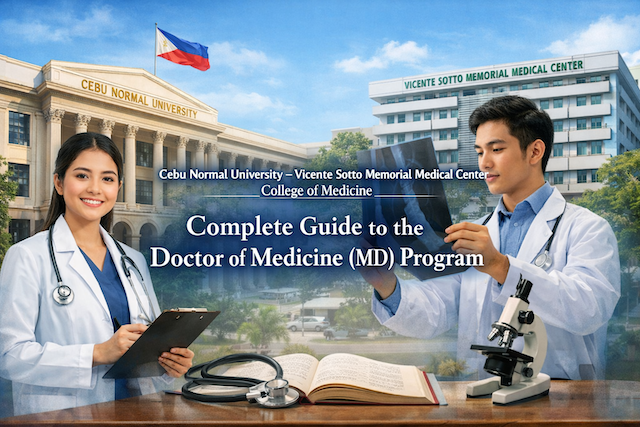
Cebu Normal University – Vicente Sotto Memorial Medical Center College of Medicine: Complete Guide to the Doctor of Medicine (MD) Program
Contents
- Cebu Normal University – Vicente Sotto Memorial Medical Center College of Medicine: Complete Guide to the Doctor of Medicine (MD) Program
- What CNU–VSMMC College of Medicine Is
- Why Students Choose This Program
- MD Program Overview: What You Study
- Learning Style and Teaching Approach
- Clinical Training at Vicente Sotto Memorial Medical Center
- Admissions: Typical Requirements and What to Prepare
- Tuition, Fees, and Budget Planning
- Student Life: Schedule, Workload, and Support Systems
- Research, Community Health, and Public Service
- How Graduates Move Forward: Licensure and Career Path
- Who This Program Fits Best
- Practical Tips for Applicants
- Final Thoughts
- FAQs (Frequently Asked Questions)
- What is Cebu Normal University – Vicente Sotto Memorial Medical Center College of Medicine?
- Is this an MD (Doctor of Medicine) program or a pre-med program?
- Why do students consider a hospital-linked medical program like CNU–VSMMC?
- What kind of learning environment should students expect?
- What are the typical admission requirements for medical school in the Philippines?
- Is the NMAT required, and what score should I aim for?
- What subjects and competencies are covered in the MD curriculum?
- How does clinical training at a large government hospital help medical students?
- What are medical students expected to do during clinical rotations?
- How heavy is the workload, and what study habits are most effective?
- What costs should I plan for besides tuition?
- Does the program include research and community health activities?
- What happens after graduating from an MD program in the Philippines?
- Who is the best fit for a program connected to a public tertiary hospital?
- How can I improve my chances of admission?
Cebu Normal University – Vicente Sotto Memorial Medical Center College of Medicine: Complete Guide to the Doctor of Medicine (MD) Program
Cebu Normal University – Vicente Sotto Memorial Medical Center College of Medicine (often shortened as CNU–VSMMC College of Medicine) is one of the medical education pathways in Cebu that blends academic training with hospital-based clinical exposure. For aspiring doctors who want to study in a setting closely connected to a large public tertiary hospital, the CNU–VSMMC model is especially appealing. Students typically look at this program when they want strong bedside learning, early exposure to real patient care, and a training environment that reflects the day-to-day realities of healthcare delivery in the Philippines.
This guide explains what the program is, what students can expect in the MD journey, how admissions generally work, and how to prepare if you are aiming to apply. Because policies can change from year to year, treat this as a practical overview and always confirm the most current requirements and deadlines directly with the official school and hospital channels.
What CNU–VSMMC College of Medicine Is
CNU–VSMMC College of Medicine is commonly understood as a partnership-based medical program connected to Cebu Normal University (CNU) and Vicente Sotto Memorial Medical Center (VSMMC). CNU is widely recognized for teacher education and allied academic programs, while VSMMC is known as a major government hospital in Cebu that serves a high volume of patients. In a partnership structure like this, the university side often supports academic administration and learning resources, while the hospital side provides the core clinical training environment: wards, outpatient departments, emergency services, operating rooms, and specialty units.
For many students, the main advantage is clear: clinical training is not something “added later.” The hospital is central to the identity of the program. This matters because medicine is not only about reading textbooks; it is about decision-making, communication, teamwork, and patient-centered care. A strong clinical setting can accelerate professional growth, especially for students who learn best by seeing real cases and participating in supervised care.
Why Students Choose This Program
Medical students consider CNU–VSMMC for several reasons:
- High patient exposure: A government tertiary hospital typically handles a wide range of conditions, from common infections to complex chronic diseases, trauma, high-risk pregnancies, and referrals from other facilities.
- Realistic training environment: Students learn how care is delivered under real-world constraints, which can sharpen clinical reasoning, resource management, and professionalism.
- Public-service orientation: Many students want their medical education to be grounded in community health and service to diverse populations.
- Opportunities for strong mentorship: In hospital-based programs, learning often comes from residents and consultants who teach while practicing.
- Preparation for residency: The rhythm of clinical work can help students transition more smoothly into internship and residency after graduation.
That said, this style of training can be demanding. Students should be prepared for early mornings, long study hours, and emotionally intense clinical experiences. If you value structured learning plus hands-on exposure, the environment can be a great fit.
MD Program Overview: What You Study
The Doctor of Medicine (MD) program in the Philippines is commonly a multi-year professional program that moves from foundational sciences to clinical clerkship and internship preparation. While specific sequencing can vary, students generally progress through these phases:
- Pre-clinical years: Heavy focus on basic medical sciences and skills training.
- Clinical years: Hospital rotations and supervised patient care activities.
- Integration and review: Case-based learning, exams, and preparation for licensure.
Students can expect core subjects such as Anatomy, Physiology, Biochemistry, Pharmacology, Pathology, Microbiology and Parasitology, Medicine, Surgery, Pediatrics, Obstetrics and Gynecology, Psychiatry, and Community Medicine / Public Health. Many programs also include research methods, bioethics, medical jurisprudence, and clinical epidemiology.
Learning Style and Teaching Approach
Hospital-connected medical programs often emphasize applied learning. Instead of only memorizing facts, students repeatedly practice how to use information in patient care. Teaching methods may include:
- Lectures and small-group discussions to build core knowledge.
- Laboratory sessions (e.g., anatomy labs, microbiology labs) to understand scientific foundations.
- Clinical skills training such as history taking, physical examination, basic procedures, and communication skills.
- Case-based conferences where students analyze patient scenarios and justify diagnosis and management plans.
- Ward rounds and clerkship rotations under supervision in the hospital setting.
If you thrive in environments where learning is connected to real patient stories, you may find this approach highly motivating. If you prefer strictly classroom-based learning with fewer hospital demands early on, you should consider how you handle high-intensity clinical exposure.
Clinical Training at Vicente Sotto Memorial Medical Center
VSMMC’s role as a major medical center is a key feature. In clinical years, students may rotate through departments such as Internal Medicine, General Surgery, Pediatrics, Obstetrics and Gynecology, Emergency Medicine, Anesthesiology, Orthopedics, ENT, Ophthalmology, Radiology, and other specialties depending on availability and program design.
Clinical training typically includes:
- Patient interviewing and documentation: Learning how to take a complete history, write progress notes, and present cases.
- Physical examination skills: Systematic exam techniques and identifying relevant findings.
- Diagnostic reasoning: Creating differential diagnoses and choosing appropriate tests.
- Management planning: Understanding initial treatment steps, referrals, and follow-up plans under supervision.
- Teamwork: Working with nurses, residents, consultants, and allied health professionals.
- Professional behavior: Confidentiality, consent, ethical decision-making, and patient respect.
Students often discover that clinical medicine is both inspiring and challenging. You will meet patients with limited resources, complex social situations, and urgent needs. This setting can deepen empathy and strengthen your commitment to service.
Admissions: Typical Requirements and What to Prepare
Admission policies vary by institution and may be updated periodically. However, applicants to MD programs in the Philippines commonly prepare the following:
- Bachelor’s degree or equivalent from a recognized institution.
- Academic records (transcripts, diploma, and related documents).
- NMAT (National Medical Admission Test) results meeting the program’s required percentile rank.
- Application forms and personal data sheets provided by the school.
- Recommendation letters (some schools request these).
- Interview as part of screening (often used to assess motivation, communication, and readiness).
- Medical clearance and other health-related documents where required.
If you are planning to apply, it helps to prepare a clear personal statement or interview narrative: why you want medicine, why this program, and what kind of doctor you hope to become. Schools connected to public hospitals often value service orientation, resilience, and professionalism.
Tuition, Fees, and Budget Planning
Costs can differ significantly depending on whether the program is structured as a public institution offering, a partnered program, or includes additional hospital-related fees. Beyond tuition, medical students should budget for:
- Uniforms and clinical attire (white coats, scrubs, shoes).
- Medical tools (stethoscope, sphygmomanometer, penlight, reflex hammer, etc.).
- Books and learning resources (print and digital references).
- Laboratory and miscellaneous fees depending on the curriculum.
- Transportation between home, campus, and hospital.
- Daily living costs (meals, rent if living near Cebu City, utilities).
Many students underestimate the “small but frequent” expenses. Planning a realistic monthly budget reduces stress during exam-heavy periods.
Student Life: Schedule, Workload, and Support Systems
Medical school is a full-time commitment. A typical week may involve lectures, practicals, skills labs, quizzes, and group work. During clinical years, schedules often shift toward hospital duty hours and rotation-based learning.
To succeed, most students develop systems early:
- Study routines: Daily review, weekly consolidation, and exam-focused practice.
- Peer support: Study groups can help, especially for anatomy, pathology, pharmacology, and case discussions.
- Health habits: Sleep, nutrition, and exercise matter more than many students expect.
- Mentorship: Guidance from faculty, residents, or senior students helps you navigate both academics and hospital culture.
If your program includes counseling, wellness initiatives, or student organizations, consider participating. The emotional intensity of clinical exposure can be heavy, and support systems are not optional—they are part of sustainable success.
Research, Community Health, and Public Service
Medical training increasingly emphasizes evidence-based practice and community health impact. Many programs require a research component such as a thesis, capstone project, or research paper. The goal is not only academic output; it is learning how to evaluate evidence, understand study design, and apply research to patient care.
Community medicine and public health activities may include health education projects, community immersion, epidemiology exercises, or local health system exposure. For students in Cebu, this can also mean understanding regional health priorities and the realities of urban and rural healthcare access.
How Graduates Move Forward: Licensure and Career Path
After completing an MD program, graduates generally proceed toward internship, licensure examination, and eventual residency training. The typical progression includes:
- Completion of the medical degree and required clinical rotations.
- Postgraduate internship (often in an accredited hospital) depending on national regulations and institutional pathways.
- Physician licensure examination (Philippines) and registration as a licensed physician upon passing.
- Residency training in a chosen specialty (e.g., Internal Medicine, Surgery, Pediatrics, OB-GYN, Family Medicine, etc.).
A hospital-based training environment can be helpful when you apply for residency because you will be familiar with the workflow, documentation standards, and multidisciplinary coordination that residency demands.
Who This Program Fits Best
CNU–VSMMC College of Medicine can be a strong match if you:
- Prefer learning with direct clinical context rather than only classroom theory.
- Want extensive exposure to a wide range of patient cases.
- Value public service, community health, and practical training.
- Are ready for a demanding schedule and emotionally intense learning experiences.
- Plan to build strong clinical confidence and communication skills early.
On the other hand, if you need a slower transition into hospital life or strongly prefer a purely campus-centered environment, you should consider whether the hospital-based demands align with your learning style.
Practical Tips for Applicants
If you are preparing to apply, these steps can strengthen your readiness:
- Plan your NMAT strategy early: Treat it like a major project and schedule consistent prep.
- Organize documents in advance: Transcripts and certifications can take time to request.
- Prepare for interviews: Practice explaining your motivation, your understanding of medical training, and how you handle pressure.
- Visit the area if possible: If you will relocate, understand commuting realities and housing costs near Cebu City.
- Build habits now: Consistent study and discipline matter more than “natural intelligence” in medical school.
Most importantly, be honest about your “why.” Medicine is a long journey. Programs connected to public hospitals often look for students who are not only academically capable but also grounded, respectful, and committed to patient care.
Final Thoughts
Cebu Normal University – Vicente Sotto Memorial Medical Center College of Medicine stands out for students who want a medical education tied closely to a high-volume clinical environment. The combination of academic training and hospital-based experience can develop strong clinical instincts, resilience, and a service-oriented mindset—qualities that shape not only competent physicians but also compassionate ones.
If you are serious about applying, your next best step is to confirm current admissions requirements, NMAT thresholds, application timelines, and program policies directly with official sources. Once you have those details, you can plan your application timeline, budget, and preparation strategy with confidence.
FAQs (Frequently Asked Questions)
What is Cebu Normal University – Vicente Sotto Memorial Medical Center College of Medicine?
Cebu Normal University – Vicente Sotto Memorial Medical Center College of Medicine (often written as CNU–VSMMC College of Medicine) is an MD program pathway associated with Cebu Normal University and connected to Vicente Sotto Memorial Medical Center, a major government hospital in Cebu City. The structure is designed to blend academic learning with hospital-based clinical exposure, allowing students to train in an environment where real patient cases and public-service healthcare are central to daily learning.
Is this an MD (Doctor of Medicine) program or a pre-med program?
This is an MD-level program, meaning it is intended for students who have already completed a bachelor’s degree (or equivalent requirement) and are pursuing professional medical training. It is not a pre-med track. Applicants should plan their undergraduate education and required entrance exams accordingly before applying for medical school admission.
Why do students consider a hospital-linked medical program like CNU–VSMMC?
Many students choose hospital-linked programs because they want clinical learning to be a core part of training, not just a late-stage add-on. A major public hospital typically offers high patient volume and diverse cases, which can strengthen clinical reasoning, communication, and practical skills. Students who want exposure to real-world healthcare delivery—especially public-service medicine—often see this model as an advantage.
What kind of learning environment should students expect?
Students can expect a mix of classroom-based teaching and applied, case-focused learning. Early years typically emphasize foundational medical sciences and skills labs, while later years shift toward clinical rotations and supervised patient care tasks. Teaching commonly includes lectures, small-group discussions, anatomy and laboratory sessions, clinical skills training, case presentations, and ward-based learning. The environment can be demanding, requiring consistent study habits and professional behavior.
What are the typical admission requirements for medical school in the Philippines?
While exact requirements differ by institution and can change, applicants usually need a recognized bachelor’s degree, official transcripts, and a qualifying NMAT (National Medical Admission Test) score. Many schools also require completed application forms, identification documents, and may conduct interviews. Some programs request recommendation letters and medical clearance. Always confirm current requirements and deadlines with the program’s official admissions office.
Is the NMAT required, and what score should I aim for?
Most MD programs in the Philippines require the NMAT. The required percentile rank varies by school and may be updated each admission cycle. As a practical strategy, aim as high as possible to strengthen your application and widen your options. If you are targeting competitive programs or limited slots, a strong NMAT can be a key differentiator alongside grades and interview performance.
What subjects and competencies are covered in the MD curriculum?
MD curricula generally include core medical sciences such as Anatomy, Physiology, Biochemistry, Pharmacology, Pathology, Microbiology, and related laboratory work. As students progress, training expands into major clinical disciplines like Internal Medicine, Surgery, Pediatrics, Obstetrics and Gynecology, Psychiatry, and Community Medicine/Public Health. Programs also emphasize clinical skills, professionalism, ethics, patient safety, research literacy, and communication.
How does clinical training at a large government hospital help medical students?
Large government hospitals often see a broad spectrum of cases, including both common and complex conditions. This can improve students’ diagnostic thinking, exposure to emergencies, and understanding of continuity of care. Students may also develop stronger teamwork skills by working with multidisciplinary hospital staff. Additionally, learning in a public hospital setting can deepen awareness of social determinants of health and the realities of healthcare access.
What are medical students expected to do during clinical rotations?
Clinical rotations typically involve supervised history-taking, physical examinations, case presentations, basic documentation, and participation in ward rounds or outpatient clinics. Students learn how to construct differential diagnoses, request appropriate tests under guidance, and propose management plans that are reviewed by licensed physicians. Professional conduct—confidentiality, respectful communication, punctuality, and patient-centered behavior—is essential throughout rotations.
How heavy is the workload, and what study habits are most effective?
Medical school workload is consistently heavy and requires sustained effort. Effective students often use daily review, spaced repetition, and regular practice questions to consolidate learning. Many benefit from structured weekly schedules that include reading, note synthesis, and case-based application. Study groups can help for discussion-heavy topics, but independent mastery is still necessary. Good sleep, nutrition, and stress management are also critical for long-term performance.
What costs should I plan for besides tuition?
Beyond tuition and school fees, students should budget for uniforms or clinical attire, medical tools (such as a stethoscope and blood pressure apparatus), books and online resources, printing and supplies, transportation, and daily living expenses. Clinical years may increase costs due to commuting, meals during duty hours, and additional requirements. Planning a realistic monthly budget reduces stress and helps students stay focused.
Does the program include research and community health activities?
Most medical programs include research training and a required project or paper to build evidence-based thinking. Community health components are also common, including public health lectures, community immersion, health education projects, and exposure to local health systems. These experiences prepare students to think beyond individual cases and understand population-level health challenges and prevention strategies.
What happens after graduating from an MD program in the Philippines?
After completing the MD degree and required clinical training, graduates typically proceed to postgraduate internship (based on national regulations and accreditation requirements) and then take the Physician Licensure Examination. Once licensed, many doctors enter residency training in a chosen specialty, while others work in general practice, public health, research, or related healthcare roles. Career pathways vary depending on goals, performance, and available training positions.
Who is the best fit for a program connected to a public tertiary hospital?
This type of program often suits students who learn well through real clinical exposure, are comfortable in fast-paced environments, and value service-oriented medicine. It can be especially fitting for students who want strong patient interaction, broad case diversity, and early professional formation. Students who prefer a quieter, purely classroom-centered pace should consider whether they are ready for the intensity and emotional demands of hospital-based learning.
How can I improve my chances of admission?
Start by building a strong academic record and preparing seriously for the NMAT. Organize your documents early and follow application instructions carefully. Practice interview responses that clearly explain your motivation, resilience, and understanding of medical training. Demonstrate professionalism in communication and timelines. If you have relevant volunteer work, leadership experience, or healthcare exposure, present it thoughtfully to show commitment and maturity.
Complete List of Medical Schools in the Philippines (All 78 MD Programs)
Best Medical Schools in the Philippines (Local & International Rankings)
Recommend
2026年1月23日
Sultan Kudarat State University College of Medicine: Complete Guide for Aspiring MD Students
2026年1月23日
University of Southern Mindanao College of Medicine: Complete Guide for Aspiring MD Students
2026年1月23日
Mindanao State University – General Santos College of Medicine: Complete Guide for Future MD Students

How to Register for eTravel Philippines (2025 Guide)
Step-by-step guide to completing your eTravel registration before arriving in the Philippines, with images and tips.

Night Market in Cebu – Things You Don’t Know About Cebu Life
Discover the hidden charm of Cebu’s night markets, from street food stalls to local life tips you won’t find in tourist guides.

How to Use ChatGPT for IELTS Preparation: A Complete Guide
Learn how to prepare for IELTS using ChatGPT — including strategies for Writing, Reading, Listening, Speaking, and grammar support.

How to Build a Website Without Coding Using ChatGPT
Discover how to build your own website using AI—no coding skills needed. From structure planning to SEO and design, let ChatGPT guide you.