2026年1月23日
3D ACADEMY offers affordable English study programs in Cebu, Philippines – perfect for beginners, professionals, and exam takers.

3D UNIVERSAL ENGLISH INSTITUTE INC
info.3d-universal.com
8:00-17:00(Mon-Fri)
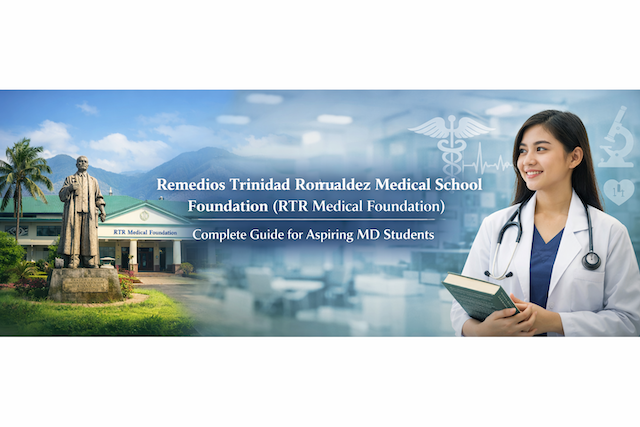
Remedios Trinidad Romualdez Medical School Foundation (RTR Medical Foundation): Complete Guide for Aspiring MD Students
Contents
- Remedios Trinidad Romualdez Medical School Foundation (RTR Medical Foundation): Complete Guide for Aspiring MD Students
- Quick Overview: What RTR Medical Foundation Is Known For
- Location and Why It Matters for Medical Training
- Who Should Consider RTR Medical Foundation?
- Doctor of Medicine (MD) Program Structure: What to Expect
- Teaching Style and Learning Environment
- Admissions: General Requirements and How to Prepare
- Application Tips That Improve Your Chances
- Tuition, Fees, and Budget Planning
- Scholarships, Financial Aid, and Support Options
- Clinical Training and Hospital Exposure
- Student Life: Routines, Stress, and Support Systems
- How to Decide If RTR Medical Foundation Is the Right Fit
- Practical Next Steps: What You Should Do This Week
- Final Thoughts
- FAQs (Frequently Asked Questions)
- What is Remedios Trinidad Romualdez Medical School Foundation (RTR Medical Foundation)?
- Where is RTR Medical Foundation located, and why does the location matter?
- What degree does the school offer, and how long is the MD pathway in the Philippines?
- What are the usual admission requirements for Philippine medical schools?
- How important is the NMAT score for admission?
- Can international students apply to RTR Medical Foundation?
- How much does it cost to study medicine there?
- Are scholarships or financial assistance options available?
- What is the workload like in medical school, and how should I prepare?
- What kind of clinical exposure should students expect?
- How do I know if RTR Medical Foundation is the right fit for me?
Remedios Trinidad Romualdez Medical School Foundation (RTR Medical Foundation): Complete Guide for Aspiring MD Students
Remedios Trinidad Romualdez Medical School Foundation—often referred to as the Remedios T. Romualdez Medical Foundation (RTRMF)—is one of the medical education institutions in Eastern Visayas that was created with a clear social purpose: to help address the region’s need for more physicians by making medical training more accessible to qualified students, especially those who plan to serve local communities.
If you are considering an MD (Doctor of Medicine) pathway in the Philippines and you’re looking for a school outside Metro Manila—one that is positioned closer to the healthcare realities of provincial and regional communities—this guide will walk you through what to expect, how to prepare, and how to evaluate fit. It is written for first-time applicants, transferees, and even career-shifters exploring medicine as a second degree.
Quick Overview: What RTR Medical Foundation Is Known For
RTR Medical Foundation is part of an educational foundation established to help build health manpower in Eastern Visayas and to improve access to medical education in the region. In practice, this means the institution is often mission-driven—balancing academic training with community-oriented healthcare values, and emphasizing the idea that medical graduates should be prepared not only for board exams, but also for real-world patient care in a regional setting.
As with many Philippine medical schools, your experience will depend on your study habits, support system, and ability to adapt to a demanding schedule. But students who thrive in community-oriented learning environments often look for schools like RTRMF because of their alignment with service, clinical exposure, and the healthcare needs of the broader region.
Location and Why It Matters for Medical Training
RTR Medical Foundation is associated with Tacloban City, Leyte, which serves as a major urban center of Eastern Visayas. Studying medicine in a regional hub can be a practical advantage: you are close to hospitals, clinics, and a diverse patient population, while also being in a city that is generally more manageable (in terms of cost of living and daily logistics) than the largest metropolitan areas.
For many students, the “location factor” matters in three ways:
- Clinical reality: You learn medicine where it is practiced every day—often dealing with common conditions, public health issues, and resource-conscious care.
- Community exposure: You may have more structured opportunities for community-based learning, outreach, and public health participation.
- Cost and focus: Students sometimes find it easier to maintain a study-focused routine outside bigger cities with heavier commuting and higher expenses.
Who Should Consider RTR Medical Foundation?
Every medical school has a “best-fit” student profile. RTR Medical Foundation may be a good match if you:
- Prefer a mission-driven school environment that values community health and regional service.
- Want to train in a setting that reflects the realities of healthcare delivery outside major metropolitan centers.
- Plan to practice in Eastern Visayas (or similar regions) and want clinical exposure aligned with that goal.
- Are looking for a medical school option that is grounded in regional accessibility and health manpower development.
On the other hand, if your priority is a highly specialized, research-heavy environment with a strong emphasis on tertiary/quaternary subspecialty exposure from the earliest years, you may want to compare several schools and look closely at clinical affiliations, faculty structure, and student outcomes.
Doctor of Medicine (MD) Program Structure: What to Expect
In the Philippines, the MD program typically follows a multi-year structure that moves from foundational sciences to clinical application, then into hospital-based training. While specific curricula vary by institution, most programs include:
- Pre-clinical years: Anatomy, physiology, biochemistry, pathology, pharmacology, microbiology/parasitology, and related disciplines—usually paired with lab work and assessments.
- Transition to clinical learning: Physical diagnosis, clinical correlation, basic clinical skills, case discussions, and early patient exposure in some form.
- Clinical years: Rotations and/or major exposure in internal medicine, surgery, pediatrics, obstetrics and gynecology, psychiatry, and community medicine, plus electives depending on school design.
- Internship: After completing academic MD requirements, students typically proceed to a post-graduate internship in an accredited hospital prior to full licensure pathways.
What matters most is not only what subjects appear on paper, but how the school delivers them: teaching style, clinical case exposure, mentoring, exam preparation culture, and student support systems.
Teaching Style and Learning Environment
Medical education in the Philippines commonly combines lectures, small-group discussions, laboratory work, and skills training. Many schools also incorporate:
- Case-based learning: Students learn to analyze patient cases, interpret symptoms, propose differential diagnoses, and plan management.
- Practical skills sessions: History-taking, physical examination, basic procedures, and clinical communication.
- Community medicine: Public health principles, epidemiology, preventive care, and community immersion components.
When comparing schools, ask (or research) how student performance is assessed: written exams, practical exams, OSCE-style skills evaluation, case presentations, research requirements, and clinical performance feedback.
Admissions: General Requirements and How to Prepare
Philippine medical school admissions typically consider multiple components. Although exact requirements can change from year to year, a standard set of expectations often includes:
- Academic background: A bachelor’s degree (or equivalent) with required prerequisite units, depending on the institution.
- NMAT score: Most medical schools require an NMAT (National Medical Admission Test) result, usually with a minimum percentile rank set by the school.
- Documents: Transcript of records, certificate of graduation, birth certificate, and other supporting forms (often including good moral character references).
- Interview: Many schools interview applicants to assess maturity, motivation, communication, and readiness for the demands of medical training.
How to prepare effectively: Start early. Gather documents, plan your NMAT schedule, and work on your personal narrative—why you want medicine, what kind of doctor you want to become, and how your background supports that goal.
Application Tips That Improve Your Chances
Whether you apply to RTR Medical Foundation alone or as part of a broader list of medical schools, these strategies help you present a strong application:
- Make your “why medicine” clear: Admissions committees look for commitment and realism—not only inspiration.
- Show evidence of discipline: Medicine is a grind. A consistent academic record, strong NMAT preparation, and solid references matter.
- Connect your goals to service: If you genuinely intend to serve regional communities, articulate how and why.
- Practice interviews: Be ready to talk about stress management, study habits, ethical thinking, and patient-centered values.
If you have gaps in your academic history or you are a career shifter, focus on explaining your readiness: recent coursework, test preparation, clinical exposure (even volunteering), and your support system.
Tuition, Fees, and Budget Planning
Tuition and fees vary by school year, payment scheme, and institutional policy. For RTR Medical Foundation, the most reliable approach is to request the latest official breakdown directly from the school. When planning your budget, include more than tuition:
- School fees: Laboratory fees, technology fees, library fees, and miscellaneous institutional charges.
- Medical equipment: Stethoscope, BP apparatus, diagnostic tools, and clinical supplies as required.
- Books and resources: Some students shift to digital resources, but you should still budget for references and review materials.
- Housing and living costs: Rent, utilities, transportation, and food can be a major part of your total cost.
- Clinical requirements: Uniforms, vaccinations, health clearance, and other hospital rotation requirements.
A practical budgeting method is to estimate your “full monthly cost” (living + school expenses), then multiply by the length of the academic term. Add an emergency buffer for unexpected expenses—medicine is full of hidden costs.
Scholarships, Financial Aid, and Support Options
Many medical students in the Philippines rely on a combination of family support, scholarships, partial grants, or government/private programs. Availability and eligibility change, so you should ask the school about:
- Academic scholarships or merit-based discounts (if offered).
- Needs-based assistance (if available).
- External scholarships from local government units (LGUs), foundations, or service-linked programs.
- Payment plans or installment options.
If you are aiming for service-based scholarships, be honest about the tradeoff: you may be required to serve in certain areas or fulfill return-service commitments after graduation or licensure steps.
Clinical Training and Hospital Exposure
Clinical training is where medical learning becomes real. During clinical years, you will transition from mastering concepts to applying them: taking histories, performing physical exams, presenting cases, writing notes, and learning how teams function in real hospital workflows.
When evaluating a medical school, the key questions include:
- Patient volume and variety: Do you see enough cases across core specialties?
- Supervision quality: Are you guided by clinicians who teach, not only assign tasks?
- Skills development: Do you have structured opportunities to practice clinical skills, communication, and professional behavior?
- Assessment and feedback: Do you get clear feedback that helps you improve?
Even if a school has strong affiliations, students still need to be proactive: show up prepared, ask questions respectfully, read around your cases, and treat every clinical encounter as a learning opportunity.
Student Life: Routines, Stress, and Support Systems
Medicine is academically demanding and emotionally intense. Your success is not only about intelligence—it’s about consistency, resilience, and habits. Most students find that a stable routine is essential:
- Weekly planning: Map lectures, labs, quizzes, and reading assignments.
- Daily structure: Set a realistic study block, exercise time, and recovery time.
- Peer support: A good circle helps you survive difficult exam seasons.
- Healthy coping strategies: Sleep, movement, and mental breaks are not optional in a multi-year marathon.
Also consider your personal environment: where you live, who you spend time with, and how you manage distractions. Students who treat medical school like a professional commitment (not a casual extension of college life) usually adapt faster.
How to Decide If RTR Medical Foundation Is the Right Fit
Choosing a medical school is a high-stakes decision. Beyond tuition and location, consider fit across these dimensions:
- Mission alignment: Do you resonate with a community-focused, region-building purpose?
- Learning style: Do you thrive in structured teaching, self-directed learning, or blended approaches?
- Support culture: Does the school provide student advising, mentoring, and fair academic policies?
- Clinical readiness: Do graduates appear well-prepared for internship and board exam pathways?
Whenever possible, talk to current students or alumni. Ask what surprised them most, what they wish they knew before starting, and what they think the school does particularly well.
Practical Next Steps: What You Should Do This Week
If you’re seriously considering RTR Medical Foundation, here is a practical checklist you can follow immediately:
- Confirm your eligibility: Review required pre-med units and ensure your degree background aligns with medical school prerequisites.
- Plan your NMAT: Choose a test date that gives you enough time to prepare properly.
- Collect documents: Request your transcript early—processing can take time.
- Write your personal statement: Clarify your reasons for pursuing medicine and how you plan to grow as a physician-in-training.
- Request the official admissions and fee information: Get the latest details directly from the school for accuracy.
Medical school is not only a program—it’s a commitment to a demanding craft and a service profession. If your goals include becoming a competent, grounded doctor who can make a meaningful impact in communities, a mission-driven regional institution like RTR Medical Foundation can be a path worth evaluating carefully.
Final Thoughts
Remedios Trinidad Romualdez Medical School Foundation represents a type of medical education pathway that many aspiring doctors look for: grounded, community-aware, and positioned within a region that genuinely benefits from local health manpower development. Your outcome will ultimately depend on your discipline, study methods, and ability to grow through pressure—but choosing a school whose mission and environment match your long-term goals makes that journey far more sustainable.
FAQs (Frequently Asked Questions)
What is Remedios Trinidad Romualdez Medical School Foundation (RTR Medical Foundation)?
Remedios Trinidad Romualdez Medical School Foundation (often abbreviated as RTR Medical Foundation) is a medical education institution in Eastern Visayas, commonly associated with Tacloban City, Leyte. It offers a Doctor of Medicine (MD) pathway designed to train future physicians for clinical practice, professional licensure preparation, and community-oriented healthcare work. As with many medical schools in the Philippines, the overall experience is shaped by the curriculum design, clinical exposure, faculty supervision, and a student’s own study discipline and support system.
Where is RTR Medical Foundation located, and why does the location matter?
RTR Medical Foundation is generally linked to Tacloban City, a regional hub in Eastern Visayas. Location matters because it influences your clinical environment and daily routine. Studying in a regional center can provide exposure to a wide range of common medical conditions, public health concerns, and real-world hospital workflows. It may also affect your cost of living, commute time, and access to housing, food, and learning resources. For students who want to train in a setting closer to community realities outside major metropolitan areas, the location can be a major advantage.
What degree does the school offer, and how long is the MD pathway in the Philippines?
The primary professional medical degree is the Doctor of Medicine (MD). In the Philippines, the MD program typically spans several years, moving from foundational sciences (pre-clinical) into hospital-based learning (clinical). After completing the academic MD program, graduates usually proceed to a post-graduate internship in an accredited hospital as part of the standard pathway toward full physician licensure. Exact sequencing can vary by school policy and national regulations, so applicants should confirm the latest academic calendar and progression requirements directly with the institution.
What are the usual admission requirements for Philippine medical schools?
Most medical schools in the Philippines require a bachelor’s degree (or equivalent), a valid NMAT (National Medical Admission Test) score, and a set of academic and personal documents such as transcripts, identification documents, and character references. Many schools also conduct interviews to assess motivation, maturity, communication skills, and readiness for the intensity of medical training. Specific thresholds—especially minimum NMAT percentile ranks—can differ by institution and may change over time, so the safest approach is to request the most recent admissions guidelines from RTR Medical Foundation.
How important is the NMAT score for admission?
The NMAT is one of the most important standardized requirements in Philippine medical school admissions. It helps schools compare applicants from different academic backgrounds. A higher NMAT score can strengthen your application, but it usually works together with your academic record, interview performance, and overall profile. If your NMAT score is not as strong as you hoped, focus on improving other factors you can control—such as your interview preparation, completeness of documents, and your ability to present a clear, realistic plan for handling medical school demands.
Can international students apply to RTR Medical Foundation?
International student policies depend on the institution and applicable national rules. Some Philippine medical schools accept foreign applicants, but the process can require additional documentation such as passport copies, authenticated academic records, and proof of English readiness. If you are a foreign applicant, you should contact the admissions office early to confirm eligibility, timelines, and any country-specific requirements. It is also wise to ask about visa considerations, enrollment procedures, and whether there are additional administrative steps for international students.
How much does it cost to study medicine there?
Tuition and fees can vary by academic year, payment scheme, and institutional policy. Beyond tuition, students should budget for laboratory and miscellaneous fees, uniforms, clinical supplies, required medical clearances, and learning resources. Living costs (rent, utilities, food, and transportation) are also a significant part of the total budget. Because published figures can change, request an official and updated breakdown directly from the school. When comparing options, look at the total cost of attendance rather than tuition alone.
Are scholarships or financial assistance options available?
Scholarship availability differs by institution and by year. Some students rely on merit-based scholarships, needs-based support, external programs from local government units (LGUs), or service-linked sponsorships. If scholarships are offered, they may have grade retention rules or other conditions. The best approach is to ask the school for current scholarship opportunities and then explore external funding options in parallel. Even if you do not receive a full scholarship, partial support or flexible payment schemes can still make the program more manageable.
What is the workload like in medical school, and how should I prepare?
The workload is typically heavy and consistent, especially during exam periods. Students manage lectures, readings, laboratory sessions, quizzes, practical exams, and case discussions. Preparation starts before enrollment: build strong study habits, learn time management, and practice active learning methods such as spaced repetition, practice questions, and case-based thinking. Many successful students also maintain a stable routine for sleep and exercise, because burnout can derail even high-performing learners. Treat medical school like professional training rather than an extension of college life.
What kind of clinical exposure should students expect?
Clinical exposure usually becomes more intensive in the later years of the MD program, when students begin structured hospital learning and rotations. You will practice history-taking, physical examination, case presentations, and basic patient care tasks under supervision. The quality of clinical learning often depends on patient volume, faculty mentoring, and how well rotations are organized. Students can maximize exposure by preparing before duties, reading around their cases, asking thoughtful questions, and treating every patient interaction as an opportunity to improve clinical reasoning and professionalism.
How do I know if RTR Medical Foundation is the right fit for me?
Fit depends on your goals and learning preferences. Consider the school’s mission, clinical environment, and the lifestyle implications of studying in a regional hub. Ask yourself whether you want community-oriented training, whether you can thrive in a demanding schedule, and whether you have a support system in place. If possible, speak with current students or alumni and ask about teaching quality, assessment style, mentoring culture, and how well the school prepares students for internship and licensure pathways. A strong fit can make the journey more sustainable.
Complete List of Medical Schools in the Philippines (All 78 MD Programs)
Best Medical Schools in the Philippines (Local & International Rankings)
Recommend
2026年1月23日
Sultan Kudarat State University College of Medicine: Complete Guide for Aspiring MD Students
2026年1月23日
University of Southern Mindanao College of Medicine: Complete Guide for Aspiring MD Students
2026年1月23日
Mindanao State University – General Santos College of Medicine: Complete Guide for Future MD Students

How to Register for eTravel Philippines (2025 Guide)
Step-by-step guide to completing your eTravel registration before arriving in the Philippines, with images and tips.

Night Market in Cebu – Things You Don’t Know About Cebu Life
Discover the hidden charm of Cebu’s night markets, from street food stalls to local life tips you won’t find in tourist guides.

How to Use ChatGPT for IELTS Preparation: A Complete Guide
Learn how to prepare for IELTS using ChatGPT — including strategies for Writing, Reading, Listening, Speaking, and grammar support.

How to Build a Website Without Coding Using ChatGPT
Discover how to build your own website using AI—no coding skills needed. From structure planning to SEO and design, let ChatGPT guide you.