2026年1月23日
3D ACADEMY offers affordable English study programs in Cebu, Philippines – perfect for beginners, professionals, and exam takers.

3D UNIVERSAL ENGLISH INSTITUTE INC
info.3d-universal.com
8:00-17:00(Mon-Fri)
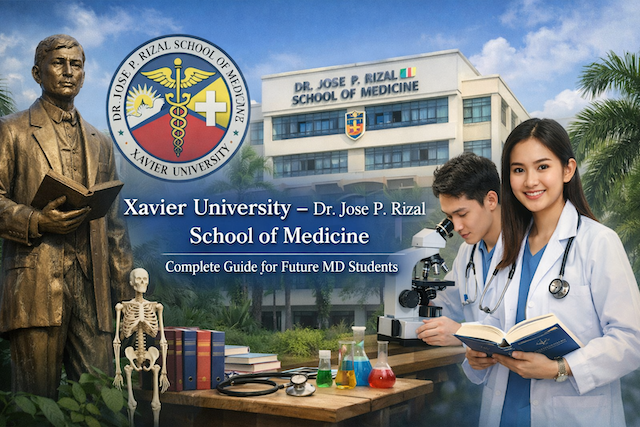
Xavier University – Dr. Jose P. Rizal School of Medicine: Complete Guide for Future MD Students
Contents
- Xavier University – Dr. Jose P. Rizal School of Medicine: Complete Guide for Future MD Students
- Quick Snapshot
- What Makes This Medical School Distinct
- Campus and Learning Environment
- Doctor of Medicine (MD) Program Overview
- Community Health and Service Orientation
- Clinical Training and Rotations
- Research and Academic Development
- Admissions: What Applicants Should Prepare
- Enrollment Flow and Practical Steps
- Tuition, Scholarships, and Financial Planning
- Student Life, Culture, and Support Systems
- How to Decide if XU Dr. Jose P. Rizal School of Medicine Is Right for You
- Tips to Strengthen Your Application
- Contact and Next Steps
- FAQs (Frequently Asked Questions)
- Where is Xavier University – Dr. Jose P. Rizal School of Medicine located?
- Is Xavier University the same as “Xavier Ateneo”?
- What degree does the school offer?
- Do I need an NMAT score to apply?
- What are the usual admission requirements?
- What is the teaching style like?
- Does the school emphasize community medicine and service?
- Where do students do their clinical rotations?
- How long is the MD program?
- How much are the tuition and fees?
- Are scholarships or financial aid available?
- Can international students apply?
- What kind of student support is available?
- What should I do now if I want to apply?
Xavier University – Dr. Jose P. Rizal School of Medicine: Complete Guide for Future MD Students
Xavier University – Ateneo de Cagayan (often called “Xavier Ateneo” or “XU”) is one of the most established Jesuit universities in Mindanao, based in Cagayan de Oro City. Within its professional schools is the Dr. Jose P. Rizal School of Medicine, an institution that trains future physicians with a strong emphasis on service, ethics, competence, and compassion—especially toward communities that have limited access to healthcare.
If you are considering becoming a doctor in Northern Mindanao (or you want a medical school experience that blends academic rigor with community engagement), Xavier University’s medical school is worth a serious look. This guide explains what the school is known for, what student life and training can feel like, and what to prepare for when applying.
Quick Snapshot
- School: Xavier University – Dr. Jose P. Rizal School of Medicine
- Location: Cagayan de Oro City, Philippines
- Program: Doctor of Medicine (MD)
- Identity: Catholic and Jesuit formation, values-driven medical education
- Training emphasis: Community health, clinical competence, ethical practice, service to the poor
What Makes This Medical School Distinct
Many medical schools promise excellence, but Xavier University’s approach is often described through a few consistent themes:
- Mission-focused training: The school highlights a commitment to life, country, and service—particularly toward underserved communities.
- Jesuit formation: Expect attention to values, reflection, and leadership, not just technical skills.
- Community orientation: Medical education here typically goes beyond hospital corridors. Students are exposed to community-based health realities early and repeatedly.
- Professional culture: Students are often encouraged to develop habits essential for medical practice—discipline, empathy, teamwork, and responsibility.
In practical terms, this means you may find the culture more “service-minded” and less purely prestige-driven. That can be a major advantage if your long-term goal is to practice in Mindanao, work in public health, or contribute to healthcare access.
Campus and Learning Environment
The Dr. Jose P. Rizal School of Medicine is housed in a dedicated multi-storey building within the Xavier University campus area. Having a defined medical school space can be helpful for students because it keeps academic and clinical learning resources concentrated—classrooms, labs, study areas, and administrative offices are typically easier to access day-to-day.
Since Xavier University is a comprehensive university (not only a medical institution), you may also benefit from broader university resources—libraries, research offices, student services, campus organizations, and a wider academic community. For some students, this creates a more balanced environment compared with stand-alone medical schools.
Doctor of Medicine (MD) Program Overview
The MD program in the Philippines generally includes pre-clinical years (focused on foundational medical sciences and early clinical skills) followed by clinical clerkship years (hospital-based rotations). While every school has its own sequencing and teaching style, a typical structure includes:
- Pre-clinical phase: Anatomy, physiology, biochemistry, pathology, pharmacology, microbiology, and related subjects, combined with early clinical exposure and patient communication skills.
- Transition to clinical medicine: Practical sessions, simulated skills training, and supervised patient encounters, depending on the school’s facilities and partner hospitals.
- Clinical clerkship: Rotations through major medical departments—internal medicine, surgery, pediatrics, obstetrics-gynecology, psychiatry, family/community medicine, and others.
For applicants, the key question is not only “What subjects will I take?” but also “How will I be trained?” Xavier’s medical school is typically presented as one that integrates professional values with clinical competence—meaning you’re expected to grow not only in knowledge, but also in judgment, ethics, and patient-centered care.
Community Health and Service Orientation
One of the strongest reasons students choose a mission-driven medical school is exposure to community realities. In many medical programs, community medicine can feel like a separate requirement. In service-oriented schools, it is often treated as a core identity.
At Xavier University’s Dr. Jose P. Rizal School of Medicine, you should expect community-oriented learning experiences such as:
- Health education and prevention work: Activities related to public health priorities (e.g., hygiene, maternal-child health, nutrition, chronic disease prevention).
- Community immersion: Engagement with barangays or partner communities where students learn to listen, assess needs, and support local health solutions.
- Primary care perspective: Training that encourages seeing the patient as a whole person—family context, economic realities, access barriers, and health beliefs.
If you want to build a career in family medicine, internal medicine with a public health orientation, government service, NGO work, or rural practice, this type of formation can be extremely valuable.
Clinical Training and Rotations
Clinical training is the heart of medical education. It is where students move from textbook knowledge to real patient care under supervision. In clerkship, students learn to take histories, perform physical exams, interpret labs, present cases, and collaborate with residents, consultants, nurses, and allied health professionals.
Because hospital partnerships and training sites can evolve, it’s best to confirm current rotation hospitals through the school’s admissions office or official enrollment materials. In general, you should look for these indicators of quality clinical exposure:
- High patient volume: More cases usually mean more learning opportunities.
- Balanced case mix: Exposure to both common conditions and complex referrals.
- Structured teaching: Case conferences, bedside teaching, skills checklists, and feedback.
- Professional supervision: Clear guidance, evaluation standards, and learning objectives.
When researching, ask practical questions: How are duty schedules arranged? How are students evaluated in rotations? How does the school support students who struggle in specific areas? These details often matter as much as brand reputation.
Research and Academic Development
Research training in medical school helps students learn critical thinking: how to ask good questions, assess evidence, and apply findings ethically. Even if you do not plan to become a researcher, evidence-based practice is essential for any physician.
In a typical MD program, research training may involve:
- Research methods and biostatistics: Understanding study design, bias, and interpretation.
- Medical writing: Proper citation, structuring a paper, and presenting results.
- Ethics in research: Consent, confidentiality, and responsible conduct.
- A capstone project: Often a thesis or a group research output, depending on the program.
To evaluate fit, check whether the school offers research mentorship, access to journals and databases, and opportunities to present work in forums or conferences. A supportive research environment can strengthen your future residency applications and professional profile.
Admissions: What Applicants Should Prepare
Medical school admissions in the Philippines can be competitive. Requirements differ by institution, but you should generally prepare for these major categories:
- Academic records: Transcript of records and proof of degree completion (or expected graduation).
- NMAT: Most medical schools require a National Medical Admission Test score. Target a score that is competitive for your chosen school.
- Personal documents: Birth certificate, valid IDs, photos, and other standard requirements.
- Recommendation letters: Often from professors, supervisors, or professionals who can speak to your character and readiness.
- Interview: Many schools assess motivation, communication skills, maturity, and values alignment.
Because exact cutoffs, document lists, and timelines can change by academic year, always verify the current admissions checklist and deadlines through Xavier University’s official School of Medicine admissions page or help desk.
Enrollment Flow and Practical Steps
Once accepted, enrollment usually involves document submission, medical clearance, payment steps, and orientation requirements. Practical reminders:
- Organize documents early: Some certificates take time to request.
- Prepare for fees beyond tuition: Medical school often includes lab fees, uniforms, insurance, and other school charges.
- Watch for official announcements: Enrollment dates and processes can be posted per level or per semester.
- Plan housing and commute: Cagayan de Oro has multiple residential options; choose based on safety, distance, budget, and access to daily essentials.
If you are relocating from another province, build a simple “arrival checklist”: housing, transportation, school schedule, clinic requirements, and emergency contacts.
Tuition, Scholarships, and Financial Planning
Medical education is a major investment. Students often underestimate the total cost because tuition is only part of the picture. A realistic budget should include:
- Tuition and school fees: Usually assessed per semester or per academic year.
- Living expenses: Rent, food, transportation, and utilities.
- Academic costs: Books, printing, devices, online resources, and lab supplies.
- Clinical costs: Uniforms, duty shoes, equipment (stethoscope, BP apparatus), and potential hospital requirements.
Xavier University highlights scholarship and financial aid options to help make medical education more accessible. If finances are a concern, ask about:
- Merit-based scholarships
- Need-based assistance
- Payment schedules or installment options (if offered)
- External scholarships and government programs that the school supports or recognizes
Even small planning steps help: create a monthly budget, track fixed vs. flexible expenses, and set aside an emergency buffer for unexpected clinical requirements.
Student Life, Culture, and Support Systems
Medical school is demanding everywhere—long study hours, frequent exams, and a constant cycle of learning. What often determines success is not intelligence alone, but support systems and habits.
In a values-based institution, student life may include:
- Student organizations: Academic groups, interest societies, outreach programs, and leadership roles.
- Mentorship culture: Opportunities to learn from upper-level students and faculty.
- Formation activities: Events that emphasize reflection, ethics, service, and leadership.
Before enrolling, think about the kind of environment that helps you thrive. Some students want a highly competitive setting; others want a collaborative culture. If possible, talk to current students or alumni and ask what the day-to-day experience is really like.
How to Decide if XU Dr. Jose P. Rizal School of Medicine Is Right for You
This school can be a strong fit if you:
- Want a medical education that emphasizes service, ethics, and community health
- Plan to practice in Mindanao or serve Filipino communities with healthcare access gaps
- Prefer a values-driven environment alongside academic rigor
- Want to grow as a physician with strong professional identity and character formation
It may be less ideal if you are looking only for a purely research-intensive, ultra-specialized environment from day one. That said, many students build strong research portfolios and residency paths from mission-driven schools—especially when they actively seek mentorship and opportunities.
Tips to Strengthen Your Application
- Take NMAT seriously: Give yourself enough preparation time and aim for a score that supports your target school choices.
- Build evidence of service: Volunteer work, leadership, tutoring, health outreach, or community involvement can align well with the school’s mission.
- Write a clear personal narrative: Be specific about why medicine, why Xavier, and what kind of physician you hope to become.
- Prepare for interviews: Practice explaining your motivations, strengths, weaknesses, and stress-coping strategies.
- Show maturity: Medical school is professional training; schools look for reliability, communication skills, and ethical judgment.
Contact and Next Steps
If you are ready to move forward, your best next step is to review the current official admissions and enrollment pages for the School of Medicine, then reach out to the admissions help desk for the latest requirements, deadlines, and fee schedules for the current academic year.
Recommended action plan:
- List your target medical schools and compare requirements.
- Schedule your NMAT plan and timeline.
- Prepare documents early (TOR, certificates, IDs, recommendations).
- Draft your personal statement and organize service/leadership records.
- Confirm the latest admissions process and submit on time.
Choosing a medical school is not only about where you can get in—it’s about where you can become the kind of doctor you want to be. Xavier University – Dr. Jose P. Rizal School of Medicine is positioned as a school that asks students to pursue excellence with compassion, and competence with conscience. For many future physicians, that combination becomes the foundation of a meaningful medical career.
FAQs (Frequently Asked Questions)
Where is Xavier University – Dr. Jose P. Rizal School of Medicine located?
Xavier University – Dr. Jose P. Rizal School of Medicine is based in Cagayan de Oro City in Northern Mindanao, Philippines. The city is a major regional hub with hospitals, clinics, and public health institutions that support medical training. For students coming from outside Mindanao, Cagayan de Oro is generally considered accessible because it has an airport, intercity bus routes, and ferry connections through nearby ports.
Is Xavier University the same as “Xavier Ateneo”?
Yes. Xavier University – Ateneo de Cagayan is commonly referred to as “Xavier” or “Xavier Ateneo.” The School of Medicine is one of the university’s professional schools. When you see the name “Xavier Ateneo” in announcements, alumni profiles, or student communities, it usually refers to the same institution.
What degree does the school offer?
The main professional degree offered is the Doctor of Medicine (MD). The MD program is designed to prepare students for clinical practice and for the Physician Licensure Examination (PLE) in the Philippines. The MD curriculum typically includes pre-clinical training in the medical sciences and clinical rotations in hospital and community settings, with an emphasis on professional ethics and patient-centered care.
Do I need an NMAT score to apply?
Most medical schools in the Philippines require the National Medical Admission Test (NMAT), and applicants should expect to submit an NMAT score as part of the admissions process. However, the exact required percentile score (and whether there are conditional admissions pathways) can vary by school and academic year. The best practice is to confirm the current NMAT requirement directly from the official Xavier University School of Medicine admissions announcements.
What are the usual admission requirements?
While requirements can change, applicants commonly prepare their transcript of records, proof of bachelor’s degree completion (or expected graduation), NMAT results, personal identification documents, recommendation letters, and other forms required by the admissions office. Many schools also conduct interviews to assess motivation, communication, and readiness for the intensity and responsibilities of medical training.
What is the teaching style like?
Medical schools generally use a mix of lectures, small-group discussions, laboratory sessions, skills training, and supervised clinical exposure. At Xavier University’s Dr. Jose P. Rizal School of Medicine, the culture is often associated with values-driven formation and community orientation. That means you should expect to be trained not only in knowledge and clinical skills, but also in professional conduct, ethics, and service-minded decision-making.
Does the school emphasize community medicine and service?
Yes. The school is known for aligning medical education with service and social responsibility. Students commonly participate in community-based learning experiences and public health–related activities that help them understand healthcare access challenges, disease prevention needs, and the realities of primary care. If your long-term goal includes serving underserved communities, working in public health, or practicing in Mindanao, this orientation can be a strong advantage.
Where do students do their clinical rotations?
Clinical rotations (clerkship) are typically done through affiliated hospitals and approved training sites. Because partnerships and rotation schedules can evolve, it is important to verify the current list of clerkship hospitals and rotation arrangements through the school’s official communications. When evaluating clinical training, ask about patient volume, supervision, duty schedules, and the balance of exposure across major departments such as Internal Medicine, Surgery, Pediatrics, and OB-GYN.
How long is the MD program?
In the Philippines, the MD program commonly spans several years and is divided into pre-clinical and clinical phases, followed by a post-graduate internship pathway that supports preparation for the Physician Licensure Examination (PLE). The exact year-by-year structure can differ by institution, so applicants should check the school’s curriculum outline and academic calendar for the most accurate breakdown.
How much are the tuition and fees?
Tuition and fees vary depending on the academic year and the school’s official schedule of charges. In addition to tuition, students should budget for laboratory fees, uniforms, medical instruments (such as a stethoscope), books or digital resources, transportation, and living costs. For the most accurate and current information, request the official fee schedule from the admissions office rather than relying on unofficial estimates.
Are scholarships or financial aid available?
Xavier University commonly provides scholarship and financial assistance pathways, but eligibility rules and application timelines can vary. Some options may be merit-based, while others may be need-based or service-oriented. If finances are a concern, contact the admissions or student finance office early and ask what documents are required, when scholarship applications open, and whether payment plans are possible.
Can international students apply?
International applicants may be eligible, but they should expect additional documentation and administrative steps. These often include authenticated academic records, passport and visa requirements, and potentially proof of English proficiency depending on policy. International students should contact the school directly to confirm eligibility, deadlines, and any special requirements for foreign credentials.
What kind of student support is available?
Medical school is academically and emotionally demanding, so support systems matter. Universities typically offer guidance through academic advising, student affairs services, counseling or wellness programs, and mentorship opportunities. Student organizations can also provide peer support, study groups, and professional development activities. Ask during your inquiry or interview what support services are actively available for medical students.
What should I do now if I want to apply?
Start by confirming the current admissions timeline, NMAT requirement, and document checklist through official channels. Next, build your application plan: schedule your NMAT, request transcripts early, and prepare recommendation letters. If interviews are part of the process, practice explaining your motivation for medicine and how you handle pressure. Finally, budget realistically for both tuition and living expenses in Cagayan de Oro City so you can enter medical school prepared and focused.
Complete List of Medical Schools in the Philippines (All 78 MD Programs)
Best Medical Schools in the Philippines (Local & International Rankings)
Recommend
2026年1月23日
Sultan Kudarat State University College of Medicine: Complete Guide for Aspiring MD Students
2026年1月23日
University of Southern Mindanao College of Medicine: Complete Guide for Aspiring MD Students
2026年1月23日
Mindanao State University – General Santos College of Medicine: Complete Guide for Future MD Students

How to Register for eTravel Philippines (2025 Guide)
Step-by-step guide to completing your eTravel registration before arriving in the Philippines, with images and tips.

Night Market in Cebu – Things You Don’t Know About Cebu Life
Discover the hidden charm of Cebu’s night markets, from street food stalls to local life tips you won’t find in tourist guides.

How to Use ChatGPT for IELTS Preparation: A Complete Guide
Learn how to prepare for IELTS using ChatGPT — including strategies for Writing, Reading, Listening, Speaking, and grammar support.

How to Build a Website Without Coding Using ChatGPT
Discover how to build your own website using AI—no coding skills needed. From structure planning to SEO and design, let ChatGPT guide you.