2026年1月23日
3D ACADEMY offers affordable English study programs in Cebu, Philippines – perfect for beginners, professionals, and exam takers.

3D UNIVERSAL ENGLISH INSTITUTE INC
info.3d-universal.com
8:00-17:00(Mon-Fri)
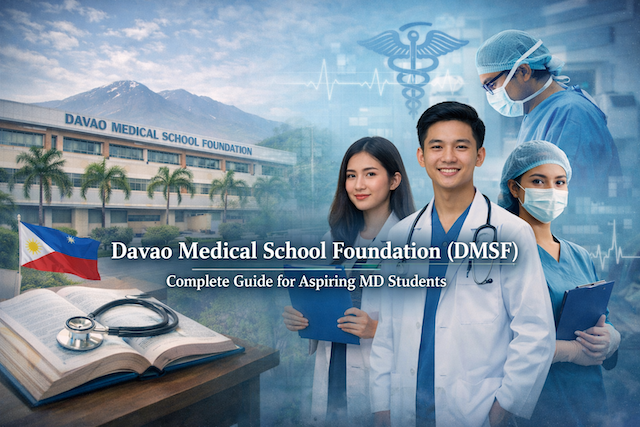
Davao Medical School Foundation (DMSF): Complete Guide for Aspiring MD Students
Contents
- Davao Medical School Foundation (DMSF): Complete Guide for Aspiring MD Students
- Overview: What DMSF Is Known For
- Where DMSF Is Located and Why Davao City Matters
- MD Program Structure: What to Expect Across the Years
- Admissions: Typical Requirements and How to Prepare
- Tuition, Fees, and Budgeting for Medical School Life
- Campus Life and Student Support: What Matters Most
- Clinical Training and Hospital Exposure: Building Real-World Competence
- Board Exam Path and Career Planning
- Housing and Daily Living in Davao for Medical Students
- Tips for Succeeding at DMSF (and Any Medical School)
- Who DMSF May Be a Good Fit For
- How to Evaluate DMSF Before You Apply
- Final Thoughts
- FAQs (Frequently Asked Questions)
- Is Davao Medical School Foundation (DMSF) a good option for international students?
- What language is the MD program taught in?
- How long does it typically take to complete medical school at DMSF?
- What are the usual admission requirements for applicants?
- Does DMSF require a specific “pre-med” degree?
- How competitive is medical school, and what study habits help most?
- What costs should I budget for besides tuition?
- What is clinical training like, and when does it start?
- Is it possible to work part-time while studying medicine at DMSF?
- How can I check if a DMSF MD degree will be accepted in my home country?
- What housing setup is best for medical students in Davao City?
- What should I do if I feel overwhelmed during the semester?
Davao Medical School Foundation (DMSF): Complete Guide for Aspiring MD Students
Overview: What DMSF Is Known For
Davao Medical School Foundation (DMSF) is one of the medical schools in Mindanao that attracts both Filipino and international students who want to pursue a Doctor of Medicine (MD) degree in the Philippines. Located in Davao City, DMSF benefits from being in a major regional hub with access to hospitals, public health programs, and a diverse patient population—factors that matter a lot when you are training to become a physician.
For many applicants, the appeal of DMSF is practical: you get medical education in English (the standard medium in Philippine medical schools), you live in a city with relatively manageable cost of living compared to Metro Manila, and you gain clinical exposure in an environment that reflects a broad range of cases—from community medicine and primary care needs to tertiary hospital cases. Like any med school, your experience will ultimately depend on your study habits, support system, and how well you adapt to the intensity of the program. But if you are looking for an MD pathway in a major city outside the traditional Manila-based options, DMSF is a school worth considering.
Where DMSF Is Located and Why Davao City Matters
Davao City is one of the Philippines’ largest cities and is often described as organized, accessible, and easier to navigate than some other major urban centers. For medical students, the location matters in very practical ways: commute time, safety, food options, access to libraries and printing shops, and proximity to hospitals and training sites can shape your daily routine.
Living in Davao also gives you exposure to Mindanao’s health realities. You may encounter a wide range of patients and community health contexts, which can strengthen your clinical reasoning and your understanding of population health. If you are an international student, Davao can feel like a balanced “big city” choice—busy enough for convenience, but not as overwhelming as the capital.
MD Program Structure: What to Expect Across the Years
Most MD programs in the Philippines follow a broadly similar structure: pre-clinical years focused on foundational sciences and systems-based learning, then clinical years and clerkship with increasing hospital exposure. While the exact curriculum design can vary by institution, you should generally expect the MD journey to be a full-time commitment that requires consistent study and time management.
Early years (pre-clinical phase): You will typically focus on core medical sciences such as anatomy, physiology, biochemistry, histology, pathology, pharmacology, microbiology, and parasitology. Even if your school uses integrated or organ-system approaches, the learning load is heavy. Many students find that the first year is a major adjustment because you are learning how to study efficiently, how to handle frequent quizzes or practical exams, and how to build discipline.
Transition and clinical exposure: As you progress, you will likely encounter more clinical correlations, case discussions, and introductions to history taking and physical examination. This is where medicine starts to feel “real,” and many students find renewed motivation once they can connect textbook concepts to actual patient care.
Clerkship and hospital training: The clinical phase typically includes rotations in major departments such as Internal Medicine, Surgery, Pediatrics, Obstetrics and Gynecology, Psychiatry, Family and Community Medicine, and other specialties depending on training capacity. During rotations, you learn by doing: taking histories, presenting cases, assisting in procedures (as allowed), attending rounds, and completing duty schedules.
Internship and beyond: After the MD degree, graduates typically proceed to internship and licensure pathways as required by Philippine regulations and the requirements of their home country if they plan to return abroad. International students should research recognition, exam eligibility, and documentation requirements early, because the process can take time.
Admissions: Typical Requirements and How to Prepare
Medical school admissions in the Philippines commonly evaluate academic background, entrance examinations (or an equivalent admissions process), interviews, and document requirements. Because specific requirements can change, treat this section as a practical checklist of what you should prepare rather than a guarantee of exact rules.
Common documents you may need:
- Official academic records (transcripts, diploma, or proof of degree completion)
- Birth certificate or passport identification (especially for international applicants)
- Certificate of good moral character or recommendation letters (if required)
- Medical clearance or health records (often requested for enrollment)
- Photos and completed application forms
Academic background: Many medical schools accept applicants from a range of pre-med or bachelor’s programs, but you should ensure you meet any prerequisite courses or degree requirements. If you are an international applicant, your documents may need authentication or additional processing depending on the school’s admissions policy.
Interview readiness: Interviews often test motivation, maturity, stress tolerance, and whether you understand what medicine demands. Be prepared to explain why you want to become a physician, how you handle pressure, and what your long-term plan is (especially if you are an international student).
Preparation tips: Start building your documentation early, create a timeline for submission, and keep digital backups. If you are relocating, plan your housing and city adjustment steps before classes begin so you can start the semester focused.
Tuition, Fees, and Budgeting for Medical School Life
Medical school is a major financial commitment, and your budget should include more than tuition alone. Even if your tuition is manageable, the hidden costs—books, printing, transportation, medical instruments, uniforms, exam fees, and daily living expenses—add up quickly.
Common cost categories to plan for:
- Tuition and miscellaneous school fees
- Books, digital resources, and subscriptions
- Laboratory and practical class expenses (e.g., dissection-related materials if applicable)
- Medical instruments (stethoscope, BP apparatus, penlight, etc.)
- Uniforms, IDs, and required attire
- Transportation and meals
- Rent and utilities (if you are living away from family)
- Emergency fund (unexpected medical expenses, family needs, device repairs)
If you are an international student, also budget for immigration-related costs, document processing, and travel. Try to build a conservative monthly estimate and then add a buffer. Your goal is to reduce financial stress so you can focus on studying.
Campus Life and Student Support: What Matters Most
In medical school, the “best” environment is often the one that helps you stay consistent. You will benefit from a culture that supports discipline, peer collaboration, and accessible faculty guidance. While every batch has its own dynamic, you can actively shape your student life by choosing the right study group, setting boundaries, and building healthy routines.
Study culture: Expect frequent assessments. Many students thrive by using active recall, spaced repetition, and regular practice questions. If you are new to these methods, learn them early—medical content expands quickly, and cramming becomes less effective over time.
Mentorship and peer networks: Upperclassmen advice is extremely valuable. Ask about practical matters like exam style, professor expectations, duty schedules, and which resources are most helpful for each subject.
Well-being: Sleep, nutrition, and movement matter. Burnout is not a badge of honor. A sustainable routine—one that you can repeat weekly—is often more powerful than extreme study bursts.
Clinical Training and Hospital Exposure: Building Real-World Competence
Clinical competence is built through repetition, feedback, and patient exposure. During hospital training, you will learn the everyday realities of medical work: time constraints, teamwork across departments, patient communication, charting, and decision-making under pressure.
Skills you will develop:
- History taking and physical examination
- Clinical reasoning and differential diagnosis
- Case presentations and documentation
- Basic procedures and assisting roles (depending on training rules)
- Professional communication with patients and healthcare teams
A key mindset shift happens in clinical years: you move from “learning facts” to “learning how to think like a doctor.” Your job is not to memorize everything; your job is to recognize patterns, ask the right questions, and build safe decision pathways.
Board Exam Path and Career Planning
Many students choose a medical school based on where they plan to practice after graduation. Your plans should guide how you evaluate DMSF and how you prepare during your MD years.
If you plan to practice in the Philippines: Understand the licensure path, internship requirements, and how residency applications work. Build relationships with mentors and keep a record of your clinical experiences.
If you plan to practice abroad: Start researching early. Different countries have different recognition rules and exam pathways. Some graduates pursue international licensing exams, while others return home and follow their local medical licensing requirements. Your timeline, documentation needs, and training alignment can be easier if you plan ahead from Year 1.
Specialty exploration: Don’t pressure yourself to choose a specialty immediately. Use rotations to observe daily work realities: patient load, lifestyle, emotional demands, and long-term fit. Your interests will evolve as you gain clinical exposure.
Housing and Daily Living in Davao for Medical Students
Your living setup can either support your focus or constantly distract you. A good rule: choose the simplest option that gives you stable sleep, predictable commute time, and a quiet study environment.
Housing considerations:
- Distance to campus and training sites
- Safety, lighting, and walkability
- Noise levels (critical during exam weeks)
- Internet reliability (important for resources and online learning)
- Access to food, laundry, and basic services
Daily routine tips: Have a weekly system for meal planning, laundry, and errands. Medical school can consume your attention; routines prevent small tasks from becoming stressful crises.
Tips for Succeeding at DMSF (and Any Medical School)
Medical school success is less about being naturally “smart” and more about consistency. Here are practical strategies that work for many students:
- Study in cycles: Short, repeated review sessions beat long, exhausting marathons.
- Use practice questions early: They reveal what you truly understand versus what you only recognize.
- Master your weak subjects: Don’t avoid them—schedule them.
- Protect sleep: If you sacrifice sleep constantly, your memory and performance suffer.
- Choose the right peers: A supportive study group can raise your performance dramatically.
- Keep your “why” visible: Motivation drops in the middle of long semesters; reminders matter.
Also, be honest about your limits. If you feel overwhelmed, ask for help early—from classmates, advisers, or family. Getting support is a professional strength, not a weakness.
Who DMSF May Be a Good Fit For
DMSF can be a strong option if you want medical education in a major Philippine city outside Metro Manila, prefer a Mindanao-based setting, and value exposure to a wide patient population in a regional hub. It may also appeal to students who want a city lifestyle with practical conveniences while still being able to focus on demanding academic work.
That said, the best fit depends on your personal learning style and constraints. Consider DMSF if you are comfortable adapting to a fast-paced program, can maintain consistent study habits, and have a realistic financial plan. If you are an international applicant, ensure you are prepared for documentation processes, cultural adjustment, and long-term career planning.
How to Evaluate DMSF Before You Apply
Before committing, try to gather information that affects your day-to-day experience:
- Ask about the academic calendar and typical weekly schedule.
- Learn how assessments are structured (written exams, practicals, oral exams, OSCE-style formats).
- Inquire about clinical training sites and rotation structure.
- Check student support services, counseling access, and wellness initiatives.
- If possible, speak with current students or alumni about workload and culture.
Choosing a medical school is not just about reputation—it’s about whether you can thrive there for several years under sustained pressure. A school that supports your routine, stability, and learning style can be the best choice for your long-term success.
Final Thoughts
Davao Medical School Foundation offers an MD pathway in Davao City for students who want medical training in a major regional center. If your goal is to become a competent, compassionate physician, the school you choose is only one part of the equation. Your habits, resilience, and ability to learn from real clinical exposure will shape your outcome more than any single feature on a brochure.
If you are considering DMSF, approach the decision with a practical checklist: curriculum fit, training exposure, living setup, total budget, and your long-term licensure plan. When those fundamentals are solid, you give yourself the best chance to succeed—not only in medical school, but also in the demanding, meaningful work that comes after.
FAQs (Frequently Asked Questions)
Is Davao Medical School Foundation (DMSF) a good option for international students?
DMSF can be a practical option for international students who want to earn an MD degree in the Philippines, especially if they prefer studying in a major city outside Metro Manila. Many international applicants look for an English-taught medical program, a supportive student environment, and access to hospitals for clinical exposure. As with any school, the “best” choice depends on your goals and your country’s licensing requirements. Before enrolling, confirm what documents you need, what student services are available for foreign nationals, and how the program aligns with your long-term plan to take licensing exams or pursue training in your home country.
What language is the MD program taught in?
Medical education in the Philippines is generally delivered in English, including lectures, textbooks, and most examinations. However, during clinical training, you will communicate with patients who may speak Cebuano, Filipino, or other local languages. International students usually learn common medical phrases and basic conversational language over time, and they rely on teamwork with classmates and clinical staff. If you are not fluent in local languages, you can still succeed by focusing on clear, respectful communication and by improving gradually throughout rotations.
How long does it typically take to complete medical school at DMSF?
The Doctor of Medicine pathway typically takes several years and includes both classroom-based learning and hospital-based clinical training. In the Philippines, the MD program is commonly structured with pre-clinical years followed by clinical clerkship. After earning the MD degree, graduates usually complete a supervised internship and then proceed to licensure requirements. Exact timelines can differ depending on program policies and individual circumstances, so you should verify the current structure with the school and plan your finances and living arrangements accordingly.
What are the usual admission requirements for applicants?
Admission requirements often include an application form, academic transcripts, proof of degree completion, identification documents, and other supporting papers such as recommendation letters or certificates of good moral character. Some schools also require an entrance exam or an interview. International applicants may need authenticated documents, and there may be additional steps related to immigration and student status. A good approach is to prepare a complete digital folder of your documents early and request official records in advance to avoid delays close to deadlines.
Does DMSF require a specific “pre-med” degree?
Many medical schools accept students from a range of undergraduate backgrounds as long as they meet prerequisite requirements and demonstrate readiness for medical training. Applicants often come from science-related programs, but schools may also consider other degrees depending on their policies. If you are unsure whether your academic background qualifies, you should check the most current admissions guidelines and ask the admissions office how they evaluate prerequisites, transcript equivalency, and degree recognition for international transcripts.
How competitive is medical school, and what study habits help most?
Medical school is demanding everywhere, and the competition is usually less about competing with others and more about keeping up with a heavy workload. The most effective habits are consistency and structured review. Many students do well with active recall (testing themselves instead of rereading), spaced repetition (reviewing at planned intervals), and frequent practice questions. Time management matters more than “genius.” If you build a weekly routine—lecture review, question practice, group discussion, and rest—you can improve steadily and reduce exam-week panic.
What costs should I budget for besides tuition?
Beyond tuition and standard school fees, you should budget for books or digital resources, printing and photocopying, transportation, meals, uniforms, and medical instruments like a stethoscope. Clinical years may bring additional expenses related to duty requirements, supplies, or commuting to training sites. International students should also plan for travel costs, document processing, and immigration-related fees. It helps to create a monthly budget with a buffer for unexpected expenses such as device repairs, health needs, or emergency family situations.
What is clinical training like, and when does it start?
Clinical exposure usually increases as you progress through the program. Early years may include basic patient interviewing practice, case discussions, and skills training. Later, clerkship rotations place you in hospital departments where you learn through rounds, patient workups, presentations, and supervised responsibilities. The clinical phase is where you build practical competence: how to gather information efficiently, how to prioritize safety, and how to communicate clearly with patients and healthcare teams. Expect long days at times and a steep learning curve, especially during major rotations.
Is it possible to work part-time while studying medicine at DMSF?
For most students, working part-time during medical school is difficult because the schedule is heavy and the study load is continuous. Even if you manage a small side activity, it should not interfere with sleep, class attendance, and exam preparation. International students should also consider visa conditions and school policies that may restrict employment. If finances are a concern, it is safer to plan funding sources before enrollment rather than relying on part-time work after classes begin.
How can I check if a DMSF MD degree will be accepted in my home country?
This is one of the most important questions for international students. Recognition depends on your country’s medical council or licensing authority, the pathway you plan to take (licensing exam, bridging program, internship equivalency), and documentation requirements. Start by reviewing the official requirements of your home country’s regulator and confirm whether a Philippine MD is eligible. Then ask the school what documents they provide for international graduates (transcripts, internship records, English-medium certification, course descriptions). Planning early helps you avoid surprises after graduation.
What housing setup is best for medical students in Davao City?
The best setup is usually the one that minimizes friction: short commute, quiet environment, reliable internet, and easy access to food and laundry. Many students prefer living close to campus or training sites to reduce daily travel time, especially during exam periods and clinical duties. If you share housing, choose roommates who respect study time and sleep schedules. Your living environment can directly affect your grades, mood, and stamina, so prioritize stability over luxury.
What should I do if I feel overwhelmed during the semester?
Feeling overwhelmed is common in medical school, and the key is to respond early. Start by reviewing your weekly schedule and identifying what is creating pressure: poor sleep, inefficient study methods, unrealistic goals, or lack of support. Talk to classmates, mentors, or academic advisers for practical strategies. If stress becomes persistent or affects your health, seek professional support if available. Medicine is a long path, and learning to ask for help is part of becoming a safe and resilient healthcare professional.
Complete List of Medical Schools in the Philippines (All 78 MD Programs)
Best Medical Schools in the Philippines (Local & International Rankings)
Recommend
2026年1月23日
Sultan Kudarat State University College of Medicine: Complete Guide for Aspiring MD Students
2026年1月23日
University of Southern Mindanao College of Medicine: Complete Guide for Aspiring MD Students
2026年1月23日
Mindanao State University – General Santos College of Medicine: Complete Guide for Future MD Students

How to Register for eTravel Philippines (2025 Guide)
Step-by-step guide to completing your eTravel registration before arriving in the Philippines, with images and tips.

Night Market in Cebu – Things You Don’t Know About Cebu Life
Discover the hidden charm of Cebu’s night markets, from street food stalls to local life tips you won’t find in tourist guides.

How to Use ChatGPT for IELTS Preparation: A Complete Guide
Learn how to prepare for IELTS using ChatGPT — including strategies for Writing, Reading, Listening, Speaking, and grammar support.

How to Build a Website Without Coding Using ChatGPT
Discover how to build your own website using AI—no coding skills needed. From structure planning to SEO and design, let ChatGPT guide you.