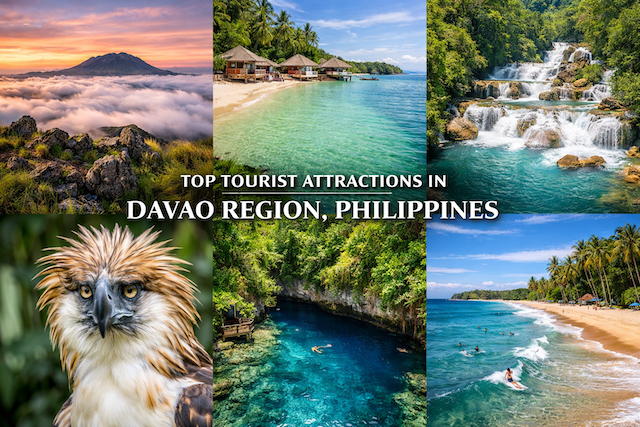
6 Tourist Attractions in Davao Region, Philippines
The Davao Region (Region XI), located in the southeastern part of Mindanao, is one of the Philippines’ most diverse and underrated travel destinations. Known for its dramatic mountains, pristine beaches, rich indigenous culture, and thriving urban center, the region offers a balanced mix of adventure, relaxation, and cultural immersion. While Davao City often takes the spotlight, the surrounding provinces—Davao del Norte, Davao de Oro, Davao Oriental, and Davao Occidental—are home to equally remarkable attractions.
This guide introduces six must-visit tourist attractions in the Davao Region, each showcasing a unique side of the area’s natural beauty and cultural heritage. Whether you are a nature lover, adventure seeker, or first-time visitor to Mindanao, these destinations deserve a place on your itinerary.
Mount Apo Natural Park
Standing at 2,954 meters above sea level, Mount Apo is the highest mountain in the Philippines and the crown jewel of the Davao Region. Located along the borders of Davao City, Davao del Sur, and North Cotabato, Mount Apo Natural Park is a protected area recognized as an ASEAN Heritage Park.
Mount Apo is a paradise for trekkers and outdoor enthusiasts. The mountain features diverse ecosystems, ranging from lowland tropical rainforests to mossy forests and volcanic landscapes near the summit. Along the trails, hikers may encounter unique flora and fauna, including the Philippine eagle, one of the world’s largest and rarest birds.
Several established trails lead to the summit, with Kidapawan–Magpet and Kapatagan–Sta. Cruz being among the most popular. Each route offers different scenery, from sulfur vents and boulder fields to waterfalls and panoramic viewpoints. Climbing Mount Apo typically takes two to three days and requires permits, guides, and prior coordination with local authorities.
Even for those not aiming to reach the summit, Mount Apo Natural Park offers hot springs, scenic campsites, and eco-tourism experiences suitable for casual visitors. It remains one of the most iconic and rewarding destinations in the Philippines.
Philippine Eagle Center
Located in Malagos, Davao City, the Philippine Eagle Center is one of the region’s most important conservation and educational attractions. Operated by the Philippine Eagle Foundation, the center plays a crucial role in protecting the critically endangered Philippine eagle, the country’s national bird.
The center spans several hectares of forested land, providing large enclosures that closely resemble the eagle’s natural habitat. Visitors can observe Philippine eagles as well as other rescued birds, mammals, and reptiles native to Mindanao. Informational displays explain conservation efforts, wildlife protection, and the ecological importance of preserving forests.
A visit to the Philippine Eagle Center is both educational and inspiring. It allows travelers to learn about biodiversity conservation while supporting efforts to protect one of the Philippines’ most treasured species. The center is easily accessible from Davao City and is ideal for families, students, and eco-conscious travelers.
Samal Island (Island Garden City of Samal)
Just a 15-minute ferry ride from Davao City lies Samal Island, officially known as the Island Garden City of Samal. This tropical island destination is famous for its white-sand beaches, crystal-clear waters, and laid-back atmosphere.
Samal Island offers a wide range of accommodations, from budget-friendly beach resorts to luxury villas and high-end retreats. Popular beach areas include Kaputian, Babak, and Peñaplata, each offering different levels of development and crowd density.
Snorkeling, diving, kayaking, and island hopping are among the most popular activities. The island is also home to natural attractions such as Hagimit Falls, Monfort Bat Sanctuary (the world’s largest bat colony), and scenic cliff viewpoints overlooking the Davao Gulf.
Samal Island is ideal for travelers seeking relaxation without straying too far from the city. Its accessibility, clean beaches, and variety of resorts make it one of the top tourist attractions in the Davao Region.
Aliwagwag Falls Eco Park
Located in Davao de Oro, Aliwagwag Falls is often referred to as the “Stairway to Heaven” due to its unique, multi-tiered formation. With more than 80 cascading levels stretching across a wide rock face, it is considered one of the widest waterfalls in the Philippines.
Unlike tall single-drop waterfalls, Aliwagwag Falls flows gently over a series of rock steps, creating numerous shallow pools ideal for swimming and photography. During the rainy season, the falls become especially impressive, with water flowing across almost the entire width of the cliff.
The Aliwagwag Falls Eco Park features well-maintained pathways, viewing decks, and picnic areas. Visitors can also enjoy ziplining across the falls, offering a thrilling perspective of the cascading water below. The site is community-managed, providing livelihood opportunities for local residents while promoting sustainable tourism.
Aliwagwag Falls is a must-visit for nature lovers and photographers, offering a tranquil yet visually stunning experience away from crowded tourist hubs.
Dahican Beach
Dahican Beach, located in Mati City, Davao Oriental, is widely regarded as one of the best beaches in Mindanao. Known for its long stretch of powdery white sand and strong waves, Dahican is a favorite among surfers, skimboarders, and beach enthusiasts.
Unlike heavily developed resort beaches, Dahican remains largely natural and uncrowded. Tall coconut trees line the shore, providing shade and a classic tropical atmosphere. The beach is also part of a marine sanctuary, playing an important role in protecting sea turtles that nest along the coastline.
Activities at Dahican Beach include surfing, skimboarding, beach camping, and early-morning dolphin watching just offshore. The area is especially popular during sunrise, when the sky lights up over the Pacific Ocean.
For travelers seeking a raw, unspoiled beach experience, Dahican Beach offers a refreshing alternative to more commercialized destinations.
People’s Park, Davao City
Located in the heart of Davao City, People’s Park is a beautifully landscaped urban park that reflects the region’s cultural identity and artistic spirit. Once a neglected property, the park has been transformed into a vibrant public space featuring sculptures, gardens, and open-air art installations.
One of the park’s highlights is its large sculptures inspired by Lumad (indigenous) cultures, showcasing traditional motifs, wildlife, and family life. Durian-shaped domes, dancing figures, and water features add character and charm to the park.
People’s Park is popular among locals and tourists alike, especially in the early morning and late afternoon. It serves as a relaxing green space amid the city’s bustle and offers a glimpse into Davao’s emphasis on community, culture, and cleanliness.
As a free and centrally located attraction, People’s Park is an excellent starting or ending point for exploring Davao City.
Why Visit the Davao Region?
The Davao Region stands out for its balance of nature, culture, and urban comfort. It offers towering mountains, pristine islands, powerful waterfalls, and meaningful wildlife encounters—all within relatively short travel distances. The region is also known for its safety, friendly locals, and well-organized tourism infrastructure compared to many other parts of Mindanao.
Whether you are climbing the country’s highest peak, relaxing on a quiet beach, or learning about conservation and indigenous culture, the Davao Region delivers diverse experiences that appeal to a wide range of travelers.
Final Thoughts
From the majestic heights of Mount Apo to the calming shores of Dahican Beach, the Davao Region showcases some of the Philippines’ most remarkable attractions. These six destinations highlight the region’s natural beauty, environmental responsibility, and cultural richness.
For travelers looking beyond the usual tourist routes, the Davao Region offers rewarding experiences that are authentic, scenic, and deeply memorable. It is a destination that continues to surprise and impress those who take the time to explore it.
FAQs (Frequently Asked Questions)
Is the Davao Region safe for tourists?
Many travelers consider the Davao Region one of the more visitor-friendly areas in Mindanao, especially in and around Davao City and major tourism zones like Samal Island and Mati. Safety can vary by location and current conditions, so it’s smart to check recent travel advisories, follow local guidance, and avoid unfamiliar areas late at night. Use registered transport, keep valuables secure, and share your itinerary with someone you trust. If you plan to hike or visit remote beaches and waterfalls, go with accredited guides and avoid traveling alone.
How many days do I need to visit the top attractions in the Davao Region?
A practical trip length is 4 to 7 days. With four days, you can cover Davao City highlights (People’s Park, Philippine Eagle Center) and do a day trip to Samal Island. With five to seven days, you can add a longer side trip to Mati for Dahican Beach and allocate time for Aliwagwag Falls in Davao de Oro. If you plan to climb Mount Apo, expect to dedicate 2 to 3 days just for the trek, plus a rest day before or after, depending on your fitness level and schedule.
What is the best time of year to visit the Davao Region?
The region is generally enjoyable year-round, but many visitors prefer the drier months for outdoor activities like beach trips, waterfall visits, and mountain trekking. Weather patterns can shift, so it helps to plan with flexibility. For Mount Apo, clearer conditions are typically preferred for safer trails and better summit views. If you are visiting for surfing or skimboarding at Dahican Beach, wave conditions may vary by season, so checking local surf reports before you go can help you pick the best dates.
Do I need a permit or guide to climb Mount Apo?
Yes. Mount Apo is a protected area, and hiking usually requires permits, registration, and the use of authorized guides. This helps protect the mountain’s environment and improves safety for hikers. Requirements can differ depending on the trail and the local government unit managing the route. It’s best to arrange your climb through accredited tour operators or coordinate with the local tourism office well in advance, especially during peak trekking months when slots can fill up.
Can beginners hike Mount Apo?
Beginners can attempt Mount Apo if they prepare properly, choose a beginner-friendly route, and join a guided group. However, it is still a demanding multi-day trek with steep sections, long walking hours, and changing weather. Basic fitness, stamina training, and proper gear make a major difference. If you are new to hiking, consider doing shorter hikes in the region first and consult your guide about trail difficulty, expected temperatures, and camp conditions before committing to the climb.
What should I pack for Mount Apo and other outdoor trips?
For Mount Apo, pack layered clothing, a rain jacket, sturdy hiking shoes, headlamp, gloves, hydration system, quick-dry clothing, insect repellent, sun protection, and personal medicines. A lightweight sleeping bag and trekking poles are often helpful. For waterfall and beach trips, bring swimwear, water shoes, a dry bag, reef-safe sunscreen, and a basic first-aid kit. In general, pack for sudden rain and humidity, and keep electronics protected. If your tour includes meals, confirm what is provided so you don’t overpack.
How do I get to Samal Island from Davao City?
Samal Island is easy to reach from Davao City by ferry. You can choose passenger ferries (for walk-on travelers) or car ferries if you are bringing a vehicle. Ferry terminals are commonly reached by taxi or ride-hailing services. Travel times are short, but waiting times may increase during weekends and holidays. Once on the island, you can use tricycles, vans, or pre-arranged resort transfers depending on where you are staying and how far your destination is from the port.
Is Dahican Beach suitable for swimming?
Dahican Beach is beautiful, but conditions can include strong waves and currents, especially during certain seasons. Many visitors swim closer to shore or in calmer sections, but it’s important to be cautious, avoid swimming alone, and follow local advice. If lifeguards or local guides are present, ask where it is safest to enter the water. If your main goal is relaxed swimming, you can also consider nearby beaches or resort areas that provide calmer waters and safety support.
What are the best activities at Dahican Beach?
Dahican is known for surfing and skimboarding, long beach walks, sunrise viewing, and beach camping. Some travelers also enjoy dolphin watching offshore during early mornings, depending on weather and sea conditions. Because the area is less commercialized than other beaches, the experience feels more natural and quiet. Bring essentials like drinking water, snacks, and sun protection, especially if you plan to spend the whole day outdoors. If you want lessons, ask local operators about board rentals and beginner-friendly spots.
Is the Philippine Eagle Center worth visiting if I’m short on time?
Yes, especially if you care about wildlife, conservation, or meaningful travel experiences. The Philippine Eagle Center is more than a tourist stop—it supports education and protection efforts for endangered species. Even a half-day visit can be valuable, and it pairs well with other nearby attractions in the Davao City area. Plan to arrive earlier in the day for cooler temperatures and better chances of seeing the birds active. Respect the rules, avoid loud noise, and take time to read the educational displays.
How can I travel between these attractions efficiently?
To move efficiently, base yourself in Davao City for urban attractions and Samal Island, then plan separate overnight trips for farther destinations like Mati (Dahican Beach) and Davao de Oro (Aliwagwag Falls). Private vans and organized tours are convenient for groups, while buses and public vans can work for budget travelers but may require more time and transfers. If your schedule is tight, prioritize one “big” side trip (either Mati or Aliwagwag) and keep the rest closer to the city.
What local etiquette should tourists follow in the Davao Region?
Be respectful, speak politely, and ask permission before taking photos of people, especially in indigenous communities or cultural sites. Dress appropriately when visiting towns, markets, and non-beach areas. Support local businesses by buying from community vendors when possible, and follow environmental guidelines such as proper trash disposal and reef-safe practices. In nature sites, avoid loud music, don’t disturb wildlife, and stay on marked trails. Small acts of respect go a long way and help keep tourism sustainable.