2026年1月12日
3D ACADEMY offers affordable English study programs in Cebu, Philippines – perfect for beginners, professionals, and exam takers.

3D UNIVERSAL ENGLISH INSTITUTE INC
info.3d-universal.com
8:00-17:00(Mon-Fri)
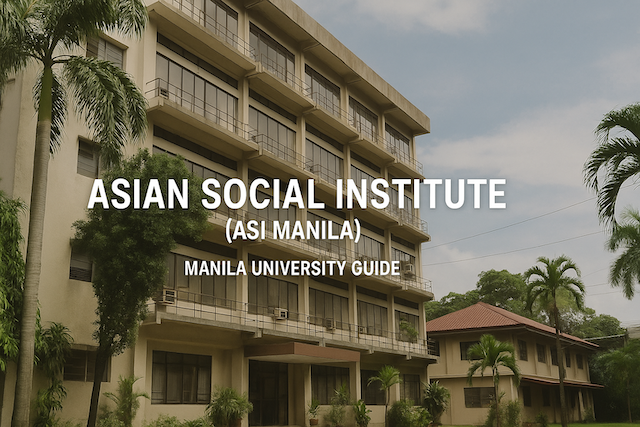
Asian Social Institute (ASI Manila): Manila University Guide
Contents
- Asian Social Institute (ASI Manila): Manila University Guide
- Overview of Asian Social Institute (ASI Manila)
- History and Mission of ASI Manila
- Academic Programs Offered
- Campus Location and Environment
- Learning Approach and Academic Culture
- Campus Facilities
- Student Life at ASI Manila
- Admissions and Application Process
- Tuition and Fees
- Career Opportunities for ASI Graduates
- Why Choose Asian Social Institute (ASI Manila)
- Frequently Asked Questions
- What programs does the Asian Social Institute (ASI Manila) offer?
- Is ASI Manila a good school for working professionals?
- Where is the Asian Social Institute located?
- Does ASI accept international students?
- Is tuition at ASI Manila affordable?
- What career paths can ASI graduates pursue?
- Does ASI have student housing?
- What makes ASI Manila different from other universities?
- How do I apply to ASI Manila?
- Is ASI Manila a religious institution?
Asian Social Institute (ASI Manila): Manila University Guide
Overview of Asian Social Institute (ASI Manila)
The Asian Social Institute (ASI) in Manila is a distinguished graduate school focused on social transformation, development studies, and community leadership. Founded in 1962 by Rev. Dr. Francis Senden, ASI’s mission revolves around forming competent, ethical, and socially responsible leaders who will contribute to nation-building and poverty alleviation. Over the decades, ASI has become known for its strong academic foundation, research-oriented programs, and deep commitment to serving marginalized communities.
Located in Malate, Manila, ASI attracts students from across the Philippines and abroad, especially individuals working in the fields of social development, public policy, church ministries, and non-government organizations. Its unique student population includes professionals, community leaders, international volunteers, and scholars dedicated to humanitarian and development work.
History and Mission of ASI Manila
The institution was established with the goal of shaping graduates who can bridge the gap between academia and real-world social challenges. ASI’s educational philosophy is rooted in three core dimensions:
-
Teachings (Academic Learning) – Through rigorous coursework and theoretical frameworks.
-
Research (Knowledge Development) – Encouraging students to produce research that contributes to social progress.
-
Community Service (Fieldwork & Outreach) – Partnerships with local communities and development agencies.
Today, ASI maintains this mission while integrating modern methodologies, community-based participation, and intercultural perspectives.
Academic Programs Offered
Graduate Programs
ASI primarily offers Master’s and Doctoral degrees in specialized fields related to social sciences and development:
-
Master of Science in Social Work
-
Master in Economics
-
Master in Management (Development Management)
-
Master in Social Services and Development
-
Doctor of Philosophy in Applied Cosmic Anthropology
-
Doctor of Philosophy in Applied Economics
-
Doctor of Philosophy in Organization Development
Each program blends theory, field engagement, and policy analysis. Many students enrolled in ASI programs are working professionals, allowing the school to adopt flexible schedules and community-based learning frameworks.
Certificate and Special Programs
ASI offers various short courses and certificate programs, commonly focused on:
-
Community development
-
Social services
-
Leadership for NGOs
-
Economic development
-
Poverty alleviation frameworks
-
Social research methods
These programs typically run on flexible schedules suitable for working professionals.
Campus Location and Environment
ASI is located in 1518 Leon Guinto Street, Malate, Manila, an accessible university district close to major establishments such as De La Salle University, St. Scholastica’s College, and Arellano University.
Key advantages of the campus location:
-
Accessible public transportation, including jeepneys, LRT stations (Vito Cruz and Quirino), and buses.
-
Near dormitories, boarding houses, and budget apartments.
-
Student-friendly neighborhood with cafés, libraries, and community centers.
-
Walking distance to cultural and historical sites in Manila.
ASI’s campus environment fosters a community-driven atmosphere, blending academic rigor with practical grassroots fieldwork.
Learning Approach and Academic Culture
ASI Manila’s educational model emphasizes:
1. Integrative Learning
Students are encouraged to combine academic theory with real-life community immersion.
2. Interdisciplinary Methods
Programs often incorporate elements of sociology, economics, anthropology, and development management.
3. Research-Oriented Curriculum
Graduate students produce theses and dissertations addressing social issues, policies, and development initiatives.
4. Spiritual and Ethical Values
As a non-profit institution with religious influence, ASI promotes compassion, human dignity, and ethical leadership.
5. Multicultural Learning Environment
The student body includes individuals from different provinces and countries, particularly from Southeast Asia and Africa.
Campus Facilities
Despite being a relatively small graduate institute, ASI offers essential facilities to support academic and research activities:
-
Library and Resource Center – Specialized in sociology, anthropology, social work, and development studies.
-
Seminar Rooms and Classrooms – Designed for collaborative discussions and lectures.
-
Research Offices – Support for thesis advising, publication, and fieldwork coordination.
-
Student Lounge Areas – Spaces for group meetings and study sessions.
-
Chapel / Reflection Spaces – For spiritual activities and meditation.
-
Community Outreach Centers – Connecting students to NGOs and grassroots communities.
ASI’s facilities are modest but fully aligned with its mission of social transformation and academic excellence.
Student Life at ASI Manila
Community-Focused Culture
Students at ASI often engage in meaningful discussions, group research projects, and community immersion activities. The environment is highly collaborative and encourages critical thinking and social awareness.
Professional Networking
Many students work in NGOs, government agencies, church ministries, and international volunteer organizations. The community provides opportunities for networking, internships, and partnerships.
Student Organizations
While not as event-heavy as major universities, ASI hosts academic seminars, workshops, and community-based events throughout the year.
International Students
ASI welcomes international applicants, making it common to meet students from Asia, Africa, and Europe. Cultural exchange is an important part of student life.
Admissions and Application Process
Admission Requirements (General Guidelines)
-
Completed admission form
-
Transcript of Records (TOR) for undergraduate or master’s degree
-
Recommendation letters
-
Statement of purpose
-
Resume or CV
-
For international students: passport, English proficiency documents, student visa requirements
Steps to Apply
-
Submit admission requirements through the registrar or admissions email.
-
Attend an interview with the program chair or academic head.
-
Receive acceptance notice and complete enrollment procedures.
-
Pay tuition and fees to secure your slot.
-
Start orientation and program-specific advising.
ASI typically has flexible intake schedules for short programs but follows semester-based admissions for degree programs.
Tuition and Fees
ASI Manila is known for affordable tuition rates, especially compared to private universities in Manila. As a non-profit institution, tuition costs are generally lower and designed to support students working in development fields.
Fees may vary per program, but overall, ASI remains budget-friendly for local and international graduate students.
Career Opportunities for ASI Graduates
Graduates from ASI often pursue careers in:
-
NGOs and humanitarian organizations
-
Government and public policy agencies
-
Academic and research institutions
-
Social enterprises
-
Church ministries and mission work
-
International development organizations
-
Community-based programs and cooperatives
ASI’s strong focus on leadership and community impact prepares graduates for roles requiring analytical, ethical, and social development expertise.
Why Choose Asian Social Institute (ASI Manila)
Strong Reasons to Enroll at ASI:
-
Highly specialized graduate programs in social sciences and development.
-
Affordable tuition with strong academic value.
-
Deep commitment to community service and social transformation.
-
Ideal for working professionals needing flexible program structures.
-
International and multicultural student environment.
-
Long-standing history and strong legacy in development education.
For students passionate about social work, applied economics, anthropology, or community development, ASI remains one of the most respected graduate institutions in Manila.
Frequently Asked Questions
What programs does the Asian Social Institute (ASI Manila) offer?
ASI Manila primarily offers graduate-level programs focused on social sciences, development management, economics, anthropology, and social work. These include master’s degrees such as the Master of Science in Social Work, Master in Economics, Master in Social Services and Development, and Master in Management with a specialization in Development Management. ASI also provides doctoral programs in Applied Cosmic Anthropology, Applied Economics, and Organization Development. In addition to degree programs, the institute offers certificate courses and special training programs for professionals working in NGOs, government agencies, and community organizations.
Is ASI Manila a good school for working professionals?
Yes. Many students enrolled at ASI are mid-career professionals working in NGOs, government institutions, church ministries, and social development organizations. ASI’s programs are designed with flexible schedules, blended learning environments, and community-based requirements that match the needs of working students. This makes ASI particularly appealing to individuals who wish to pursue graduate studies while maintaining full-time or part-time employment.
Where is the Asian Social Institute located?
ASI Manila is located on Leon Guinto Street in Malate, a vibrant academic and cultural district in Manila. The area is accessible via public transportation, including jeepneys, buses, and LRT stations such as Vito Cruz and Quirino. Because of its location, students can find convenient dining areas, dormitories, coworking spaces, and bookstores within walking distance.
Does ASI accept international students?
Yes. ASI Manila welcomes international students from various countries, particularly those pursuing careers in humanitarian work, development studies, or social sciences. International applicants must comply with standard immigration requirements, including student visas and English proficiency documents. The multicultural environment enhances the learning experience for both local and foreign students.
Is tuition at ASI Manila affordable?
Compared to other private graduate schools in Manila, ASI offers affordable tuition fees due to its non-profit structure. While exact costs differ by program, students typically find ASI’s tuition accessible, especially for long-term graduate study. Many students who pursue careers in social development appreciate the institution’s mission-driven approach to affordability.
What career paths can ASI graduates pursue?
Graduates of ASI Manila commonly work in NGOs, humanitarian agencies, social enterprises, local and national government offices, academic institutions, international development programs, and community-based organizations. ASI’s emphasis on leadership, research, and community service helps prepare graduates for roles in policy-making, program management, research, and social innovation.
Does ASI have student housing?
ASI itself does not operate its own dormitories; however, students can easily find accommodation around Malate, Ermita, and nearby Taft Avenue. These neighborhoods offer affordable dorms, apartments, boarding houses, and transient rooms suitable for both local and international students.
What makes ASI Manila different from other universities?
ASI stands out because of its unique mission of forming leaders deeply committed to social transformation. The institute integrates spiritual, academic, and community-based approaches into its curriculum, making it ideal for students who want to combine social sciences with ethical and community-centered values. Its programs emphasize interdisciplinary research, participatory learning, and engagement with marginalized sectors.
How do I apply to ASI Manila?
Applicants must submit an application form, transcript of records, recommendation letters, a statement of purpose, and other required documents. After submission, applicants undergo an interview with the program chair. Once accepted, students complete the enrollment procedures and pay the necessary fees. International students must also secure a student visa and comply with immigration rules.
Is ASI Manila a religious institution?
While ASI was founded on Christian values and maintains spiritual development as part of its mission, it admits students of all backgrounds and beliefs. The institute’s approach emphasizes respect for human dignity, compassion, and ethical leadership rather than religious exclusivity.
Philippines University Guide
Manila University Guide
Manila Province All Universities Lists

How to Register for eTravel Philippines (2025 Guide)
Step-by-step guide to completing your eTravel registration before arriving in the Philippines, with images and tips.

Night Market in Cebu – Things You Don’t Know About Cebu Life
Discover the hidden charm of Cebu’s night markets, from street food stalls to local life tips you won’t find in tourist guides.

How to Use ChatGPT for IELTS Preparation: A Complete Guide
Learn how to prepare for IELTS using ChatGPT — including strategies for Writing, Reading, Listening, Speaking, and grammar support.

How to Build a Website Without Coding Using ChatGPT
Discover how to build your own website using AI—no coding skills needed. From structure planning to SEO and design, let ChatGPT guide you.