2026年1月12日
3D ACADEMY offers affordable English study programs in Cebu, Philippines – perfect for beginners, professionals, and exam takers.

3D UNIVERSAL ENGLISH INSTITUTE INC
info.3d-universal.com
8:00-17:00(Mon-Fri)
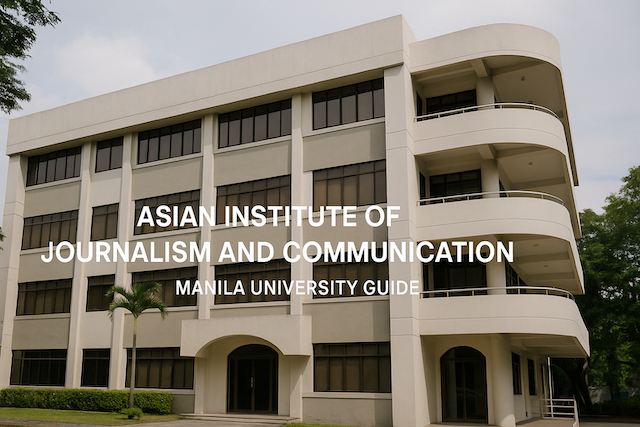
Asian Institute of Journalism and Communication (AIJC): Manila University Guide
Contents
- Asian Institute of Journalism and Communication (AIJC): Manila University Guide
- Overview of AIJC
- Why Choose AIJC?
- Academic Programs
- Campus and Facilities
- Student Life
- Admission Requirements
- Tuition and Fees
- Career Opportunities
- Location and Accessibility
- Conclusion
- FAQs (Frequently Asked Questions)
- What is the Asian Institute of Journalism and Communication (AIJC)?
- Is AIJC a good choice for working professionals?
- What programs are offered at AIJC?
- Who should consider studying at AIJC?
- What skills can I gain from AIJC programs?
- Does AIJC focus only on traditional journalism?
- How does AIJC integrate research and practice?
- What are the typical admission requirements?
- Are there additional requirements for international students?
- How much is the tuition at AIJC?
- Does AIJC offer scholarships or financial assistance?
- What career opportunities are available for AIJC graduates?
- Where is AIJC located and how accessible is it?
- How can I get more information or apply to AIJC?
Asian Institute of Journalism and Communication (AIJC): Manila University Guide
Overview of AIJC
The Asian Institute of Journalism and Communication (AIJC) is one of the Philippines’ most respected institutions specializing in journalism, communication, and media studies. Founded in 1980, the school has built a strong reputation for producing communication professionals who excel in media organizations, corporate communication departments, public affairs offices, and development communication programs.
AIJC is particularly known for its focus on ethical journalism, communication research, policy development, and digital-age media skills. With a mission centered on empowering communicators to contribute to social development, the institute blends academic instruction with practical training, industry exposure, and research-driven learning.
Over the decades, AIJC has become a trusted institution for media practitioners, government agencies, NGOs, international organizations, and students seeking high-quality journalism and communication education in Manila.
This guide provides a comprehensive overview of the institute, including its programs, facilities, admission process, student life, and career paths.
Why Choose AIJC?
AIJC stands out among communication schools in Manila because of its strong specialization and long-standing commitment to media and communication excellence. Here are the top reasons why students choose AIJC:
1. Industry-Focused Programs
AIJC’s curriculum is directly aligned with the needs of media, communication, and public information industries. The school’s training prepares students for careers in journalism, broadcasting, corporate communication, development communication, public relations, and digital media.
2. Expert Faculty and Industry Professionals
Many professors at AIJC are well-known media practitioners, policy advisors, communication consultants, and researchers. Students benefit from real-world insights and mentorship.
3. Strong Research and Public Policy Background
AIJC has contributed to national and regional media and communication reforms through extensive research projects. This allows students to learn from meaningful, socially relevant studies.
4. Flexible Programs for Working Students
The institute offers options for full-time students, working professionals, and those seeking continuing education or specialized training.
5. Small Class Sizes
AIJC ensures personalized learning through small and focused classes that allow for deeper discussions, individualized feedback, and improved mentorship.
Academic Programs
AIJC offers a mix of undergraduate-equivalent programs, graduate degrees, certifications, and professional training.
Graduate Programs
The most popular offerings include:
Master of Arts in Journalism
A program designed to develop advanced analytical skills, reporting techniques, digital journalism competencies, and ethical decision-making.
Master of Arts in Communication
Focused on communication research, policy development, strategic communication, and communication management.
These programs are ideal for media practitioners seeking career advancement or individuals looking to enter the communication industry.
Continuing Education Programs
AIJC provides several diploma and certificate programs such as:
-
Diploma in Journalism
-
Diploma in Communication
-
Specialized training modules in digital media, strategic communication, crisis communication, media literacy, and public information management
These short courses are designed for skills enhancement and are flexible enough for working professionals.
Custom Training Programs
AIJC frequently collaborates with government offices, non-profit organizations, and corporate clients to develop communication training tailored to their specific needs. This reflects the institute’s strong industry connection and applied learning culture.
Campus and Facilities
AIJC is located in Manila and provides a professional and academically focused environment. While not a large traditional university campus, the institute offers facilities that cater specifically to communication and journalism training.
Key Facilities Include:
-
Communication and media training rooms
-
Computer laboratories
-
Research and documentation centers
-
Seminar halls and training venues
-
Digital learning facilities for blended and online learning
The setup is ideal for students who prefer a focused, professional learning environment with emphasis on practical skills and hands-on activities.
Student Life
Although AIJC is not a traditional campus with large social organizations, it offers a vibrant academic and professional learning environment.
Academic-Focused Community
Most students are aspiring or practicing journalists, researchers, communication officers, and media professionals. This creates a mature, discussion-oriented learning culture.
Work-Friendly Schedule
AIJC’s flexible options allow working students to balance their careers with their studies.
Industry Exposure
Students gain opportunities to attend workshops, conferences, and seminars conducted by industry experts and partner organizations. Many programs also include research projects, fieldwork, and communication campaigns.
Professional Networking
AIJC’s network includes media organizations, government agencies, NGOs, and corporate communication departments. Students often secure internships, consultancy roles, or job placements through these connections.
Admission Requirements
AIJC has straightforward admission requirements, especially for graduate and diploma programs.
General Requirements
-
Completed application form
-
Bachelor’s degree from a recognized institution (for graduate programs)
-
Transcript of records
-
Updated résumé or CV
-
ID photos
-
Application fee
For International Students:
-
Passport copy
-
English proficiency (IELTS/TOEFL or equivalent, depending on the program)
-
Visa processing documents
Interview and Assessment
Some programs require an interview or written assessment to evaluate communication skills and academic readiness.
Tuition and Fees
Tuition varies depending on the program, number of units, and type of course. Graduate programs tend to be more expensive than diploma and certificate courses. Compared to major private universities in Manila, AIJC’s tuition is generally more affordable, making it a popular choice among working professionals.
Scholarships and financial assistance options may be available depending on the academic year and partnerships.
Career Opportunities
Graduates of AIJC pursue careers in various communication-related industries. Common career paths include:
Journalism and Media
-
Reporter
-
Editor
-
Photojournalist
-
Broadcast journalist
-
Multimedia journalist
-
Investigative journalist
Corporate and Strategic Communication
-
Corporate communications officer
-
PR specialist
-
Crisis communication manager
-
Brand communication manager
Government and Public Information Work
-
Public information officer
-
Communication consultant
-
Policy researcher
Development Communication and NGOs
-
Program communicator
-
Outreach coordinator
-
Researcher
Digital Media and Content Creation
-
Social media strategist
-
Content writer
-
Digital campaign manager
AIJC graduates are known for strong analytical and ethical communication skills, making them competitive in various industries.
Location and Accessibility
AIJC’s Manila location provides easy access to government agencies, media centers, corporate headquarters, and NGOs. This strategic placement allows students to participate in industry events and professional opportunities within the city.
Public transportation options, nearby restaurants, and study-friendly cafés make it convenient for both full-time and part-time students.
Conclusion
The Asian Institute of Journalism and Communication (AIJC) is an excellent choice for students and professionals who want specialized and high-quality education in journalism and communication. With its strong reputation, expert faculty, industry partnerships, and research-focused environment, AIJC continues to shape the future of journalism and communication in the Philippines.
Whether you’re aiming for a journalism career, transitioning into corporate communication, or enhancing your professional communication skills, AIJC offers a strong academic foundation and practical training to help you succeed.
FAQs (Frequently Asked Questions)
What is the Asian Institute of Journalism and Communication (AIJC)?
The Asian Institute of Journalism and Communication (AIJC) is a specialized institution in Manila that focuses on journalism, communication, and media-related studies.
It offers graduate programs, diploma courses, short trainings, and customized workshops for students, media practitioners, government staff, NGO workers, and corporate communication professionals.
AIJC is known for combining theory, practice, and research in the fields of journalism and strategic communication.
Is AIJC a good choice for working professionals?
Yes. AIJC is a popular choice among working professionals because of its flexible program design and class schedules.
Many students are already employed as journalists, communication officers, public information staff, or managers in government and private organizations.
Programs are often offered in formats that allow learners to balance work and study, such as evening or weekend classes and modular or blended learning formats when available.
What programs are offered at AIJC?
AIJC commonly offers graduate programs such as a Master of Arts in Journalism and a Master of Arts in Communication.
In addition, it provides diploma and certificate programs related to journalism, strategic communication, digital media, public information work, and development communication.
The institute also organizes customized trainings and workshops for institutions that need communication capacity-building for their staff or partners.
Who should consider studying at AIJC?
AIJC is ideal for aspiring journalists, communication graduates, mid-career media practitioners, public information officers, corporate communication staff, NGO communication workers, and researchers.
It also suits professionals from other fields who want to strengthen their communication skills in areas such as public affairs, advocacy, media relations, and digital content creation.
International students interested in Asian and Philippine media and communication contexts may also find AIJC a suitable option.
What skills can I gain from AIJC programs?
Students can develop a wide range of skills, including news writing, investigative reporting, editorial judgment, communication research, campaign planning, strategic communication design, digital content production, and policy-focused communication.
AIJC also emphasizes ethics, media literacy, and the social responsibility of communicators.
Graduates often leave with stronger critical thinking, analytical skills, and the ability to design and manage communication programs for different sectors.
Does AIJC focus only on traditional journalism?
No. While journalism is a core strength of AIJC, the institute has a broader focus on communication and media.
Programs usually cover both traditional and digital platforms, including print, broadcast, online media, and social networks.
Students learn how to adapt communication strategies to changing technologies, audience behaviors, and organizational needs.
How does AIJC integrate research and practice?
AIJC is known for its involvement in communication and media-related research projects for public institutions, NGOs, and international organizations.
Students benefit from this environment through research-oriented coursework, exposure to real case studies, and opportunities to participate in or learn from actual communication projects.
This approach helps bridge the gap between academic learning and practical application in the field.
What are the typical admission requirements?
For graduate programs, applicants are usually required to hold a bachelor’s degree from a recognized institution, submit official transcripts of records, fill out an application form, and provide ID photos.
Many applicants also submit a CV or résumé that summarizes their work experience, especially if they are already in the communication or media field.
Some programs may include an interview or a short written assessment to evaluate the applicant’s communication skills and academic readiness.
Are there additional requirements for international students?
International students typically need to submit a copy of their passport, academic documents such as transcripts, and proof of English proficiency if required by the program.
They also need to comply with Philippine visa and immigration regulations, which may involve coordination with AIJC and the appropriate government agencies.
Because requirements can change, foreign applicants are encouraged to contact AIJC directly for the latest guidelines and timelines.
How much is the tuition at AIJC?
Tuition and fees at AIJC can vary depending on the program, number of units enrolled, and type of course or training.
Generally, its fees are more affordable than those of large private universities, especially for professionals seeking focused, specialized communication education.
For accurate and updated tuition information, students should refer to AIJC’s official communication channels or contact the admissions office directly.
Does AIJC offer scholarships or financial assistance?
In some cases, AIJC may offer scholarships, discounts, or sponsored slots in partnership with government agencies, NGOs, or donor organizations.
Availability can depend on current projects, institutional agreements, or special programs being implemented during a specific academic year.
Prospective students who need financial support should inquire directly with AIJC and regularly check official announcements for scholarship opportunities.
What career opportunities are available for AIJC graduates?
Graduates of AIJC often pursue careers as journalists, editors, news producers, communication officers, PR specialists, development communication practitioners, media researchers, and consultants.
Others work in government information offices, corporate communication departments, advocacy organizations, and international agencies.
The strong emphasis on ethics, research, and strategic thinking helps AIJC graduates remain competitive and adaptable in the fast-changing communication and media landscape.
Where is AIJC located and how accessible is it?
AIJC is based in Manila, giving students access to media organizations, government institutions, corporate offices, NGOs, and international agencies.
The location is generally accessible via public transportation and is surrounded by commercial areas, cafés, and other services that are convenient for students and working professionals.
Because exact addresses and access routes can change or be updated, applicants should always verify the latest location details from AIJC’s official website or contact office.
How can I get more information or apply to AIJC?
If you want more detailed and updated information about programs, schedules, admissions, or tuition, the best step is to visit AIJC’s official website or contact its office through email or phone.
You can request brochures, program outlines, and application guidelines, or ask specific questions related to your background and goals.
Early communication with the school helps you plan your application timeline, prepare documents, and choose the program that fits your career path.
Philippines University Guide
Manila University Guide
Manila Province All Universities Lists

How to Register for eTravel Philippines (2025 Guide)
Step-by-step guide to completing your eTravel registration before arriving in the Philippines, with images and tips.

Night Market in Cebu – Things You Don’t Know About Cebu Life
Discover the hidden charm of Cebu’s night markets, from street food stalls to local life tips you won’t find in tourist guides.

How to Use ChatGPT for IELTS Preparation: A Complete Guide
Learn how to prepare for IELTS using ChatGPT — including strategies for Writing, Reading, Listening, Speaking, and grammar support.

How to Build a Website Without Coding Using ChatGPT
Discover how to build your own website using AI—no coding skills needed. From structure planning to SEO and design, let ChatGPT guide you.