2026年1月9日
3D ACADEMY offers affordable English study programs in Cebu, Philippines – perfect for beginners, professionals, and exam takers.

3D UNIVERSAL ENGLISH INSTITUTE INC
info.3d-universal.com
8:00-17:00(Mon-Fri)
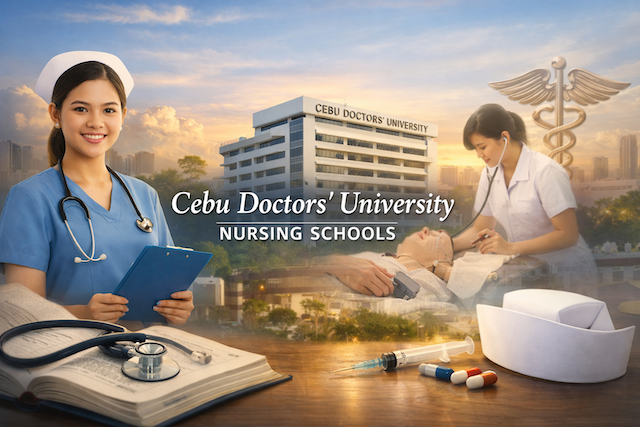
Cebu Doctors’ University (CDU): Nursing Schools
Contents
- Cebu Doctors’ University (CDU): Nursing Schools
- Overview of Cebu Doctors’ University
- College of Nursing at Cebu Doctors’ University
- Bachelor of Science in Nursing (BSN) Program
- Clinical Training and Hospital Exposure
- Faculty and Academic Mentorship
- Facilities and Learning Resources
- Nursing Licensure Examination Performance
- Career Opportunities for CDU Nursing Graduates
- International Exposure and Global Readiness
- Student Life and Campus Environment
- Admission Requirements and Application Process
- Tuition Fees and Financial Considerations
- Why Choose Cebu Doctors’ University for Nursing
- Conclusion
- FAQs (Frequently Asked Questions)
- Is Cebu Doctors’ University (CDU) a good nursing school in Cebu?
- What degree do students take to become nurses at CDU?
- How long is the BSN program at CDU?
- Does CDU provide hospital exposure for nursing students?
- What kinds of clinical areas do CDU nursing students rotate through?
- Does CDU help students prepare for the Nursing Licensure Exam (PNLE)?
- Is CDU nursing suitable for students aiming to work abroad?
- What is the teaching style like in CDU’s nursing program?
- Are there simulation labs or skills laboratories for nursing students at CDU?
- What are the common requirements to apply for CDU’s BSN program?
- Is CDU nursing a good fit for students who want strong discipline and structure?
- What expenses should nursing students expect besides tuition?
- How can I choose between CDU and other nursing schools in Cebu?
Cebu Doctors’ University (CDU): Nursing Schools
Overview of Cebu Doctors’ University
Cebu Doctors’ University (CDU) is one of the most respected private medical and health sciences universities in the Philippines. Located in Mandaue City, Cebu, CDU is widely recognized for its strong focus on medicine, nursing, allied health sciences, and healthcare-related education. Established in 1975, the university has built a solid reputation for producing competent, board-passing professionals who work both locally and internationally.
Unlike comprehensive universities that offer a wide range of unrelated programs, CDU is highly specialized. Its academic ecosystem is centered on healthcare, allowing students—especially those in nursing—to learn in an environment where medical education, clinical training, and hospital exposure are deeply integrated. This specialization makes CDU a preferred choice for students who are serious about building long-term careers in healthcare.
College of Nursing at Cebu Doctors’ University
The College of Nursing at Cebu Doctors’ University is one of its flagship academic units. It is designed to train students not only to pass the Philippine Nursing Licensure Examination (PNLE) but also to become globally competitive nurses equipped for diverse healthcare environments.
CDU’s nursing program emphasizes a balance between theoretical foundations, clinical competence, ethical practice, and professional development. Graduates are trained to deliver patient-centered care while adapting to rapidly evolving healthcare systems.
The nursing program at CDU follows a structured curriculum aligned with the standards set by the Commission on Higher Education (CHED) and integrates modern nursing practices, evidence-based care, and interdisciplinary collaboration.
Bachelor of Science in Nursing (BSN) Program
The Bachelor of Science in Nursing (BSN) program at CDU is a four-year degree program that prepares students for entry-level nursing practice. The curriculum is designed to progressively develop students’ knowledge, skills, and professional values.
During the early years, students focus on foundational courses such as anatomy, physiology, microbiology, psychology, and basic nursing concepts. As they advance, the program shifts toward specialized nursing areas, including:
-
Medical-Surgical Nursing
-
Maternal and Child Nursing
-
Pediatric Nursing
-
Psychiatric and Mental Health Nursing
-
Community Health Nursing
-
Leadership and Management in Nursing
In the final year, students undergo intensive clinical internships where they apply classroom learning in real healthcare settings. This gradual transition ensures that graduates are confident, competent, and job-ready.
Clinical Training and Hospital Exposure
One of CDU’s strongest advantages as a nursing school is its access to extensive clinical training opportunities. The university is closely affiliated with Cebu Doctors’ University Hospital, one of the leading tertiary hospitals in the region.
Through this affiliation, nursing students gain hands-on experience in various hospital departments, including emergency care, intensive care units, operating rooms, pediatric wards, and community health centers. Clinical exposure begins early in the program and increases in complexity as students progress.
In addition to the university hospital, CDU collaborates with other accredited hospitals, clinics, and community health facilities. This exposure allows students to experience different healthcare settings, patient populations, and clinical challenges, preparing them for diverse nursing roles after graduation.
Faculty and Academic Mentorship
The College of Nursing at CDU is supported by a team of experienced faculty members composed of licensed nurses, nurse educators, and healthcare professionals with advanced degrees and clinical expertise. Many faculty members have extensive experience in both local and international healthcare systems.
Faculty mentorship plays a critical role in CDU’s nursing education. Instructors closely monitor students’ academic performance, clinical skills, and professional behavior. This supportive learning environment helps students develop confidence, critical thinking abilities, and ethical decision-making skills.
Small to moderate class sizes also allow for more personalized instruction, meaningful feedback, and active participation during lectures, simulations, and clinical rotations.
Facilities and Learning Resources
Cebu Doctors’ University provides modern facilities that support effective nursing education. The College of Nursing is equipped with skills laboratories, simulation rooms, and learning spaces designed to replicate real clinical environments.
Simulation-based learning is a key component of the program. Students practice procedures such as vital sign assessment, intravenous therapy, wound care, patient communication, and emergency response in a controlled environment before performing them in actual clinical settings.
The university also maintains a comprehensive medical library with access to nursing textbooks, academic journals, research databases, and online resources. These facilities help students develop strong research skills and stay updated on current nursing practices.
Nursing Licensure Examination Performance
CDU has consistently demonstrated strong performance in the Philippine Nursing Licensure Examination. Over the years, the university has maintained above-national-average passing rates, reflecting the quality of its nursing education and exam preparation strategies.
The College of Nursing places a strong emphasis on board exam readiness. Review sessions, mock examinations, and faculty-led refresher courses are integrated into the curriculum, especially during the final year of study. This structured approach helps students build confidence and familiarity with the licensure exam format.
High licensure exam performance also enhances the employability of CDU nursing graduates, both within the Philippines and abroad.
Career Opportunities for CDU Nursing Graduates
Graduates of Cebu Doctors’ University’s nursing program enjoy strong employment prospects. Many alumni work in reputable hospitals, clinics, and healthcare institutions across the Philippines. Others pursue international careers in countries such as the United States, Canada, the Middle East, Australia, and parts of Europe.
The comprehensive clinical training and English-based instruction at CDU prepare graduates for global nursing standards. Alumni are employed in various roles, including:
-
Staff Nurse
-
Critical Care Nurse
-
Pediatric Nurse
-
Community Health Nurse
-
Nurse Educator
-
Clinical Instructor
-
Healthcare Administrator
Some graduates also pursue advanced studies in nursing, medicine, public health, or healthcare management.
International Exposure and Global Readiness
CDU recognizes the global demand for Filipino nurses and integrates international perspectives into its nursing program. English is the primary medium of instruction, which helps students develop strong communication skills essential for international practice.
The curriculum emphasizes cultural competence, ethical standards, and evidence-based nursing, all of which align with global healthcare expectations. While CDU does not operate as an international nursing school per se, its graduates are well-prepared to meet the requirements of overseas licensure exams and employer assessments.
This global readiness is one of the reasons CDU nursing graduates are highly regarded in international healthcare markets.
Student Life and Campus Environment
Cebu Doctors’ University offers a focused and professional campus environment. As a healthcare-oriented institution, the campus culture emphasizes discipline, responsibility, and academic commitment.
Nursing students participate in academic organizations, student councils, health outreach programs, and community service activities. These experiences help students develop leadership skills, teamwork, and a sense of social responsibility.
The university’s location in Mandaue City provides convenient access to transportation, hospitals, commercial centers, and residential areas. This makes daily student life manageable, even for those commuting from nearby cities such as Cebu City and Lapu-Lapu City.
Admission Requirements and Application Process
Admission to the BSN program at Cebu Doctors’ University is competitive. Applicants are typically evaluated based on academic performance, entrance examination results, and other screening criteria set by the university.
Common admission requirements include:
-
High school or senior high school transcript
-
Completed application form
-
Entrance examination results
-
Interview or screening assessment
-
Medical examination
Prospective students are encouraged to apply early, as nursing slots can be limited due to clinical training capacity requirements.
Tuition Fees and Financial Considerations
As a private university, CDU’s tuition fees are generally higher than those of public institutions. However, many students and families consider the cost a worthwhile investment due to the quality of education, clinical exposure, and career outcomes.
Tuition fees may vary depending on the year level and number of laboratory and clinical units. Additional costs may include uniforms, books, clinical supplies, and miscellaneous fees.
CDU may offer scholarships, academic discounts, or financial assistance programs for qualified students. Applicants are advised to inquire directly with the university’s admissions or finance office for updated information.
Why Choose Cebu Doctors’ University for Nursing
Cebu Doctors’ University stands out as a top nursing school in Cebu for several reasons. Its healthcare-focused academic environment, strong hospital affiliations, experienced faculty, and consistent licensure exam performance make it a compelling choice for aspiring nurses.
Students who choose CDU benefit from early and extensive clinical exposure, practical skills training, and a curriculum aligned with both local and international nursing standards. The university’s reputation in the medical field further enhances graduates’ employability and professional credibility.
For students who are committed to pursuing a serious and rewarding career in nursing, Cebu Doctors’ University offers a strong foundation, comprehensive training, and long-term career value.
Conclusion
The College of Nursing at Cebu Doctors’ University represents excellence in nursing education in the Philippines. With its specialized focus on healthcare, robust clinical training system, and proven track record of producing competent nursing professionals, CDU remains a top choice for nursing students in Cebu and beyond.
Whether the goal is to serve in local communities, work in leading hospitals, or pursue international nursing opportunities, CDU provides the academic rigor, practical experience, and professional preparation needed to succeed in today’s demanding healthcare landscape.
FAQs (Frequently Asked Questions)
Is Cebu Doctors’ University (CDU) a good nursing school in Cebu?
Yes. Cebu Doctors’ University is widely regarded as one of the stronger nursing schools in Cebu because it is a health-sciences-focused university with a long history of training healthcare professionals. For nursing students, this specialized environment can be an advantage because many campus resources, faculty expertise, and academic expectations are aligned with clinical practice. CDU is also known for emphasizing hands-on training, professional discipline, and board exam readiness. That said, “good” depends on your learning style and goals. If you want a nursing program with a strong medical culture and structured clinical exposure, CDU is often a strong match.
What degree do students take to become nurses at CDU?
Students typically enroll in the Bachelor of Science in Nursing (BSN) program. The BSN is the standard undergraduate degree pathway for becoming a registered nurse in the Philippines. It includes general education subjects, health sciences foundation courses, core nursing courses, and supervised clinical practice. After completing the BSN, graduates may apply to take the Philippine Nursing Licensure Examination (PNLE) to become licensed nurses. Some students later pursue graduate studies, but the BSN is the primary entry route into professional nursing practice.
How long is the BSN program at CDU?
The BSN program is generally completed in four academic years, following the typical Philippine university structure. The early part of the program focuses more on foundational sciences and introductory nursing concepts, while the later years include higher-level nursing subjects and more intensive clinical rotations. The final year usually includes major clinical internship components where students rotate through multiple areas of nursing practice. Program length can vary if a student has transferred credits, took a leave of absence, or needs to repeat certain courses.
Does CDU provide hospital exposure for nursing students?
Yes. Clinical exposure is a central part of CDU’s nursing training. Students participate in supervised clinical duty in hospitals and other accredited healthcare settings. Because CDU is known as a health-sciences institution, it tends to prioritize clinical readiness and structured duty rotations. Nursing students typically experience a range of areas such as medical-surgical nursing, maternal and child health, pediatrics, psychiatric nursing, and community health. The goal is to ensure students can apply theoretical knowledge in real patient-care environments under professional supervision.
What kinds of clinical areas do CDU nursing students rotate through?
Clinical rotations commonly cover core nursing settings such as hospital wards, outpatient units, and community-based health programs. Depending on scheduling and partner facilities, students may rotate through emergency care, medical-surgical units, operating room-related exposure, intensive or critical care observation, maternal and newborn care, pediatric care, mental health settings, and public health/community clinics. These rotations are designed to build competency step by step, so students start with basic skills and progress toward higher responsibility as they advance in the program.
Does CDU help students prepare for the Nursing Licensure Exam (PNLE)?
Most nursing programs, including CDU, place strong emphasis on licensure preparation because the PNLE is a key professional milestone. Students usually receive structured review support through major exams, integrated assessments, practice tests, and faculty-led reinforcement sessions in higher year levels. Many schools also schedule mock boards and targeted remediation for weaker areas. The best approach is to confirm CDU’s current review format with the college office, but in general you should expect a nursing culture that treats the PNLE as a serious academic and professional goal.
Is CDU nursing suitable for students aiming to work abroad?
It can be. Many Filipino nursing graduates aim for international careers, and a BSN from a reputable institution can provide a solid foundation. However, working abroad typically requires additional steps beyond graduation, such as passing local licensure exams, meeting language requirements, and fulfilling clinical experience thresholds depending on the country. CDU’s strengths—clinical exposure, professional training, and English-based instruction—can support global readiness, but students should still plan early by researching country-specific requirements and building strong academic and clinical records.
What is the teaching style like in CDU’s nursing program?
Nursing education is usually structured, competency-based, and practical. Students can expect a mix of classroom lectures, laboratory skills training, case discussions, research activities, and supervised clinical duty. Teaching often emphasizes critical thinking, patient safety, communication, and documentation. Because nursing is a regulated profession, evaluation tends to be strict, with performance assessed through exams, return demonstrations, clinical performance checklists, and professional behavior. Students who prefer clear expectations and structured learning often do well in this type of environment.
Are there simulation labs or skills laboratories for nursing students at CDU?
Most nursing schools that focus on clinical readiness provide skills labs and simulation-based learning, and CDU is known for emphasizing practical training. Simulation labs typically allow students to practice procedures such as taking vital signs, performing health assessments, administering medications (in controlled settings), wound care, patient communication, and emergency response scenarios before moving to real clinical environments. Simulation helps students build confidence and reduce errors during actual duty. For specific lab facilities available this year, it is best to check CDU’s current campus resources.
What are the common requirements to apply for CDU’s BSN program?
Requirements can change, but applicants commonly need to submit an application form, academic records (such as senior high school report cards or transcripts), and other supporting documents. Many universities also require an entrance examination and may conduct screening interviews or evaluations, especially for programs with limited clinical slots like nursing. Some institutions require a medical examination to ensure fitness for clinical duty. If you are applying as a transferee, you may also need course descriptions and an evaluation of credits.
Is CDU nursing a good fit for students who want strong discipline and structure?
Yes, it can be a good fit if you prefer structured expectations and a professional healthcare environment. Nursing programs often enforce standards related to attendance, uniforms, grooming, clinical behavior, confidentiality, and patient safety. CDU’s identity as a health-sciences university may reinforce a culture of professionalism and seriousness. If you thrive when rules and clinical standards are clear, you may find the environment supportive. If you prefer highly flexible learning styles, you should prepare for a more regulated academic experience.
What expenses should nursing students expect besides tuition?
Beyond tuition and miscellaneous school fees, nursing students often budget for uniforms, shoes, nameplates, clinical supplies, transportation to duty sites, skills lab materials, books or digital resources, and medical requirements such as vaccinations or health clearances. Some courses may also require printing costs for reports, care plans, and documentation. Costs vary by year level because clinical duty requirements typically increase in later years. Planning a realistic budget early can reduce stress and help students focus on academic performance.
How can I choose between CDU and other nursing schools in Cebu?
Start by comparing factors that directly affect your learning and outcomes: clinical training quality, faculty support, facilities, student support systems, licensure exam preparation, and overall program culture. If possible, talk to current students or alumni, ask about duty schedules and workload, and look for signs of consistent academic systems (clear guidelines, structured labs, and organized clinical rotations). Also consider practical issues like location, commute, tuition, and your personal study habits. The “best” school is the one that fits your goals, budget, and learning style while providing strong clinical preparation.
Cebu Universities: Nursing Degree – Top Nursing Schools, Tuition, and Board Exam Pass Rates

How to Register for eTravel Philippines (2025 Guide)
Step-by-step guide to completing your eTravel registration before arriving in the Philippines, with images and tips.

Night Market in Cebu – Things You Don’t Know About Cebu Life
Discover the hidden charm of Cebu’s night markets, from street food stalls to local life tips you won’t find in tourist guides.

How to Use ChatGPT for IELTS Preparation: A Complete Guide
Learn how to prepare for IELTS using ChatGPT — including strategies for Writing, Reading, Listening, Speaking, and grammar support.

How to Build a Website Without Coding Using ChatGPT
Discover how to build your own website using AI—no coding skills needed. From structure planning to SEO and design, let ChatGPT guide you.