2026年1月12日
3D ACADEMY offers affordable English study programs in Cebu, Philippines – perfect for beginners, professionals, and exam takers.

3D UNIVERSAL ENGLISH INSTITUTE INC
info.3d-universal.com
8:00-17:00(Mon-Fri)
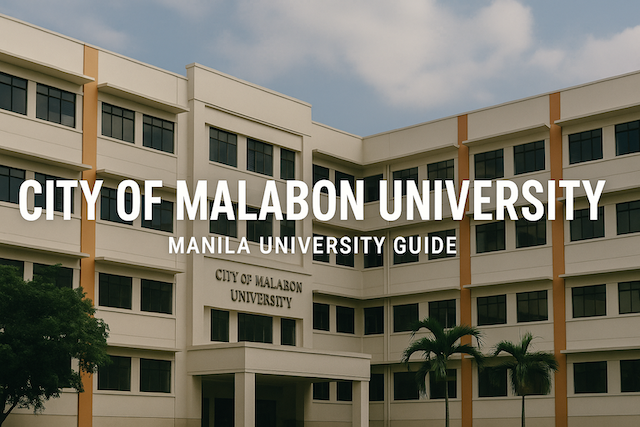
City of Malabon University: Manila University Guide
Contents
- City of Malabon University: Manila University Guide
- Overview of City of Malabon University
- Academic Programs Offered
- Admission Requirements
- Tuition and Fees
- Facilities and Campus Environment
- Student Life at CMU
- Why Choose City of Malabon University?
- Conclusion
- FAQs (Frequently Asked Questions)
- Is City of Malabon University a public or private institution?
- What undergraduate programs are offered at City of Malabon University?
- Who can apply to City of Malabon University?
- What are the basic admission requirements for freshmen?
- Does City of Malabon University offer free tuition?
- How much should I budget per semester aside from tuition?
- What facilities are available on campus?
- Is City of Malabon University accessible by public transportation?
- What is student life like at City of Malabon University?
- Are there opportunities for internships and on-the-job training?
- Does CMU have a strong focus on board exam preparation?
- How can I get updated information about admissions and announcements?
City of Malabon University: Manila University Guide
Overview of City of Malabon University
City of Malabon University (CMU) is a public higher education institution located in Malabon City, part of Metro Manila. Known for its strong community-oriented mission, CMU provides accessible and affordable education to local residents while maintaining solid academic standards. Over the years, the university has grown from a municipal college into a full-fledged city university with modern facilities, upgraded programs, and improved academic services.
CMU focuses on producing graduates who are competitive in fields such as education, business, computer studies, engineering, and public service. With its commitment to academic excellence and values formation, the university continues to be a top choice for students seeking quality yet budget-friendly education in Malabon.
This guide covers CMU’s programs, admission process, facilities, student life, tuition structure, and why the university is a strong option for both local and nearby-city students.
Academic Programs Offered
City of Malabon University offers a variety of undergraduate programs designed to meet the needs of students entering today’s competitive workforce. The programs are aligned with CHED standards and continuously updated to ensure relevance.
College of Arts and Sciences
-
Bachelor of Arts in Communication
-
Bachelor of Science in Psychology
-
Bachelor of Science in Criminology
These programs train students in communication skills, behavioral sciences, and law enforcement competencies. The Criminology program, in particular, is one of the most in-demand offerings at CMU due to its strong community service alignment.
College of Business and Accountancy
-
Bachelor of Science in Business Administration (BSBA) with majors in:
-
Marketing Management
-
Financial Management
-
Human Resource Management
-
-
Bachelor of Science in Accounting Information System (BSAIS)
The business programs emphasize practical learning, entrepreneurship, and modern financial systems. Students develop strong analytical and management skills applicable to various industries.
College of Computer Studies
-
Bachelor of Science in Information Technology (BSIT)
-
Bachelor of Science in Computer Science (BSCS)
These programs provide hands-on training in programming, systems development, software engineering, and cybersecurity. The curriculum is suited for students aiming to enter the rapidly growing tech sector.
College of Teacher Education
-
Bachelor of Elementary Education (BEEd)
-
Bachelor of Secondary Education (BSEd) with majors in:
-
English
-
Science
-
Mathematics
-
These programs prepare future educators with a strong foundation in teaching principles, classroom management, and curriculum development.
College of Engineering
-
Bachelor of Science in Civil Engineering (BSCE)
-
Bachelor of Science in Computer Engineering (BSCpE)
Engineering students undergo rigorous training that combines theoretical instruction with practical application through laboratory work and field studies.
Admission Requirements
City of Malabon University maintains a straightforward and accessible admissions process designed to accommodate both fresh graduates and transferees.
Requirements for Freshmen
-
Accomplished application form
-
PSA Birth Certificate
-
Form 138 (Report Card)
-
Certificate of Good Moral Character
-
2×2 ID photos (usually 2–4 copies)
-
Proof of residency (priority is given to Malabon residents)
CMU often prioritizes local applicants, though non-residents may still apply depending on available slots.
Requirements for Transferees
-
Transcript of Records or certified copy of grades
-
Honorable Dismissal
-
Good Moral Certificate
-
Evaluation of subjects for crediting
Transferees may undergo an interview or assessment to ensure proper placement.
Entrance Exam or Screening
Some programs may require an entrance test, especially those with limited slots (e.g., Criminology and Education). The university periodically releases admission schedules through its official Facebook page or website.
Tuition and Fees
One of the biggest advantages of City of Malabon University is its affordability. As a local government-funded institution, CMU offers free tuition under the Universal Access to Quality Tertiary Education Act (RA 10931) for qualified students.
What Students May Still Need to Pay
While tuition is free, students may be responsible for minimal fees such as:
-
ID processing
-
Laboratory fees (varies by program)
-
Uniform costs
-
Miscellaneous campus fees
These costs remain significantly lower than those in private universities across Metro Manila.
Facilities and Campus Environment
City of Malabon University has undergone improvements over recent years, enhancing its learning environment and modernizing key facilities.
Classrooms and Learning Spaces
Well-lit classrooms, multimedia-equipped rooms, and newly renovated buildings support an effective learning atmosphere.
Library and Resource Centers
The university library provides academic resources, research materials, and online learning tools. Study areas are available for individual and group work.
Laboratories
Students in IT, engineering, and science-related programs have access to specialized laboratories, including:
-
Computer labs
-
Electronics and engineering labs
-
Science laboratories
Sports and Recreation
CMU promotes student wellness through facilities such as:
-
Covered courts
-
Open activity spaces
-
Physical education training areas
Community Location
Situated within Malabon, the campus is accessible via local jeepneys, tricycles, and nearby transport hubs. The university’s central location makes it convenient for most residents of the city.
Student Life at CMU
City of Malabon University encourages an active and well-rounded student experience through various campus organizations, events, and leadership programs.
Student Organizations
Students can join academic, cultural, sports, and special-interest clubs that help develop leadership and teamwork skills.
Events and Traditions
CMU celebrates annual events such as:
-
Foundation Day
-
Intramurals
-
Academic competitions
-
Community outreach programs
These events strengthen camaraderie among students and staff.
Internship and Practical Training
Many programs include on-the-job training (OJT), giving students real-world industry exposure. Partnerships with local government offices, businesses, and schools enhance internship opportunities.
Why Choose City of Malabon University?
CMU stands out as a practical and reliable choice for students looking for quality education at minimal cost. Key reasons include:
1. Affordable and Accessible
Free tuition and low miscellaneous fees make CMU one of the most cost-effective universities in Metro Manila.
2. Strong Community-Focused Programs
CMU’s mission is to uplift Malabon residents by providing education that leads to employment and career growth.
3. Growing Academic Reputation
Its continuous development, program expansion, and facilities improvement have strengthened its position among local universities.
4. Supportive Learning Environment
CMU offers a student-centered approach with supportive faculty, accessible resources, and active student organizations.
5. Convenient Location
The campus is easy to access for students within Malabon and nearby areas like Navotas, Caloocan, and Valenzuela.
Conclusion
City of Malabon University is an excellent option for students seeking an affordable, community-oriented, and academically solid education in Metro Manila. With diverse programs, improving facilities, and a supportive campus environment, CMU continues to help shape the future of thousands of students each year.
If you’re considering enrolling at CMU, this guide provides the essential details to help you make an informed decision and prepare for your academic journey.
FAQs (Frequently Asked Questions)
Is City of Malabon University a public or private institution?
City of Malabon University (CMU) is a public higher education institution funded and supported by the local government of Malabon City.
As a city university, its main goal is to provide accessible and affordable tertiary education to residents of Malabon and nearby areas.
Because it is public, qualified students may enjoy free tuition under national government programs, subject to existing policies and eligibility rules.
What undergraduate programs are offered at City of Malabon University?
CMU offers several undergraduate programs through its different colleges. Common programs include degrees in Business Administration,
Accounting Information System, Information Technology, Computer Science, Criminology, Psychology, Communication, Elementary Education,
Secondary Education, Civil Engineering, and Computer Engineering. These programs are aligned with national standards and are designed
to prepare students for employment, licensure exams, and further studies.
Who can apply to City of Malabon University?
The university accepts senior high school graduates, ALS passers who meet the requirements, and transferees from other colleges and universities.
Priority is often given to residents of Malabon City, but non-residents may also be considered depending on the availability of slots in each program.
Applicants must be able to present the required documents, meet academic standards, and comply with admission schedules set by the university.
What are the basic admission requirements for freshmen?
Typical requirements for new students include a completed application form, Form 138 or senior high school report card,
PSA birth certificate, certificate of good moral character, recent ID photos, and in many cases proof of residency for Malabon applicants.
Some programs may require an entrance exam, interview, or additional documents. The university usually posts detailed and updated requirements
through its official online channels before each admission cycle.
Does City of Malabon University offer free tuition?
Yes, CMU generally offers free tuition to eligible students under the Universal Access to Quality Tertiary Education Act and local government initiatives.
However, while tuition may be covered, students might still need to pay certain minimal fees such as ID processing, laboratory fees,
and other miscellaneous charges. These costs remain considerably lower than those in many private institutions in Metro Manila.
How much should I budget per semester aside from tuition?
Although exact amounts can change over time, students should budget for items such as uniforms, school supplies, photocopying of materials,
laboratory fees for programs like IT, engineering, and sciences, as well as transportation and daily allowance.
Compared with private universities, the overall cost of studying at CMU is still relatively low, which makes it a good option
for families looking for a budget-friendly yet reputable school.
What facilities are available on campus?
City of Malabon University provides classrooms, libraries, computer laboratories, science and engineering labs, and spaces for student activities.
Many classrooms are equipped with basic multimedia tools to support lectures and presentations. The library offers books, references, and study areas,
while computer labs support IT and computer-related courses. Sports and activity areas are also available for physical education and student events.
Is City of Malabon University accessible by public transportation?
Yes, CMU is generally accessible by common modes of public transport such as jeepneys, tricycles, and other local routes serving Malabon and neighboring cities.
Its location inside the city makes it convenient for most local residents. Students coming from nearby areas like Navotas, Caloocan, and Valenzuela
can usually reach the campus through connecting routes, although travel time may vary depending on traffic conditions.
What is student life like at City of Malabon University?
Student life at CMU involves a mix of academic work, extracurricular activities, and community involvement.
Learners can join various organizations, including academic clubs, cultural groups, sports teams, and student councils.
The university also organizes events such as intramurals, foundation celebrations, seminars, and outreach programs.
These activities help students build leadership, teamwork, and social skills while strengthening school spirit.
Are there opportunities for internships and on-the-job training?
Most degree programs at City of Malabon University include internship or on-the-job training (OJT) components in their curriculum.
Students may be deployed to partner companies, schools, government offices, or community organizations depending on their course.
These experiences allow them to apply classroom knowledge in real work environments, gain practical skills, and start building their professional network.
Does CMU have a strong focus on board exam preparation?
For programs that lead to professional licensure, such as Education, Criminology, and Engineering, CMU typically integrates board exam-related content
into the curriculum and may provide review support or enrichment activities. While outcomes can vary per batch, the university’s aim is to help students
develop both the theoretical foundation and practical competence needed to perform well in licensure examinations.
How can I get updated information about admissions and announcements?
The best way to get updated and accurate information about City of Malabon University is to follow its official social media pages, check its official website,
or visit the campus registrar or information office. Admission schedules, application guidelines, enrollment procedures, and special announcements are usually
posted on those channels. Relying on official sources ensures that you receive the latest policies and avoid outdated or incorrect information.
Philippines University Guide
Manila University Guide
Manila Province All Universities Lists

How to Register for eTravel Philippines (2025 Guide)
Step-by-step guide to completing your eTravel registration before arriving in the Philippines, with images and tips.

Night Market in Cebu – Things You Don’t Know About Cebu Life
Discover the hidden charm of Cebu’s night markets, from street food stalls to local life tips you won’t find in tourist guides.

How to Use ChatGPT for IELTS Preparation: A Complete Guide
Learn how to prepare for IELTS using ChatGPT — including strategies for Writing, Reading, Listening, Speaking, and grammar support.

How to Build a Website Without Coding Using ChatGPT
Discover how to build your own website using AI—no coding skills needed. From structure planning to SEO and design, let ChatGPT guide you.