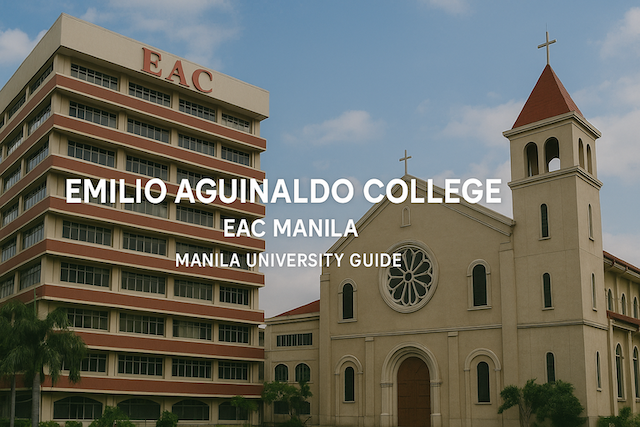
Emilio Aguinaldo College (EAC Manila): Manila University Guide
Emilio Aguinaldo College (EAC Manila) is one of the long-established private institutions in the heart of Manila, known for its strong programs in health sciences, hospitality, business, and criminology. With a mission to develop globally competitive graduates through academic excellence, research, and community engagement, EAC attracts both local and international students seeking quality education within an accessible urban environment.
This comprehensive guide covers everything you need to know about EAC Manila, including academics, facilities, student life, tuition, admissions, and living tips for students planning to study in Manila.
Overview of Emilio Aguinaldo College (EAC Manila)
Founded in 1957, Emilio Aguinaldo College has grown into a respected multidisciplinary institution offering basic education, undergraduate programs, and graduate studies. The Manila campus, located along United Nations Avenue, is easily accessible via public transportation and surrounded by essential student conveniences like dormitories, restaurants, bookstores, and hospitals.
EAC is named after Emilio Aguinaldo, the first President of the Philippines, reflecting the institution’s strong orientation toward patriotism, leadership, and service. The institution is recognized for its applied learning approach and strong focus on healthcare education, especially Nursing and Physical Therapy.
EAC Manila maintains partnerships with local and international institutions, providing students opportunities for internships, training, and exchange programs.
Academic Programs at EAC Manila
EAC Manila offers a wide range of undergraduate and graduate programs. It is best known for its courses in the medical and health sciences fields but also has popular programs in business, engineering, education, and tourism.
Health Sciences Programs
EAC has established a strong reputation in the allied health fields, with its graduates consistently performing well in licensure exams.
Popular programs include:
-
Bachelor of Science in Nursing (BSN)
-
Bachelor of Science in Physical Therapy
-
Bachelor of Science in Radiologic Technology
-
Bachelor of Science in Medical Technology
-
Bachelor of Science in Pharmacy
-
Bachelor of Science in Nutrition and Dietetics
These programs include clinical internships in major partner hospitals in Manila, providing real-world exposure and hands-on training.
Hospitality, Tourism, and Culinary Programs
The college is also known for:
Students gain experience through EAC’s industry partnerships, allowing them to train in hotels, resorts, and tourism companies.
Business, Engineering, and Other Programs
EAC offers additional relevant programs in:
-
Business Administration
-
Accountancy
-
Information Technology
-
Computer Engineering
-
Criminology
-
Psychology
-
Education
Graduate studies programs and teacher certification programs are also available.
Campus Facilities
EAC Manila provides facilities that support both academic success and holistic development.
Academic and Laboratory Facilities
-
Modernized science and health laboratories
-
Skills labs for Nursing and Allied Health
-
Computer laboratories
-
Engineering and IT labs
-
Library with digital research resources
-
Simulation rooms for medical and hospitality programs
Student and Community Facilities
-
Gymnasium and sports complex
-
Student lounges and study areas
-
Cafeterias and food kiosks
-
Multi-purpose halls
-
Campus clinic
-
Bookstore and printing services
The campus environment is designed to be secure and conducive to learning, with 24/7 security personnel and CCTV surveillance.
Student Life at EAC Manila
EAC Manila fosters an inclusive and active student community through various clubs, organizations, and events. Student life focuses on leadership development, cultural appreciation, athletics, and social engagement.
Student Organizations
Students can join academic, interest-based, cultural, and religious organizations, such as:
Events and Activities
The college organizes:
These activities encourage personal growth and help build a strong sense of community among students.
Tuition and Fees
EAC Manila is considered moderately priced compared to other private colleges in Manila. Tuition will vary depending on your program and year level, especially for laboratory-heavy courses such as Nursing, Medical Technology, and Radiologic Technology.
Estimated Tuition Range
-
₱40,000 – ₱70,000 per semester for most programs
-
₱70,000 – ₱90,000 per semester for health sciences and laboratory-intensive courses
Other fees may include:
-
Miscellaneous fees
-
Laboratory fees
-
Uniform and ID
-
Medical and dental fees
Financial aid options such as scholarships, discounts, and government programs (TES, CHED scholarships) may also be available for qualified students.
Admission Requirements
For Incoming Freshmen
General admission requirements include:
-
Accomplished application form
-
Form 138 (Report Card)
-
Good Moral Certificate
-
PSA Birth Certificate
-
2×2 or passport-size photos
-
Entrance exam (if required)
For Transferees
For International Students
-
Passport
-
Student Visa or Study Permit
-
English proficiency certificate (if required)
-
High school or college records
EAC Manila has a dedicated International Students Office to assist with onboarding, visa requirements, and orientation.
Living Near EAC Manila
EAC’s central location makes student living convenient, with easy access to:
-
Affordable dormitories
-
Apartments and boarding houses
-
Malls such as Robinsons Place Manila
-
Restaurants, convenience stores, and cafés
-
Public transportation (LRT, jeepneys, buses)
-
Manila Bay area for leisure
Popular nearby residential areas include Ermita, Malate, Paco, and Intramuros.
Estimated Cost of Living
-
Dormitory: ₱3,000–₱7,000/month
-
Meals: ₱150–₱300/day
-
Transportation: ₱500–₱1,500/month
Living near campus is recommended for safety and convenience, especially for students with early morning or late-evening classes.
Career Opportunities and Industry Connections
EAC graduates are employed locally and internationally across various fields. The institution maintains partnerships with:
Internships and on-the-job training programs help students gain practical experience and improve employability.
Why Choose Emilio Aguinaldo College Manila?
Students choose EAC Manila for several reasons:
-
Strong academic reputation in health sciences
-
Strategic campus location
-
Affordable tuition and financial aid options
-
Industry partnerships for internships and employment
-
Supportive community and active student life
-
Accessible transport systems
Its balanced approach to academics and character formation makes it a solid choice for students looking for a practical and career-oriented education pathway.
FAQs (Frequently Asked Questions)
Where is Emilio Aguinaldo College (EAC Manila) located?
Emilio Aguinaldo College (EAC Manila) is located along United Nations Avenue in Ermita, Manila. The campus is surrounded by hospitals, offices, dormitories, and commercial establishments, making it convenient for students to access transportation, food options, and basic services. Its central location is ideal for those who plan to live nearby or commute daily.
What programs is EAC Manila best known for?
EAC Manila is particularly well known for its health sciences programs, including Nursing, Physical Therapy, Radiologic Technology, Medical Technology, and Pharmacy. It also offers strong programs in Hospitality Management, Tourism Management, Business Administration, Criminology, Information Technology, and Education. These programs are designed to be practical and industry-oriented, with internships and hands-on training.
Is Emilio Aguinaldo College a good choice for Nursing and health-related courses?
Yes. EAC has built a solid reputation in the allied health fields. Nursing and other health-related courses feature extensive clinical exposure through partner hospitals in Manila. Students spend time in real hospital settings, working with patients under supervision. This helps them build confidence, improve skills, and prepare for licensure examinations and future employment in hospitals or clinics locally and abroad.
Does EAC Manila accept international students?
Yes, Emilio Aguinaldo College welcomes international students. The school provides assistance with admission requirements, visa processing, and orientation. International applicants are usually required to submit academic records, passport copies, and other immigration documents, and in some cases may need to prove English proficiency. An International Students Office or designated coordinator typically helps guide them through the process.
What are the basic admission requirements for Filipino freshmen?
For incoming Filipino freshmen, common requirements include a completed application form, Form 138 (report card), Good Moral Certificate, PSA birth certificate, and ID photographs. Some programs may require an entrance examination, interview, or additional documents, especially for health sciences courses. It is best to check with EAC’s admissions office or official website for the most updated list of requirements and deadlines.
How much is the tuition at EAC Manila?
Tuition fees at EAC Manila vary depending on the program and the number of units enrolled. In general, non-laboratory courses often have lower tuition compared to health sciences programs with many practical subjects. Additional charges may include laboratory fees, miscellaneous fees, medical fees, and other campus charges. For accurate and updated tuition estimates, students should contact the registrar or finance office directly.
Are scholarships or financial assistance available?
EAC Manila may offer various forms of financial assistance, such as academic scholarships, athletic grants, discounts for siblings, and government-sponsored programs when applicable. Some scholarships are merit-based, while others may be need-based or tied to specific qualifications. Applicants are encouraged to inquire early at the scholarship or student affairs office to understand eligibility, documentary requirements, and application timelines.
What facilities can students use on campus?
Students at EAC Manila have access to classrooms, science and health laboratories, computer labs, a library with print and digital resources, skills and simulation labs, and multipurpose halls. There are also gym and sports facilities, student lounges, cafeterias, and a campus clinic. These spaces support both academic learning and extracurricular activities, contributing to a more holistic student experience.
What is student life like at EAC Manila?
Student life at EAC Manila is active and community-oriented. Learners can join academic organizations, cultural groups, sports clubs, and volunteer associations. The campus regularly hosts events such as intramurals, cultural celebrations, outreach programs, seminars, and leadership training activities. These events provide opportunities to build friendships, improve communication skills, and develop leadership and social responsibility.
Is it safe to study and live near EAC Manila?
Like most urban campuses, safety depends on both school measures and student awareness. EAC Manila employs security personnel and maintains entry controls and surveillance in key areas. The surrounding district has many schools, offices, and residences, so it is generally busy. Students are advised to stay alert, avoid walking alone late at night, use trusted transportation, and choose reputable dormitories or boarding houses for accommodation.
What are the housing options for EAC students?
Many students choose to live in dormitories, boarding houses, or apartments within walking distance or a short commute from the campus. Options range from budget-friendly shared rooms to more private studio-type units. Monthly rental costs usually depend on room type, facilities, and distance from EAC. Living near the campus can reduce travel time and expenses and is convenient for early morning or late evening classes.
What career opportunities do EAC Manila graduates have?
Graduates of EAC Manila find employment in a wide range of fields, including hospitals, clinics, schools, hotels, tourism companies, corporations, and government agencies. Health sciences graduates may work as nurses, medical technologists, radiologic technologists, physical therapists, or pharmacists. Business and IT graduates may enter corporate roles or start their own ventures. EAC’s industry linkages, internships, and training programs help students transition more smoothly into the job market.
How can I get more information or apply to EAC Manila?
Prospective students can contact EAC Manila through its official website, email, phone, or social media pages. The admissions office usually provides details on application procedures, program offerings, tuition estimates, and schedules. It is recommended to request the latest prospectus, confirm deadlines, and, if possible, visit the campus for an on-site tour or orientation before finalizing your decision.