2026年1月12日
3D ACADEMY offers affordable English study programs in Cebu, Philippines – perfect for beginners, professionals, and exam takers.

3D UNIVERSAL ENGLISH INSTITUTE INC
info.3d-universal.com
8:00-17:00(Mon-Fri)
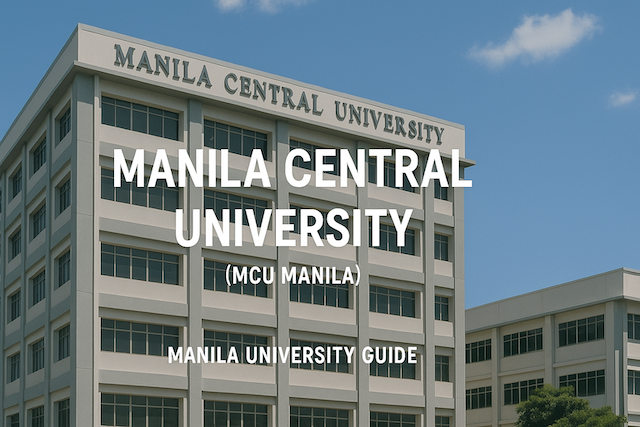
Manila Central University (MCU Manila): Manila University Guide
Contents
- Manila Central University (MCU Manila): Manila University Guide
- Overview of Manila Central University
- History and Founding Philosophy
- Location and Campus Environment
- Academic Programs at MCU Manila
- Facilities and Campus Resources
- Tuition Fees and Other Costs
- Admission Process
- Student Life at MCU Manila
- Housing and Nearby Accommodation
- Transportation and Accessibility
- Why Choose MCU Manila?
- Final Thoughts
- FAQs (Frequently Asked Questions)
- What programs does Manila Central University (MCU Manila) offer?
- Is MCU Manila a good choice for students who want to work in healthcare?
- Where is MCU Manila located and is it easy to commute to the campus?
- How much is the tuition fee at MCU Manila?
- Does MCU Manila offer scholarships or financial assistance?
- What is campus life like at MCU Manila?
- Are there dormitories or student housing options near MCU Manila?
- Is MCU Manila safe for students?
- Does MCU Manila accept international students?
- How can I apply to Manila Central University?
Manila Central University (MCU Manila): Manila University Guide
Overview of Manila Central University
Manila Central University (MCU Manila), located in Caloocan City, is one of the Philippines’ oldest and most established private universities. Founded in 1904 as a small pharmacy review center, MCU expanded over the decades into a full-fledged university offering comprehensive programs in health sciences, engineering, business, education, and graduate studies. Today, it is widely recognized for its strong medical and allied health programs and continues to attract students from Metro Manila and abroad.
MCU is known for its commitment to academic excellence, community service, and holistic student development. Its campus blends traditional academic buildings with modern facilities, including laboratories, research centers, simulation clinics, and a university hospital. For students seeking an institution with a long history, strong professional programs, and an accessible location, MCU is a solid option.
History and Founding Philosophy
Manila Central University was originally named the Escuela de Farmacia del Liceo de Manila. It soon became known as one of the leading pharmacy review centers before evolving through expansions in allied health sciences, dentistry, medicine, and other disciplines. The university has deep roots in Philippine education, especially in the health sciences, where many of its graduates have contributed significantly to the country’s health sector.
MCU emphasizes high academic standards, character formation, and service-oriented training. Its long-standing motto centers on producing competent, ethical, and socially responsible graduates.
Location and Campus Environment
MCU is located in Caloocan City, along EDSA, one of Metro Manila’s major transport routes. Because of its location, students can commute easily using buses, jeepneys, UV Express vans, LRT-1, and tricycles.
Key advantages of MCU’s location
-
Accessible from Manila, Quezon City, Valenzuela, and northern Metro Manila
-
Near residential zones suitable for dorms and boarding houses
-
Surrounded by shops, eateries, convenience stores, and student-friendly services
-
Close to healthcare and community facilities, including the MCU-FDTMF Hospital
The campus offers a mix of green open spaces and specialized academic buildings. Though not as large as some provincial universities, the campus is optimized for modern instruction and hands-on learning.
Academic Programs at MCU Manila
MCU provides a wide range of undergraduate, graduate, and professional programs. It is especially known for its health-related courses, though it also offers programs in business, education, and engineering.
Popular Undergraduate Programs
-
BS Nursing – One of the university’s flagship programs with a strong board exam performance record
-
BS Pharmacy – A historically significant program with excellent laboratory facilities
-
BS Medical Technology (MedTech) – A highly in-demand course with strong clinical training
-
Doctor of Dental Medicine (DMD) – Includes access to modern dental clinics and pre-clinical laboratories
-
BS Physical Therapy – Known for hands-on internships and clinical rotations
-
BS Radiologic Technology – Offers advanced imaging equipment for student training
-
BS Psychology – Prepares students for careers in counseling, industry, and graduate studies
-
BS Information Technology (IT) – Updated curriculum aligned with industry needs
-
BS Accountancy and Business Administration – Strong foundation for corporate careers
Graduate and Professional Programs
MCU also offers advanced degrees in:
-
Master of Arts in Education
-
Master in Business Administration (MBA)
-
Master in Public Administration (MPA)
-
Graduate programs in Nursing, Pharmacy, and Dentistry
The university continues to modernize its curricular offerings to meet national accreditation requirements and global education standards.
Facilities and Campus Resources
MCU provides students with a variety of academic and support facilities designed to enhance their learning experience. These include:
Academic Facilities
-
Modern science and health laboratories
-
Simulation centers for Nursing and Medical Technology
-
Dental clinics for student training
-
Computer laboratories and IT hubs
-
Multimedia classrooms with updated teaching technology
-
A well-equipped university library with digital access resources
MCU-FDTMF Hospital
One of MCU’s biggest strengths is its training hospital located within the campus grounds. Students in Nursing, MedTech, and other medical fields benefit from hands-on experience close to their academic environment.
Student Support Facilities
-
Guidance and counseling center
-
Student activity centers
-
Gymnasium and sports facilities
-
Campus church
-
Cafeterias and dining areas
-
Bookstores and photocopy centers
These facilities contribute to an environment that balances academics with student life and personal development.
Tuition Fees and Other Costs
MCU’s tuition fees are considered mid-range compared to other health-focused universities in Metro Manila.
Estimated tuition ranges (may vary by academic year):
-
Nursing / MedTech / Pharmacy: PHP 45,000–70,000 per semester
-
Dentistry: PHP 70,000–120,000 per semester
-
IT / Business / Education: PHP 30,000–45,000 per semester
Additional costs may include laboratory fees, uniforms, clinical materials, and miscellaneous fees. MCU also offers installment plans and accepts government scholarship programs.
Admission Process
MCU’s admissions process is straightforward and student-friendly. It typically includes:
1. Online Application
Applicants fill out a form and submit basic requirements such as:
-
High school report card (Form 138)
-
Good moral certificate
-
PSA birth certificate
-
2×2 ID photos
2. Entrance Examination
Some programs, particularly health sciences, may require an entrance test or interview.
3. Enrollment and Orientation
Accepted students proceed with payment, class scheduling, and onboarding activities.
For International Students
MCU accepts foreign students and provides support for visa processing, document authentication, and enrollment requirements.
Student Life at MCU Manila
MCU promotes a vibrant campus culture that blends academic rigor with extracurricular involvement.
Student Organizations
Students can join organizations related to:
-
Health sciences
-
Leadership and community service
-
Sports clubs
-
Cultural and music groups
-
Academic honor societies
Events and Activities
Throughout the year, MCU hosts:
-
University Week celebrations
-
Health and wellness campaigns
-
Outreach programs
-
Academic competitions
-
Cultural and talent showcases
Campus Safety
MCU maintains 24/7 security personnel, CCTV monitoring, and regulated access points to ensure student safety.
Housing and Nearby Accommodation
MCU does not have on-campus dormitories, but numerous boarding houses, apartments, and dorms are located around Caloocan City near the university.
Typical accommodation options:
-
PHP 3,000–6,000 per month for shared dorms
-
PHP 6,000–12,000 per month for private rooms
-
PHP 12,000+ for studio-type apartments
Many students choose to live within walking distance or a short commute away to avoid EDSA traffic.
Transportation and Accessibility
MCU is located along a major transportation corridor, making it easy for students to commute.
Available transportation includes:
-
Jeepneys and buses along EDSA
-
LRT-1 (Monumento Station)
-
UV Express and multicabs
-
Tricycles and e-trikes for last-mile travel
Its convenient location is a major factor for students coming from Quezon City, Manila, Bulacan, and other nearby provinces.
Why Choose MCU Manila?
Students often select MCU for the following reasons:
Strengths
-
Long-established medical and health science programs
-
On-campus training hospital
-
Affordable and flexible tuition options
-
Accessible location along Metro Manila’s major transport routes
-
Strong academic accreditation for allied health courses
-
Supportive learning environment and modern laboratories
Ideal For
-
Students aiming for careers in healthcare
-
Students living in northern Metro Manila
-
Those seeking quality education at moderate tuition fees
-
Students who prefer a long-established university with proven results
Final Thoughts
Manila Central University (MCU Manila) remains one of the most respected private universities in Metro Manila, especially in health-related programs. With its accessible location, extensive facilities, and a long history of academic excellence, it is a strong choice for students pursuing professional careers in healthcare, business, and various technical fields. Anyone considering studying in Caloocan or northern Metro Manila will find MCU a reliable and well-rounded educational institution.
FAQs (Frequently Asked Questions)
What programs does Manila Central University (MCU Manila) offer?
Manila Central University offers a wide range of undergraduate, graduate, and professional programs. Popular undergraduate courses include Nursing, Pharmacy, Medical Technology, Dentistry, Radiologic Technology, Physical Therapy, Psychology, Information Technology, Business Administration, Accountancy, and Education. The university also has graduate programs such as Master of Arts in Education, Master in Business Administration, and advanced degrees in Nursing, Pharmacy, and Dentistry. MCU is particularly well known for its strong health-related and allied medical programs, supported by modern laboratories and a training hospital.
Is MCU Manila a good choice for students who want to work in healthcare?
Yes. MCU is widely recognized for its health science programs, especially Nursing, Pharmacy, Medical Technology, and Dentistry. The presence of the MCU-FDTMF Hospital within or near the campus allows students to gain hands-on clinical experience as part of their training. The curriculum is generally aligned with national licensure exam requirements, and many graduates pursue careers in hospitals, clinics, laboratories, and healthcare institutions in the Philippines and abroad. For students whose main goal is to build a professional healthcare career, MCU is a strong option to consider.
Where is MCU Manila located and is it easy to commute to the campus?
MCU Manila is located in Caloocan City along EDSA, one of Metro Manila’s main transportation corridors. This makes the campus highly accessible from various parts of the metropolis, including Quezon City, Manila, Valenzuela, and nearby areas. Students can reach the university using buses, jeepneys, UV Express vans, and tricycles. In addition, the campus is relatively close to LRT-1 stations, making rail transit another practical choice. The location is convenient for students who plan to commute daily instead of living in dormitories.
How much is the tuition fee at MCU Manila?
Tuition fees at MCU Manila vary depending on the program and year level. Health-related programs such as Nursing, Pharmacy, Medical Technology, Dentistry, and Radiologic Technology usually have higher tuition due to the cost of laboratories and clinical training. Non-health programs such as IT, Business, and Education tend to be more affordable. Overall, MCU’s fees are often considered mid-range compared to other private universities in Metro Manila. For the most accurate and updated fee schedules, applicants should check directly with the Admissions or Finance Office or review official MCU materials for the current academic year.
Does MCU Manila offer scholarships or financial assistance?
MCU Manila typically provides several forms of financial support, which may include academic scholarships, grants-in-aid, discounts for honor students, and special scholarships for children of alumni or employees. Some students may also be able to use government scholarships and financial assistance programs if the university is an accredited institution in those schemes. The availability, qualifications, and coverage of scholarships can change over time, so it is important for students and parents to inquire directly with the Scholarship or Student Affairs Office for the latest guidelines and application timelines.
What is campus life like at MCU Manila?
Campus life at MCU Manila is a mix of academic focus and student involvement in organizations and events. Students can join health-related associations, academic societies, leadership and service organizations, cultural clubs, and sports groups. Throughout the year, the university organizes activities such as University Week, health campaigns, outreach projects, seminars, workshops, and cultural performances. These events help students develop soft skills, build friendships, and balance their academic workload with personal growth and social engagement.
Are there dormitories or student housing options near MCU Manila?
MCU Manila is surrounded by numerous boarding houses, dormitories, and apartments within walking distance or a short ride from the campus. These accommodations vary in price, room type, and facilities. Students can choose from shared rooms in dorm-style housing, single rooms in boarding houses, or small apartment units. Monthly rental costs depend on factors such as location, room size, utilities, and whether meals are provided. Because housing options are privately managed, students are advised to visit, compare, and check reviews or recommendations before signing any lease agreement.
Is MCU Manila safe for students?
The university generally implements standard security measures, including security personnel at gates, ID checks, and CCTV coverage in key areas of the campus. Access points are monitored, and visitors may need to register upon entry. While MCU strives to maintain a safe environment, students are encouraged to practice personal safety habits, such as keeping valuables secure, being mindful of belongings in public areas, and planning safe travel routes to and from the campus. As with any urban university, awareness and responsible behavior are important parts of staying safe.
Does MCU Manila accept international students?
Yes, MCU Manila typically accepts international students for selected programs. Foreign applicants usually need to submit authenticated academic records, passport copies, proof of English proficiency when required, and additional documents for visa processing. The university often coordinates with the Philippine immigration authorities to help students comply with local regulations. Since requirements for international students can change, it is important to contact MCU’s Admissions or International Student Office for updated guidelines, timelines, and assistance with visas and enrollment.
How can I apply to Manila Central University?
The application process usually starts with an online or in-person submission of basic documents, such as the high school report card (Form 138), good moral certificate, birth certificate, ID photos, and other program-specific requirements. Some courses, especially in the health sciences, may require an entrance examination or interview. Once an applicant passes the screening, they can proceed with enrollment, payment of fees, and class scheduling. To avoid missing deadlines or requirements, prospective students should regularly check MCU’s official website or visit the Admissions Office for the latest updates on application periods and procedures.
Philippines University Guide
Manila University Guide
Manila Province All Universities Lists

How to Register for eTravel Philippines (2025 Guide)
Step-by-step guide to completing your eTravel registration before arriving in the Philippines, with images and tips.

Night Market in Cebu – Things You Don’t Know About Cebu Life
Discover the hidden charm of Cebu’s night markets, from street food stalls to local life tips you won’t find in tourist guides.

How to Use ChatGPT for IELTS Preparation: A Complete Guide
Learn how to prepare for IELTS using ChatGPT — including strategies for Writing, Reading, Listening, Speaking, and grammar support.

How to Build a Website Without Coding Using ChatGPT
Discover how to build your own website using AI—no coding skills needed. From structure planning to SEO and design, let ChatGPT guide you.