2026年1月12日
3D ACADEMY offers affordable English study programs in Cebu, Philippines – perfect for beginners, professionals, and exam takers.

3D UNIVERSAL ENGLISH INSTITUTE INC
info.3d-universal.com
8:00-17:00(Mon-Fri)
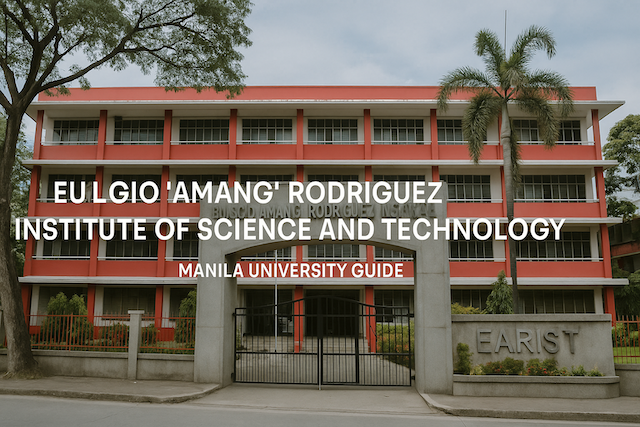
Eulogio “Amang” Rodriguez Institute of Science and Technology (EARIST): Manila University Guide
Contents
- Eulogio “Amang” Rodriguez Institute of Science and Technology (EARIST): Manila University Guide
- Overview of EARIST
- History and Mission of EARIST
- Academic Programs Offered at EARIST
- Admissions Guide for EARIST
- Campus Life and Facilities
- Student Services and Support
- Campus Location and Accessibility
- Why Choose EARIST?
- Tips for Future EARIST Students
- Nearby Housing and Student-Friendly Spots
- Conclusion
- FAQs (Frequently Asked Questions)
- What is Eulogio “Amang” Rodriguez Institute of Science and Technology (EARIST) known for?
- Where is EARIST located and how do I get there?
- What degree programs are offered at EARIST?
- Is EARIST a public or private institution, and how much is the tuition?
- What are the general admission requirements for new students?
- Does EARIST require an entrance exam?
- Are there scholarships or financial assistance programs available at EARIST?
- What is campus life like at EARIST?
- Are there dormitories or nearby housing options for EARIST students?
- Can I work part-time while studying at EARIST?
- Does EARIST offer internships or on-the-job training (OJT)?
- Is EARIST a good choice for students interested in engineering or technical fields?
- FAQs (Frequently Asked Questions)
- What is Eulogio “Amang” Rodriguez Institute of Science and Technology (EARIST) known for?
- Where is EARIST located and how do I get there?
- What degree programs are offered at EARIST?
- Is EARIST a public or private institution, and how much is the tuition?
- What are the general admission requirements for new students?
- Does EARIST require an entrance exam?
- Are there scholarships or financial assistance programs available at EARIST?
- What is campus life like at EARIST?
- Are there dormitories or nearby housing options for EARIST students?
- Can I work part-time while studying at EARIST?
- Does EARIST offer internships or on-the-job training (OJT)?
- Is EARIST a good choice for students interested in engineering or technical fields?
Eulogio “Amang” Rodriguez Institute of Science and Technology (EARIST): Manila University Guide
Overview of EARIST
Eulogio “Amang” Rodriguez Institute of Science and Technology (EARIST) is a state college in Manila known for its strong emphasis on science, technology, vocational training, and affordable quality education. Established in 1945, EARIST has grown into a reputable public institution offering a wide variety of undergraduate and graduate programs. Its mission centers on technological innovation, research development, and providing accessible education to Filipino students, especially those seeking career-ready and hands-on technical skills.
EARIST is strategically located in Nagtahan, Sampaloc, Manila, an area known for its accessible transportation links, nearby dormitories, and student-friendly establishments. The campus is particularly attractive to students pursuing engineering, industrial technology, hospitality management, education, and various applied sciences. With its low tuition fees and strong technical programs, EARIST remains a popular choice among Manila-based students.
This guide provides an in-depth look at EARIST’s academic offerings, admissions process, campus life, student services, and what makes the school a strong option for budget-conscious and career-driven learners.
History and Mission of EARIST
EARIST began as the Eulogio Rodriguez Vocational High School before expanding into a full-fledged institute offering higher education programs. The institution was named after Senator Eulogio “Amang” Rodriguez Sr., a political figure known for his advocacy for education and socio-economic development.
The school’s core mission focuses on:
-
Providing accessible education to students regardless of economic background
-
Advancing technological innovation through applied research
-
Delivering industry-relevant programs that strengthen the Philippine workforce
-
Offering community extension programs that support nation-building
EARIST has maintained a consistent commitment to practical, skill-based education, making it a notable institution for those seeking technical expertise and hands-on training.
Academic Programs Offered at EARIST
EARIST offers a diverse set of programs across engineering, technology, education, business, the arts, and the sciences. The institute is recognized for its technical and vocational education while also providing traditional degree programs.
Undergraduate Programs
EARIST provides bachelor’s degrees through the following colleges:
College of Engineering
-
Bachelor of Science in Civil Engineering
-
Bachelor of Science in Electrical Engineering
-
Bachelor of Science in Electronics Engineering
-
Bachelor of Science in Mechanical Engineering
These programs include laboratory-based instruction, technical workshops, and on-the-job training to prepare students for engineering licensure examinations and professional practice.
College of Industrial Technology
-
BS Industrial Technology (with specializations in Automotive, Electrical, Electronics, Food Trades, Welding, Drafting, and more)
-
BS in Industrial Education
This college is well-known for producing graduates with strong technical and practical skills.
College of Hospitality Management
-
BS in Hospitality Management
-
BS in Tourism Management
Programs focus on operational training, food service management, tourism marketing, and hotel operations.
College of Arts and Sciences
-
BS in Biology
-
BS in Chemistry
-
BS in Mathematics
-
BA in English
-
BA in Political Science
These programs emphasize foundational sciences, liberal arts, and communication skills.
College of Education
-
Bachelor of Secondary Education
-
Bachelor of Elementary Education
-
Bachelor of Technology and Livelihood Education
EARIST’s education programs are aligned with the Philippine teacher certification system.
Graduate Studies
EARIST also offers a range of Master’s degree programs in education, engineering management, and public administration.
Admissions Guide for EARIST
EARIST is a public institution, making its admissions process accessible and budget-friendly for many Filipino students. The typical admissions steps include:
1. Application Requirements
Applicants must prepare the following documents:
-
Form 138 (Report Card for SHS graduates)
-
PSA Birth Certificate
-
Certificate of Good Moral Character
-
Two or more 2×2 ID photos
-
Application form (provided by EARIST)
For transferees or second-degree takers:
-
Transcript of Records (TOR) or copy of grades
-
Honorable Dismissal or Transfer Credentials
2. Entrance Examination
EARIST traditionally requires an entrance exam, although requirements may vary by program or academic year. Engineering and technology programs may have more competitive standards.
3. Interview (Program-Specific)
Some colleges conduct interviews or evaluations to assess applicants’ readiness, especially for:
-
Engineering
-
Industrial Education
-
Hospitality programs
4. Enrollment and Tuition Fees
Being a state college, EARIST offers very affordable tuition, with some programs covered under RA 10931 (Free Higher Education Act) for eligible students.
Miscellaneous fees may apply, but overall costs remain significantly lower than private institutions in Manila.
Campus Life and Facilities
EARIST offers a lively campus environment that supports a community-centered student life.
Classrooms and Laboratories
The campus has specialized laboratories for:
-
Engineering
-
Chemistry and Biology
-
Industrial Technology workshops
-
Computer laboratories
Hands-on learning is a major part of the EARIST experience.
Library and Learning Commons
The EARIST Library provides:
-
General reference materials
-
E-learning materials
-
Study rooms
-
Computer access
Sports and Recreation
The campus offers various facilities such as a gymnasium, open grounds, and sports courts for:
-
Basketball
-
Volleyball
-
Track and field
-
Intramural competitions
Student Organizations
EARIST has a vibrant student community with organizations related to:
-
Academic departments
-
Leadership and governance
-
Culture and arts
-
Technology and engineering
-
Socio-civic activities
These organizations help students enhance soft skills, leadership, and campus involvement.
Student Services and Support
EARIST provides several student-centered services to help learners succeed academically and socially.
Guidance and Counseling Office
Offers counseling, academic advising, and career development programs.
Scholarship and Financial Assistance
As a public institution, EARIST provides access to:
-
Government-funded scholarships
-
Tertiary Education Subsidy
-
Academic scholarships based on merit
-
Grants from CHED and other agencies
Health Services
On-campus clinic with medical staff providing basic healthcare, first aid, and wellness programs.
OJT and Internship Placement
EARIST partners with various companies and institutions for:
-
Engineering internships
-
Hotel and restaurant management training
-
Educational practicum
-
Industrial technology apprenticeships
This ensures students gain relevant work experience before graduation.
Campus Location and Accessibility
EARIST’s main campus is located in Nagtahan, Sampaloc, Manila, a busy and well-connected area surrounded by:
-
Dormitories and boarding houses
-
Local eateries and cafeterias
-
Transportation terminals
-
Budget-friendly student shops
The school is accessible through:
-
Jeepneys
-
LRT lines (nearby Pureza and Legarda stations)
-
Buses and UV Express routes
-
Tricycles and pedicabs
The location benefits students commuting from nearby cities like Quezon City, Pasig, Mandaluyong, and Pasay.
Why Choose EARIST?
EARIST is an ideal institution for students who value affordable education, technical skills, and practical training. Key advantages include:
-
Strong reputation in engineering, industrial technology, and applied sciences
-
Government-subsidized tuition under RA 10931
-
Hands-on and industry-focused training
-
Accessible campus location
-
A wide variety of program offerings
-
Active student life and support services
For students seeking career-ready skills without the high cost of private college tuition, EARIST is a top choice in Manila.
Tips for Future EARIST Students
1. Prepare for technical coursework.
Engineering, science, and industrial technology programs require strong math and analytical skills.
2. Expect workshop-heavy classes.
Many technical programs involve laboratories, hands-on projects, and industry training.
3. Join student organizations.
Networking and extracurricular activities enhance your academic experience.
4. Explore scholarship options early.
Government and school-based grants can significantly reduce your overall expenses.
5. Arrive early for enrollment.
Slots can be competitive in popular programs like engineering and hospitality management.
Nearby Housing and Student-Friendly Spots
Students can find affordable housing options around:
-
Nagtahan
-
Sampaloc
-
España
-
Sta. Mesa
These areas offer:
-
Budget dormitories
-
Meal canteens
-
24/7 convenience stores
-
Internet cafés
-
Study places
EARIST’s surroundings are generally student-friendly, providing convenience for daily life.
Conclusion
Eulogio “Amang” Rodriguez Institute of Science and Technology (EARIST) remains one of Manila’s most respected public institutions offering technical and science-focused education. With its long history, strong commitment to practical learning, and affordable tuition, EARIST continues to attract thousands of students each year. Whether you are pursuing engineering, hospitality, industrial technology, education, or liberal arts, EARIST provides a learning environment that prepares you for both professional and real-world success.
FAQs (Frequently Asked Questions)
What is Eulogio “Amang” Rodriguez Institute of Science and Technology (EARIST) known for?
EARIST is best known as a public institution in Manila that focuses on science, technology, and applied fields such as engineering, industrial technology, and hospitality management. It has a strong reputation for hands-on training, laboratory-based learning, and vocationally oriented programs. Many students choose EARIST because it offers affordable tuition while still providing solid technical and professional preparation for the workplace. As a state college, it serves a wide range of learners who want career-ready skills without the high cost often associated with private universities.
Where is EARIST located and how do I get there?
The main campus of EARIST is located in Nagtahan, Sampaloc, Manila. This area is well connected to other parts of Metro Manila. Students can reach EARIST via jeepneys, buses, UV Express vans, and tricycles. It is also accessible from nearby LRT stations such as Pureza or Legarda, followed by a short jeepney or tricycle ride. Because of its central location, commuting from neighboring cities like Quezon City, Pasig, Mandaluyong, and Pasay is manageable for daily student travel.
What degree programs are offered at EARIST?
EARIST offers a wide range of undergraduate and graduate programs. At the undergraduate level, it has programs in civil, electrical, electronics, and mechanical engineering, as well as industrial technology with various specializations such as automotive, electronics, food trades, and welding. The institute also offers programs in hospitality and tourism management, education, industrial education, and the arts and sciences, including degrees in biology, chemistry, mathematics, English, and political science. EARIST also offers graduate programs, including master’s degrees in education, public administration, and related fields, for students who want to pursue advanced studies.
Is EARIST a public or private institution, and how much is the tuition?
EARIST is a public state college, which means it is government-funded. Because of this, tuition fees are significantly lower than those at many private schools in Manila. Eligible students may also benefit from the Free Higher Education Act (RA 10931), which can cover tuition and certain fees. While some miscellaneous fees and personal expenses still apply, EARIST is generally considered a very budget-friendly option for students who want to complete a college degree without taking on large financial burdens.
What are the general admission requirements for new students?
For incoming freshmen, the usual admission requirements include a completed application form, a senior high school report card (Form 138), a PSA-issued birth certificate, a certificate of good moral character, and recent ID photos. EARIST may also require an entrance examination and, for some programs, an interview or skills evaluation. Transferees and second-degree takers need to present their transcript of records or certified copy of grades, along with honorable dismissal or transfer credentials. Specific requirements can vary slightly by academic year or program, so applicants are encouraged to check the latest official announcement from the school.
Does EARIST require an entrance exam?
Yes, EARIST traditionally administers an entrance examination for applicants, especially for popular or highly technical programs such as engineering and industrial technology. The entrance exam helps the institution assess the academic readiness and skills of prospective students. Some courses may have higher cut-off scores or additional screening processes. It is important for applicants to prepare by reviewing basic mathematics, science, reading comprehension, and logical reasoning topics before taking the examination.
Are there scholarships or financial assistance programs available at EARIST?
EARIST students may access a variety of scholarship and financial assistance options. These can include government-funded programs such as the Tertiary Education Subsidy and other CHED or government agency grants, as well as academic and merit-based scholarships offered through the institution or external partners. There may also be discounts or grants for students who maintain a certain grade point average or demonstrate leadership and community involvement. Students are encouraged to visit the Scholarship or Student Affairs office early in the semester to ask about available programs and application deadlines.
What is campus life like at EARIST?
Campus life at EARIST is active and community-oriented. Students attend lectures and laboratory classes while also engaging in various extracurricular activities. There are academic organizations, cultural and arts groups, leadership and student government bodies, and socio-civic clubs. These organizations help students develop soft skills such as communication, teamwork, and leadership while building networks across different programs. Sports, intramurals, and campus events are also part of the experience, giving students a healthy balance of academic and social life.
Are there dormitories or nearby housing options for EARIST students?
EARIST itself may have limited on-campus housing, so many students opt for nearby dormitories, boarding houses, or apartments around Nagtahan, Sampaloc, España, and Sta. Mesa. These areas are popular student zones with a range of price points and living conditions, from shared rooms in basic dorms to more private studio units. The neighborhoods around EARIST typically offer affordable food options, laundry services, internet shops, and convenience stores, making it relatively easy for students to manage daily living needs close to campus.
Can I work part-time while studying at EARIST?
Many EARIST students choose to work part-time to support their education and living expenses. Because the campus is in Manila, there are opportunities in retail, food service, tutoring, and office-based roles, depending on a student’s schedule and qualifications. However, students should carefully balance work and study to ensure their academic performance does not suffer. International students, if accepted, must also follow Philippine immigration and labor regulations regarding part-time work.
Does EARIST offer internships or on-the-job training (OJT)?
Yes, internships and on-the-job training are integral parts of many programs at EARIST. For example, engineering and industrial technology students undergo practical training in companies, factories, or technical facilities, while hospitality and tourism management students often train in hotels, resorts, or restaurants. Education students participate in practice teaching in partner schools. These internships give students real-world experience, strengthen their resumes, and help them build professional networks before graduation.
Is EARIST a good choice for students interested in engineering or technical fields?
EARIST is indeed a strong choice for students who are interested in engineering, industrial technology, and technical vocational fields. The institution has long-standing programs in these areas, emphasizes laboratory work and hands-on training, and maintains ties with industry partners for OJT and employment opportunities. Combined with its affordable tuition and accessible Manila location, EARIST is particularly attractive for students who want practical, skill-based training that can lead directly to employment or licensure examinations in technical professions.
FAQs (Frequently Asked Questions)
What is Eulogio “Amang” Rodriguez Institute of Science and Technology (EARIST) known for?
EARIST is best known as a public institution in Manila that focuses on science, technology, and applied fields such as engineering, industrial technology, and hospitality management. It has a strong reputation for hands-on training, laboratory-based learning, and vocationally oriented programs. Many students choose EARIST because it offers affordable tuition while still providing solid technical and professional preparation for the workplace. As a state college, it serves a wide range of learners who want career-ready skills without the high cost often associated with private universities.
Where is EARIST located and how do I get there?
The main campus of EARIST is located in Nagtahan, Sampaloc, Manila. This area is well connected to other parts of Metro Manila. Students can reach EARIST via jeepneys, buses, UV Express vans, and tricycles. It is also accessible from nearby LRT stations such as Pureza or Legarda, followed by a short jeepney or tricycle ride. Because of its central location, commuting from neighboring cities like Quezon City, Pasig, Mandaluyong, and Pasay is manageable for daily student travel.
What degree programs are offered at EARIST?
EARIST offers a wide range of undergraduate and graduate programs. At the undergraduate level, it has programs in civil, electrical, electronics, and mechanical engineering, as well as industrial technology with various specializations such as automotive, electronics, food trades, and welding. The institute also offers programs in hospitality and tourism management, education, industrial education, and the arts and sciences, including degrees in biology, chemistry, mathematics, English, and political science. EARIST also offers graduate programs, including master’s degrees in education, public administration, and related fields, for students who want to pursue advanced studies.
Is EARIST a public or private institution, and how much is the tuition?
EARIST is a public state college, which means it is government-funded. Because of this, tuition fees are significantly lower than those at many private schools in Manila. Eligible students may also benefit from the Free Higher Education Act (RA 10931), which can cover tuition and certain fees. While some miscellaneous fees and personal expenses still apply, EARIST is generally considered a very budget-friendly option for students who want to complete a college degree without taking on large financial burdens.
What are the general admission requirements for new students?
For incoming freshmen, the usual admission requirements include a completed application form, a senior high school report card (Form 138), a PSA-issued birth certificate, a certificate of good moral character, and recent ID photos. EARIST may also require an entrance examination and, for some programs, an interview or skills evaluation. Transferees and second-degree takers need to present their transcript of records or certified copy of grades, along with honorable dismissal or transfer credentials. Specific requirements can vary slightly by academic year or program, so applicants are encouraged to check the latest official announcement from the school.
Does EARIST require an entrance exam?
Yes, EARIST traditionally administers an entrance examination for applicants, especially for popular or highly technical programs such as engineering and industrial technology. The entrance exam helps the institution assess the academic readiness and skills of prospective students. Some courses may have higher cut-off scores or additional screening processes. It is important for applicants to prepare by reviewing basic mathematics, science, reading comprehension, and logical reasoning topics before taking the examination.
Are there scholarships or financial assistance programs available at EARIST?
EARIST students may access a variety of scholarship and financial assistance options. These can include government-funded programs such as the Tertiary Education Subsidy and other CHED or government agency grants, as well as academic and merit-based scholarships offered through the institution or external partners. There may also be discounts or grants for students who maintain a certain grade point average or demonstrate leadership and community involvement. Students are encouraged to visit the Scholarship or Student Affairs office early in the semester to ask about available programs and application deadlines.
What is campus life like at EARIST?
Campus life at EARIST is active and community-oriented. Students attend lectures and laboratory classes while also engaging in various extracurricular activities. There are academic organizations, cultural and arts groups, leadership and student government bodies, and socio-civic clubs. These organizations help students develop soft skills such as communication, teamwork, and leadership while building networks across different programs. Sports, intramurals, and campus events are also part of the experience, giving students a healthy balance of academic and social life.
Are there dormitories or nearby housing options for EARIST students?
EARIST itself may have limited on-campus housing, so many students opt for nearby dormitories, boarding houses, or apartments around Nagtahan, Sampaloc, España, and Sta. Mesa. These areas are popular student zones with a range of price points and living conditions, from shared rooms in basic dorms to more private studio units. The neighborhoods around EARIST typically offer affordable food options, laundry services, internet shops, and convenience stores, making it relatively easy for students to manage daily living needs close to campus.
Can I work part-time while studying at EARIST?
Many EARIST students choose to work part-time to support their education and living expenses. Because the campus is in Manila, there are opportunities in retail, food service, tutoring, and office-based roles, depending on a student’s schedule and qualifications. However, students should carefully balance work and study to ensure their academic performance does not suffer. International students, if accepted, must also follow Philippine immigration and labor regulations regarding part-time work.
Does EARIST offer internships or on-the-job training (OJT)?
Yes, internships and on-the-job training are integral parts of many programs at EARIST. For example, engineering and industrial technology students undergo practical training in companies, factories, or technical facilities, while hospitality and tourism management students often train in hotels, resorts, or restaurants. Education students participate in practice teaching in partner schools. These internships give students real-world experience, strengthen their resumes, and help them build professional networks before graduation.
Is EARIST a good choice for students interested in engineering or technical fields?
EARIST is indeed a strong choice for students who are interested in engineering, industrial technology, and technical vocational fields. The institution has long-standing programs in these areas, emphasizes laboratory work and hands-on training, and maintains ties with industry partners for OJT and employment opportunities. Combined with its affordable tuition and accessible Manila location, EARIST is particularly attractive for students who want practical, skill-based training that can lead directly to employment or licensure examinations in technical professions.
Philippines University Guide
Manila University Guide
Manila Province All Universities Lists

How to Register for eTravel Philippines (2025 Guide)
Step-by-step guide to completing your eTravel registration before arriving in the Philippines, with images and tips.

Night Market in Cebu – Things You Don’t Know About Cebu Life
Discover the hidden charm of Cebu’s night markets, from street food stalls to local life tips you won’t find in tourist guides.

How to Use ChatGPT for IELTS Preparation: A Complete Guide
Learn how to prepare for IELTS using ChatGPT — including strategies for Writing, Reading, Listening, Speaking, and grammar support.

How to Build a Website Without Coding Using ChatGPT
Discover how to build your own website using AI—no coding skills needed. From structure planning to SEO and design, let ChatGPT guide you.