2026年1月12日
3D ACADEMY offers affordable English study programs in Cebu, Philippines – perfect for beginners, professionals, and exam takers.

3D UNIVERSAL ENGLISH INSTITUTE INC
info.3d-universal.com
8:00-17:00(Mon-Fri)
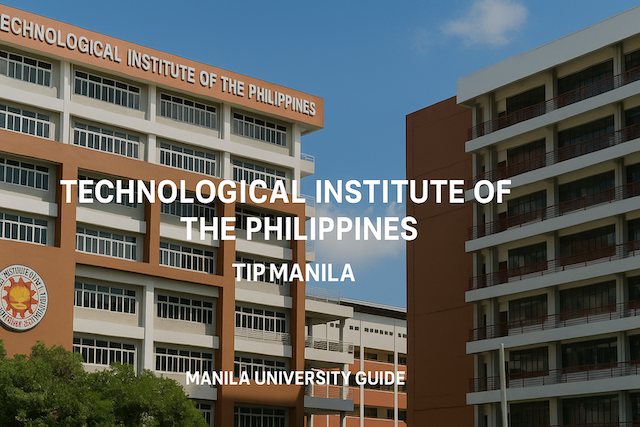
Technological Institute of the Philippines (TIP Manila): Manila University Guide
Contents
- Technological Institute of the Philippines (TIP Manila): Manila University Guide
- Introduction
- Overview of TIP Manila
- Campus Location and Accessibility
- Academic Programs Offered
- Accreditation and Global Recognition
- Campus Facilities
- Student Life and Culture
- Scholarships and Financial Assistance
- Admission Requirements
- Tuition and Fees
- Dormitories and Nearby Accommodation
- Reasons to Choose TIP Manila
- Conclusion
- FAQs (Frequently Asked Questions)
- What is the Technological Institute of the Philippines (TIP Manila) known for?
- Where is TIP Manila located and is it easy to access?
- What degree programs are offered at TIP Manila?
- Are TIP Manila’s engineering and IT programs internationally accredited?
- What facilities can students expect on the TIP Manila campus?
- What is student life like at TIP Manila?
- Does TIP Manila offer scholarships or financial assistance?
- What are the general admission requirements for new students?
- How much does it cost to study at TIP Manila?
- Does TIP Manila provide on-campus dormitories?
- What kinds of career opportunities do TIP Manila graduates have?
- Is TIP Manila a good choice for international students?
- How can prospective students get the most accurate and updated information?
Technological Institute of the Philippines (TIP Manila): Manila University Guide
Introduction
The Technological Institute of the Philippines (TIP Manila) is one of the country’s most respected engineering and technology-focused institutions. Known for its strong emphasis on innovation, applied learning, and industry alignment, TIP Manila has built a reputation for producing graduates who are well-prepared for the demands of modern industries. For both local and international students seeking a college that combines academic rigor with practical competency, TIP Manila stands as a compelling choice.
This university guide provides a comprehensive overview of TIP Manila—including its academic programs, campus environment, facilities, student life, admission requirements, and more—to help prospective students make informed decisions.
Overview of TIP Manila
Founded in 1962, the Technological Institute of the Philippines has campuses in Manila and Quezon City. TIP Manila is located in the heart of Sampaloc, one of Manila’s most well-known educational districts. The institution is well-regarded for delivering quality higher education in engineering, architecture, business, maritime studies, computer science, and IT.
TIP is recognized globally through its multiple international accreditations, including ABET for engineering and computing programs, as well as PACUCOA and AACCUP for various degree offerings. These accreditations ensure TIP’s curriculum aligns with global standards and industry needs.
Key Highlights
-
ABET-accredited engineering and computing programs
-
Strong partnerships with local and international industries
-
Modern laboratories and specialized facilities for engineering and IT
-
Focused on innovation, research, and technology-driven education
-
Affordable tuition with many scholarship options
Campus Location and Accessibility
TIP Manila is strategically located along P. Casal Street, near Legarda and Mendiola—areas known for their concentration of colleges and universities. This gives students convenient access to dormitories, food hubs, stationery shops, transportation, and review centers.
Transportation Access
-
LRT-2 Legarda Station: Approximately 10 minutes away
-
Jeepney routes: Numerous routes connecting Sampaloc, Quiapo, and nearby districts
-
UV Express terminals: Several options for commuters
-
Proximity to dorms: Many student residences are located within walking distance
Its central location makes TIP Manila an excellent choice for both Manila residents and students relocating from other regions.
Academic Programs Offered
TIP Manila offers a wide range of undergraduate and graduate programs across engineering, computing, business, maritime studies, and architecture. The institution’s primary strength lies in its engineering and technology disciplines.
Engineering Programs
TIP Manila offers ABET-accredited engineering degrees, including:
-
Civil Engineering
-
Mechanical Engineering
-
Electrical Engineering
-
Electronics Engineering
-
Computer Engineering
-
Industrial Engineering
IT and Computing Programs
-
Bachelor of Science in Information Technology
-
Bachelor of Science in Computer Science
-
Bachelor of Science in Information Systems
These computing programs also hold international accreditations, strengthening their global competitiveness.
Maritime and Technical Programs
TIP is known for its maritime offerings, particularly:
-
Bachelor of Science in Marine Engineering
-
Bachelor of Science in Marine Transportation
The school has strong ties with maritime companies, giving students practical training through industry placements.
Business and Management Programs
TIP Manila also offers business-related courses that integrate technology and data-driven skills:
-
BS in Business Administration
-
BS in Entrepreneurship
-
BS in Accountancy (in some campuses)
Architecture and Design
-
Bachelor of Science in Architecture
-
BS in Engineering Technology programs
Graduate Studies
TIP Manila offers master’s programs in engineering, IT, and education, providing pathways for academic advancement.
Accreditation and Global Recognition
TIP has consistently pursued quality assurance through accreditation from internationally recognized bodies.
ABET Accreditation
The engineering and computing programs of TIP have received accreditation from the Accreditation Board for Engineering and Technology (ABET)—a major advantage for graduates seeking opportunities abroad.
Philippine Accreditation
Programs are accredited by:
-
AACCUP (Accrediting Agency of Chartered Colleges and Universities in the Philippines)
-
PACUCOA (Philippine Association of Colleges and Universities Commission on Accreditation)
ISO Certification
TIP maintains ISO certifications for quality management systems, ensuring consistent and high standards in operations, processes, and instruction.
Campus Facilities
TIP Manila continues to upgrade its facilities to support its technology-driven curriculum.
Key Facilities
-
Engineering laboratories: Civil, mechanical, electrical, and electronics labs equipped with industry-grade tools
-
Computer laboratories: Modern computer systems and software for programming, cybersecurity, data analytics, and simulation
-
Innovation and research centers: Spaces dedicated to robotics, automation, and software development
-
Library and e-learning resources: Digital platforms providing access to journals and learning modules
-
Student lounges and study hubs: Areas for group study and collaboration
-
Multipurpose halls: Venue for seminars, events, and academic programs
TIP Manila fosters an environment that encourages practical learning, research, and creative innovation.
Student Life and Culture
TIP Manila is known for a balanced campus life that blends academics, innovation, and co-curricular engagement.
Student Organizations
Students can join groups related to academic interests, sports, entrepreneurship, performing arts, or community service. Popular organizations include:
-
Engineering societies
-
IT/Computer science clubs
-
Maritime student groups
-
Innovation and robotics clubs
-
Sports teams and dance groups
Events and Competitions
TIP students regularly participate in:
-
Robotics contests
-
Research and innovation expos
-
Engineering design competitions
-
Cultural festivals
-
Sports tournaments
Campus Culture
The campus culture is academically focused, with many students concentrating on engineering and technical projects. However, the wide range of student organizations ensures a vibrant and engaging environment.
Scholarships and Financial Assistance
TIP Manila offers an extensive set of scholarships designed to support talented students and those with financial needs.
Available Scholarships
-
Entrance scholarships: For honor graduates (valedictorian, salutatorian)
-
Academic scholarships: For students with high academic performance
-
Athletic scholarships: For varsity athletes
-
Financial assistance programs: For students in need of tuition support
-
Industry-sponsored scholarships: Supported by partner companies
TIP is known for keeping tuition fees competitive while providing accessible financial aid opportunities.
Admission Requirements
Admission requirements may vary depending on the program, but general guidelines include:
Basic Requirements
-
Senior High School Report Card (Form 138)
-
Birth certificate (PSA)
-
ID photos
-
Filled-out application form
-
Entrance exam (varies; some programs may waive tests)
Additional Requirements (for specific programs)
-
For Engineering: Good grades in STEM-related subjects
-
For Architecture: Drawing or design-related assessment
-
For Maritime: Medical clearance and physical fitness evaluation
TIP Manila also accepts transferees and international students subject to additional documentation.
Tuition and Fees
TIP Manila is considered more affordable compared to other well-known engineering schools in Manila. Tuition may vary by program, year level, and laboratory usage.
Estimated Tuition Range
-
Engineering programs: Moderate cost with additional lab fees
-
IT and computing programs: Generally lower than engineering
-
Maritime programs: Slightly higher due to specialized training requirements
Despite its accessible fees, TIP maintains high-quality instruction and facilities—making it a strong value-for-money option.
Dormitories and Nearby Accommodation
While TIP Manila does not provide on-campus dormitories, the surrounding Sampaloc area offers many private options.
Common Nearby Dorm Choices
-
Student dormitories along Legarda
-
Boarding houses in Mendiola and Concepcion areas
-
Co-living spaces designed for students
-
Affordable apartments within walking distance
The district is student-friendly, with convenient access to food stalls, laundry shops, printing services, and study cafés.
Reasons to Choose TIP Manila
Students choose TIP Manila for several key reasons:
Strong Engineering and IT Programs
Its internationally accredited programs are the biggest draw, producing job-ready graduates.
Practical and Industry-Aligned Education
Hands-on labs, internships, and capstone projects ensure real-world preparedness.
Affordable and Accessible
Cost-effective tuition combined with generous scholarship programs.
Central Location
Easy transportation access and abundant nearby amenities.
Career-Ready Graduates
TIP maintains connections with companies in engineering, maritime, IT, and business fields, helping students secure employment.
Conclusion
The Technological Institute of the Philippines (TIP Manila) is a top choice for students seeking a career-focused education in engineering, technology, maritime studies, IT, and business. With global accreditations, strong academic programs, modern facilities, and accessible tuition, TIP Manila offers an excellent balance of quality and value. Its central location in Manila’s educational hub ensures students enjoy both convenience and a vibrant campus experience.
This guide serves as a comprehensive introduction for students preparing to study at TIP Manila and looking to understand what the institution offers academically, culturally, and professionally.
FAQs (Frequently Asked Questions)
What is the Technological Institute of the Philippines (TIP Manila) known for?
TIP Manila is best known for its strong focus on engineering, technology, information technology, and maritime education. The institution emphasizes practical, industry-aligned training supported by modern laboratories, international accreditations, and partnerships with companies. Many students choose TIP Manila because it offers career-oriented programs at a relatively affordable cost.
Where is TIP Manila located and is it easy to access?
TIP Manila is located in Sampaloc, Manila, near P. Casal Street, Legarda, and Mendiola. This area is a major educational hub with many universities and student residences. The campus is accessible via LRT-2 Legarda Station, multiple jeepney routes, UV Express vans, and public buses. Because of its central location, commuting from different parts of Metro Manila is generally convenient.
What degree programs are offered at TIP Manila?
TIP Manila offers a wide range of undergraduate and graduate programs. These include engineering degrees such as Civil, Mechanical, Electrical, Electronics, Computer, and Industrial Engineering; computing programs like Information Technology, Computer Science, and Information Systems; maritime programs such as Marine Engineering and Marine Transportation; as well as Business Administration, Entrepreneurship, Accountancy (in some campuses), Architecture, and selected graduate programs in engineering and IT. Program availability may change over time, so prospective students should always confirm through the official website.
Are TIP Manila’s engineering and IT programs internationally accredited?
Yes. Many of TIP’s engineering and computing programs hold accreditation from ABET (Accreditation Board for Engineering and Technology), a globally recognized accrediting body. In addition, various programs are accredited by Philippine agencies such as AACCUP and PACUCOA. These accreditations help ensure that curricula meet international standards and support graduates who may wish to work or pursue further studies abroad.
What facilities can students expect on the TIP Manila campus?
Students at TIP Manila have access to specialized engineering laboratories, computer labs equipped with updated software, innovation and research centers, a library with print and digital resources, and dedicated study areas. There are also multipurpose halls for seminars and events, as well as student lounges and informal learning spaces. Facilities are designed to support hands-on learning, research, and project-based activities across different programs.
What is student life like at TIP Manila?
Student life at TIP Manila balances academic focus with co-curricular involvement. There are numerous student organizations linked to engineering, IT, maritime, business, and the arts. Learners can join academic societies, robotics and innovation clubs, sports teams, cultural groups, or community-service organizations. The campus regularly hosts competitions, research expos, and cultural events that give students opportunities to build soft skills, leadership, and teamwork alongside their technical training.
Does TIP Manila offer scholarships or financial assistance?
Yes. TIP Manila provides various scholarships and financial aid schemes. These may include entrance scholarships for honor graduates, academic scholarships for high-performing students, athletic scholarships for varsity players, and need-based financial assistance. Some scholarships are also sponsored by partner industries. Each scholarship has specific criteria and application procedures, so applicants are encouraged to check the latest guidelines directly from the school’s official channels.
What are the general admission requirements for new students?
Basic admission requirements typically include a completed application form, Senior High School report card, birth certificate, and ID photos. Some programs may require passing an entrance examination or interview, while others may have minimum grade requirements in key subjects such as Mathematics and Science. Specialized programs, like Architecture or Maritime courses, may also have additional assessments or medical clearances. Because policies can change, it is important to refer to TIP Manila’s official admissions information for the most accurate details.
How much does it cost to study at TIP Manila?
TIP Manila is generally considered more affordable than many other private universities offering similar engineering and technology programs. Tuition fees vary depending on the program, year level, and laboratory usage. Engineering and maritime courses often have additional lab or training fees, while IT and business programs may be slightly lower. Since fee structures may be updated periodically, prospective students should request a current estimate from the admissions or accounting office.
Does TIP Manila provide on-campus dormitories?
TIP Manila does not typically offer on-campus dormitories. However, its location in Sampaloc provides students with many nearby housing options, such as private dormitories, boarding houses, co-living spaces, and apartments. These are usually within walking distance or a short commute from the campus. The surrounding area is student-friendly, with access to eateries, convenience stores, laundry shops, printing services, and study cafés.
What kinds of career opportunities do TIP Manila graduates have?
Graduates of TIP Manila pursue careers in engineering firms, construction and infrastructure companies, manufacturing, ship management, IT and software development, business and finance, and government agencies. Many are hired as engineers, system developers, analysts, project coordinators, technical specialists, seafarers, and managers. TIP’s emphasis on outcomes-based education, practical training, and partnerships with industry helps students develop job-ready skills. However, as with any school, individual employment outcomes depend on personal performance, experience, and labor market conditions.
Is TIP Manila a good choice for international students?
TIP Manila can be an attractive choice for international students interested in engineering, maritime, or IT programs at comparatively lower tuition rates than many institutions abroad. English is widely used as the medium of instruction, and Manila offers a multicultural environment with plenty of services for students. International applicants may need to submit additional documents such as passport copies, visa requirements, and credentials evaluation. It is recommended that they coordinate closely with the admissions office for specific procedures.
How can prospective students get the most accurate and updated information?
Since program offerings, admission guidelines, tuition fees, and scholarship rules may change over time, the best way to get accurate and updated information is to visit TIP Manila’s official website or contact the admissions office directly. Prospective students can also follow the school’s official social media accounts for announcements regarding entrance exams, enrollment schedules, open house events, and scholarship opportunities.
Philippines University Guide
Manila University Guide
Manila Province All Universities Lists

How to Register for eTravel Philippines (2025 Guide)
Step-by-step guide to completing your eTravel registration before arriving in the Philippines, with images and tips.

Night Market in Cebu – Things You Don’t Know About Cebu Life
Discover the hidden charm of Cebu’s night markets, from street food stalls to local life tips you won’t find in tourist guides.

How to Use ChatGPT for IELTS Preparation: A Complete Guide
Learn how to prepare for IELTS using ChatGPT — including strategies for Writing, Reading, Listening, Speaking, and grammar support.

How to Build a Website Without Coding Using ChatGPT
Discover how to build your own website using AI—no coding skills needed. From structure planning to SEO and design, let ChatGPT guide you.