2026年1月12日
3D ACADEMY offers affordable English study programs in Cebu, Philippines – perfect for beginners, professionals, and exam takers.

3D UNIVERSAL ENGLISH INSTITUTE INC
info.3d-universal.com
8:00-17:00(Mon-Fri)
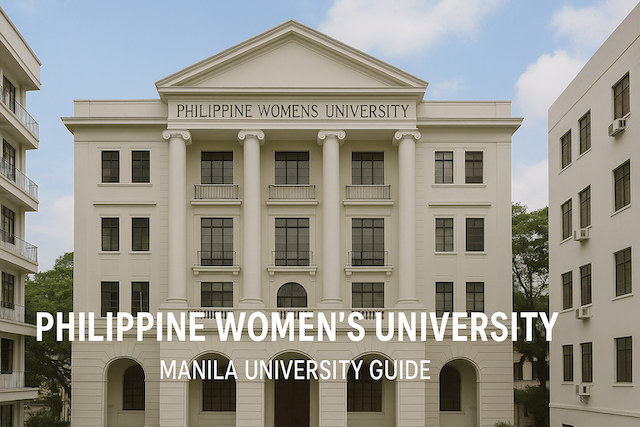
Philippine Women’s University (PWU Manila): Manila University Guide
Contents
- Philippine Women’s University (PWU Manila): Manila University Guide
- Overview of Philippine Women’s University (PWU Manila)
- History and Legacy
- Location and Accessibility
- Academic Programs
- Teaching Approach and Academic Strengths
- Campus Facilities
- Student Life and Organizations
- PWU’s Strength in Culture and the Arts
- Tuition and Fees
- Scholarships and Financial Assistance
- Admissions Guide
- Is PWU Manila Good for International Students?
- Pros and Cons of Studying at PWU Manila
- Nearby Housing and Dormitories
- Safety and Security
- Final Thoughts
- FAQs (Frequently Asked Questions)
- 1. What is Philippine Women’s University (PWU Manila) known for?
- 2. Is PWU Manila still a women-only university?
- 3. Where is PWU Manila located and is it accessible?
- 4. What degree programs does PWU Manila offer?
- 5. How much is the tuition fee at PWU Manila?
- 6. Are there scholarships or financial aid options available?
- 7. What is student life like at PWU Manila?
- 8. Is PWU Manila a good choice for international students?
- 9. Are there dormitories or housing options near PWU?
- 10. How safe is the PWU Manila campus and surrounding area?
- 11. Does PWU offer online or blended learning options?
- 12. How do I apply to PWU Manila as a new student?
Philippine Women’s University (PWU Manila): Manila University Guide
Overview of Philippine Women’s University (PWU Manila)
Philippine Women’s University (PWU), located in Manila’s historic district of Malate, is one of the Philippines’ most respected private universities. Founded in 1919 as the first university for women in Asia founded by Filipinos, PWU has evolved into a coeducational institution while maintaining its core mission of empowering women and shaping socially responsible leaders. The university is known for its strong programs in the arts, education, hospitality, nursing, nutrition, and business, as well as its close industry partnerships and values-driven education.
PWU Manila attracts students from across the Philippines and abroad because of its rich history, holistic approach to learning, central location, and supportive campus culture. This guide will give you a detailed overview of the university’s academics, campus facilities, student life, admissions, tuition, and what makes PWU Manila an appealing choice for future students.
History and Legacy
PWU was established by a group of visionary Filipino women: Helena Benitez, Clara Aragon, Paz Policarpio Mendez, and others, who wanted to provide women with opportunities equal to men in education. Over a century later, the university continues to honor its legacy of inclusivity, cultural awareness, and character formation.
The university has produced notable alumni in various fields: educators, artists, policy-makers, diplomats, and business leaders. PWU’s long-standing commitment to community engagement and the arts highlights its role in shaping well-rounded citizens.
Location and Accessibility
PWU Manila is located along Taft Avenue in Malate, one of the most accessible and vibrant university areas in the city.
Key advantages of its location:
-
Near LRT-1 stations (Pedro Gil and Vito Cruz)
-
Close to shopping districts like Robinsons Place Manila
-
Proximity to cultural hubs such as CCP Complex and Intramuros
-
Easy access to dormitories, restaurants, cafés, and student housing
-
Minutes away from major hospitals like PGH and Manila Doctors Hospital
This makes PWU a convenient choice for commuting students and those living nearby.
Academic Programs
PWU Manila offers a range of undergraduate, graduate, and diploma programs. The university is particularly known for its creative and service-oriented courses.
Popular Undergraduate Programs:
-
Bachelor of Science in Nutrition and Dietetics
-
Bachelor of Science in Hospitality Management
-
Bachelor of Arts in Communication Arts
-
Bachelor of Fine Arts
-
Bachelor of Science in Business Administration
-
Bachelor of Science in Nursing
-
Bachelor of Elementary or Secondary Education
Graduate Programs:
-
Master’s in Education
-
Master’s in Business Administration
-
Master’s in Nursing
-
Master’s in Arts and Communication
Senior High School (SHS):
PWU also offers SHS strands such as HUMSS, ABM, and Arts & Design under its Junior College program.
Teaching Approach and Academic Strengths
PWU emphasizes a blend of traditional values and modern learning methods. Its educational philosophy centers on character development, creativity, leadership, and social responsibility.
Academic strengths include:
-
Industry-integrated training programs
-
Strong focus on arts, culture, and heritage
-
Community outreach and social involvement
-
Well-balanced curriculum combining theory and practical experience
-
Small class sizes and personalized instruction
Many programs also include internships and partnerships with companies in hospitality, business, health sciences, and creative industries.
Campus Facilities
PWU Manila has upgraded its facilities in recent years to ensure that students have access to modern learning environments.
Key Facilities:
-
Air-conditioned classrooms
-
Science and nutrition laboratories
-
Nursing skills laboratories
-
Computer and multimedia rooms
-
Art studios for Fine Arts students
-
Library and learning resource center
-
Auditoriums and function halls
-
Student lounges and open study spaces
-
Cafeteria and food kiosks
The campus is compact, secure, and easy to navigate.
Student Life and Organizations
PWU has a vibrant and inclusive student community. Organizations and student-led activities help cultivate leadership and creativity.
Popular Student Organizations:
-
Dance and Performing Arts Groups
-
Student Government
-
Journalism and Media Clubs
-
Nutrition and Hospitality Associations
-
Fine Arts Guilds
-
Community Service and Outreach Organizations
Students can participate in cultural activities, seminars, leadership training, and annual fairs that help build friendships and broaden perspectives.
PWU’s Strength in Culture and the Arts
PWU is widely respected for its dedication to cultural preservation and its vibrant arts programs. The university is home to cultural initiatives such as:
-
PWU Chorale
-
Ballet and dance programs
-
Visual arts exhibitions
-
Cultural diplomacy projects
These enrich the campus environment and provide students with opportunities for creative expression.
Tuition and Fees
Tuition at PWU Manila varies depending on the program and year level. While exact figures change annually, PWU is known to offer moderate tuition rates compared to large private universities in Manila.
Estimated Cost Range:
-
Undergraduate programs: PHP 30,000–45,000 per semester
-
Specialized programs (Nursing, Nutrition): PHP 40,000–60,000 per semester
-
Graduate programs: PHP 18,000–30,000 per term
Miscellaneous fees may apply, including laboratory, library, and student activity fees.
Scholarships and Financial Assistance
PWU offers various scholarship options for academically talented students or those with financial limitations.
Types of Scholarships:
-
Academic scholarships
-
Cultural scholarships (dance, music, arts)
-
Athletic scholarships
-
Financial assistance grants
-
Alumni foundation support
Applicants are encouraged to check requirements early as slots are limited.
Admissions Guide
General Admission Steps:
-
Fill out the online application form via the PWU website.
-
Submit required documents (Report card, Form 137, ID pictures, etc.).
-
Pay the application fee.
-
Attend interviews or program-specific assessments if required.
-
Wait for official acceptance and enrollment instructions.
Transfer students and international applicants may have additional requirements.
Is PWU Manila Good for International Students?
Yes. PWU Manila accepts international students and provides assistance with documentation, campus integration, and cultural adjustment. Its small class sizes and supportive faculty make it a suitable option for foreign learners seeking a more intimate academic environment.
Pros and Cons of Studying at PWU Manila
Pros:
-
Long history and cultural heritage
-
Strong programs in arts, hospitality, education, and health sciences
-
Central Manila location
-
Moderate tuition fees
-
Supportive student community
Cons:
-
Smaller campus compared to larger universities
-
Limited program offerings in STEM fields
-
Peak hours along Taft Avenue can be crowded
Overall, PWU is an excellent option for students who value culture, arts, and service-oriented education.
Nearby Housing and Dormitories
The Malate–Taft area has many dorms and affordable apartments that cater to students from PWU, UP Manila, and De La Salle University.
Options include:
-
Co-living spaces
-
Female dormitories
-
Budget apartments
-
Studios and shared rooms
Most are within 5–15 minutes of walking distance.
Safety and Security
PWU maintains campus security with guards stationed at all entrances and regular patrols. The Taft area is generally busy and well-lit, but students are advised to observe city safety practices, especially at night.
Final Thoughts
Philippine Women’s University (PWU Manila) remains a respected institution with a unique historical identity and a strong commitment to holistic education. Its programs emphasize character formation, cultural appreciation, and practical skills—making it an excellent choice for students seeking a meaningful and well-rounded university experience in Manila.
FAQs (Frequently Asked Questions)
1. What is Philippine Women’s University (PWU Manila) known for?
Philippine Women’s University (PWU Manila) is best known for its long history as one of the first higher education institutions for women in Asia founded by Filipinos. Today, it is a coeducational university recognized for strong programs in the arts, hospitality management, nutrition and dietetics, nursing, education, and business. PWU is also respected for its emphasis on values-based education, cultural awareness, and community involvement. Many students choose PWU because it offers a holistic learning environment that focuses not only on academic achievement but also on character formation, leadership, and creativity.
2. Is PWU Manila still a women-only university?
No. PWU started as a university exclusively for women, but it has since become coeducational. This means both male and female students can enroll in its senior high school, undergraduate, and graduate programs. Despite this change, the university preserves its original mission of empowering women and promoting gender equality. Its history as a pioneering institution for women remains a key part of its identity and continues to influence its policies, curriculum, and campus culture in a positive way.
3. Where is PWU Manila located and is it accessible?
PWU Manila is located along Taft Avenue in Malate, one of the major university and commercial districts in Manila. The campus is accessible via public transportation, including jeepneys, buses, and the LRT-1 line. The nearest LRT stations are Pedro Gil and Vito Cruz, which are just a short walk or jeepney ride away from campus. Because it is situated near shopping malls, restaurants, dormitories, and hospitals, students find it convenient to study and live in the area. However, like other parts of Manila, traffic can be heavy during rush hours, so students are encouraged to plan their travel time accordingly.
4. What degree programs does PWU Manila offer?
PWU Manila offers a variety of programs at different levels. For undergraduates, there are popular courses in Nutrition and Dietetics, Hospitality Management, Business Administration, Nursing, Education, Fine Arts, and Communication Arts. At the graduate level, PWU provides master’s programs such as Master of Arts in Education, Master in Business Administration, and advanced programs in nursing and communication. The university also has a Senior High School department with strands like HUMSS, ABM, and Arts and Design. Program availability may change, so applicants should always verify the latest list of offerings directly with the university.
5. How much is the tuition fee at PWU Manila?
Tuition fees at PWU Manila vary depending on the program, year level, and number of units enrolled per term. In general, tuition for many undergraduate programs falls within a moderate range compared to other private universities in Manila. Specialized programs such as Nursing or Nutrition and Dietetics tend to have higher fees due to laboratory and practicum components. There are also additional costs for miscellaneous fees, laboratory fees, and student activities. Because tuition rates are updated periodically, it is best to contact the admissions or finance office or visit the official website for the most accurate and current information.
6. Are there scholarships or financial aid options available?
Yes. PWU Manila offers several forms of scholarships and financial assistance to qualified students. These may include academic scholarships for high-performing students, cultural scholarships for those involved in dance, music, or the arts, and athletic scholarships for student-athletes. There are also need-based grants or discounts for students who can demonstrate financial difficulty, as well as possible support from alumni or partner organizations. Requirements usually involve grade qualifications, auditions or tryouts (for cultural and athletic scholars), and completion of application forms. Slots may be limited, so interested students should apply early and comply with all deadlines.
7. What is student life like at PWU Manila?
Student life at PWU Manila is active, diverse, and community-oriented. Students can join various organizations and clubs related to arts and culture, student leadership, community service, academic interests, and media or publications. The university regularly hosts seminars, cultural events, talent showcases, and outreach activities that help students build confidence and develop skills outside the classroom. Because the campus is smaller than some large universities, the community tends to feel close-knit, and students often describe the atmosphere as friendly and supportive. This environment can be especially appealing to those who prefer a more personal and less intimidating campus experience.
8. Is PWU Manila a good choice for international students?
Yes. PWU Manila welcomes international students and provides assistance in processing admission requirements and student visas. The university’s relatively small class sizes and approachable faculty can be especially helpful for foreign students adjusting to a new culture and academic system. Programs in hospitality, arts, business, and health-related fields may be particularly attractive for international enrollees. However, incoming students from abroad should be prepared for Manila’s urban environment, including heavy traffic, busy streets, and tropical climate. It is always advisable for international applicants to contact the international student office or admissions team in advance for updated guidelines and support.
9. Are there dormitories or housing options near PWU?
PWU Manila itself may not have large on-campus dormitories, but there are many housing options available within the Malate and Taft Avenue area. Students can choose from private dormitories, co-living spaces, shared apartments, and studios that cater specifically to university students from nearby schools. Options range from budget rooms with shared facilities to more modern residences with security, Wi-Fi, and air-conditioned rooms. When choosing housing, students should consider safety, distance to campus, monthly rent, and the reliability of utilities. It is recommended to visit the place personally or read reviews before signing any lease agreement.
10. How safe is the PWU Manila campus and surrounding area?
PWU Manila maintains security personnel at its gates and inside the campus to help ensure the safety of students, employees, and visitors. The campus is enclosed and access is monitored, especially during class hours. The surrounding Malate–Taft area is a busy commercial and educational district, which means there are usually many people around. Still, as with any urban environment, students are advised to remain vigilant, avoid carrying large amounts of cash or valuables, and take extra care when walking late at night. Using reliable transportation services, traveling with classmates when possible, and following university safety reminders can further minimize risks.
11. Does PWU offer online or blended learning options?
In recent years, PWU Manila, like many universities, has integrated flexible learning modes such as online, blended, or hybrid classes where appropriate. The specific format may vary by semester, program, and course. Some subjects may be conducted fully on campus, while others may use learning management systems, video conferencing, and digital materials. Students should be ready to use basic technology tools and have a stable internet connection for any online components. For the most accurate updates on the learning setup for an upcoming term, it is always best to check official announcements from PWU’s administration or academic departments.
12. How do I apply to PWU Manila as a new student?
To apply to PWU Manila, prospective students typically start by filling out the online application form or visiting the admissions office. They must prepare basic documents such as their latest report card or transcript, Form 137 or equivalent, a copy of their birth certificate, ID photos, and other program-specific requirements. There may be an application or entrance fee to pay, and some programs might require interviews, portfolio submissions, or additional exams. Once the application is processed and the student is accepted, they will receive instructions on enrollment schedules, payment procedures, and orientation. Transfer and international applicants may have extra requirements, so they should communicate directly with the admissions staff for guidance.
Philippines University Guide
Manila University Guide
Manila Province All Universities Lists

How to Register for eTravel Philippines (2025 Guide)
Step-by-step guide to completing your eTravel registration before arriving in the Philippines, with images and tips.

Night Market in Cebu – Things You Don’t Know About Cebu Life
Discover the hidden charm of Cebu’s night markets, from street food stalls to local life tips you won’t find in tourist guides.

How to Use ChatGPT for IELTS Preparation: A Complete Guide
Learn how to prepare for IELTS using ChatGPT — including strategies for Writing, Reading, Listening, Speaking, and grammar support.

How to Build a Website Without Coding Using ChatGPT
Discover how to build your own website using AI—no coding skills needed. From structure planning to SEO and design, let ChatGPT guide you.