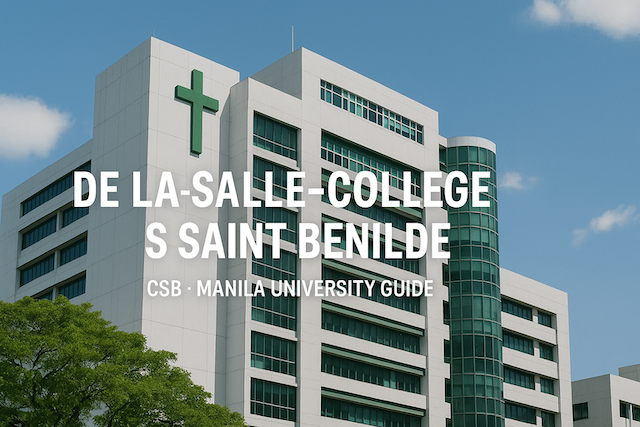
De La Salle–College of Saint Benilde (CSB): Manila University Guide
De La Salle–College of Saint Benilde (CSB) is one of Manila’s most dynamic and innovative private colleges, known for its strong focus on modern education, creative industries, and learner-centered teaching. As part of the De La Salle system, CSB offers a unique environment where arts, technology, and business intersect. This guide provides a comprehensive overview of CSB, its campuses, programs, culture, facilities, student life, and what future students can expect.
Overview of De La Salle–College of Saint Benilde (CSB)
Founded in 1988, De La Salle–College of Saint Benilde was originally established as a learning extension program of De La Salle University–Manila. Over the years, it grew into a standalone institution with a clear mission: to provide innovative and industry-relevant education grounded in Lasallian values.
CSB is widely recognized for its emphasis on creativity, hospitality, business, deaf education, and emerging technologies. The college delivers programs that differ from those traditionally offered in other Lasallian schools, catering especially to students who prefer applied learning, hands-on training, and a less conventional academic approach.
Campuses of CSB
CSB operates three major campuses located in Manila’s Taft Avenue area, each designed with modern facilities to support specific academic programs.
Taft Campus
The Taft Campus houses the School of Management and Information Technology (SMIT) and the School of Diplomacy and Governance (SDG). It includes computer laboratories, networking facilities, and student support offices.
Angelo King International Center (AKIC) Campus
Known for its world-class hospitality and culinary facilities, the AKIC Campus is home to the School of Hotel, Restaurant, and Institution Management (SHRIM). Students train in simulated hotel environments, industrial-grade kitchens, and fully equipped dining halls.
Design and Arts Campus (DAC)
DAC is one of the most impressive art and design structures in the Philippines. With 14 floors dedicated to creative programs, it features studios, performance spaces, black box theaters, galleries, editing suites, and design laboratories.
Academic Programs and Schools
CSB offers a wide range of undergraduate programs divided into specialized schools, each with a strong industry alignment.
School of Design and Arts (SDA)
The SDA is one of the largest design schools in Southeast Asia. Programs include:
These programs are known for producing award-winning creatives in both local and international competitions.
School of Hotel, Restaurant, and Institution Management (SHRIM)
SHRIM is one of the top hospitality schools in the country. Popular programs include:
Students benefit from AKIC’s real-life training environments and internships with top hotels and resorts.
School of Management and Information Technology (SMIT)
SMIT offers industry-oriented programs, such as:
The school integrates entrepreneurship, technology, and management in its curriculum.
School of Diplomacy and Governance (SDG)
SDG focuses on governance, policy, and political science. Programs include:
Students receive training to participate in model UN, international relations simulations, and public service careers.
School of Deaf Education and Applied Studies (SDEAS)
SDEAS is one of the leading institutions in Southeast Asia for deaf education. The school offers:
It promotes accessibility, inclusion, and empowerment through sign language-centered learning.
Teaching Approach and Learning Environment
CSB is known for its learner-centered approach and non-traditional academic system. It emphasizes flexibility, creativity, and independence.
Hands-On Learning
Many programs focus on applied experiences rather than purely theoretical lectures. Students regularly engage in:
Individualized Education
CSB implements flexible learning styles to accommodate different learning needs. This includes:
Strong Industry Connections
CSB maintains local and international partnerships for:
-
Internships
-
On-the-job training
-
Student exchange
-
Immersion programs
These connections help students transition smoothly into their chosen industries.
Campus Facilities and Resources
CSB’s campuses are designed to support specialized programs with state-of-the-art learning environments.
Libraries and Study Areas
Each campus has a modern library with digital resources, collaborative spaces, and research hubs.
Studios and Creative Spaces
The DAC campus includes:
-
Art studios
-
Editing and sound suites
-
Recording rooms
-
Black box theaters
-
Photography studios
Hospitality Training Areas
AKIC offers:
-
Hotel-style front desks
-
Commercial kitchens
-
Fine dining restaurants
-
Bar and beverage labs
Technology Laboratories
SMIT and Taft Campus feature:
Student Support Services
Services include:
Student Life at CSB
CSB fosters a vibrant and inclusive student community. With its proximity to other universities in the Taft area, students enjoy a dynamic learning atmosphere and an active lifestyle.
Student Organizations
CSB offers organizations related to:
-
Arts and culture
-
Hospitality
-
Technology
-
Student governance
-
Performing arts
-
Special interest groups
There are also groups for deaf culture and advocacy.
Events and Competitions
The college regularly hosts:
-
Fashion shows
-
Film festivals
-
Art exhibitions
-
Culinary showcases
-
Academic competitions
These events help students present their work to real audiences.
Diversity and Inclusion
Benilde is known for its commitment to inclusivity. Deaf and hearing students interact freely, and the school encourages:
-
Respect
-
Safe spaces
-
Cross-cultural learning
Location and Lifestyle
CSB’s Taft location offers easy access to:
-
Cafes
-
Student-friendly restaurants
-
Dormitories
-
Public transportation (LRT, buses, jeepneys)
It is also near famous landmarks like Rizal Memorial Sports Complex and Manila Bay.
Admissions and Enrollment
Admission Requirements
Applicants must submit:
-
High school records
-
Entrance test results (or alternative assessments)
-
Interview (for selected programs)
-
Portfolio or audition (for arts programs)
Some programs, like Multimedia Arts and Music Production, require strong creative outputs.
Tuition Fees
CSB tuition fees are generally higher than average but comparable to private Manila universities specializing in arts and hospitality. Fees vary by program due to lab and material requirements.
Scholarships and Financial Assistance
CSB offers scholarships, including:
Why Choose CSB?
CSB is ideal for students who want:
-
A creative and modern learning environment
-
Hands-on education
-
Strong industry connections
-
Inclusive and diverse community
-
High-quality facilities designed for practical learning
It stands out for its design, arts, and hospitality programs, making it a top choice for creative and service-oriented careers.
Conclusion
De La Salle–College of Saint Benilde (CSB) offers one of the most progressive and innovative academic environments in Manila. With specialized campuses, industry-driven programs, and a culture that promotes creativity and inclusion, CSB provides a unique college experience tailored to modern career paths. Whether you aim to become a designer, chef, filmmaker, diplomat, technologist, or advocate for the deaf community, CSB provides the training, facilities, and support to help you succeed.
This guide should help future students understand what makes CSB a standout institution in Manila’s educational landscape.
FAQs (Frequently Asked Questions)
What is De La Salle–College of Saint Benilde (CSB) known for?
De La Salle–College of Saint Benilde (CSB) is known for its innovative, learner-centered approach and its strong programs in design and arts, hospitality, business, technology, diplomacy, and deaf education. Unlike more traditional universities, CSB emphasizes hands-on learning, industry alignment, and creative expression. It is part of the De La Salle system, so students benefit from Lasallian values while enjoying a modern, flexible academic environment designed for contemporary careers.
Where are the CSB campuses located in Manila?
CSB has multiple campuses clustered around the Taft Avenue area in Manila. The main Taft Campus houses business, management, IT, and governance programs. The Angelo King International Center (AKIC) Campus is focused on hospitality and culinary arts. The Design and Arts Campus (DAC) is a high-rise facility dedicated to creative disciplines such as multimedia arts, animation, film, fashion, music production, and theater. All campuses are accessible via public transportation, including LRT and jeepneys.
What types of degree programs does CSB offer?
CSB offers a wide range of undergraduate programs across several schools: the School of Design and Arts (SDA), School of Hotel, Restaurant, and Institution Management (SHRIM), School of Management and Information Technology (SMIT), School of Diplomacy and Governance (SDG), and the School of Deaf Education and Applied Studies (SDEAS). Programs cover areas such as animation, multimedia arts, fashion, interior design, culinary arts, hotel and tourism management, business, IT, diplomacy, and specialized courses for deaf students.
How is CSB’s teaching style different from traditional universities?
CSB is strongly learner-centered and outcomes-based. Instead of focusing only on lectures and memorization, the college emphasizes practical projects, simulations, studio work, and real-world applications. Students often work on portfolios, performances, exhibitions, and industry-style tasks. There is also a culture of flexibility and support for different learning styles, making CSB attractive to students who thrive in creative, applied, and less rigid academic environments.
What facilities can students use at CSB?
Students at CSB have access to specialized facilities based on their programs. These include design studios, photography and film studios, sound and editing rooms, theaters, art galleries, commercial-grade kitchens, training restaurants, mock hotel front desks, computer laboratories, and IT centers. All campuses also feature libraries, study lounges, student service offices, and spaces for organizations and events. The Design and Arts Campus in particular is known for its modern, industry-style creative spaces.
Is CSB a good choice for creative and design-related careers?
Yes. CSB is widely regarded as one of the top choices in the Philippines for design, multimedia arts, film, music production, theater, and other creative disciplines. The School of Design and Arts offers industry-relevant curricula, updated software and equipment, and active partnerships with creative companies. Students often participate in local and international competitions, festivals, and exhibitions, giving them a strong portfolio and network by the time they graduate.
What makes CSB’s hospitality and culinary programs stand out?
CSB’s hospitality and culinary programs under SHRIM are based at the AKIC Campus, which simulates real hotel and restaurant environments. Students train in professional kitchens, bar and beverage laboratories, training restaurants, and hotel-style facilities. The curriculum emphasizes both technical skills and service excellence. Industry internships and practicums are built into the program, allowing students to gain work experience in hotels, resorts, restaurants, and tourism organizations in the Philippines and abroad.
Does CSB support deaf and hard-of-hearing students?
Yes. CSB is a regional leader in deaf education through its School of Deaf Education and Applied Studies (SDEAS). It offers degree programs specifically designed for deaf students and provides a signing environment, interpreters, and accessibility services. The school promotes inclusion, empowerment, and equal opportunities. Deaf and hearing students share the same community, creating a diverse campus culture where Filipino Sign Language and inclusion are highly valued.
What is student life like at CSB?
Student life at CSB is vibrant, creative, and diverse. There are many student organizations focused on arts, culture, technology, hospitality, advocacy, and governance. Events such as film screenings, theater productions, fashion shows, culinary showcases, art exhibits, debates, and cultural festivals happen regularly. Because CSB is located in the Taft university belt, students also enjoy access to nearby cafes, restaurants, dorms, and other schools, contributing to a lively and social environment.
How much are the tuition fees at CSB?
Tuition fees at CSB are generally higher than those at many public institutions, but they are comparable to other private universities in Manila that specialize in creative, hospitality, and technology programs. Costs vary based on the program, number of units, and laboratory or materials requirements. Design, film, and culinary courses may have additional expenses for equipment and supplies. Prospective students should check the latest official fee schedules and plan a realistic budget for each term.
Are there scholarships or financial aid options available?
CSB offers different forms of scholarships and financial assistance. These may include academic scholarships for high-performing students, grants for athletes and artists, assistance for deaf students, and special Lasallian or need-based scholarships. Some programs and donors may also sponsor specific fields like design, hospitality, or diplomacy. Students are encouraged to inquire with the admissions or scholarship office early and prepare the required documents to apply for financial support.
How do I apply to CSB and what are the typical admission requirements?
To apply to CSB, prospective students usually complete an online application, submit their high school records or equivalent credentials, and follow the instructions for the chosen program. Some courses require entrance tests, interviews, or additional assessments. Creative programs may ask for a portfolio, audition, or sample works. International applicants or transferees may need extra documents such as English proficiency proof or course descriptions. It is important to review the latest admission guidelines and deadlines from the official CSB channels.