2026年1月12日
3D ACADEMY offers affordable English study programs in Cebu, Philippines – perfect for beginners, professionals, and exam takers.

3D UNIVERSAL ENGLISH INSTITUTE INC
info.3d-universal.com
8:00-17:00(Mon-Fri)
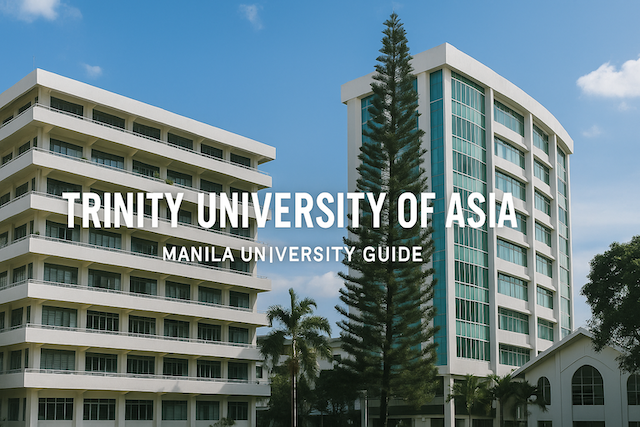
Trinity University of Asia: Manila University Guide
Contents
- Trinity University of Asia: Manila University Guide
- Introduction to Trinity University of Asia
- About Trinity University of Asia
- Academic Programs
- Campus Facilities
- Campus Life at Trinity University of Asia
- Admissions Process
- Tuition Fees and Scholarships
- Why Choose Trinity University of Asia?
- Conclusion
- FAQs (Frequently Asked Questions)
- Where is Trinity University of Asia located in Manila?
- What programs is Trinity University of Asia best known for?
- Is Trinity University of Asia a religious school?
- Does Trinity University of Asia accept international students?
- How much is the tuition fee at Trinity University of Asia?
- Are there scholarships or financial assistance programs available?
- What is campus life like at Trinity University of Asia?
- Are there dormitories or accommodation options near the campus?
- How safe is the campus and surrounding area?
- What are the admission requirements for new college students?
- Does Trinity University of Asia offer graduate programs?
- How can I get more updated information about Trinity University of Asia?
Trinity University of Asia: Manila University Guide
Introduction to Trinity University of Asia
Trinity University of Asia (TUA), located in Quezon City, stands as one of the prominent private universities in Metro Manila. Known for its strong foundation in liberal arts, health sciences, education, business, and technology programs, TUA consistently attracts both local and international students. Its connection to the Episcopal Church also contributes to its distinctive educational philosophy—one that integrates academic excellence with values-based learning.
As a mid-sized university, Trinity University of Asia offers a balanced environment where students can enjoy a vibrant campus life without being overwhelmed by the scale of much larger institutions. The university emphasizes community engagement, leadership, and holistic development, shaping graduates who are professionally competent and socially responsible. This guide provides a detailed overview of TUA’s programs, facilities, campus life, admission process, fees, and what makes it a compelling choice for students in Metro Manila.
About Trinity University of Asia
Trinity University of Asia traces its roots to the late 1960s, founded by the Episcopal Church with the aim of developing globally competitive yet grounded Filipino professionals. Over the decades, the institution evolved into a full-fledged university with multiple colleges specializing in key academic disciplines. TUA is recognized by CHED and PAASCU and continues to expand its offerings to meet industry and community needs.
The university is located along Cathedral Heights, E. Rodriguez Sr. Avenue in Quezon City—an accessible location surrounded by residential communities, hospitals, and commercial hubs. This makes TUA ideal for students seeking a safe and convenient study environment with nearby amenities.
Academic Programs
Trinity University of Asia offers a wide array of undergraduate and graduate programs through its different colleges. Programs are designed to be industry-aligned, with strong ties to hospitals, companies, and partner institutions.
College of Arts, Sciences, and Education
This college offers traditional liberal arts programs and teacher education courses. Key programs include:
-
Bachelor of Arts in Communication
-
Bachelor of Arts in English Language Studies
-
Bachelor of Secondary Education
-
Bachelor of Elementary Education
-
Bachelor of Science in Psychology
These programs emphasize research, critical thinking, and pedagogy, preparing students for careers in teaching, media, research, and human resource management.
College of Business Administration
TUA’s business programs focus on entrepreneurship, finance, management, and marketing. Popular programs include:
-
BSBA Major in Marketing Management
-
BSBA Major in Financial Management
-
BSBA Major in Human Resource Management
-
Bachelor of Science in Entrepreneurship
Students benefit from industry internships, business simulations, and entrepreneurial incubation.
College of Hospitality and Tourism Management
One of TUA’s most sought-after departments, this college offers:
-
BS in Hospitality Management
-
BS in Tourism Management
The college features modern training kitchens, mock hotel rooms, and partnerships with hotels and travel companies for internships.
St. Luke’s College of Nursing
TUA is widely recognized for its strong nursing program, offered through a long-standing partnership with St. Luke’s Medical Center. The nursing program is among the most respected in the Philippines and attracts many students aiming for local and international healthcare careers.
College of Medical Technology
The Medical Technology program trains students in diagnostic laboratory science, offering strong board exam performance and international opportunities.
College of Engineering and Information Technology
Aiming to meet the demand for tech professionals, the CEIT offers:
-
BS in Computer Science
-
BS in Information Technology
-
BS in Electronics Engineering
-
BS in Computer Engineering
Graduate Studies
TUA offers graduate programs in education and management, providing opportunities for career advancement and specialization.
Campus Facilities
Trinity University of Asia provides a range of student-friendly facilities designed to support both academic and extracurricular activities.
Academic and Learning Facilities
-
Modern Classrooms: Equipped with multimedia systems and conducive environments for learning.
-
Library and Learning Resource Center: A multi-floor facility offering digital and physical collections, study areas, and research support.
-
Science and Nursing Laboratories: Updated labs that support practical learning, especially for health-related programs.
-
Computer Laboratories: High-speed internet and updated workstations for IT and engineering students.
Student Life and Support Facilities
-
Chapel: Reflecting the university’s Episcopal roots, the chapel serves as a space for reflection and community events.
-
Student Center: A hub for student organizations, activities, and social engagement.
-
Gymnasium and Sports Facilities: Courts for basketball, volleyball, and other sports, promoting fitness and wellness.
-
Cafeterias and Food Outlets: Offering affordable meals for students and staff.
Safety and Accessibility
Security personnel, CCTV coverage, and strict campus access protocols ensure a safe environment. The campus is also accessible via jeepneys, buses, and nearby LRT-2 stations.
Campus Life at Trinity University of Asia
Campus life at TUA is diverse, meaningful, and activity-driven. Students can join various organizations, including:
-
Academic organizations
-
Performing arts groups
-
Religious and outreach clubs
-
Sports teams
-
Student government
Events such as Trinity Days, Foundation Week, competitions, seminars, and cultural presentations enrich the student experience.
The university strongly promotes community outreach through programs involving public schools, local communities, and church partners. This aligns with TUA’s mission of fostering service-oriented graduates.
Admissions Process
Admission requirements may vary depending on the applicant type—freshman, transferee, international student, or graduate student. In general, applicants will need:
-
Completed application form
-
High school report card or equivalent
-
Good moral certificate
-
Birth certificate
-
Entrance exam results (if required)
-
Interview or program screening (for selected programs)
International students may need additional documents such as passport copies, student visa requirements, and English proficiency proof.
Tuition Fees and Scholarships
Tuition Fees
Tuition fees at TUA are moderate compared to other private universities in Manila. Costs depend on the program, with Nursing, Medical Technology, and Engineering programs being on the higher end due to specialized laboratory use.
Scholarships and Financial Aid
Trinity University of Asia offers several scholarship options:
-
Academic scholarships for high-performing students
-
Financial assistance for students in need
-
Grants for athletes and performers
-
Church-related scholarships
-
Discounts for siblings and deserving students
Students are encouraged to check updated criteria each academic year.
Why Choose Trinity University of Asia?
Trinity University of Asia remains a strong choice for students due to its:
-
Well-respected nursing and health sciences programs
-
Balanced academic and student life environment
-
Strong community values and ethical foundation
-
Industry-aligned programs and internships
-
Accessible campus and supportive learning facilities
-
Holistic education model focused on character and competence
Whether a student aims for a career in healthcare, business, education, technology, or the creative industries, TUA offers a nurturing and academically strong environment.
Conclusion
Trinity University of Asia stands as an excellent option for students looking for a university in Metro Manila that combines academic excellence with holistic values and community engagement. With strong programs in nursing, education, business, tourism, engineering, and IT, the university prepares students to excel both locally and internationally. Its campus culture fosters leadership, creativity, and social responsibility—making TUA a
FAQs (Frequently Asked Questions)
Where is Trinity University of Asia located in Manila?
Trinity University of Asia is located along E. Rodriguez Sr. Avenue in Quezon City, within the Cathedral Heights area. This location is in Metro Manila and is surrounded by residential communities, hospitals, churches, and commercial establishments. It is accessible by public transportation such as jeepneys, buses, and nearby LRT-2 stations, making it convenient for students coming from different parts of the city.
What programs is Trinity University of Asia best known for?
Trinity University of Asia is particularly well known for its health-related programs, especially Nursing and Medical Technology, which have strong partnerships with hospitals and good board exam performance. The university is also recognized for programs in Education, Business Administration, Hospitality and Tourism Management, Information Technology, and Engineering, offering a balanced mix of professional, technical, and liberal arts courses.
Is Trinity University of Asia a religious school?
Yes, Trinity University of Asia has an Episcopal Church background. While it is a private Christian institution, it welcomes students from all religious backgrounds. The university integrates values education, ethics, and community service into its curriculum, but it does not require students to convert or strictly follow a specific religious practice. Respect, inclusivity, and character formation are emphasized for all students.
Does Trinity University of Asia accept international students?
Trinity University of Asia accepts international students for selected programs. Foreign applicants must submit additional documents such as a valid passport, student visa requirements, and, in some cases, proof of English language proficiency. International students are encouraged to coordinate directly with the Admissions or Registrar’s Office to confirm program availability, admission timelines, and visa-related procedures before applying.
How much is the tuition fee at Trinity University of Asia?
Tuition fees at Trinity University of Asia vary depending on the program and number of units enrolled per semester. Health-related and laboratory-intensive courses such as Nursing, Medical Technology, Engineering, and IT generally have higher total fees because of specialized facilities and lab requirements. Meanwhile, Education, Business, and Liberal Arts courses may be relatively more affordable. For updated and exact figures, students should refer to the official TUA website or contact the Finance Office.
Are there scholarships or financial assistance programs available?
Yes, Trinity University of Asia offers several scholarship and financial assistance options. These may include academic scholarships for honor graduates and high achievers, financial aid for students with demonstrated need, athletic scholarships for varsity players, and grants for performing artists or student leaders. Some church-related and external scholarships may also be available. Each program has its own qualifications and retention requirements, so applicants should inquire early.
What is campus life like at Trinity University of Asia?
Campus life at Trinity University of Asia is active but not overwhelming. Students can join various academic organizations, student councils, cultural and performing arts groups, religious organizations, and sports teams. Events such as orientation programs, foundation celebrations, outreach missions, seminars, and competitions provide opportunities for leadership, networking, and personal growth. The atmosphere is generally friendly, community-oriented, and supportive.
Are there dormitories or accommodation options near the campus?
Trinity University of Asia is located in an urban area where many boarding houses, apartments, and dormitories are available within a short distance from the campus. While the availability of on-campus dormitories may vary, many students opt for off-campus housing in nearby streets or residential buildings. It is recommended that students and parents personally visit and assess accommodations in terms of safety, budget, and travel time before deciding.
How safe is the campus and surrounding area?
The campus has security personnel, gate controls, and CCTV cameras to help maintain a safe environment for students and staff. The surrounding area is a mix of residential and institutional zones, with nearby hospitals and churches adding to the sense of community. However, as with any city campus in Metro Manila, students are advised to stay vigilant, avoid walking alone late at night, and follow university safety guidelines.
What are the admission requirements for new college students?
For incoming freshmen, typical requirements include a completed application form, senior high school report card (Form 138 or equivalent), Certificate of Good Moral Character, birth certificate, and ID photos. Some programs may require entrance examinations, interviews, or additional screening (especially for Nursing and other health science courses). Deadlines and exact requirements may change each academic year, so applicants should always check the latest announcements from the Admissions Office.
Does Trinity University of Asia offer graduate programs?
Yes, Trinity University of Asia offers selected graduate programs, particularly in Education and Management. These are designed for professionals who want to advance their careers, specialize in specific fields, or meet qualification requirements for higher positions. Graduate students usually have flexible schedules such as evening or weekend classes. Interested applicants should review the latest list of graduate programs, admission criteria, and schedules from the Graduate School or official university channels.
How can I get more updated information about Trinity University of Asia?
For the most accurate and updated information on programs, tuition, admission schedules, and campus policies, it is best to visit the official Trinity University of Asia website or official social media pages. You may also contact the Admissions Office, Registrar, or Marketing Office via email or phone. Visiting the campus during office hours is another good way to ask questions, get brochures, and experience the environment firsthand.
Philippines University Guide
Manila University Guide
Manila Province All Universities Lists

How to Register for eTravel Philippines (2025 Guide)
Step-by-step guide to completing your eTravel registration before arriving in the Philippines, with images and tips.

Night Market in Cebu – Things You Don’t Know About Cebu Life
Discover the hidden charm of Cebu’s night markets, from street food stalls to local life tips you won’t find in tourist guides.

How to Use ChatGPT for IELTS Preparation: A Complete Guide
Learn how to prepare for IELTS using ChatGPT — including strategies for Writing, Reading, Listening, Speaking, and grammar support.

How to Build a Website Without Coding Using ChatGPT
Discover how to build your own website using AI—no coding skills needed. From structure planning to SEO and design, let ChatGPT guide you.