2026年1月23日
3D ACADEMY offers affordable English study programs in Cebu, Philippines – perfect for beginners, professionals, and exam takers.

3D UNIVERSAL ENGLISH INSTITUTE INC
info.3d-universal.com
8:00-17:00(Mon-Fri)
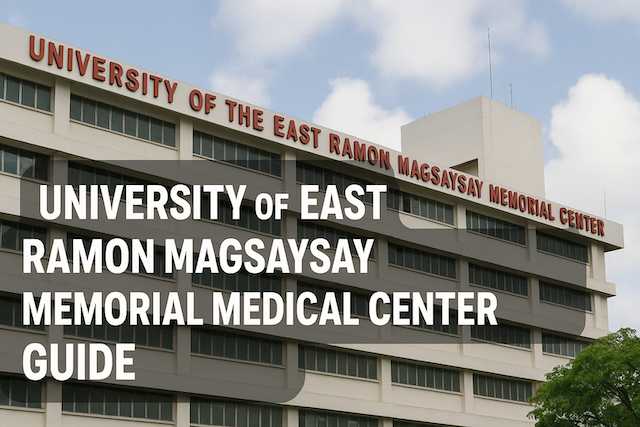
University of the East Ramon Magsaysay Memorial Medical Center (UERMMMC) Guide
Contents
- University of the East Ramon Magsaysay Memorial Medical Center (UERMMMC) Guide
- Overview of UERMMMC
- History and Background
- Colleges and Programs Offered
- Facilities and Campus Life
- Admission Requirements and Process
- Tuition Fees and Scholarships
- International Recognition and Affiliations
- Why Choose UERMMMC?
- Conclusion
- What programs does UERMMMC offer?
- How competitive is admission to the College of Medicine?
- What are the basic prerequisites for the MD program?
- Does UERMMMC accept international students?
- What kind of clinical exposure do students receive?
- How is the curriculum structured in the MD program?
- What are typical tuition and fees?
- Are scholarships or financial aid available?
- What support is available for student well-being?
- Can graduates practice abroad?
- What research opportunities exist for students?
- How does UERMMMC engage with communities?
- What is campus life like?
- What facilities and learning resources are available?
- How do I strengthen my application?
- What does UERMMMC look for during interviews?
- What are typical timelines in the admissions cycle?
- How do students prepare for licensure exams?
- What career paths do graduates pursue?
- How can I visit or contact the school?
University of the East Ramon Magsaysay Memorial Medical Center (UERMMMC) Guide
Overview of UERMMMC
The University of the East Ramon Magsaysay Memorial Medical Center (UERMMMC) is one of the Philippines’ most reputable institutions for medical education, healthcare services, and research. Established in 1956 and named after the late President Ramon Magsaysay, the university has consistently been recognized for its academic excellence, ethical training, and strong commitment to community service.
Located in Quezon City, UERMMMC is part of the University of the East (UE) system, which is known for its long-standing contributions to higher education in the country. The medical center serves as both a teaching hospital and a medical school, providing students with direct exposure to real-world medical practice while serving the Filipino community.
UERMMMC’s mission is centered on producing competent, compassionate, and socially responsible medical professionals who are capable of addressing both local and global health challenges. Over the years, it has produced thousands of graduates who have made significant contributions to the fields of medicine, nursing, physical therapy, and allied health sciences.
History and Background
The University of the East was founded in 1946, but the Ramon Magsaysay Memorial Medical Center was established a decade later to provide specialized education in medicine and healthcare. It was inaugurated in 1956 in honor of President Ramon Magsaysay, whose vision of service and integrity inspired the university’s educational philosophy.
In the years following its founding, UERMMMC quickly gained recognition for its quality of education and medical training. It became known for producing top performers in national board examinations and for developing innovative programs that combine rigorous academic study with extensive clinical experience.
The medical center also functions as a non-stock, non-profit foundation, with revenues reinvested into hospital operations, research programs, and student scholarships. This commitment to sustainability and social impact has helped UERMMMC maintain its position as one of the most respected medical institutions in the country.
Colleges and Programs Offered
UERMMMC houses several colleges under its umbrella, each specializing in a distinct aspect of healthcare education. These colleges collaborate closely within the medical center to create a well-rounded and interdisciplinary learning environment.
1. College of Medicine
The College of Medicine is the flagship of UERMMMC. It offers a Doctor of Medicine (MD) program that combines basic sciences, clinical training, and community immersion. The curriculum emphasizes the development of diagnostic, therapeutic, and preventive medicine skills.
The program is designed to produce doctors who not only excel in hospitals but also serve in community health settings. Students undergo rotations in major departments such as Internal Medicine, Pediatrics, Surgery, Obstetrics and Gynecology, Psychiatry, and Family Medicine.
2. College of Nursing
The College of Nursing has produced numerous topnotchers in the Philippine Nursing Licensure Examination. The program focuses on both theoretical foundations and clinical competencies, ensuring that graduates can deliver patient-centered care locally and internationally.
The nursing students are trained at UERMMMC Hospital and partner institutions, providing them with diverse and intensive hands-on experience.
3. College of Allied Rehabilitation Sciences (CARS)
This college offers programs such as Physical Therapy (PT) and Occupational Therapy (OT). These courses prepare students to work with patients recovering from injury, illness, or disability. The programs integrate human anatomy, kinesiology, biomechanics, and evidence-based rehabilitation techniques.
Graduates of CARS are among the most employable Filipino rehabilitation professionals abroad due to the school’s high international training standards.
4. Graduate Studies
UERMMMC also offers graduate programs in areas like Public Health, Hospital Administration, and Biomedical Sciences. These programs aim to develop leadership and research capabilities among healthcare professionals.
Facilities and Campus Life
The UERMMMC campus in Aurora Boulevard, Quezon City, features modern facilities designed to support both education and healthcare services. It integrates academic buildings, laboratories, and a fully operational hospital.
Hospital and Clinical Facilities
The UERMMMC Hospital serves as a tertiary training and teaching hospital. It provides comprehensive medical and surgical services across multiple specialties. The hospital caters to thousands of patients annually, giving students valuable clinical exposure.
Facilities include:
-
Intensive Care Units (ICU)
-
Diagnostic Laboratories
-
Imaging Centers (CT, MRI, X-ray)
-
Operating Theaters
-
Emergency Department
-
Specialty Outpatient Clinics
Laboratories and Simulation Centers
The medical and nursing students benefit from state-of-the-art laboratories for anatomy, biochemistry, microbiology, and pathology. The Clinical Skills and Simulation Laboratory allows students to practice procedures and patient interaction in a controlled environment before actual hospital rotations.
Library and Research Center
The Medical Library is one of the most comprehensive in the country, with an extensive collection of medical books, journals, and online databases. The Research Institute for Health Sciences supports faculty and student research in clinical and biomedical fields.
Student Life
Beyond academics, UERMMMC promotes a holistic learning experience through student organizations, leadership programs, and outreach activities. The school regularly holds medical missions, community health drives, and symposiums to instill a sense of social responsibility among students.
Admission Requirements and Process
For the College of Medicine
Applicants must:
-
Hold a Bachelor’s degree (preferably in a pre-medical field such as Biology, Chemistry, Psychology, or Medical Technology).
-
Have completed subjects in General Biology, Chemistry, Physics, and Mathematics.
-
Take and pass the National Medical Admission Test (NMAT).
-
Submit required documents, including:
-
Transcript of Records
-
NMAT results
-
Recommendation letters
-
Application form and personal essay
-
-
Undergo an interview and screening process.
For Nursing and Allied Health Programs
Requirements typically include:
-
High school diploma or equivalent
-
Entrance examination
-
Medical certificate of fitness
-
Interview with the admissions committee
For International Students
Foreign applicants must:
-
Submit academic transcripts authenticated by the Philippine Embassy.
-
Present proof of English proficiency (IELTS or TOEFL may be required).
-
Apply for a student visa or Special Study Permit (SSP) through the Commission on Higher Education (CHED) and Bureau of Immigration.
Tuition Fees and Scholarships
Tuition fees at UERMMMC are moderate compared to other private medical schools in the Philippines, but they vary depending on the program.
-
College of Medicine: approximately PHP 150,000 – 200,000 per semester.
-
College of Nursing: around PHP 70,000 – 100,000 per semester.
-
Allied Health Programs: typically PHP 80,000 – 120,000 per semester.
The university offers scholarships and financial aid to qualified students, including:
-
Academic Merit Scholarships
-
Need-Based Assistance
-
President Ramon Magsaysay Scholarship
-
Alumni Foundation Grants
International Recognition and Affiliations
UERMMMC has earned international recognition for its quality of education and ethical training. Its graduates consistently perform well in international licensure exams, particularly in the United States (USMLE), United Kingdom (PLAB), and Middle East boards.
The university is accredited by:
-
Philippine Accrediting Association of Schools, Colleges, and Universities (PAASCU)
-
Commission on Higher Education (CHED)
-
World Directory of Medical Schools (WDOMS)
Additionally, UERMMMC has exchange programs and academic collaborations with institutions in Japan, the United States, and Australia, promoting global exposure for its students.
Why Choose UERMMMC?
1. Strong Academic Reputation
UERMMMC is consistently ranked among the top medical schools in the Philippines due to its high passing rates in the Physician Licensure Examination.
2. Clinical Exposure
Students train in one of the country’s most respected teaching hospitals, gaining practical experience early in their education.
3. Holistic and Ethical Formation
The school emphasizes values formation, empathy, and professionalism, producing doctors who are not only skilled but also compassionate.
4. Research-Oriented Learning
Through its Research Institute, students engage in clinical and biomedical research, encouraging evidence-based medical practice.
5. International Opportunities
Graduates are highly employable both locally and abroad, with many pursuing residencies or fellowships overseas.
Conclusion
The University of the East Ramon Magsaysay Memorial Medical Center (UERMMMC) stands as a pillar of excellence in Philippine medical education. Its blend of academic rigor, clinical exposure, and ethical training makes it a top choice for aspiring doctors, nurses, and health professionals. With its legacy of producing globally competent graduates and its continued dedication to community health, UERMMMC remains a leading institution for medical and healthcare education in the Philippines.
What programs does UERMMMC offer?
UERMMMC offers a Doctor of Medicine (MD) program under the College of Medicine, bachelor’s degrees in Nursing and Allied Rehabilitation Sciences (e.g., Physical Therapy and Occupational Therapy), and selected graduate programs in public health, hospital administration, and biomedical sciences. Programs are designed to integrate foundational science, clinical exposure, research, and community engagement.
How competitive is admission to the College of Medicine?
Admission is selective. Applicants are evaluated holistically based on a completed bachelor’s degree (preferably with pre-med coursework), NMAT performance, collegiate grades, recommendations, interviews, and evidence of service or leadership. Meeting minimum requirements does not guarantee acceptance; a strong overall profile and clear motivation for medicine will help.
What are the basic prerequisites for the MD program?
Most successful applicants present coursework in biology, chemistry (including organic chemistry), physics, and mathematics, along with laboratory components when available. Universities and health regulators may update prerequisites; applicants should verify the latest list before applying. A competitive NMAT score and strong communication skills are essential.
Does UERMMMC accept international students?
Yes. International applicants are welcome and typically submit authenticated academic records, proof of English proficiency when applicable, a valid passport, and immigration documents (e.g., student visa or Special Study Permit). Processing timelines vary by country, so students should start early and keep scanned copies of all documents for faster coordination.
What kind of clinical exposure do students receive?
Students train in UERMMMC’s tertiary teaching hospital and affiliated facilities. Rotations cover core specialties—Internal Medicine, Pediatrics, Surgery, Obstetrics–Gynecology, Psychiatry, and Family Medicine—plus electives. Simulation labs and skills centers provide a safe environment for practicing procedures and clinical reasoning prior to direct patient care.
How is the curriculum structured in the MD program?
The curriculum generally progresses from basic medical sciences to systems-based integration, followed by clerkship and internship. Early years focus on anatomy, physiology, biochemistry, pathology, microbiology, and pharmacology; later years emphasize bedside learning, team-based rounds, and community immersion. Assessments may include written exams, OSCEs, case presentations, and portfolio milestones.
What are typical tuition and fees?
Tuition varies by program and term. As a private, non-stock institution, fees reflect the cost of maintaining hospital-grade facilities, laboratories, and student services. Prospective students should consult the latest official schedule of fees and budget for books, uniforms, equipment, exam costs, and living expenses in Quezon City.
Are scholarships or financial aid available?
UERMMMC offers merit- and need-based assistance when funds permit. Competitive scholarships may consider academic performance, leadership, and service. Some external foundations and alumni groups also support qualified students. Because application windows can be brief, prepare transcripts, recommendation letters, and a concise personal statement in advance.
What support is available for student well-being?
Medical training is demanding. Students can typically access guidance counseling, faculty advising, peer organizations, and wellness programming. Academic support may include mentoring, review sessions, and skills remediation. Learners are encouraged to build sustainable routines for sleep, nutrition, exercise, and reflection to prevent burnout.
Can graduates practice abroad?
Many graduates pursue training or licensure overseas. Pathways depend on the destination country and may include credential verification, examinations (e.g., USMLE or PLAB equivalents), residency or supervised practice, and immigration steps. Students planning an international route should map requirements early and align electives, research, and extracurriculars accordingly.
What research opportunities exist for students?
Students can participate in clinical, community, or laboratory research under faculty mentorship. Typical activities include protocol development, ethics submissions, data collection, analysis, and manuscript preparation. Presenting at conferences and contributing to publications strengthens residency applications and cultivates evidence-based practice skills.
How does UERMMMC engage with communities?
Community medicine components often pair students with local health stakeholders to conduct needs assessments, health education, screenings, and referral initiatives. This exposure trains future clinicians to deliver patient-centered care that considers social determinants of health and resource constraints.
What is campus life like?
Beyond coursework, students join professional societies, interest groups, outreach teams, and research clubs. Events may include case conferences, interschool competitions, cultural programs, and wellness days. The hospital environment fosters professional identity while student organizations provide social support and leadership opportunities.
What facilities and learning resources are available?
Core resources typically include a medical library with print and electronic holdings, study spaces, skills and simulation laboratories, anatomy facilities, basic science labs, and IT-enabled classrooms. Hospital departments support bedside learning with multidisciplinary teams and structured teaching rounds.
How do I strengthen my application?
Maintain strong grades in science courses, prepare thoroughly for the NMAT, and demonstrate consistency in service or leadership roles. Craft a reflective personal statement that connects your experiences to your goals. Secure recommendations from mentors who can discuss your character, rigor, and readiness for a demanding curriculum.
What does UERMMMC look for during interviews?
Interviewers often probe motivation for medicine, understanding of the profession’s realities, communication skills, ethical reasoning, and resilience. Use specific examples to illustrate teamwork, cultural humility, and growth after setbacks. Practice clear, concise responses and professional demeanor.
What are typical timelines in the admissions cycle?
Cycles vary each year. As a general guide, expect application launches, NMAT testing windows, document screening, interviews, admissions decisions, and enrollment steps to span several months. Monitor official announcements and set calendar reminders for exams, forms, and fees.
How do students prepare for licensure exams?
Successful examinees start early, aligning coursework with review plans, question banks, and peer study groups. They track weak areas using objective metrics (scores, item tags) and schedule spaced repetition. Clinical rotations are leveraged to reinforce diagnostic reasoning and management algorithms.
What career paths do graduates pursue?
Alumni practice in hospitals, clinics, and community health centers; many enter residency across core specialties and subspecialties. Others pursue research, public health, health administration, medical education, global health, or entrepreneurship. The mix of clinical training and scholarly exposure supports diverse careers.
How can I visit or contact the school?
Prospective students are encouraged to attend official orientations, virtual info sessions, or campus tours when offered. For the most accurate details on admissions, fees, and calendars, reach out to the designated admissions or registrar channels listed on the institution’s official website and communications.
Best Medical Schools in the Philippines (Local & International Rankings)
Recommend
2026年1月23日
Sultan Kudarat State University College of Medicine: Complete Guide for Aspiring MD Students
2026年1月23日
University of Southern Mindanao College of Medicine: Complete Guide for Aspiring MD Students
2026年1月23日
Mindanao State University – General Santos College of Medicine: Complete Guide for Future MD Students

How to Register for eTravel Philippines (2025 Guide)
Step-by-step guide to completing your eTravel registration before arriving in the Philippines, with images and tips.

Night Market in Cebu – Things You Don’t Know About Cebu Life
Discover the hidden charm of Cebu’s night markets, from street food stalls to local life tips you won’t find in tourist guides.

How to Use ChatGPT for IELTS Preparation: A Complete Guide
Learn how to prepare for IELTS using ChatGPT — including strategies for Writing, Reading, Listening, Speaking, and grammar support.

How to Build a Website Without Coding Using ChatGPT
Discover how to build your own website using AI—no coding skills needed. From structure planning to SEO and design, let ChatGPT guide you.