2026年1月23日
3D ACADEMY offers affordable English study programs in Cebu, Philippines – perfect for beginners, professionals, and exam takers.

3D UNIVERSAL ENGLISH INSTITUTE INC
info.3d-universal.com
8:00-17:00(Mon-Fri)
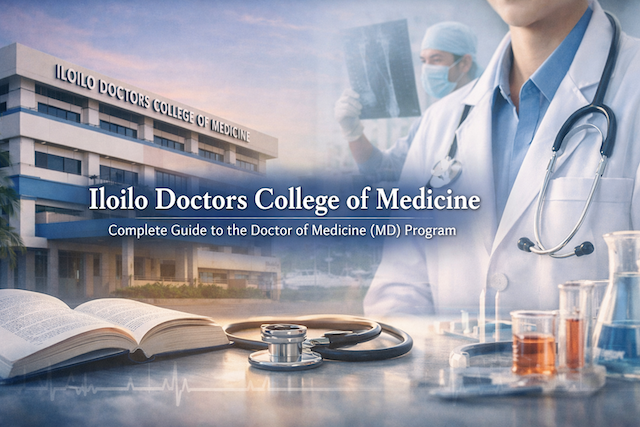
Iloilo Doctors College of Medicine: Complete Guide to the Doctor of Medicine (MD) Program
Contents
- Iloilo Doctors College of Medicine: Complete Guide to the Doctor of Medicine (MD) Program
- Overview: What to Expect from Iloilo Doctors College of Medicine
- Why Study Medicine in Iloilo
- MD Program Structure and Curriculum
- Teaching and Learning Approach
- Clinical Training and Hospital Exposure
- Admissions: Typical Requirements and Eligibility
- How to Prepare a Strong Application
- Tuition, Fees, and Cost of Living in Iloilo
- Facilities, Learning Resources, and Student Support
- Student Life, Housing, and Daily Routine
- Career Outcomes: Internship, Board Exams, and Beyond
- Who Is Iloilo Doctors College of Medicine Best For?
- How to Apply: Practical Step-by-Step Checklist
- Final Thoughts
- FAQs (Frequently Asked Questions)
- Is Iloilo Doctors College of Medicine a good option for studying medicine in the Philippines?
- How long is the Doctor of Medicine (MD) program in the Philippines?
- Do I need an NMAT score to apply?
- What undergraduate degree is required for admission?
- What documents are typically required when applying?
- Does the school require an interview?
- What is clinical clerkship, and when does it start?
- How can I evaluate the quality of clinical exposure?
- How much should I budget besides tuition?
- Is Iloilo a good city for medical students?
- What study habits help students succeed in the first year?
- What happens after graduation from the MD program?
- Can international students apply?
- How do I confirm the most accurate and updated information?
Iloilo Doctors College of Medicine: Complete Guide to the Doctor of Medicine (MD) Program
Iloilo is one of the Philippines’ most student-friendly cities, known for its balanced lifestyle, strong healthcare network, and access to both community-based and tertiary hospital exposure. If you are exploring medical schools in Western Visayas, Iloilo Doctors College of Medicine is a name you may encounter when searching for an MD program that emphasizes practical clinical learning, local community engagement, and a training environment that is not as congested as larger metro areas.
This guide explains what prospective students usually want to know before applying: the program structure, typical admission requirements, learning approach, clinical exposure, campus life, costs to plan for, and practical application tips. Because requirements and policies can change, always treat school announcements as the final authority—but this page will help you understand the overall picture and prepare a strong application.
Overview: What to Expect from Iloilo Doctors College of Medicine
Iloilo Doctors College of Medicine offers a Doctor of Medicine (MD) program designed to build a solid foundation in medical sciences while steadily developing clinical competence, communication skills, and professional ethics. Like most medical programs in the Philippines, the MD track typically follows a four-year structure: the first years focus more on foundational and organ-system concepts, then later years shift toward clinical clerkship, patient-facing skills, and hospital rotations.
Students who choose medical school in Iloilo often value the city’s manageable pace, comparatively lower living costs than Manila, and a healthcare ecosystem where clinical learning can feel more accessible. Instead of competing with very large cohorts and heavy urban congestion, many students prefer a setting where hospital access, commuting, and day-to-day routines are more predictable.
Why Study Medicine in Iloilo
Choosing a city is not just about the school name; it shapes your daily learning experience. Iloilo offers several practical advantages for medical students:
- Student-oriented city: Iloilo has a long-standing academic culture with multiple universities and a supportive environment for students.
- More manageable commute: Time lost in traffic adds up during medical school. A more predictable commute can translate into more time for sleep, study, and recovery.
- Access to varied patient cases: Medical training benefits from exposure to both common conditions and complex cases, including community health needs.
- Strong local food and lifestyle: A stable routine and access to affordable meals matter more than you think during exam-heavy months.
For many students, these lifestyle factors become part of their academic strategy—reducing friction so they can focus on learning and clinical performance.
MD Program Structure and Curriculum
While the exact curriculum differs by institution, most Philippine MD programs share a similar structure aligned with national standards and board preparation. Iloilo Doctors College of Medicine generally follows a progression from foundational sciences to clinical sciences and finally to clerkship.
Pre-clinical phase (commonly Years 1–2): This stage builds your medical foundation. Expect subjects such as anatomy, physiology, biochemistry, histology, pathology, microbiology, parasitology, pharmacology, and introductory clinical skills. Many programs now integrate subjects using an organ-system approach, connecting structure, function, disease mechanisms, and treatment principles.
Transition to clinical (commonly Year 3): The third year often increases clinical exposure through case discussions, bedside introductions, patient simulations, diagnostic reasoning exercises, and exposure to major clinical departments. You’ll likely have more small-group activities, practical exams, and OSCE-style assessments (Objective Structured Clinical Examination), depending on the school’s evaluation system.
Clinical clerkship (commonly Year 4): Clerkship is the most immersive part of the MD program. Students rotate through core areas such as Internal Medicine, Surgery, Pediatrics, Obstetrics and Gynecology, Psychiatry, Family and Community Medicine, and other required rotations. Responsibilities expand from observation to supervised clinical tasks: history taking, physical exams, progress notes, case presentations, basic procedures, and patient counseling—always under guidance.
The key question to ask any medical school is: How does it support students in moving from theory to real patient care? A program’s strength is not only the syllabus, but also the consistency of clinical exposure, feedback culture, and the learning environment during rotations.
Teaching and Learning Approach
Modern medical education increasingly emphasizes active learning rather than pure lecture memorization. In a typical MD program setting, you can expect a mix of:
- Lectures and guided review: Efficient for covering core concepts and aligning students on fundamentals.
- Laboratory and practical sessions: Anatomy labs, microscopy, skill labs, and simulated patient encounters.
- Small-group discussions: Case-based learning, problem-based learning elements, and clinical reasoning practice.
- Skills training: Structured practice for history taking, physical examination, communication, and professionalism.
- Assessments and feedback: Written exams, practical exams, OSCEs, and clinical performance evaluation during rotations.
When evaluating fit, pay attention to how the program helps students who struggle early. Medicine is demanding; supportive systems such as mentoring, structured remediation, and study skill development can be crucial for long-term success.
Clinical Training and Hospital Exposure
Clinical training is where a medical student becomes a doctor-in-training. In Iloilo, clinical exposure typically includes both hospital-based and community-based learning. Students benefit when they can see a wide range of conditions: acute emergencies, chronic disease management, maternal and child health, infectious diseases, and lifestyle-related illnesses.
In many Philippine programs, students rotate in affiliated hospitals and community settings that allow them to develop competence in:
- Patient interviewing and documentation: History taking, SOAP notes, progress notes, and referral summaries.
- Physical examination skills: Systematic exams, focused exams, and interpretation of clinical findings.
- Diagnostic reasoning: Forming differential diagnoses and choosing appropriate tests.
- Basic procedures: Depending on rotation and supervision, students may learn venipuncture, IV insertion observation/assistance, wound care, suturing observation/assistance, and other skills aligned with training level.
- Team-based care: Working with nurses, residents, consultants, and allied health professionals.
For applicants, a practical question is: How early do students interact with patients, and how consistent is supervision? The best learning environments combine responsibility with structured safety and feedback.
Admissions: Typical Requirements and Eligibility
Admission requirements vary by institution and may change each year, but most Philippine medical schools share similar baseline criteria. Applicants usually need:
- Bachelor’s degree (any major may be accepted, though science-related degrees often help with preparation)
- NMAT score (National Medical Admission Test), usually with a minimum percentile requirement set by the school
- Official transcripts and academic documents
- Certificate of good moral character and/or recommendation letters
- Interview (depending on admissions process)
- Additional documents (birth certificate, IDs, medical clearance, etc., depending on policy)
Some schools place emphasis on NMAT and GPA, while others take a more holistic approach that considers interviews, motivation, and suitability for medical training. If you have gaps in your transcript or an NMAT score you are not satisfied with, focus on what you can control: a better NMAT retake, strong interview preparation, and a clear explanation of your goals.
How to Prepare a Strong Application
Medical school applications are not only about being “smart.” Schools also look for maturity, communication skills, resilience, and ethical orientation. Here are realistic ways to strengthen your profile:
- Plan your NMAT timeline: Don’t rush. Schedule a testing window that gives you enough time for content review and practice exams.
- Write a clear personal statement (if required): Explain why medicine, why now, and what values you bring. Avoid clichés; use concrete experiences.
- Prepare for interviews: Practice structured answers for motivation, stress management, teamwork, and ethical scenarios.
- Show consistency: Volunteer work, research, tutoring, leadership roles, or healthcare exposure can demonstrate commitment.
- Get strong recommendations: Choose recommenders who can describe your work ethic, integrity, and learning attitude.
Most importantly, be honest. Admissions teams can recognize rehearsed stories. A sincere narrative with real evidence of growth is more persuasive than a perfect-sounding script.
Tuition, Fees, and Cost of Living in Iloilo
The total cost of medical school includes more than tuition. You should plan for:
- Tuition and school fees: These may include laboratory fees, miscellaneous fees, library fees, and clinical fees.
- Books and learning resources: Some students rely on a mix of printed books, e-books, and question banks.
- Uniforms and equipment: White coats, scrubs (if required), stethoscope, BP apparatus, and basic diagnostic tools.
- Transportation: Daily commute to campus and hospital rotations.
- Housing and food: Dorms, apartments, utilities, and meal planning.
- Rotation-related expenses: Additional requirements during clerkship such as medical clearances, vaccinations, or documentation.
Iloilo is often considered more affordable than larger metropolitan areas, but “affordable” depends on lifestyle and proximity to campus/hospitals. As a medical student, location matters: being closer can reduce daily stress and help you maintain a stable study routine.
Facilities, Learning Resources, and Student Support
Medical education is resource-intensive. Students benefit when a school provides access to solid learning infrastructure and support systems, such as:
- Libraries and study spaces: Quiet areas for focused reading and group discussion rooms for case practice.
- Skills labs: Spaces for practicing clinical skills before performing them in real settings.
- Simulation training: Basic mannequins, simulated patient stations, and structured OSCE preparation.
- Academic support: Mentoring, advising, and structured remediation when needed.
- Wellness and guidance services: Counseling support can be crucial during high-pressure periods.
When comparing schools, consider how students describe the teaching culture. Are faculty approachable? Is feedback consistent? Is the environment competitive or collaborative? These factors strongly influence your learning experience over four intense years.
Student Life, Housing, and Daily Routine
Medical school is a lifestyle. Your daily routine will likely be built around lectures, lab work, review sessions, and self-study blocks. During clerkship, your schedule shifts to early mornings, rounds, duty assignments, and patient care responsibilities. Because the demands change each year, students benefit from building flexible routines early.
Housing decisions matter more than many applicants expect. Ideally, choose accommodation that supports:
- Reliable sleep: Quiet environment and stable utilities.
- Short commute: Less time wasted means more time for review and recovery.
- Access to food and essentials: Grocery and affordable meals nearby reduce daily friction.
- Study-friendly space: Even a small desk and good lighting can make a difference.
Also plan for mental health. Medicine can be emotionally heavy—especially once you begin seeing real patients. A supportive peer group and healthy boundaries help you sustain performance over time.
Career Outcomes: Internship, Board Exams, and Beyond
After finishing the MD program, graduates typically proceed to internship (postgraduate internship) and then take the Physician Licensure Examination (PLE). Medical schools commonly integrate board-oriented review and clinical reasoning into later years, but success depends on consistent study habits from the beginning.
Beyond licensure, pathways often include residency training in specialties such as Internal Medicine, Pediatrics, Surgery, OB-GYN, Family Medicine, Psychiatry, Anesthesiology, Radiology, and others. Your clerkship experience can heavily influence this decision—many students “discover” their best-fit specialty during rotations rather than before entering medical school.
Who Is Iloilo Doctors College of Medicine Best For?
This program may be a strong match if you value:
- A learning environment in a student-centered city
- Structured progression from theory to clinical practice
- Practical, patient-facing training with community and hospital exposure
- A lifestyle setting that may be less stressful than larger metro areas
On the other hand, if you strongly prefer a highly research-intensive environment or a massive tertiary hospital complex with extremely high patient volume, you should compare multiple schools and ask targeted questions about case exposure, supervision, and training style.
How to Apply: Practical Step-by-Step Checklist
Application steps vary, but many students can use this checklist to stay organized:
- Confirm eligibility: Make sure you meet degree and NMAT requirements.
- Prepare documents: Transcripts, certificates, IDs, and recommendation letters.
- Track deadlines: Medical school timelines can be strict.
- Submit application: Follow the school’s official instructions carefully.
- Prepare for interview: Practice motivation and scenario-based questions.
- Plan finances: Estimate tuition, fees, housing, and daily expenses.
- Arrange housing early: Especially if you are relocating from another region.
If you are applying to multiple schools, create a single spreadsheet that tracks requirements, NMAT cutoffs (if stated), fees, deadlines, and submission status. Organization reduces stress, and stress management is a core skill in medical training.
Final Thoughts
Choosing a medical school is ultimately about fit: learning style, training environment, support systems, and the daily reality of studying medicine for years. Iloilo Doctors College of Medicine appeals to students who want a practical MD education in a city known for its livability and academic culture. If you are serious about applying, take time to clarify your goals, prepare your NMAT strategically, and evaluate whether the school’s clinical exposure and student support align with the kind of doctor you want to become.
Medical school is challenging, but it is also deeply meaningful. With the right environment and habits, you can build not only knowledge, but also the discipline, empathy, and professional identity required to serve patients well.
FAQs (Frequently Asked Questions)
Is Iloilo Doctors College of Medicine a good option for studying medicine in the Philippines?
Iloilo Doctors College of Medicine can be a practical choice for students who want an MD program in a city that is generally easier to live in than larger metro areas. Many applicants consider Iloilo because it is known as a student-friendly city with a manageable daily routine, which matters when medical school becomes intense. A “good option” depends on your priorities: the learning environment, the curriculum structure, clinical exposure, student support, and your personal fit. Before deciding, review the school’s current admission policies, ask about hospital affiliations and clerkship setup, and compare it with other medical schools in the region.
How long is the Doctor of Medicine (MD) program in the Philippines?
In the Philippines, the MD program is commonly completed in four academic years. The earlier years focus on foundational medical sciences and integrated clinical concepts, while the later part transitions into clinical subjects and hands-on hospital training. The final year is typically a clerkship year with rotations in major departments. After graduating from the MD program, most graduates proceed to a postgraduate internship and then take the Physician Licensure Examination (PLE). Exact timelines can vary depending on institutional policies, academic performance, and any curriculum updates.
Do I need an NMAT score to apply?
Most medical schools in the Philippines require the National Medical Admission Test (NMAT) as part of the admissions process, and they may set a minimum percentile requirement. Your NMAT score is usually evaluated alongside academic records and other documents. If your NMAT score is lower than expected, some applicants choose to retake the exam to improve competitiveness. Always check the latest requirement set by the admissions office because required percentiles, accepted test dates, and submission rules can change across application cycles.
What undergraduate degree is required for admission?
Many Philippine medical schools accept applicants from a wide range of undergraduate programs, not only pre-med or science majors. However, students with strong backgrounds in biology, chemistry, health sciences, or psychology may find the early curriculum more familiar. Regardless of major, applicants should demonstrate readiness for a rigorous science-heavy curriculum. If your degree is not science-focused, you can strengthen your preparation by reviewing basic biology and chemistry, building study systems early, and demonstrating clear motivation and academic discipline in your application.
What documents are typically required when applying?
While the exact list can differ, most applicants should be ready to submit official transcripts, proof of graduation, an NMAT score report, identification documents, and certificates such as good moral character. Some schools request recommendation letters, a personal statement, or additional forms. International or transferring applicants may need extra documentation. Because incomplete submissions can delay evaluation, it is best to prepare your documents early and keep both physical and digital copies, following the school’s formatting and submission instructions carefully.
Does the school require an interview?
Many medical schools include an interview as part of the admissions process. Interviews typically assess motivation for medicine, communication skills, professionalism, and how you handle stress and responsibility. Some interviews also include scenario-based questions involving ethics or teamwork. Preparation helps, but authenticity matters: admissions teams often look for consistent reasons, realistic expectations, and emotional maturity. You can prepare by practicing structured answers, reviewing your application details, and reflecting on experiences that shaped your interest in healthcare and service.
What is clinical clerkship, and when does it start?
Clinical clerkship is the stage where medical students train in hospital and community settings under supervision. In many MD programs, clerkship happens in the later part of the program, often the final year. Students rotate through key departments such as Internal Medicine, Surgery, Pediatrics, Obstetrics and Gynecology, Psychiatry, and Family or Community Medicine. During clerkship, students learn patient interviewing, physical examination, clinical documentation, case presentations, and teamwork. The level of responsibility increases gradually, and supervision is essential for safe learning.
How can I evaluate the quality of clinical exposure?
Clinical exposure is not only about being “in a hospital.” It also depends on patient volume, the variety of cases, and how students are supervised and evaluated. When comparing schools, ask practical questions: How many students are assigned per rotation group? Are there structured learning objectives? How often do students present cases? What kind of feedback is given? Also ask if students have community exposure, outpatient experience, and opportunities to practice core skills in a structured way before performing tasks in real settings.
How much should I budget besides tuition?
Even if tuition is your largest cost, medical school expenses extend beyond it. Plan for learning resources (books, digital subscriptions, review materials), uniforms and clinical equipment (white coats, basic tools), transportation, housing, food, and rotation-related requirements such as health clearances. Budgeting is easier when you estimate monthly living costs and add a buffer for unexpected expenses, especially during clerkship when schedules may limit your ability to cook or travel efficiently. Living closer to campus or training sites can also reduce daily costs and stress.
Is Iloilo a good city for medical students?
Iloilo is often considered a supportive environment for students because daily life can be more manageable than in heavily congested areas. For medical students, this can translate into practical benefits: more predictable commuting, easier access to essentials, and a lifestyle that can support better sleep and study routines. Your experience will still depend on where you live, your schedule, and your personal habits. When possible, visit the area, explore housing options near the school or affiliated hospitals, and ask current students about their weekly routines.
What study habits help students succeed in the first year?
First-year medical students often struggle not because they are incapable, but because the workload demands a new system. Effective habits include daily review (not cramming), active recall (practice questions and self-testing), spaced repetition, and small-group discussion for difficult topics. Time-blocking and prioritizing high-yield concepts can prevent burnout. Many students also benefit from building a routine that protects sleep and includes short recovery breaks. If you fall behind, early action matters—seek academic support, adjust your strategy, and avoid waiting until exam week to reset.
What happens after graduation from the MD program?
After earning the MD degree, graduates commonly complete a postgraduate internship. This provides supervised training across major clinical areas and helps prepare graduates for independent practice. After internship, most graduates take the Physician Licensure Examination (PLE) to become licensed physicians in the Philippines. Once licensed, doctors may pursue residency training in a chosen specialty or work in general practice settings, depending on career goals. Long-term outcomes are strongly influenced by consistent learning habits during medical school and focused preparation during review periods.
Can international students apply?
Some Philippine medical schools accept international applicants, but requirements may differ, and additional documentation is often needed. International students may need credential evaluation, immigration-related requirements, and proof of eligibility to study and train clinically. If you are an international applicant, contact the admissions office early to confirm current policies, required documents, and timelines. It is also important to understand how licensing and postgraduate training may work for your situation, especially if you plan to practice in another country after graduation.
How do I confirm the most accurate and updated information?
The most reliable information comes from the school’s official admissions office and official announcements. Because policies can change—especially for deadlines, NMAT cutoffs, fee structures, and documentary requirements—use this guide as a preparation tool, but verify all details directly with the institution. When you contact the school, ask specific questions and request a checklist for your application category. Keeping your own organized list of requirements and deadlines can prevent last-minute issues and help you submit a complete application confidently.
Complete List of Medical Schools in the Philippines (All 78 MD Programs)
Best Medical Schools in the Philippines (Local & International Rankings)
Recommend
2026年1月23日
Sultan Kudarat State University College of Medicine: Complete Guide for Aspiring MD Students
2026年1月23日
University of Southern Mindanao College of Medicine: Complete Guide for Aspiring MD Students
2026年1月23日
Mindanao State University – General Santos College of Medicine: Complete Guide for Future MD Students

How to Register for eTravel Philippines (2025 Guide)
Step-by-step guide to completing your eTravel registration before arriving in the Philippines, with images and tips.

Night Market in Cebu – Things You Don’t Know About Cebu Life
Discover the hidden charm of Cebu’s night markets, from street food stalls to local life tips you won’t find in tourist guides.

How to Use ChatGPT for IELTS Preparation: A Complete Guide
Learn how to prepare for IELTS using ChatGPT — including strategies for Writing, Reading, Listening, Speaking, and grammar support.

How to Build a Website Without Coding Using ChatGPT
Discover how to build your own website using AI—no coding skills needed. From structure planning to SEO and design, let ChatGPT guide you.