2026年1月23日
3D ACADEMY offers affordable English study programs in Cebu, Philippines – perfect for beginners, professionals, and exam takers.

3D UNIVERSAL ENGLISH INSTITUTE INC
info.3d-universal.com
8:00-17:00(Mon-Fri)
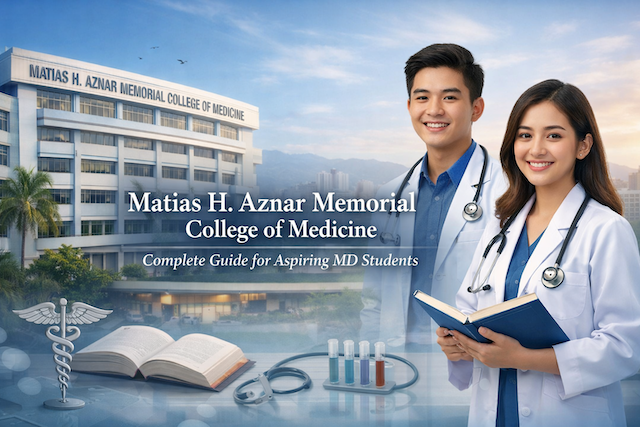
Matias H. Aznar Memorial College of Medicine: Complete Guide for Aspiring MD Students
Contents
- Matias H. Aznar Memorial College of Medicine: Complete Guide for Aspiring MD Students
- Overview of Matias H. Aznar Memorial College of Medicine
- Why Study Medicine in Cebu
- Doctor of Medicine (MD) Program Structure
- Pre-Clinical Years: Foundations of Medical Science
- Clinical Years: Hospital Exposure and Patient Care
- Post-Graduate Internship and Licensure Pathway
- Admissions: What Applicants Typically Need
- Tuition, Fees, and Cost of Living in Cebu
- Learning Environment and Student Support
- How to Evaluate a Medical School Fit
- Study Tips for Incoming Medical Students
- Clinical Professionalism and Communication Skills
- Common Challenges and How to Handle Them
- Final Thoughts
- FAQs (Frequently Asked Questions)
- What is Matias H. Aznar Memorial College of Medicine?
- How long is the Doctor of Medicine (MD) program in the Philippines?
- What do the pre-clinical years usually include?
- What happens during the clinical years?
- What are the typical admission requirements for medical school?
- Is the NMAT required to apply?
- How much does medical school cost in Cebu?
- Are scholarships or financial assistance available?
- Where do students typically stay while studying medicine in Cebu?
- What is the study workload like in the first year?
- How can I prepare before starting medical school?
- What skills matter most during clinical rotations?
- Can international students apply?
- What should I check before choosing this medical school?
- What happens after graduation from the MD program?
Matias H. Aznar Memorial College of Medicine: Complete Guide for Aspiring MD Students
Overview of Matias H. Aznar Memorial College of Medicine
Matias H. Aznar Memorial College of Medicine is a medical education institution in Cebu, Philippines, recognized for contributing to the training of future physicians through a curriculum that blends foundational medical sciences with clinical exposure. For students who are considering pursuing a Doctor of Medicine (MD) degree in the Visayas—especially those who want to study in Cebu—this school can be an option worth exploring, depending on your academic background, budget, preferred learning environment, and long-term licensing goals.
Cebu has long been considered one of the major educational hubs outside Metro Manila. Its strong network of tertiary institutions, active healthcare ecosystem, and relative accessibility make it attractive to students from different parts of the Philippines. Studying medicine in Cebu also means learning in a setting where public and private hospitals serve a diverse patient population—valuable for clinical training, bedside skills, and real-world case exposure.
In this guide, you will find an organized overview of what a typical MD journey involves, what to check when evaluating a medical school, and practical preparation tips. Because medical programs can vary in structure and policies from one institution to another, this article focuses on the most important points that future applicants should understand and verify before committing.
Why Study Medicine in Cebu
Choosing Cebu for medical school can be appealing for several reasons. First, Cebu City is a regional center with a steady flow of patients across many specialties, which can strengthen clinical learning opportunities. Second, Cebu offers a balance between urban convenience and manageable living costs compared with some larger metropolitan areas. Third, the city has a large student population, which means there are established housing options, transport routes, and student-friendly services.
For students who perform best when they can access libraries, review centers, laboratories, and hospitals within a practical commuting range, Cebu’s compact educational zones can be an advantage. However, students should also consider traffic patterns, housing distance, and time management—medicine is demanding, and minimizing daily friction (like long commutes) can meaningfully improve study consistency and overall well-being.
Doctor of Medicine (MD) Program Structure
In the Philippines, the Doctor of Medicine program typically spans four academic years, followed by a post-graduate internship (PGI). The MD proper generally includes two years of pre-clinical training (foundational sciences and laboratory work) and two years of clinical training (hospital-based rotations, patient interviews, case presentations, and supervised clinical procedures).
While the exact distribution of subjects and rotations depends on the institution, the overall trajectory is usually consistent: students build core scientific knowledge first, then progress toward clinical decision-making, communication skills, and professionalism in patient care. A strong program will guide students not only in memorizing information but also in learning how to apply it safely, ethically, and effectively.
Pre-Clinical Years: Foundations of Medical Science
The pre-clinical phase is where students develop the language and logic of medicine. Expect intensive coursework that requires disciplined reading, consistent review, and frequent assessments. Typical subject areas include anatomy, physiology, biochemistry, histology, microbiology, pathology, pharmacology, and behavioral sciences. Many schools integrate case discussions early, helping students connect theory to patient scenarios.
Students often underestimate how mentally demanding the first year can be. The volume of material is large, and success depends on building a repeatable study system. Pre-clinical training also includes laboratory sessions—such as anatomy practicals—and may include early clinical skills training, including history-taking, physical examination basics, and medical documentation.
If you learn best through structure, consider how the school supports students academically. Some schools offer mentoring programs, skills laboratories, review schedules, or faculty consultations. These support systems can be crucial when you hit your first difficult stretch, which is common in medical school.
Clinical Years: Hospital Exposure and Patient Care
The clinical phase is where students learn medicine in real settings. Rotations typically include internal medicine, surgery, pediatrics, obstetrics and gynecology, psychiatry, family and community medicine, and other specialties. During this period, you will likely participate in rounds, take patient histories, assist with basic procedures under supervision, present cases, and learn how to interpret laboratory and imaging findings.
Clinical years demand more than knowledge; they demand professionalism. Students are expected to show punctuality, respect for patients and staff, confidentiality, and an ability to function under pressure. Communication becomes a major skill—knowing how to speak with patients, explain plans, ask the right questions, and collaborate with healthcare teams.
When evaluating a medical school, the quality and variety of clinical exposure matters. Consider where rotations happen, whether case volume is adequate, and how supervision is structured. A supportive training environment can dramatically shape your confidence and competence by the time you graduate.
Post-Graduate Internship and Licensure Pathway
After completing the MD program, graduates typically proceed to a post-graduate internship (PGI), which provides additional supervised hospital experience. This is an important transition stage where responsibilities increase, and clinical judgment is tested daily. After internship, graduates can take the Physician Licensure Examination (PLE) in the Philippines, subject to national regulations and requirements.
If your goal is to practice abroad, you should research early the additional steps you may need for your target country, such as licensing exams, credential verification, clinical experience requirements, and documentation rules. Planning ahead can save you time and reduce stress later.
Admissions: What Applicants Typically Need
Medical school admission in the Philippines generally requires a bachelor’s degree, relevant pre-med coursework (depending on the institution), and a qualifying entrance exam score such as the NMAT (where applicable). Applicants typically submit academic records, identification documents, and other requirements such as certificates, recommendations, or a personal statement, depending on school policy.
Beyond formal requirements, successful applicants usually demonstrate strong study habits, resilience, and a genuine motivation to pursue healthcare. Medicine is not only academically heavy; it is emotionally demanding. Schools often look for signs that applicants understand this reality and have the maturity to commit to long-term training.
If you are still in college, focus on building your foundational sciences and study discipline. If you are already a graduate, consider how you can refresh core topics and prepare for entrance examinations. Many applicants benefit from organized review schedules, peer study groups, and consistent practice tests.
Tuition, Fees, and Cost of Living in Cebu
Studying medicine is a major financial commitment, so it is essential to consider both tuition and the full cost of attendance. Aside from school fees, students typically budget for housing, utilities, transport, food, books, equipment, uniforms, and clinical requirements. Costs can vary significantly depending on lifestyle and housing choices.
Cebu offers a wide range of living options—from shared dorm-style arrangements to studio apartments. Choosing a location near campus or near rotation sites can reduce commuting time and expenses. Many medical students find that living close to school helps maintain a stable routine, especially during exam weeks and clinical rotations.
Applicants should also ask about scholarship opportunities, payment schedules, and any additional mandatory fees for laboratories, clinical rotations, or administrative processing. A clear financial plan reduces pressure and helps students focus on learning.
Learning Environment and Student Support
A medical student’s success depends not only on individual effort but also on the environment. Look into how the institution supports students academically and emotionally. Useful support systems may include faculty advising, mentoring, counseling services, structured remediation, and student-led organizations that provide peer guidance.
Medical school can be isolating if students do not build a healthy support network. A school with an active community—study groups, student councils, interest organizations, outreach programs—can make a meaningful difference. These activities also help students develop leadership, teamwork, and community awareness, which are valuable for clinical practice.
In addition, consider learning resources: libraries, online databases, simulation labs, clinical skills labs, and access to review materials. Strong resources do not replace effort, but they make learning more efficient and practical.
How to Evaluate a Medical School Fit
When deciding whether Matias H. Aznar Memorial College of Medicine is the right fit, consider questions that go beyond marketing brochures. Think about teaching style, student culture, academic standards, and the realities of training. Here are practical points to evaluate:
- Curriculum design: Is it traditional, integrated, or competency-based?
- Assessment style: Frequent quizzes, major exams, OSCEs, case write-ups?
- Clinical training: Where are rotations conducted, and what is the exposure like?
- Faculty support: Are consultations and mentoring accessible?
- Student outcomes: How well do students prepare for board exams and internship?
- Logistics: Schedule intensity, commuting, clinical requirements, and policies.
If possible, talk to current students or alumni and ask about their day-to-day experience. What is the workload like? How supportive is the culture? Do students feel prepared as they move into clinical years? These grounded insights can help you make a better decision than relying on general impressions.
Study Tips for Incoming Medical Students
Medical school rewards consistency more than last-minute cramming. Students who succeed usually develop a system early and adjust it as the workload increases. Here are practical strategies that can help:
- Build a weekly routine: Allocate time for lecture review, active recall, practice questions, and rest.
- Use active recall: Quiz yourself frequently instead of rereading notes passively.
- Spaced repetition: Review key concepts multiple times across days and weeks.
- Focus on high-yield concepts: Learn what topics frequently appear in exams and clinical discussions.
- Protect sleep: Chronic sleep deprivation reduces memory and clinical performance.
- Study with purpose: Always ask, “How will I use this in a patient scenario?”
Also, take care of your health. Good nutrition, regular movement, and time for decompression are not luxuries—they are part of being able to perform sustainably. Medicine is a long path; staying functional matters as much as scoring well.
Clinical Professionalism and Communication Skills
From early training onward, medicine is about people. Strong communication improves patient outcomes and team coordination. Students should start practicing professional behavior early—being respectful, prepared, and responsible. Learn to listen carefully to patients, ask clear questions, and show empathy without losing clinical focus.
Communication also matters within healthcare teams. You will work with nurses, residents, consultants, and other staff. Students who learn collaborative habits early tend to perform better during clinical years. Being teachable, responsive to feedback, and proactive with tasks can build trust and improve learning opportunities.
Common Challenges and How to Handle Them
Many medical students face predictable challenges: information overload, exam anxiety, time pressure, and self-doubt. The key is to treat these challenges as part of the process rather than as personal failures. If you struggle, identify the cause: is it poor scheduling, ineffective study methods, lack of sleep, or stress management issues?
Use available support systems. Talk to mentors, professors, or guidance counselors if offered. Build a small peer circle you can rely on—people who study seriously and support each other. If you feel burned out, address it early. Burnout tends to worsen if ignored, and medicine becomes harder when health and motivation collapse.
Finally, keep a long-term perspective. The goal is not just to pass exams, but to become a safe and competent doctor. Developing good habits now will pay off during internship, licensure preparation, and residency training.
Final Thoughts
Matias H. Aznar Memorial College of Medicine can be part of your pathway to becoming a physician, especially if you are seeking medical education in Cebu. As with any medical school decision, the best approach is to evaluate fit based on curriculum structure, clinical exposure, student support, costs, and your personal learning style.
Medicine is a demanding but meaningful career path. If you prepare carefully, maintain consistent habits, and choose a training environment that supports your growth, you can build a strong foundation for clinical practice and lifelong learning. Before applying, gather complete admissions requirements and program details directly from the institution, then compare options across Cebu and beyond to make the best decision for your goals.
FAQs (Frequently Asked Questions)
What is Matias H. Aznar Memorial College of Medicine?
Matias H. Aznar Memorial College of Medicine is a medical education institution in Cebu, Philippines that offers training toward the Doctor of Medicine (MD) degree. Like other medical schools in the country, it aims to prepare students for clinical practice by combining foundational medical sciences with supervised clinical exposure. For applicants, it is important to confirm the school’s current program offerings, affiliated training hospitals, academic calendar, and official admissions requirements directly through authorized school channels before applying.
How long is the Doctor of Medicine (MD) program in the Philippines?
In the Philippines, the MD program typically takes four academic years to complete, followed by a post-graduate internship (PGI). The first part of the program usually focuses on pre-clinical or classroom-based training, while later years emphasize clinical clerkship in hospital settings. After internship, graduates may take the Physician Licensure Examination (PLE), subject to national regulations and eligibility requirements.
What do the pre-clinical years usually include?
The pre-clinical years generally focus on building strong foundations in the medical sciences. Students commonly study subjects such as anatomy, physiology, biochemistry, microbiology, pathology, pharmacology, and behavioral science. Many programs also introduce early clinical skills, including history-taking, physical examination basics, medical ethics, and patient communication. Students should expect frequent quizzes, practical exams, and a heavy reading load, especially during the first year.
What happens during the clinical years?
Clinical years usually involve hospital-based rotations where students learn through patient interactions and supervised clinical tasks. Rotations commonly include internal medicine, surgery, pediatrics, obstetrics and gynecology, psychiatry, and community or family medicine. Students may attend rounds, assist with basic procedures under supervision, write case summaries, and present cases to clinical instructors. Performance often depends on both knowledge and professionalism, including punctuality, teamwork, and respectful patient care.
What are the typical admission requirements for medical school?
Admission requirements vary by institution, but medical schools in the Philippines generally require a bachelor’s degree or its equivalent, official transcripts, and an entrance examination score such as the NMAT (when required by the school). Applicants may also need certificates, identification documents, recommendation letters, and interview results. Because requirements can change, applicants should verify the latest criteria, deadlines, and minimum test score expectations with the institution’s admissions office.
Is the NMAT required to apply?
Many medical schools in the Philippines require the NMAT as part of the admissions process, but policies can differ between institutions and may be updated over time. Some schools set minimum percentile requirements, while others may evaluate applicants more holistically alongside grades, interviews, and other documents. To avoid surprises, confirm whether the NMAT is required for your intended intake period and what minimum score is expected for consideration.
How much does medical school cost in Cebu?
Tuition and fees vary depending on the institution, year level, and included facilities. Beyond tuition, students should budget for books, supplies, uniforms, laboratory and clinical requirements, transportation, housing, food, and personal expenses. Cebu generally offers a wide range of living options, from shared rooms to private apartments, which can significantly affect total costs. It is wise to plan a realistic budget that covers both academic and daily living expenses for multiple years.
Are scholarships or financial assistance available?
Scholarships and financial assistance may be available through schools, foundations, government programs, or external organizations, but availability and eligibility rules differ. Some scholarships are merit-based, while others consider financial need, community service, or academic potential. If you are relying on financial support, ask early about application timelines, required documents, renewal conditions, and whether assistance covers tuition only or also includes fees and living allowances.
Where do students typically stay while studying medicine in Cebu?
Many medical students choose housing based on commute time, safety, and budget. Options often include dormitories, shared apartments, boarding houses, and studio units. Living closer to campus or training hospitals can save time and reduce daily stress, especially during exam periods or clinical rotations with early schedules. When choosing housing, consider internet reliability, quiet study space, building rules, and access to basic services such as grocery stores and transportation routes.
What is the study workload like in the first year?
The first year of medical school is often one of the most challenging because students must adjust to a fast pace and a large volume of new material. Exams can be frequent, and practical assessments may require consistent preparation. Many students find that success depends on building a repeatable system: attending classes, reviewing daily, using active recall, practicing questions, and maintaining sleep and health. Time management is essential because falling behind can quickly become overwhelming.
How can I prepare before starting medical school?
Useful preparation includes refreshing foundational sciences (especially anatomy and physiology basics), improving study habits, and practicing active recall methods such as self-quizzing. You can also prepare by organizing practical life logistics: housing, commute plans, budgeting, and reliable devices for studying. Mental preparation matters too—medical school requires long-term consistency, so developing routines and stress management strategies before classes begin can make the transition smoother.
What skills matter most during clinical rotations?
During clinical rotations, knowledge is important, but professionalism and communication often determine how much you learn. Key skills include clear history-taking, respectful patient interaction, accurate documentation, teamwork, and openness to feedback. Students who show reliability—being prepared, punctual, and proactive—tend to gain more opportunities for supervised procedures and case discussions. Learning to present cases logically and concisely is also a major advantage.
Can international students apply?
Some medical schools accept international applicants, but eligibility, documentation, and licensing pathways can be more complex. International students may need authenticated academic records, proof of English proficiency (if required), and additional immigration or visa documents. If you plan to practice outside the Philippines after graduation, research the licensing requirements of your target country early, as some jurisdictions have specific rules about medical education, examinations, and clinical training.
What should I check before choosing this medical school?
Before deciding, confirm the institution’s official accreditation status, current admissions requirements, curriculum structure, and clinical training arrangements. Ask where clerkship rotations are conducted, how students are supervised, and what learning resources are available, such as libraries, simulation labs, and skills training. It is also helpful to speak with current students or alumni about workload, teaching style, and support systems. A good “fit” is one that matches your learning style, budget, and long-term career goals.
What happens after graduation from the MD program?
After completing the MD program, graduates typically proceed to a post-graduate internship (PGI), then may apply to take the Physician Licensure Examination (PLE), subject to national requirements. After passing the licensure exam, physicians may pursue residency training in a chosen specialty, work in general practice, or explore research and public health roles. If you plan to train abroad, you should map out required exams and credential verification steps early to avoid delays.
Complete List of Medical Schools in the Philippines (All 78 MD Programs)
Best Medical Schools in the Philippines (Local & International Rankings)
Recommend
2026年1月23日
Sultan Kudarat State University College of Medicine: Complete Guide for Aspiring MD Students
2026年1月23日
University of Southern Mindanao College of Medicine: Complete Guide for Aspiring MD Students
2026年1月23日
Mindanao State University – General Santos College of Medicine: Complete Guide for Future MD Students

How to Register for eTravel Philippines (2025 Guide)
Step-by-step guide to completing your eTravel registration before arriving in the Philippines, with images and tips.

Night Market in Cebu – Things You Don’t Know About Cebu Life
Discover the hidden charm of Cebu’s night markets, from street food stalls to local life tips you won’t find in tourist guides.

How to Use ChatGPT for IELTS Preparation: A Complete Guide
Learn how to prepare for IELTS using ChatGPT — including strategies for Writing, Reading, Listening, Speaking, and grammar support.

How to Build a Website Without Coding Using ChatGPT
Discover how to build your own website using AI—no coding skills needed. From structure planning to SEO and design, let ChatGPT guide you.