2026年1月23日
3D ACADEMY offers affordable English study programs in Cebu, Philippines – perfect for beginners, professionals, and exam takers.

3D UNIVERSAL ENGLISH INSTITUTE INC
info.3d-universal.com
8:00-17:00(Mon-Fri)
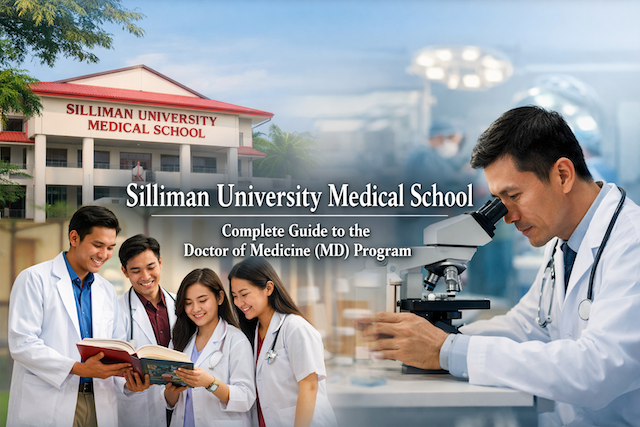
Silliman University Medical School: Complete Guide to the Doctor of Medicine (MD) Program
Contents
- Silliman University Medical School: Complete Guide to the Doctor of Medicine (MD) Program
- Why Consider Studying Medicine in Dumaguete
- Overview of Silliman University Medical School
- MD Program Structure and What to Expect
- Clinical Training Environment and Hospital Exposure
- Learning Approach, Teaching Style, and Assessment
- Research, Community Health, and Professional Development
- Admissions Considerations and Typical Requirements
- Student Life in Dumaguete
- How to Decide if This Medical School Is Right for You
- Tips for Succeeding Once You Enroll
- Final Thoughts
- FAQs (Frequently Asked Questions)
- Is Silliman University Medical School officially recognized in the Philippines?
- What is the general structure of the Doctor of Medicine (MD) program?
- What kind of teaching methods should students expect?
- Where does clinical training usually take place?
- Is studying medicine in Dumaguete a disadvantage compared to major cities?
- What are the typical admission requirements for medical school in the Philippines?
- How competitive is admission, and what helps an application stand out?
- What are common expenses medical students should plan for?
- How can students manage the heavy workload in medical school?
- Does the program support board exam preparation?
- What should applicants ask the school before enrolling?
Silliman University Medical School: Complete Guide to the Doctor of Medicine (MD) Program
Silliman University is one of the Philippines’ best-known private universities, recognized for its long academic tradition and strong reputation in higher education. Located in Dumaguete City, Negros Oriental, the university attracts students from many regions who want a learning environment that feels personal, community-centered, and academically serious. If you are considering a Doctor of Medicine (MD) path and you are looking for a medical school setting outside the country’s biggest metro areas, “Silliman University Medical School” is a search term you may encounter as you explore options in the Visayas.
This guide explains what prospective students usually want to know: what the medical program is generally like, what kind of training environment you can expect, how clinical exposure typically works in a provincial city setting, what the admissions process commonly involves, and how to plan your student life in Dumaguete. Details such as tuition, exact curriculum structure by year level, and official requirements can change, so treat this as a practical orientation and always verify the latest information directly with the university’s official channels before making decisions.
Why Consider Studying Medicine in Dumaguete
Dumaguete is known as a “university town,” with multiple schools and a student-friendly atmosphere. For medical students, this environment can be a major advantage. A city that is not overwhelmingly large can mean shorter commutes, fewer logistical headaches, and an easier day-to-day routine—important when your schedule is packed with lectures, labs, small-group sessions, and clinical duties. Many students find that living in a smaller city supports better study habits because there are fewer distractions and less time lost to traffic.
At the same time, studying in a provincial or mid-sized city comes with its own learning strengths. Clinical exposure may lean heavily toward community-based cases and a broad range of general medicine scenarios. Depending on hospital partners and training sites, you may see a strong mix of internal medicine, pediatrics, surgery, obstetrics-gynecology, and community health cases that reflect the needs of the local population. For students who want grounded clinical training and early patient interaction, this can be a compelling reason to consider a Dumaguete-based medical education.
Overview of Silliman University Medical School
Silliman University’s name carries weight in Philippine higher education, and that institutional culture often translates into structured academic expectations, faculty engagement, and a campus environment where student support services are accessible. A medical school under a university umbrella usually benefits from shared resources such as libraries, research support, student organizations, counseling services, and interdepartment collaboration—features that can help medical students cope with the intensity of training.
When you evaluate any medical school, look beyond the name. The best question is whether the program’s learning system, clinical training network, and student outcomes match your goals. If you thrive in a close-knit community with a strong campus identity and a city lifestyle that supports disciplined study, Silliman University’s medical pathway may be worth serious consideration.
MD Program Structure and What to Expect
In the Philippines, the MD program typically spans several years of academic coursework followed by clinical clerkship and internship training under structured supervision. While each institution has its own implementation, most programs follow a similar progression: foundational medical sciences, organ-system and disease-based learning, integrated clinical skills training, and then increasing immersion in hospital rotations.
During the early years, expect intensive study of subjects such as anatomy, physiology, biochemistry, histology, microbiology, pathology, pharmacology, and related disciplines. Many schools integrate these subjects through organ-system approaches or combine lectures with laboratory sessions and small-group discussions. As you advance, you should expect more clinical correlation—case discussions, problem-based learning sessions, patient interviews, physical examination training, and simulation exercises.
In the clinical years, hospital-based learning becomes the center of your training. Students rotate through major departments such as internal medicine, pediatrics, surgery, obstetrics-gynecology, psychiatry, family and community medicine, and often subspecialty areas depending on training sites. Your performance is usually assessed through written exams, practical exams, case presentations, logbooks, clinical evaluations, and professionalism measures.
Clinical Training Environment and Hospital Exposure
A key part of choosing a medical school is understanding where and how you will get clinical exposure. Clinical training depends heavily on affiliated hospitals and community sites. In a city like Dumaguete, you may encounter a training setting where students gain broad exposure to common and high-impact conditions, including infectious diseases, chronic lifestyle-related diseases, maternal and child health cases, emergency presentations, and surgical admissions typical of regional centers.
What matters most is the balance: enough patient volume to build skills, enough supervision to learn safely, and enough variety to prepare you for national licensure and real practice. When researching, look for information on the program’s partner hospitals, rotation structure, and how clinical teaching is supervised. If you can, ask current students about day-to-day training: how often they perform histories and physical exams, whether they get meaningful bedside teaching, and how feedback is delivered.
Learning Approach, Teaching Style, and Assessment
Medical school success depends on how well the teaching approach fits your learning style. Some programs rely heavily on traditional lectures, while others emphasize small-group learning, case-based discussions, and early clinical exposure. Many schools now blend multiple methods: lectures for core concepts, small groups for reasoning, labs and skills sessions for practice, and clinical exposure for application.
Assessment is also a major factor. Expect frequent quizzes and examinations, especially in foundational science courses. Practical assessments—like anatomy spot exams, OSCE-style clinical skills exams, case write-ups, and oral examinations—are common. In clinical rotations, evaluation often includes attendance, professionalism, clinical performance, patient interaction skills, case presentations, and written or oral exams at the end of each rotation.
If you are planning ahead, it helps to develop a study system early: spaced repetition for memorization-heavy subjects, active recall through practice questions, and structured review cycles. For clinical skills, consistent practice matters more than occasional cramming. Skills improve through repetition: taking patient histories, practicing physical exams, presenting cases, and writing notes.
Research, Community Health, and Professional Development
Many Philippine medical schools include research requirements or encourage research participation, often tied to public health needs. Community medicine and public health are also common components. You may be assigned to community immersion programs, health education activities, screening programs, and local public health projects. These experiences can strengthen your understanding of health systems and population health—important skills whether you plan to practice locally or abroad.
Beyond academics, professional development happens through student organizations, outreach programs, leadership roles, and conferences. Medical school is demanding, but involvement in structured activities can help you build networks and develop communication and leadership skills that are valuable in residency and beyond.
Admissions Considerations and Typical Requirements
Admissions processes vary by institution, but in the Philippines, applicants usually need an undergraduate degree or a completed pre-medical program, academic transcripts, and standardized testing requirements where applicable. Many medical schools consider academic performance, entrance exam results, interviews, recommendation letters, and other factors such as community involvement or leadership experience.
Even if you already meet general academic expectations, medical school admissions can be competitive. It helps to present a clear narrative: why you want to study medicine, what kind of doctor you hope to become, and why the specific school environment fits you. If interviews are part of the process, prepare to discuss your motivation, resilience, ethical judgment, and ability to handle pressure. Medical school is intense, so schools often look for applicants who can sustain long-term effort and manage stress.
Student Life in Dumaguete
Dumaguete is often described as walkable and student-friendly. For medical students, quality of life matters because your schedule will be heavy and consistent. A manageable city can help you keep routines stable: reliable meals, shorter commuting time, and easier access to housing near campus or clinical sites. It’s also helpful if you can build a support system—classmates, mentors, and friends—because medical training becomes much harder when you feel isolated.
Housing options in Dumaguete typically include apartments, boarding houses, and shared accommodations. When choosing where to live, prioritize safety, distance to campus and training sites, reliable internet, and a quiet study environment. If you plan to live with roommates, align expectations early about noise, visitors, and schedules, because your study demands will be strict.
Budgeting is another key point. Your expenses may include rent, utilities, food, transport, uniforms, medical instruments (like a stethoscope), books or digital resources, printing costs, and clinical requirements. If you have a realistic monthly budget and a plan for unexpected costs, you reduce stress significantly during exam-heavy periods.
How to Decide if This Medical School Is Right for You
Choosing a medical school is not only about prestige. It is about fit and outcomes. Ask yourself what kind of learning environment you need. Do you want a large hospital system with a very high patient volume? Or do you prefer a setting where the pace is intense but the city is calmer and the community is tighter? Are you comfortable living away from Manila or Cebu for several years? Do you have a support network or a plan to build one?
Also consider your long-term goals. If you plan to pursue residency in the Philippines, focus on licensure preparation, rotation quality, and mentorship. If you plan to pursue opportunities abroad, consider how the school supports your foundation in clinical reasoning, communication, research exposure, and professional development. Regardless of your path, strong fundamentals and consistent performance matter most.
A practical way to evaluate is to list your “non-negotiables” (quality clinical exposure, safe housing, reasonable living costs, learning style fit) and your “nice-to-haves” (certain facilities, research opportunities, specific mentors). If a school meets your non-negotiables, it stays on your shortlist.
Tips for Succeeding Once You Enroll
Medical school rewards consistency. Build a daily routine early, even before classes become fully intense. Many students struggle not because they lack intelligence, but because they lack systems. Use a planner or digital calendar for deadlines and exams. Review content daily in smaller chunks rather than saving everything for weekends. Use active recall techniques such as flashcards and practice questions. Study in groups when it helps you explain concepts, but protect solo study time for deep work.
For mental and physical health, sleep is not optional. Chronic sleep deprivation reduces memory, concentration, and mood stability—exactly what you need most. Also build small habits: hydration, short walks, and basic exercise. These sound minor, but they become protective factors when pressure peaks. If you feel overwhelmed, reach out early—class advisers, mentors, and trusted friends can help you adjust before stress becomes unmanageable.
Finally, remember that medicine is a professional identity, not only an academic program. Develop empathy, communication skills, and ethical judgment from the beginning. These qualities matter in patient care and will shape your reputation throughout training.
Final Thoughts
Silliman University Medical School, in the Dumaguete setting, can be appealing for students who want a supportive university environment and a city lifestyle that helps them focus on demanding medical training. The best next step is to verify the latest admissions requirements, curriculum details, training hospital information, and tuition/fees directly through official channels and, if possible, speak with current students. With the right fit and strong personal discipline, your medical school years can become a formative and rewarding foundation for a lifelong career in patient care.
FAQs (Frequently Asked Questions)
Is Silliman University Medical School officially recognized in the Philippines?
In the Philippines, medical education programs are typically subject to oversight and regulatory standards through relevant government bodies and professional pathways, including requirements linked to licensure. If you are considering Silliman University Medical School, the safest approach is to confirm the program’s current recognition and standing directly through the school’s official website or admissions office. Recognition status, affiliations, and program details can change over time due to institutional updates or regulatory processes, so always verify the most up-to-date information before applying.
What is the general structure of the Doctor of Medicine (MD) program?
Most MD programs in the Philippines follow a progression from foundational medical sciences to clinical training. Early phases commonly include core subjects such as anatomy, physiology, biochemistry, microbiology, pathology, and pharmacology, paired with introductory clinical skills like patient interviewing and physical examination. Later phases typically focus on clinical rotations in major departments such as internal medicine, pediatrics, surgery, obstetrics-gynecology, psychiatry, and community medicine. The exact sequence and teaching approach can vary, so applicants should request the latest curriculum outline from the school for accurate planning.
What kind of teaching methods should students expect?
Teaching methods in medical school often combine lectures, laboratory work, small-group discussions, case-based learning, and skills sessions. Some institutions emphasize structured lectures, while others integrate problem-based learning, team-based learning, or frequent case conferences. Clinical years usually involve ward duties, supervised patient encounters, and case presentations. To understand the day-to-day experience, ask whether the program uses regular quizzes, practical exams, OSCE-style skills testing, or portfolio/logbook requirements, and how feedback is provided during rotations.
Where does clinical training usually take place?
Clinical training depends on affiliated hospitals, clinics, and community health sites connected to the medical school. In a setting like Dumaguete, clinical exposure may include both hospital-based learning and community-oriented experiences. Students often gain broad exposure to common medical conditions and patient care workflows that are essential for general practice and residency readiness. For a clear picture, ask the school which hospitals and training sites are used, how rotations are scheduled, what supervision looks like, and whether students have opportunities to see a variety of cases.
Is studying medicine in Dumaguete a disadvantage compared to major cities?
Not necessarily. A smaller city can offer advantages such as shorter commutes, a more focused study environment, and a tighter academic community. The key factor is the quality and breadth of clinical exposure and the strength of teaching supervision, not only the city size. Some students thrive in university towns because daily life is simpler and more affordable, which can reduce stress. If you are concerned, compare rotation structure, patient volume, and support services rather than assuming that a larger city automatically provides better training.
What are the typical admission requirements for medical school in the Philippines?
Requirements differ by institution, but applicants commonly submit undergraduate transcripts, proof of degree completion, and additional documents such as recommendation letters, a personal statement, and identification records. Many schools also require an entrance exam and an interview. Because requirements can change, you should confirm the current list directly with the admissions office. If you are applying from outside the region or internationally, ask about document authentication, deadlines, and whether there are additional steps for foreign applicants.
How competitive is admission, and what helps an application stand out?
Medical school admission can be competitive. Strong academic performance helps, but schools also value maturity, communication skills, professionalism, and motivation. A well-written personal statement that explains your reasons for pursuing medicine, your long-term goals, and why the school is a good fit can strengthen your application. Relevant volunteer work, leadership roles, research exposure, or community health involvement may also add credibility. For interviews, be prepared to discuss ethical scenarios, stress management, and how you handle long-term workload pressure.
What are common expenses medical students should plan for?
Beyond tuition, medical students often budget for housing, utilities, food, transportation, uniforms, school supplies, printing, and learning resources. You may also need medical equipment such as a stethoscope, diagnostic tools, and clinical attire. Some programs have additional fees tied to laboratories, clinical rotations, and administrative requirements. Because exact costs vary, request a breakdown of expected fees and prepare a monthly living budget based on local rental rates and daily expenses in Dumaguete.
How can students manage the heavy workload in medical school?
Most students succeed by building consistent routines rather than relying on last-minute studying. Daily review, active recall methods (such as practice questions and flashcards), and spaced repetition are widely effective for memorization-heavy topics. For clinical skills, repetition and feedback matter most: practice patient interviews, physical exams, and case presentations regularly. Protect sleep as much as possible, because exhaustion quickly reduces learning efficiency. If you struggle, seek help early through mentors, academic advisers, or peer support instead of waiting until exams are near.
Does the program support board exam preparation?
Many medical schools integrate preparation into their curriculum through comprehensive exams, mock tests, review sessions, and structured clinical evaluations. The level of formal support differs by school, so ask whether the program provides dedicated review periods, standardized practice exams, or faculty-led review programs. Regardless of institutional support, students typically use external review resources and build long-term study schedules to prepare for the Physician Licensure Examination. Consistency across the full program is usually the best predictor of strong exam performance.
What should applicants ask the school before enrolling?
Before committing, ask about the latest curriculum, teaching style, student-to-faculty ratio, affiliated clinical sites, rotation schedules, evaluation methods, attendance rules, and academic support services. You may also want to ask about student counseling, wellness programs, research requirements, and community health activities. If possible, speak with current students about workload, faculty accessibility, exam difficulty, and the realities of clerkship. Clear expectations early can prevent mismatches and help you choose a program where you can thrive.
Complete List of Medical Schools in the Philippines (All 78 MD Programs)
Best Medical Schools in the Philippines (Local & International Rankings)
Recommend
2026年1月23日
Sultan Kudarat State University College of Medicine: Complete Guide for Aspiring MD Students
2026年1月23日
University of Southern Mindanao College of Medicine: Complete Guide for Aspiring MD Students
2026年1月23日
Mindanao State University – General Santos College of Medicine: Complete Guide for Future MD Students

How to Register for eTravel Philippines (2025 Guide)
Step-by-step guide to completing your eTravel registration before arriving in the Philippines, with images and tips.

Night Market in Cebu – Things You Don’t Know About Cebu Life
Discover the hidden charm of Cebu’s night markets, from street food stalls to local life tips you won’t find in tourist guides.

How to Use ChatGPT for IELTS Preparation: A Complete Guide
Learn how to prepare for IELTS using ChatGPT — including strategies for Writing, Reading, Listening, Speaking, and grammar support.

How to Build a Website Without Coding Using ChatGPT
Discover how to build your own website using AI—no coding skills needed. From structure planning to SEO and design, let ChatGPT guide you.