2026年1月23日
3D ACADEMY offers affordable English study programs in Cebu, Philippines – perfect for beginners, professionals, and exam takers.

3D UNIVERSAL ENGLISH INSTITUTE INC
info.3d-universal.com
8:00-17:00(Mon-Fri)
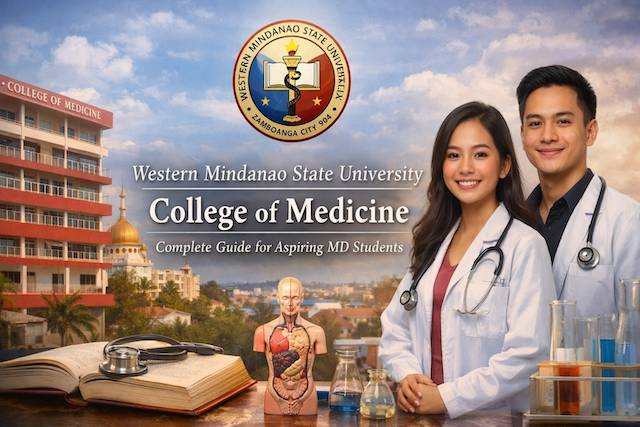
Western Mindanao State University College of Medicine: Complete Guide for Aspiring MD Students
Contents
- Western Mindanao State University College of Medicine: Complete Guide for Aspiring MD Students
- Quick Overview: What WMSU College of Medicine Offers
- Why Consider WMSU College of Medicine?
- MD Program Structure: What Your Years May Look Like
- Teaching Style and Learning Expectations
- Admissions: Typical Requirements and What to Prepare
- Tuition, Fees, and Budgeting
- Campus Life and Student Support
- Clinical Training and Community Exposure
- Life in Zamboanga City: Practical Considerations
- How to Apply: A Step-by-Step Planning Checklist
- Who Is WMSU College of Medicine Best For?
- Final Thoughts: How to Decide
- FAQs (Frequently Asked Questions)
- Is Western Mindanao State University (WMSU) College of Medicine a good choice for aspiring doctors?
- What degree does WMSU College of Medicine offer?
- What are the usual admission requirements for an MD program like WMSU’s?
- What NMAT score do I need to get into WMSU College of Medicine?
- How long is medical school at WMSU, and what is the typical structure?
- Does WMSU College of Medicine emphasize community medicine and public health?
- Where do students complete clinical training and hospital rotations?
- How much are tuition and fees at WMSU College of Medicine?
- Are there scholarships or financial assistance options for medical students?
- Can non-local applicants or international students apply to WMSU College of Medicine?
- What is student life like for medical students in Zamboanga City?
- How can I increase my chances of being accepted?
Western Mindanao State University College of Medicine: Complete Guide for Aspiring MD Students
Western Mindanao State University (WMSU) is a public state university based in Zamboanga City, and its College of Medicine was developed to help address the region’s need for accessible, high-quality medical education and socially responsive physicians. If you are planning to pursue a Doctor of Medicine (MD) degree in Western Mindanao—or you want a public-university option with a strong community-health mission—WMSU College of Medicine is worth serious consideration.
This guide explains what the school is known for, what the MD journey typically looks like, what you should prepare for admission, and how to evaluate whether WMSU is a good fit for your goals. While policies and fees can change year to year, the sections below will help you build a realistic plan and ask the right questions when you contact the school.
Quick Overview: What WMSU College of Medicine Offers
WMSU College of Medicine is part of a state university system in Zamboanga City. The MD program is designed to develop physicians who are competent, ethical, and socially responsive—especially in communities that experience gaps in access to healthcare. Because it is housed in a public university, many students consider it for its mission-driven approach and potentially more accessible costs compared with many private medical schools.
Students who thrive here are usually those who value community engagement, can handle a structured academic schedule, and are motivated by public service and regional health priorities. Expect a curriculum that emphasizes foundational medical sciences, clinical reasoning, professional behavior, and exposure to real community health needs.
Why Consider WMSU College of Medicine?
1) A mission aligned with public health needs. Medical schools differ not only in facilities or teaching style, but also in the type of doctor they aim to produce. WMSU’s orientation highlights socially responsive practice, ethical standards, and participation in broader health agendas—important if you see yourself working in underserved areas or public health settings.
2) Zamboanga City as a training environment. Training in a diverse urban setting can shape your cultural competence and communication skills—two areas that matter deeply in clinical work. A city-based campus also gives access to varied patient cases and public health concerns, which can strengthen clinical exposure during clerkship and internship phases (depending on affiliations and rotations available at the time you enroll).
3) A state-university pathway to medicine. Many students prefer state universities because they aim to widen access. While you should confirm the latest fee schedule and policies, a public university setting is often perceived as more cost-sensitive than fully private institutions, especially for qualified local applicants.
MD Program Structure: What Your Years May Look Like
Medical education in the Philippines commonly follows a structured progression. Exact course titles and sequencing differ by school, but most MD programs move through three major phases: pre-clinical foundation, clinical exposure, and then full clinical rotations.
Pre-clinical years (often Years 1–2): These years typically focus on foundational sciences such as anatomy, physiology, biochemistry, pathology, pharmacology, microbiology, and introductory clinical skills. The pace can be intense. You will spend long hours in lectures, laboratories, small-group discussions, and skills practice sessions. Study habits and time management matter as much as raw academic ability.
Clinical years (often Years 3–4): Students transition toward bedside learning and clinical decision-making. You may have more hospital or community exposure, case-based discussions, and supervised patient interactions. This is where you start connecting theory to practice: taking histories, performing basic physical exams, interpreting lab results, and presenting cases.
Clerkship and clinical rotations: At most medical schools, the later stage includes rotations in major departments such as Internal Medicine, Surgery, Pediatrics, Obstetrics and Gynecology, Psychiatry, Family and Community Medicine, and others. The goal is to practice in real healthcare environments under supervision, build endurance, improve communication, and learn professional teamwork.
Important note: The specific timing and naming of phases can vary by institution and by curriculum updates. When you inquire with WMSU, ask for the latest curriculum outline and rotation sites so you can see the actual structure you will follow.
Teaching Style and Learning Expectations
Modern medical training is not only about memorizing facts. Schools increasingly emphasize integration: using basic science knowledge to explain clinical symptoms and make decisions. You should be ready for:
- Heavy reading load: Textbooks, lecture handouts, clinical guidelines, and journal-style materials.
- Frequent assessments: Quizzes, shifting exams, practical labs, oral presentations, case write-ups, and skills check-offs.
- Small-group learning: Case-based sessions require preparation and active participation.
- Professionalism standards: Attendance, behavior in clinical settings, and ethical decision-making are typically evaluated.
To succeed, build a weekly system: pre-read key topics, attend classes consistently, review daily, and do practice questions early. Many students struggle not because they lack intelligence, but because they underestimate the volume and the need for repetition.
Admissions: Typical Requirements and What to Prepare
Admissions criteria can change, and each medical school has its own rules. However, many Philippine medical schools share common requirements. You should expect to prepare:
- NMAT score: Most medical schools require the National Medical Admission Test (NMAT). Aim to take it early enough to retake if needed.
- Undergraduate credentials: Transcript of records, proof of graduation (or graduating status), and other academic documents.
- Personal documents: Birth certificate, IDs, and possibly certificates of good moral character.
- Medical/physical exam: Universities often require health clearance before enrollment.
- Interview (if applicable): Some schools evaluate motivation, communication, and readiness for medical training.
Practical tips for your application:
- Build a strong narrative: If the program values social responsiveness, show genuine community involvement or a clear intention to serve. Avoid generic “I want to help people” statements—be specific about what shaped your motivation.
- Prepare for the interview: Expect questions about stress management, ethics, study habits, and your plan for clinical practice.
- Organize documents early: Request transcripts and certificates ahead of deadlines to avoid last-minute problems.
Tuition, Fees, and Budgeting
Costs vary by school year and by policy updates. WMSU publicly posts fee information for the university, and there may be specific assessment items for the College of Medicine such as per-unit tuition and additional miscellaneous fees. Rather than relying on secondhand figures, use the official fee schedule for the latest academic year you plan to enroll.
When budgeting, include:
- Tuition and miscellaneous fees: Often billed per semester and may include laboratory, library, ID, registration, IT, and facilities fees.
- Books and learning materials: Some costs can be reduced using e-books or shared resources, but plan for required references.
- Equipment: Stethoscope, BP apparatus (if required), basic diagnostic tools, white coat, scrubs, and clinical supplies.
- Living expenses: Housing, food, transportation, and daily needs in Zamboanga City.
Smart budgeting approach: Estimate the “full-year cost” (not just one semester). Medical school costs often rise during clinical years due to hospital rotations, transportation, uniforms, and additional requirements.
Campus Life and Student Support
Medical training can be isolating if you try to do everything alone. A supportive environment matters. While student services differ by campus and may evolve, you can typically look for support in these areas:
- Academic advising: Help with course planning and performance concerns.
- Mental health and wellness services: Counseling support is important in a high-pressure environment.
- Student organizations: Academic interest groups, community outreach clubs, and leadership opportunities can enrich your training and your CV.
- Research opportunities: Programs often encourage research aligned with local health priorities.
If you visit the campus or attend an orientation, ask how students manage workload, what remediation support exists, and how the school handles clinical placements.
Clinical Training and Community Exposure
Clinical training is where you learn the real work of medicine: communicating with patients, documenting accurately, thinking under time pressure, and collaborating with healthcare teams. For schools with a community-oriented mission, clinical training may also include exposure to public health initiatives and community medicine activities.
When evaluating WMSU College of Medicine, ask about:
- Affiliated hospitals and rotation sites: Where do students train, and what is the patient volume like?
- Supervision and mentoring: How are students guided during rotations?
- Skills development: What simulation or skills lab resources are available before hospital exposure?
- Community programs: Are there structured outreach activities, rural exposure, or public health projects?
Strong clinical training is less about the “brand name” and more about consistent patient exposure, good supervision, and a culture that encourages learning rather than fear.
Life in Zamboanga City: Practical Considerations
Medical students need a lifestyle that supports routine. Zamboanga City offers an urban environment with access to transportation, food options, and essential services. Your daily experience will depend on where you live, your commute to campus and training sites, and your personal preferences.
Housing: Many students choose accommodations that minimize commute time. In medical school, saving one hour a day can translate into better sleep and study time. Look for a place with reliable utilities and a quiet environment for rest.
Transportation: Plan your route in advance. During clinical years, you may need earlier travel times depending on duty schedules.
Safety and routines: Like any city, it is wise to practice situational awareness, especially with early-morning or late-night schedules. Students often rely on trusted routes, study groups, and consistent routines.
How to Apply: A Step-by-Step Planning Checklist
Even if you do not yet have the official deadline calendar, you can start preparing using a timeline-based approach:
- 6–12 months before intake: Plan your NMAT schedule, confirm eligibility, and map your document requirements.
- 3–6 months before intake: Request transcripts, secure certificates, prepare personal statements, and gather recommendation letters (if required).
- Application period: Submit forms, pay required fees, and track confirmation emails/receipts.
- Interview preparation: Practice explaining your motivation, strengths, weaknesses, and long-term career plan.
- Pre-enrollment: Complete medical/physical exams, finalize housing, and prepare a budget plan.
If you are applying to multiple schools, build a spreadsheet of requirements and deadlines. Missing one certificate can delay your entire plan.
Who Is WMSU College of Medicine Best For?
WMSU College of Medicine may be a good fit if you:
- Want a mission-driven program aligned with community health and public service.
- Prefer studying in Zamboanga City and potentially serving in Western Mindanao.
- Can commit to a rigorous schedule and value structured training.
- Are prepared to adapt, collaborate, and communicate across diverse communities.
It may be less ideal if you strongly prefer a purely research-intensive environment, want a highly specialized training track from the start, or need a campus setting with very specific facilities that you should verify in person. Many of these concerns can be clarified by requesting a campus tour, curriculum guide, and details on rotation sites.
Final Thoughts: How to Decide
Choosing a medical school is not only about rankings or reputation. It is about fit: mission, training style, support systems, clinical exposure, and your long-term goals. WMSU College of Medicine stands out as a public university option in Zamboanga City with an emphasis on producing competent, ethical, and socially responsive physicians—an important direction for healthcare in regions where access and equity remain major priorities.
Your next best step is to confirm the latest admissions policies, required NMAT percentile/range (if specified), deadlines, and rotation affiliations directly with the College of Medicine or the university admissions office. Once you have those details, you can finalize your timeline, strengthen your application materials, and enter the program with clear expectations.
FAQs (Frequently Asked Questions)
Is Western Mindanao State University (WMSU) College of Medicine a good choice for aspiring doctors?
WMSU College of Medicine can be a strong option if you want a mission-driven MD program in a public university setting and you are comfortable training in Zamboanga City. Many students consider it for its focus on producing competent, ethical, and socially responsive physicians, which is especially relevant for communities that need more doctors and stronger public health capacity. Like any medical school, it is “good” when it matches your goals, learning style, budget, and willingness to handle a demanding schedule. The best way to confirm fit is to review the latest curriculum outline, clinical rotation sites, student support services, and admissions policies directly from the college.
What degree does WMSU College of Medicine offer?
The primary medical program offered by a college of medicine in the Philippines is typically the Doctor of Medicine (MD) degree. The MD is the standard professional degree required to proceed to post-graduate internship (if structured separately), take the physician licensure exam, and then pursue residency training. To avoid confusion, you should confirm the exact program name and track options (if any) for the year you plan to apply, since some institutions may update curriculum structures or add bridging and enrichment activities.
What are the usual admission requirements for an MD program like WMSU’s?
Most MD programs in the Philippines require an NMAT score, a recognized bachelor’s degree (or proof of graduation), an official transcript of records, and standard personal documents such as certificates and identification records. Many schools also require a certificate of good moral character and may ask applicants to complete interviews or screening steps. Because requirements can change, you should check WMSU’s current admissions announcements and make a checklist of all documents, deadlines, and submission formats. If you are applying from outside the region, plan extra time for document requests and shipping.
What NMAT score do I need to get into WMSU College of Medicine?
NMAT expectations vary by institution and may change per application cycle depending on applicant volume and policy updates. Some schools publish a minimum percentile rank, while others use NMAT scores as one component in a broader evaluation that may include grades, interviews, and other criteria. For accurate planning, confirm the current NMAT requirement (minimum percentile or target range) directly from WMSU’s official admissions guidance. If you are still preparing, aim for the strongest NMAT score you can reasonably achieve, because higher scores generally widen your options and strengthen your application.
How long is medical school at WMSU, and what is the typical structure?
In the Philippines, the MD program commonly spans several years and is usually divided into pre-clinical coursework (often focused on foundational sciences and basic clinical skills) and clinical training (with hospital exposure, case discussions, and later clinical rotations). Exact year-level structures can differ by school and curriculum updates. Ask WMSU for the most recent curriculum map so you can understand how subjects are sequenced, when clinical exposure begins, and what the requirements are for promotion to the next level.
Does WMSU College of Medicine emphasize community medicine and public health?
Many state university medical programs highlight social accountability and community responsiveness, which often translates into community-oriented learning activities, public health exposure, and training that prepares graduates to serve diverse populations. If community medicine is important to you, ask about outreach programs, community rotations, partnerships with local health units, and opportunities to work on public health projects. Also ask how these experiences are assessed—some schools treat community work as a core requirement, while others integrate it as part of specific subjects or electives.
Where do students complete clinical training and hospital rotations?
Clinical training is usually conducted through affiliated hospitals and approved rotation sites. The quality of clinical exposure depends on factors such as patient volume, supervision, case variety, and how rotations are scheduled. Because affiliations can be updated over time, request the latest list of training hospitals and rotation areas, and ask whether students rotate across multiple sites. If possible, speak with current students about their day-to-day experience, duty schedules, and the level of hands-on learning they receive under supervision.
How much are tuition and fees at WMSU College of Medicine?
Tuition and fees can vary by academic year and by policy changes. Even within a university, professional programs may have different assessment items such as laboratory fees, miscellaneous fees, and program-specific charges. For the most accurate numbers, refer to WMSU’s official fee schedule for the current or upcoming school year and confirm whether the College of Medicine has additional fees beyond general university assessments. When budgeting, also include books, supplies (such as a stethoscope and clinical uniforms), transportation, and living expenses in Zamboanga City.
Are there scholarships or financial assistance options for medical students?
Scholarship availability depends on government programs, university-based assistance, private foundations, and eligibility criteria that may change. Some students explore academic merit scholarships, need-based support, or service-linked programs that require a return-of-service commitment after graduation. If you want a realistic plan, ask WMSU about scholarships and financial aid channels, required documents, deadlines, and whether awards are competitive or limited. If a scholarship requires service in a particular area, confirm the length and conditions of the obligation before accepting.
Can non-local applicants or international students apply to WMSU College of Medicine?
Admission pathways for non-local applicants and international students depend on institutional policy, document equivalency requirements, and immigration rules. If you are an international applicant, you may need additional steps such as credential evaluation, proof of English proficiency (if required), and visa-related documentation. Contact WMSU directly to confirm whether international applicants are accepted for the MD program, what additional documents are required, and how timelines differ from local applicants. Start early, because international document processing can take longer than expected.
What is student life like for medical students in Zamboanga City?
Medical student life is usually structured around classes, exams, and clinical duties, so many students prioritize housing that reduces commute time and supports consistent study routines. Zamboanga City offers access to essential services, food options, and transportation, but your experience will depend on where you live and your daily schedule. Consider practical factors such as safety, reliable utilities, quiet study space, and proximity to campus and rotation sites. Many students find that stable routines and supportive peer groups are just as important as location.
How can I increase my chances of being accepted?
Start with a strong NMAT plan and prepare your documents early. Maintain solid academic performance in your pre-med program, and craft a clear motivation statement that explains why you want to study medicine and how WMSU aligns with your goals. If interviews are part of the process, practice answering questions about your study habits, stress management, ethical decision-making, and long-term career direction. If the program values community health, genuine community involvement or health-related volunteer work—documented properly—can strengthen your narrative. Finally, follow application instructions carefully, because incomplete submissions can delay or weaken your application.
Complete List of Medical Schools in the Philippines (All 78 MD Programs)
Best Medical Schools in the Philippines (Local & International Rankings)
Recommend
2026年1月23日
Sultan Kudarat State University College of Medicine: Complete Guide for Aspiring MD Students
2026年1月23日
University of Southern Mindanao College of Medicine: Complete Guide for Aspiring MD Students
2026年1月23日
Mindanao State University – General Santos College of Medicine: Complete Guide for Future MD Students

How to Register for eTravel Philippines (2025 Guide)
Step-by-step guide to completing your eTravel registration before arriving in the Philippines, with images and tips.

Night Market in Cebu – Things You Don’t Know About Cebu Life
Discover the hidden charm of Cebu’s night markets, from street food stalls to local life tips you won’t find in tourist guides.

How to Use ChatGPT for IELTS Preparation: A Complete Guide
Learn how to prepare for IELTS using ChatGPT — including strategies for Writing, Reading, Listening, Speaking, and grammar support.

How to Build a Website Without Coding Using ChatGPT
Discover how to build your own website using AI—no coding skills needed. From structure planning to SEO and design, let ChatGPT guide you.