2026年1月23日
3D ACADEMY offers affordable English study programs in Cebu, Philippines – perfect for beginners, professionals, and exam takers.

3D UNIVERSAL ENGLISH INSTITUTE INC
info.3d-universal.com
8:00-17:00(Mon-Fri)
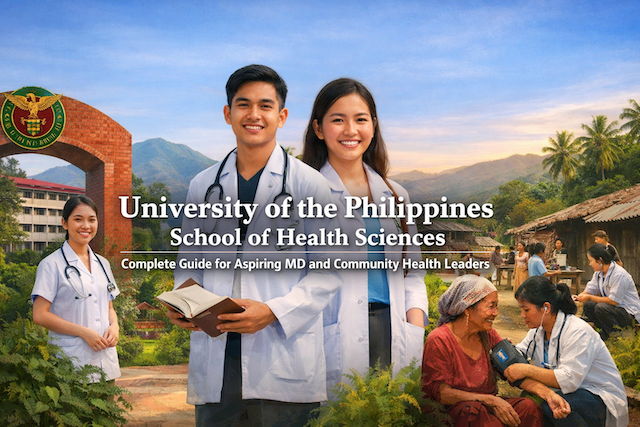
University of the Philippines School of Health Sciences: Complete Guide for Aspiring MD and Community Health Leaders
Contents
- University of the Philippines School of Health Sciences: Complete Guide for Aspiring MD and Community Health Leaders
- What Is the University of the Philippines School of Health Sciences?
- What Makes UPSHS Different From Traditional Medical Schools?
- Who Should Consider Applying to UPSHS?
- Programs and Training Pathways
- Learning Style and Academic Environment
- Community Immersion and Service Commitment
- Admissions Overview: What Applicants Should Prepare
- How to Strengthen Your Application
- Career Outcomes: Where Do UPSHS Graduates Usually Work?
- Practical Considerations: Lifestyle and Expectations
- Final Thoughts: Is UPSHS Right for You?
- FAQs (Frequently Asked Questions)
- Is the University of the Philippines School of Health Sciences a medical school?
- What is the main focus of UPSHS compared with traditional MD programs?
- Does UPSHS require community immersion or fieldwork?
- Is UPSHS a good choice if I want to become a specialist in the future?
- What qualities does UPSHS look for in applicants?
- Are there return-of-service expectations after graduation?
- What kind of learning environment should I expect at UPSHS?
- How can I prepare before applying to UPSHS?
- Does UPSHS accept international students?
- Where can I find the most accurate and updated admissions information?
University of the Philippines School of Health Sciences: Complete Guide for Aspiring MD and Community Health Leaders
The University of the Philippines School of Health Sciences (UPSHS) is one of the most distinctive health education institutions in the Philippines. Unlike traditional medical schools that mainly train hospital-based physicians, UPSHS is widely recognized for its community-oriented, service-driven approach to producing doctors and health professionals who can serve areas where healthcare access is limited. If you are a student who wants a medical path grounded in public service, primary care, and community-based practice, UPSHS may be one of the most meaningful options you can consider.
This guide explains what makes UPSHS different, who it is best suited for, what you can expect from its training model, and how to prepare as an applicant who wants to become a healthcare professional with strong community impact.
What Is the University of the Philippines School of Health Sciences?
UPSHS is part of the University of the Philippines system and is best known for its ladderized health sciences education model and its emphasis on community-based education. The school’s core philosophy is that quality healthcare should reach underserved populations, especially in geographically isolated and disadvantaged areas. To support that mission, UPSHS trains health workers through curricula that focus heavily on:
- Primary care and preventive medicine
- Community immersion and rural health practice
- Public health and population-based decision-making
- Interprofessional teamwork among different health disciplines
- Service commitments and return-of-service pathways
For many students, UPSHS is not simply a school; it is a commitment to becoming a professional who will contribute directly to national health goals by serving communities that need medical care the most.
What Makes UPSHS Different From Traditional Medical Schools?
Most medical schools in the Philippines and abroad emphasize a pathway that begins with classroom science training, progresses into hospital clerkship, and leads toward specialty-focused careers. UPSHS, however, is notable for being intentionally designed around community health systems. The differences often include:
- Community immersion is not an “extra” activity—it is central to training.
- Primary care focus—the program is strongly aligned with family medicine, general practice, and preventive care.
- Service-oriented admissions and training—students are often selected and trained based on readiness to serve in the public health context.
- Ladderized progression—UPSHS is historically associated with health programs designed to build competencies step-by-step while maintaining community relevance.
If you are choosing between a highly urban, tertiary-hospital-based training environment and a community-focused program, UPSHS leans strongly toward the latter.
Who Should Consider Applying to UPSHS?
UPSHS is best suited for students who genuinely want to build a career in community medicine and public service. While many graduates may still pursue specialization, the training philosophy is rooted in addressing real-world health needs at the population level.
You may be a strong fit for UPSHS if you are:
- Committed to serving in public health, rural health units, or underserved communities
- Interested in primary care and preventive medicine
- Motivated by fieldwork, community engagement, and immersion
- Comfortable with training that emphasizes adaptability and service responsibilities
- Open to interdisciplinary learning with other health professionals
On the other hand, if your primary goal is to enter a highly specialized track as early as possible, and you prefer a purely hospital-based academic environment, you should carefully compare UPSHS to more conventional medical schools before deciding.
Programs and Training Pathways
UPSHS is widely associated with training models that develop health professionals who can function effectively in real community settings. Depending on the current academic structure and offerings, the school may provide programs connected to health sciences and community medicine, which can include pathways aligned with medical practice and primary care leadership.
While applicants often search for “UP School of Health Sciences” in relation to becoming a doctor, it’s important to understand that UPSHS is known for health workforce development—training not only doctors, but also other health practitioners who form the backbone of local health systems.
If you are specifically targeting the doctor route, you should study the latest official program descriptions and admissions announcements to confirm the current track and requirements, and understand where it fits relative to other UP health programs.
Learning Style and Academic Environment
Students who thrive at UPSHS tend to do well with learning that is applied, contextual, and service-based. Instead of focusing only on memorization, students are expected to connect what they learn to practical health issues faced by communities. You can expect training elements such as:
- Case-based and problem-based learning tied to real community health problems
- Field exposure where students learn from local health workers and community members
- Public health frameworks including epidemiology, health systems, and prevention strategies
- Communication and cultural competence to work effectively with diverse communities
- Team-based practice reflecting how healthcare is delivered outside large hospitals
This learning environment is especially relevant for students who want their training to reflect the realities of Philippine healthcare settings, particularly outside major cities.
Community Immersion and Service Commitment
One of the defining features associated with UPSHS is its strong emphasis on community immersion. This typically means students are placed in communities where they learn to observe, assess, and participate in healthcare delivery. In such settings, students learn how to:
- Assess community health needs using practical tools
- Work with local health staff (nurses, midwives, barangay health workers, and physicians)
- Design interventions that are appropriate for local resources
- Communicate health education in a way communities can understand and use
- Understand how poverty, geography, and access barriers affect health outcomes
Because of this model, students often develop strong professional maturity early. They learn to become clinically competent while also building leadership skills that are crucial in public health settings.
Admissions Overview: What Applicants Should Prepare
Admissions processes can vary depending on program and year, but applicants generally should prepare for a competitive and mission-aligned selection process. UPSHS typically looks for students who not only have academic potential, but also show genuine alignment with community health goals.
Common preparation areas include:
- Academic readiness: solid foundation in science and health-related subjects
- Clear motivation: strong personal reason for choosing community-based health training
- Service orientation: experience with volunteering, outreach, or community involvement is often helpful
- Interview readiness: ability to explain your long-term goals and commitment to service
- Documentation: transcripts, recommendation letters, and any required forms
If you are applying as a pre-med or aspiring doctor, do not treat your personal statement as generic. UPSHS programs often value sincerity, clarity of purpose, and demonstrated commitment to health equity.
How to Strengthen Your Application
If UPSHS aligns with your goals, you can improve your application profile by building experiences that reflect the school’s values. Here are practical ways to prepare:
- Volunteer in community health programs (barangay outreach, public health campaigns, medical missions, if available)
- Join organizations focused on health, development work, or social service
- Learn about primary care and basic public health concepts before applying
- Practice writing a clear motivation statement focusing on service and community impact
- Speak with graduates or current students if you can, to understand expectations and realities
Even small experiences can matter if they show consistency. UPSHS is not just looking for high grades; it often values applicants who will persist through challenging fieldwork and remain committed to communities.
Career Outcomes: Where Do UPSHS Graduates Usually Work?
Graduates associated with UPSHS training models often contribute to healthcare where they are needed most. Many pursue roles such as:
- Primary care physicians or general practitioners in local government settings
- Public health officers and program coordinators
- Health system leaders in provincial or regional health structures
- Medical professionals who later specialize but maintain a strong community health foundation
- Advocates and policy contributors in health equity and rural healthcare development
Because community-based practice requires broad competence, UPSHS-aligned training can be a strong foundation even if you later decide to pursue a hospital specialty. You will still carry skills that many purely hospital-based programs do not emphasize as strongly, such as population thinking, prevention planning, and health systems awareness.
Practical Considerations: Lifestyle and Expectations
Before you choose UPSHS, be honest with yourself about the lifestyle and expectations. Community immersion and service-based training can be rewarding, but it can also be demanding. You may need to adapt to:
- Training environments outside major cities
- Limited resources compared to tertiary hospitals
- Fieldwork schedules and community responsibilities
- Greater independence and self-directed learning
- Service commitments after certain stages, depending on the program structure
For many students, these challenges are precisely what makes UPSHS meaningful. You are trained not only to pass exams, but to function well as a healthcare professional in the real world.
Final Thoughts: Is UPSHS Right for You?
The University of the Philippines School of Health Sciences is a powerful choice for students who want their medical or health sciences education to directly contribute to national development and community well-being. Its reputation is built on training health professionals who understand that medicine is not only about hospitals, but also about prevention, access, equity, and building health systems that work for everyone.
If your goal is to become a doctor or health professional who can serve where the need is greatest—and you want training that makes you comfortable in community settings—UPSHS is worth serious consideration. To move forward, focus on aligning your application with the school’s mission, preparing for community-based learning, and building experiences that show your commitment to service-driven healthcare.
Once you decide to apply, make sure you check the latest official program announcements and admissions requirements for the most accurate details. That will help you confirm the best pathway for your goals and ensure you are fully prepared for the application process.
FAQs (Frequently Asked Questions)
Is the University of the Philippines School of Health Sciences a medical school?
The University of the Philippines School of Health Sciences (UPSHS) is often associated with medical education, but it is best understood as a health sciences institution built around community-oriented training. Depending on the specific program track you are looking at, UPSHS may offer pathways that lead to becoming a physician or to becoming a key member of the health workforce. Because the UP System also includes other units focused on medicine, applicants should confirm whether the UPSHS pathway they are applying to is designed for an MD route, a community health practitioner route, or a ladderized health sciences route that may connect to later professional qualifications.
What is the main focus of UPSHS compared with traditional MD programs?
UPSHS is strongly known for its emphasis on primary care, public service, and community-based learning. Traditional MD programs are typically centered on classroom science and hospital-based training, especially in tertiary hospitals. UPSHS places major importance on understanding health needs at the community level, including prevention, health education, and local health system realities. Students are often trained to work effectively in settings where resources are limited and where public health strategies have direct impact on population outcomes.
Does UPSHS require community immersion or fieldwork?
Community immersion is a defining element commonly associated with UPSHS training. In a community-based model, students learn not only through lectures and clinical exposure, but also through engagement with local health units, community partners, and real health challenges faced by underserved populations. Fieldwork may involve community assessments, health promotion activities, basic clinical services in local settings, and collaborative work with local health workers. This immersion is designed to build competence, cultural sensitivity, and practical problem-solving skills.
Is UPSHS a good choice if I want to become a specialist in the future?
It can be, but you should be clear about your priorities. UPSHS training is typically built to strengthen primary care competence and community health leadership. If you plan to specialize later, a community-based foundation can still be valuable because it trains you to think broadly about prevention, patient education, and health systems. However, if your main goal is early specialization exposure in a large tertiary hospital environment, you may prefer a more conventional MD program. Many students who value service and strong fundamentals still pursue specialization later, but the path and experience may feel different from specialty-oriented schools.
What qualities does UPSHS look for in applicants?
UPSHS-aligned programs often value applicants who demonstrate academic readiness and strong motivation to serve communities. Beyond grades, the school’s mission suggests that commitment, resilience, and a genuine interest in public health and primary care can matter a lot. Applicants who can explain why they want community-based training, how they handle challenging environments, and what kind of healthcare impact they want to create may be viewed favorably. Volunteer experiences, community work, and leadership roles can help support your narrative if they are relevant and sincere.
Are there return-of-service expectations after graduation?
Some community-oriented health programs in the Philippines include return-of-service components, especially when training is designed to address healthcare gaps in underserved areas. Whether UPSHS currently requires a formal return-of-service agreement depends on the specific program track, scholarship, or funding support involved. Applicants should read the latest admissions materials carefully and ask the admissions office directly about any service obligations, required deployment locations, and expected duration. Understanding this early helps you plan realistically and align your long-term goals with the program’s mission.
What kind of learning environment should I expect at UPSHS?
You should expect a learning environment that values applied skills and context-driven understanding. Instead of focusing only on exams and hospital routines, community-based programs emphasize real-life health problems: maternal and child health, infectious disease control, nutrition, chronic disease prevention, health education, and access barriers. Students often work in teams and learn alongside other health disciplines, which reflects how healthcare is delivered in many local settings. If you enjoy practical learning and community engagement, this approach may fit you well.
How can I prepare before applying to UPSHS?
Preparation should include both academics and mindset. Academically, strengthen your foundation in biology, chemistry, and basic health concepts. In terms of mindset, learn about primary care and public health priorities in the Philippines. If possible, participate in health-related volunteer work such as community outreach, local health campaigns, or support roles in clinics. You can also practice writing a clear motivation statement that explains why you want community-based training and how you plan to contribute to healthcare access or equity in the future.
Does UPSHS accept international students?
Acceptance of international students depends on the current admissions policies of the UP System and the specific UPSHS program. Some programs may prioritize Filipino applicants due to the school’s public service mission and the structure of government-supported training. If you are an international applicant, it is essential to check the latest official admissions announcements and verify eligibility, document requirements, language expectations, and any restrictions or additional steps. Reaching out early can prevent delays and help you understand whether your intended pathway is open to non-Filipino applicants.
Where can I find the most accurate and updated admissions information?
The most reliable source is the official University of the Philippines and UPSHS channels, including official websites, admissions announcements, and authorized contact points. Because program structures and requirements can change, avoid relying only on social media posts or unofficial summaries. Look for published admissions timelines, required documents, and program descriptions. If key details are unclear, contacting the admissions office is the best way to confirm what track you are applying for, what the prerequisites are, and what commitments are expected after completion.
Complete List of Medical Schools in the Philippines (All 78 MD Programs)
Best Medical Schools in the Philippines (Local & International Rankings)
Recommend
2026年1月23日
Sultan Kudarat State University College of Medicine: Complete Guide for Aspiring MD Students
2026年1月23日
University of Southern Mindanao College of Medicine: Complete Guide for Aspiring MD Students
2026年1月23日
Mindanao State University – General Santos College of Medicine: Complete Guide for Future MD Students

How to Register for eTravel Philippines (2025 Guide)
Step-by-step guide to completing your eTravel registration before arriving in the Philippines, with images and tips.

Night Market in Cebu – Things You Don’t Know About Cebu Life
Discover the hidden charm of Cebu’s night markets, from street food stalls to local life tips you won’t find in tourist guides.

How to Use ChatGPT for IELTS Preparation: A Complete Guide
Learn how to prepare for IELTS using ChatGPT — including strategies for Writing, Reading, Listening, Speaking, and grammar support.

How to Build a Website Without Coding Using ChatGPT
Discover how to build your own website using AI—no coding skills needed. From structure planning to SEO and design, let ChatGPT guide you.