Contents
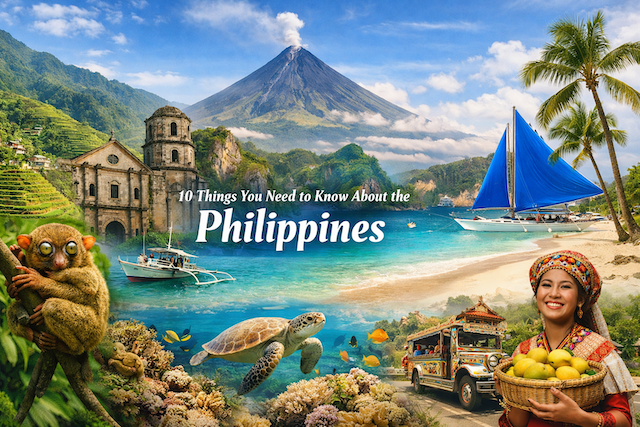
- 10 Things You Need to Know About the Philippines
- 1. The Philippines Is an Archipelago of Over 7,600 Islands
- 2. Filipinos Are Known for Hospitality and Friendliness
- 3. English Is Widely Spoken
- 4. Filipino Culture Values Family and Community
- 5. Religion Has a Strong Influence on Daily Life
- 6. Food Is Flavorful, Affordable, and Rice-Based
- 7. Transportation Can Be Challenging but Adaptable
- 8. The Cost of Living Varies Greatly by Location
- 9. Weather Is Tropical and Can Be Extreme
- 10. Safety Depends on Awareness, Not Fear
- Final Thoughts
- FAQs (Frequently Asked Questions)
- Is the Philippines a good destination for first-time travelers in Southeast Asia?
- How many islands are in the Philippines, and does that affect travel?
- Do people speak English everywhere in the Philippines?
- What languages are spoken in the Philippines besides English?
- What cultural values should foreigners understand to avoid misunderstandings?
- Is religion important in the Philippines, and how does it affect tourists?
- What foods should I try, and is Filipino food spicy?
- How should I handle transportation, especially in big cities?
- Is the Philippines expensive for tourists and long-term residents?
- When is the best time to visit, and how serious is typhoon season?
- Is the Philippines safe for foreigners, and what precautions should I take?
- What should I pack for the Philippines?
10 Things You Need to Know About the Philippines
The Philippines is a fascinating country in Southeast Asia known for its warm people, beautiful islands, and unique blend of cultures. However, beyond its postcard-perfect beaches and tropical climate, there are many important things visitors, students, and long-term residents should understand before coming. From cultural values and daily life to language, food, and safety, knowing these basics will help you adapt faster and enjoy the country more deeply.
This guide covers 10 essential things you need to know about the Philippines, especially useful for travelers, international students, digital nomads, and first-time visitors.
1. The Philippines Is an Archipelago of Over 7,600 Islands
One of the most important things to understand about the Philippines is its geography. The country is made up of more than 7,600 islands, divided into three main regions: Luzon, Visayas, and Mindanao.
This island structure affects everything—from transportation and climate to culture and lifestyle.
Travel between islands often requires flights or ferries, and weather conditions can impact schedules. At the same time, this geography gives the Philippines incredible diversity: bustling cities, quiet rural towns, mountain regions, and world-famous beach destinations all coexist within the same country.
2. Filipinos Are Known for Hospitality and Friendliness
Filipinos are widely recognized for being warm, welcoming, and hospitable. Visitors are often surprised by how friendly strangers can be, especially outside major tourist areas.
Smiling, greeting others, and casual conversation are common. It is normal for locals to ask personal but well-meaning questions such as where you are from or how long you plan to stay. This friendliness is a core part of Filipino culture and helps newcomers feel at home quickly.
Respect, politeness, and kindness go a long way in daily interactions.
3. English Is Widely Spoken
One of the biggest advantages of visiting or living in the Philippines is that English is an official language and is widely spoken across the country.
English is used in:
-
Education and universities
-
Government and legal documents
-
Business and professional settings
-
Media, signage, and online communication
This makes the Philippines especially popular for:
While accents and fluency levels vary, communication in English is generally easy, even in many rural areas.
4. Filipino Culture Values Family and Community
Family plays a central role in Filipino life. It is common for extended families to live together or remain closely connected, even as adults.
Key cultural values include:
Decisions are often made with family in mind rather than individual preference. This can influence housing, careers, and daily routines. Understanding this cultural emphasis helps explain many social behaviors in the Philippines.
5. Religion Has a Strong Influence on Daily Life
The Philippines is predominantly Christian, with the majority of the population being Roman Catholic. Religion influences many aspects of daily life, including holidays, traditions, and social norms.
Churches are common in cities and towns, and religious festivals are celebrated throughout the year. Events such as Christmas, Holy Week, and local fiestas are taken seriously and widely observed.
Even if you are not religious, showing respect for religious customs and practices is important when living or traveling in the Philippines.
6. Food Is Flavorful, Affordable, and Rice-Based
Filipino cuisine is comforting, diverse, and deeply connected to daily life. Rice is a staple and is eaten with most meals, even breakfast.
Popular Filipino dishes include:
Food is generally affordable, especially when eating local dishes or street food. International cuisine is also widely available in major cities.
Filipino food may taste mild to some and salty or sour to others, but it reflects the country’s history and regional diversity.
7. Transportation Can Be Challenging but Adaptable
Transportation in the Philippines can be confusing at first, especially in large cities.
Common transportation options include:
-
Jeepneys (traditional shared vehicles)
-
Tricycles (motorcycle taxis)
-
Buses and vans
-
Taxis and ride-hailing apps
Traffic congestion is common, particularly in Metro Manila and Cebu. Travel times can be unpredictable, so planning ahead is essential.
While transportation may seem chaotic, locals are very adaptable, and visitors usually adjust after some time.
8. The Cost of Living Varies Greatly by Location
The Philippines can be affordable, but cost of living depends heavily on location and lifestyle.
Major cities and business districts tend to be more expensive, especially for housing. In contrast, provincial areas and smaller towns are significantly cheaper.
Key factors affecting cost include:
Overall, many foreigners find that the Philippines offers good value for money, particularly when compared to Western countries.
9. Weather Is Tropical and Can Be Extreme
The Philippines has a tropical climate, meaning it is generally hot and humid year-round.
There are two main seasons:
Typhoons can occur during the rainy season, especially in northern and central regions. While not all areas are affected equally, weather disruptions are something to be aware of.
Light clothing, sun protection, and flexibility with travel plans are essential for coping with the climate.
10. Safety Depends on Awareness, Not Fear
Like any country, the Philippines has safe areas and places that require caution. Most visitors experience no serious problems, especially when practicing basic safety awareness.
General safety tips include:
-
Avoid displaying valuables
-
Use reputable transportation options
-
Be cautious in unfamiliar areas at night
-
Follow local advice
Violent crime against foreigners is relatively uncommon, but petty theft can occur. Staying informed and aware is usually enough to stay safe.
Final Thoughts
The Philippines is a country full of contrasts: modern cities and rural villages, deep traditions and modern lifestyles, relaxed island life and fast-paced urban centers. Understanding these 10 essential things about the Philippines will help you adapt more easily, avoid common misunderstandings, and appreciate the country beyond the surface.
Whether you are visiting for a short trip, studying English, or planning a long-term stay, knowing the cultural, social, and practical realities of the Philippines will make your experience far more rewarding.
FAQs (Frequently Asked Questions)
Is the Philippines a good destination for first-time travelers in Southeast Asia?
Yes. The Philippines is often considered beginner-friendly because English is widely spoken, people are generally welcoming, and there are many tourist services in major destinations. First-time travelers usually find it easy to ask for directions, book transport, and communicate basic needs. That said, the country’s island geography can make planning a bit more complex than in single-landmass countries. If it is your first visit, choose one region (for example, Cebu and nearby islands or Metro Manila plus a short side trip) instead of trying to cover too many places. Build extra time into your itinerary for weather delays and traffic, and you will have a smoother experience.
How many islands are in the Philippines, and does that affect travel?
The Philippines is an archipelago with over 7,600 islands. This absolutely affects travel. Many popular routes require a combination of flights, ferries, and land transport. Even when distances look short on a map, moving between islands can take time because of schedules, port procedures, and occasional cancellations due to sea conditions. The good news is that the island structure also creates variety: you can enjoy city life, mountain scenery, diving spots, and quiet beaches within one country. For easier logistics, focus on one hub area and do day trips or short ferry rides rather than hopping across multiple regions in a tight timeframe.
Do people speak English everywhere in the Philippines?
English is widely used, especially in cities, schools, government offices, malls, and tourist areas. Many Filipinos can understand and speak English at a functional level, which is one reason the Philippines is popular for international students and visitors. However, fluency varies by location and background. In rural areas, older locals may be more comfortable in their regional language. If you speak slowly, use simple phrases, and stay patient, communication is usually fine. Learning a few polite Filipino phrases can also improve your experience and show respect.
What languages are spoken in the Philippines besides English?
Filipino (based largely on Tagalog) is the national language, but the country is linguistically diverse. Regional languages such as Cebuano, Ilocano, Hiligaynon, Waray, Kapampangan, and many others are commonly spoken at home and in local communities. In some places, you may hear a mix of English, Filipino, and regional language in one conversation. This multilingual culture is normal. For visitors, English is typically enough, but recognizing that many locals have a “home language” helps you understand why accents, vocabulary, and everyday expressions can vary.
What cultural values should foreigners understand to avoid misunderstandings?
Respect and harmony are important in Filipino culture. Family and community ties are strong, and many decisions consider the needs of relatives. Politeness matters, so direct confrontation can feel uncomfortable in some contexts. People may speak indirectly to avoid embarrassment or conflict, and “yes” might sometimes mean “I understand” rather than “I agree.” Showing patience, staying calm, and using a friendly tone helps in daily interactions. Respect for elders is also important, and using courteous language in public settings is appreciated.
Is religion important in the Philippines, and how does it affect tourists?
Religion, especially Christianity and Roman Catholic traditions, plays a major role in many communities. You will see churches everywhere, and religious holidays can affect business hours, traffic, and local schedules. Holy Week and Christmas season are particularly significant, and local festivals often have religious roots. Tourists are welcome, but respectful behavior is expected in churches and during processions. Dress modestly when visiting religious sites, avoid loud behavior, and be mindful when taking photos, especially during solemn events.
What foods should I try, and is Filipino food spicy?
Filipino food is generally not spicy in the way some other Southeast Asian cuisines can be, though there are spicy dishes in certain regions. It often features savory, sour, sweet, and garlic-forward flavors. Many meals include rice, and popular dishes include adobo, sinigang, lechon, and kare-kare. Street food is common and can be enjoyable, but choose busy stalls with high turnover and observe cleanliness. If you have dietary restrictions, you can usually find international options in bigger cities, but be clear about ingredients when ordering.
How should I handle transportation, especially in big cities?
Transportation can feel overwhelming at first. Jeepneys, tricycles, buses, and shared vans are common, and routes may not be clearly labeled for newcomers. In major cities, taxis and ride-hailing apps can be easier and more predictable, though traffic is a major factor in travel time. If you are commuting regularly, ask locals for route advice and learn common landmarks rather than relying only on street names. Keep small cash for fares, confirm the price when appropriate, and avoid rushing—planning extra time reduces stress significantly.
Is the Philippines expensive for tourists and long-term residents?
Costs vary widely by location and lifestyle. Major business districts and central city areas can be expensive for rent, dining, and entertainment. Provincial areas and smaller towns are often much cheaper. Tourists can keep costs low by using local transport and eating local food, but beach destinations and high-end resorts may have prices similar to other international tourist hubs. For long-term stays, housing is usually the biggest variable. Setting a realistic budget based on your preferred neighborhood and lifestyle is the best approach.
When is the best time to visit, and how serious is typhoon season?
The dry season, roughly from November to May, is generally the most comfortable for travel, with less rain and more predictable schedules. The rainy season, roughly June to October, can bring heavy rain and typhoons, especially in northern and central areas. Not every place is affected equally, and many trips still go smoothly, but delays and cancellations can happen. If traveling during rainy months, keep your itinerary flexible, avoid overly tight connections, and monitor local weather updates to stay informed.
Is the Philippines safe for foreigners, and what precautions should I take?
Many visitors have safe, enjoyable trips, but basic precautions are important. Petty theft can occur, especially in crowded areas, so keep valuables secure and avoid displaying expensive items. Use reputable transportation, be cautious late at night, and research neighborhoods before going. In unfamiliar areas, ask hotel staff or trusted locals for safety guidance. If you are traveling alone, choose well-reviewed accommodations and stay connected with someone you trust. Safety is usually about awareness and smart habits rather than fear.
What should I pack for the Philippines?
Pack lightweight, breathable clothing suitable for heat and humidity. Bring comfortable walking shoes, sandals, sun protection, insect repellent, and a small umbrella or rain jacket if visiting during rainy months. A reusable water bottle can be useful, and many travelers prefer to drink bottled or filtered water. If you plan to visit churches or formal places, include one modest outfit. Also consider a power bank, basic medicines, and copies of important documents. Being prepared for both sunshine and sudden rain will make your trip easier.