2026年1月23日
3D ACADEMY offers affordable English study programs in Cebu, Philippines – perfect for beginners, professionals, and exam takers.

3D UNIVERSAL ENGLISH INSTITUTE INC
info.3d-universal.com
8:00-17:00(Mon-Fri)
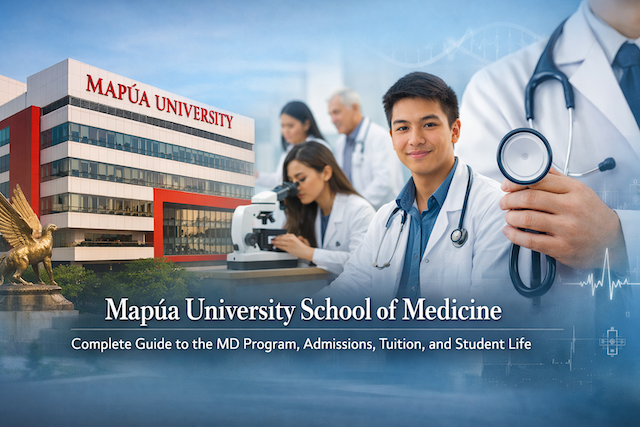
Mapúa University School of Medicine: Complete Guide to the MD Program, Admissions, Tuition, and Student Life
Contents
- Mapúa University School of Medicine: Complete Guide to the MD Program, Admissions, Tuition, and Student Life
- Quick Overview: What to Expect
- Why Consider Mapúa for Medicine
- MD Program Structure and Curriculum
- Teaching Style: Lectures, Case Discussions, and Skills Training
- Clinical Training and Hospital Exposure
- Admissions Requirements and How to Prepare
- Tuition, Fees, and Realistic Budgeting
- Student Life, Support Systems, and Wellness
- Research, Community Medicine, and Professional Development
- How to Decide If Mapúa University School of Medicine Is Right for You
- Tips for Success Once You Enroll
- Conclusion
- FAQs (Frequently Asked Questions)
- Does Mapúa University School of Medicine offer an MD (Doctor of Medicine) program?
- What are the usual requirements to apply for medical school in the Philippines?
- What NMAT score should I aim for to be competitive?
- Is the program suitable for international students?
- How is the curriculum typically structured in an MD program?
- When do students begin hospital exposure and clinical training?
- How much should I budget for tuition and living expenses?
- Is there any “admission guarantee” if I meet the minimum requirements?
- What learning style is best for succeeding in this kind of program?
- What support systems should I look for before enrolling?
- How do graduates prepare for the Physician Licensure Examination (PLE)?
Mapúa University School of Medicine: Complete Guide to the MD Program, Admissions, Tuition, and Student Life
Mapúa University is widely known in the Philippines for engineering, technology, and applied sciences, and in recent years the institution has also expanded its footprint in health and medical education. Mapúa University School of Medicine is positioned for students who want a modern, outcomes-oriented medical education that connects classroom learning with clinical exposure, research literacy, and the practical realities of becoming a doctor in the Philippines. While every medical school ultimately leads toward the same national goal—building competent physicians who can pass the Physician Licensure Examination (PLE) and serve patients safely—each school has its own strengths, culture, learning systems, and admissions style.
This guide explains what you should know before choosing Mapúa University School of Medicine: the academic structure, what the learning experience can feel like, how clinical training typically works in Philippine medical education, what admissions commonly require, and how to compare costs and outcomes. If you are deciding between multiple medical schools, the goal is to help you ask smarter questions and find a campus environment that matches your learning style, finances, and long-term plans.
Quick Overview: What to Expect
Medical education in the Philippines generally follows a Doctor of Medicine (MD) program that combines foundational sciences, organ-system or discipline-based modules, early clinical exposure, and full-time clerkship/internship rotations in affiliated hospitals. Mapúa University School of Medicine aims to offer an education aligned with modern standards: structured assessments, competency-based expectations, and training that prepares students not only for exams but also for patient care, teamwork, and ethical decision-making.
Because medical school is a long and demanding journey, the best “fit” is not only about the name of the school. It is also about the system behind your daily routine: how classes are delivered, how frequently you are assessed, how mentoring works, the support you get when you struggle, and how the school’s clinical network aligns with your interests (internal medicine, surgery, pediatrics, OB-GYN, community medicine, and beyond).
Why Consider Mapúa for Medicine
Students often consider Mapúa because of its reputation for rigorous academics and a culture that values structured learning and measurable outcomes. A strong university environment can matter in medicine because it influences your study discipline, access to learning resources, and the quality of academic support systems. If you thrive with clear schedules, performance metrics, and an organized academic framework, a university like Mapúa can be appealing.
Another factor is the broader institutional ecosystem. Universities with strong backgrounds in technology and applied sciences may emphasize research literacy, data-driven thinking, and practical problem-solving—skills that translate well into evidence-based medicine. Modern healthcare also increasingly intersects with digital systems (electronic medical records, telemedicine, diagnostic tools, analytics), so students who appreciate a technology-forward environment sometimes prefer this type of campus culture.
MD Program Structure and Curriculum
While exact course sequencing can vary, the MD curriculum in the Philippines typically includes two major phases: (1) pre-clinical and introductory clinical years focused on foundational sciences and clinical skills, and (2) clinical clerkship years centered on hospital rotations. In the early stage, you can expect subjects such as anatomy, physiology, biochemistry, pathology, pharmacology, microbiology, and parasitology—often taught with integrated clinical correlations so you understand how theory connects to real cases.
As you progress, your workload tends to become more clinically oriented. Clinical subjects commonly include internal medicine, surgery, pediatrics, obstetrics and gynecology, psychiatry, family and community medicine, preventive medicine, and medical jurisprudence/ethics. Many programs now place strong emphasis on clinical skills labs, patient interviewing, physical examination, diagnostic reasoning, and communication—skills that matter just as much as memorization.
Expect a steady rhythm of quizzes, practical exams, written exams, and performance-based assessments. Medical school rewards consistency. Students who succeed usually do not “cram and survive” long-term; they build daily systems: reviewing lecture notes, practicing recall, doing question banks, forming effective study groups, and protecting sleep and mental health as much as possible.
Teaching Style: Lectures, Case Discussions, and Skills Training
Medical schools today often combine multiple teaching formats. Traditional lectures remain important for covering dense foundations, but many programs also use case discussions, small-group learning, and scenario-based exercises. In case discussions, you learn to organize symptoms into differential diagnoses, interpret labs, and choose management plans logically. This style trains clinical reasoning early and prevents “pure memorization” from becoming your only skill.
Skills training typically includes history taking, vital signs measurement, physical exam techniques, basic procedures, and clinical documentation. Communication training also matters: explaining diagnoses in simple terms, delivering bad news appropriately, obtaining informed consent, and working with healthcare teams. A school that invests in these areas can reduce the “culture shock” when you first step into full hospital duty.
Clinical Training and Hospital Exposure
Clinical training is the heart of medical education. In clerkship, students rotate through departments such as internal medicine, surgery, pediatrics, OB-GYN, emergency medicine, and community settings. During these rotations, you learn how hospitals actually function: admission processes, rounds, charting, diagnostics, referrals, procedures, and interdisciplinary teamwork.
When evaluating Mapúa University School of Medicine, you should ask specific questions about clinical exposure: Which hospitals are used for clerkship? How many beds and patient volume do they handle? Are there opportunities for varied cases? What is the schedule like—day duty, night duty, and how often? Do students get hands-on opportunities under supervision, or are they mostly observing? The details here can strongly shape your confidence as a future doctor.
Another key question is mentoring. Strong clerkship experiences often come from structured supervision: clear learning objectives, residents who teach, consultants who give feedback, and a system that helps students improve rather than simply endure.
Admissions Requirements and How to Prepare
Admissions for Philippine medical schools usually require completion of a bachelor’s degree (or equivalent), the National Medical Admission Test (NMAT), and a set of documents such as transcripts, recommendation letters, and personal statements. Some schools also conduct interviews to assess communication skills, maturity, ethical reasoning, and motivation for medicine.
To prepare effectively, focus on three areas:
- NMAT readiness: Aim for an NMAT score that is competitive for your target schools. Start reviewing early and practice under timed conditions.
- Academic foundations: Strong grades in science-heavy courses can help, but improvement trends also matter. If your early grades were weak, show consistent performance later.
- Personal narrative: Be clear about why you chose medicine and what experiences shaped your decision. Schools often prefer grounded motivations over vague “I want to help people” statements.
Interviews (if required) are usually less about trick questions and more about your mindset: how you handle stress, how you respond to ethical dilemmas, whether you understand the realities of medical training, and whether you can communicate respectfully.
Tuition, Fees, and Realistic Budgeting
Tuition for medical school in the Philippines varies widely. Beyond tuition, you should plan for additional costs such as laboratory fees, uniforms, medical instruments, books or digital resources, transportation, meals, and living expenses. During clinical years, costs can shift: you may spend more on transportation to hospitals, meals during duty, and requirements like medical supplies or documentation needs.
A realistic budget plan should include:
- Tuition and miscellaneous school fees
- Housing and utilities (if living near campus or hospitals)
- Daily living costs (food, transport, laundry)
- Learning tools (tablet/laptop, subscriptions, printing)
- Clinical gear (stethoscope, BP apparatus, scrubs, white coat)
- Emergency fund for unexpected costs
If you are an international student or relocating from another region, consider the cost of settling in: deposit payments for housing, initial supplies, and living adjustments during the first month.
Student Life, Support Systems, and Wellness
Medical school is intense, and student support is not a luxury—it’s a survival tool. A strong program typically provides academic advising, remediation pathways when students fall behind, counseling resources, and clear communication about policies. Even the best students can struggle during transition periods: the first anatomy exams, the first major integrated exams, or the first hospital duties that disrupt sleep schedules.
Student life in medicine often revolves around study groups, exam cycles, and practical sessions, but many students still benefit from maintaining hobbies, exercise, and community. The students who last tend to treat wellness as part of the plan, not something to do only after burnout hits.
Research, Community Medicine, and Professional Development
Modern medical training increasingly expects students to understand research methods and evidence-based practice. That does not mean everyone must become a scientist, but it does mean you should be able to read studies critically, understand statistics at a basic level, and apply guidelines appropriately. Schools may include research projects, thesis requirements, or capstone outputs.
Community medicine and preventive care are also major pillars in Philippine medical education. Many programs include community exposure and public health activities to help students understand health systems, social determinants of health, and real-world barriers patients face. This training is valuable whether you plan to specialize or become a general practitioner.
How to Decide If Mapúa University School of Medicine Is Right for You
Choosing a medical school is like choosing a training environment for the next four to five years of your life. Ask yourself:
- Do I learn best with structured systems and frequent assessments?
- Do I want a school culture that values measurable performance and organized processes?
- Are the clinical training sites aligned with the type of exposure I want?
- Can I sustain the financial plan without constant crisis?
- Do I feel supported by the academic environment and communication style?
When you talk to admissions or current students, go beyond marketing phrases. Ask about workload patterns, exam frequency, remediation support, hospital duty schedules, and the reality of student life. The “best” medical school is the one where you can consistently perform, improve, and stay mentally and physically stable enough to keep going.
Tips for Success Once You Enroll
Medical school rewards strategy more than raw talent. These practical habits can help:
- Build a weekly system: Review daily, consolidate weekly, and do practice questions consistently.
- Study actively: Use recall practice (flashcards, question banks) instead of rereading notes endlessly.
- Master the basics: Anatomy, physiology, pathology, and pharmacology form the backbone of clinical reasoning.
- Protect your energy: Sleep, nutrition, and movement directly impact memory and focus.
- Ask for feedback early: In skills labs and clerkship, improvement comes from correction, not pride.
Most importantly, remember that struggling at times is normal. The key is reacting early: adjust your system, ask mentors, and change tactics before problems become overwhelming.
Conclusion
Mapúa University School of Medicine can be a strong option for students who want a modern learning environment, structured expectations, and a university culture that values discipline and performance. Your job as an applicant is to match that environment to your personal strengths and long-term goals. Ask detailed questions about clinical training sites, assessment methods, and student support, then compare those answers to your learning style and financial reality.
If you choose the right environment and commit to consistent habits, the MD journey becomes manageable—even when it is hard. Medical school is not only about passing exams; it is about becoming the kind of person who can think clearly under pressure, care for patients ethically, and keep learning for the rest of your life.
FAQs (Frequently Asked Questions)
Does Mapúa University School of Medicine offer an MD (Doctor of Medicine) program?
Mapúa University School of Medicine is positioned as a medical education provider that leads to an MD degree pathway in the Philippines. In practice, an MD program is designed to move students from foundational medical sciences into clinical medicine and supervised hospital training. If you are applying, confirm the current program name, the academic calendar, and the year level structure directly with the school’s admissions office so you understand how the program is organized, how long it takes to complete, and what requirements must be met before advancing to clinical rotations.
What are the usual requirements to apply for medical school in the Philippines?
Most Philippine medical schools require (1) completion of a bachelor’s degree or equivalent, (2) a valid NMAT (National Medical Admission Test) score, and (3) standard documents such as transcripts of records, a certificate of graduation, a birth certificate or passport (for international applicants), recommendation letters, and sometimes a personal statement. Some schools also require an interview. Requirements can vary by intake and policy updates, so treat the checklist as a baseline and verify the latest details before you submit your application.
What NMAT score should I aim for to be competitive?
There is no single “perfect” NMAT score that guarantees admission because competitiveness depends on applicant volume, available slots, and the school’s screening standards. As a rule, a higher NMAT score improves your chances and may strengthen scholarship consideration if available. A practical strategy is to target a score comfortably above the minimum requirement and pair it with consistent academic records and a strong interview (if required). If your NMAT score is not as high as you hoped, ask admissions whether re-taking the NMAT is recommended and how the school evaluates repeated attempts.
Is the program suitable for international students?
Many medical schools in the Philippines accept international applicants, but the process often involves additional documentation such as authenticated academic records, proof of English proficiency (in some cases), and immigration-related requirements. International students should also plan carefully for practical factors: housing, transportation, local support systems, and how clinical training schedules will affect day-to-day life. Before enrolling, confirm eligibility rules, document authentication steps, and whether there are specific requirements for foreign nationals during clinical rotations.
How is the curriculum typically structured in an MD program?
In the Philippines, MD education commonly progresses from pre-clinical training (basic sciences and introductory clinical skills) into clinical years that include hospital clerkship rotations. Early years usually cover anatomy, physiology, biochemistry, pathology, microbiology, pharmacology, and related courses, often integrated with clinical correlations. Later phases emphasize internal medicine, surgery, pediatrics, obstetrics and gynecology, psychiatry, community medicine, and electives. Expect frequent assessments, practical exams, and performance-based evaluations as you move toward real patient care responsibilities.
When do students begin hospital exposure and clinical training?
Hospital exposure can start early through skills labs, simulated patient encounters, and supervised clinical observations, then become more intensive during clerkship years. In clerkship, students rotate through major departments and learn clinical reasoning, documentation, and teamwork. The most important thing to verify is the school’s clinical network: which hospitals are used, what the patient volume is like, how supervision works, and how many hands-on opportunities students typically receive. Strong clinical exposure is one of the biggest determinants of confidence before graduation and licensing.
How much should I budget for tuition and living expenses?
Medical school costs go beyond tuition. You should budget for miscellaneous school fees, lab or facility fees, uniforms, medical instruments (such as a stethoscope), learning resources (books or digital subscriptions), and transportation. Living expenses depend on your housing choice and location. Clinical years can add costs related to duty schedules, commuting to hospitals, meals during long shifts, and supplies. A realistic plan includes an emergency buffer because unexpected academic and personal expenses are common during medical training.
Is there any “admission guarantee” if I meet the minimum requirements?
No. Meeting minimum requirements usually makes you eligible to apply, but it does not automatically guarantee admission. Medical schools often screen applicants based on a combination of NMAT score, academic performance, document completeness, and interview results. If a school communicates that many applicants succeed, it still does not equal a formal guarantee. If you want clarity, ask admissions directly how decisions are made, what the typical applicant profile looks like, and whether there are conditional acceptance pathways or bridging requirements.
What learning style is best for succeeding in this kind of program?
Students who do well in MD programs typically combine discipline with flexibility. You need consistent daily study habits, strong reading comprehension, and the ability to shift from memorization to clinical reasoning. Active learning methods—practice questions, spaced repetition, and case-based review—are usually more effective than rereading notes. If the school uses frequent assessments, you should be comfortable receiving feedback, adjusting your strategy quickly, and managing stress. Medical school is less about being “naturally smart” and more about building systems that work every week.
What support systems should I look for before enrolling?
Look for clear academic advising, transparent grading policies, remediation options for students who struggle, and access to counseling or wellness support. Also ask about mentorship: are there structured opportunities to consult faculty, and do students receive actionable feedback during skills training and clinical rotations? Support systems matter because even high-performing students can face burnout, exam setbacks, or health challenges. A school with organized support can help you recover faster and stay on track.
How do graduates prepare for the Physician Licensure Examination (PLE)?
PLE preparation typically begins long before formal review season. Successful students master foundations early, build consistent recall practice, and connect basic science concepts to clinical decision-making. Many graduates use structured review schedules, question banks, and group study during the final phase. When evaluating a medical school, you can ask how the curriculum aligns with board competencies, what internal assessments look like, and whether the school offers guidance or review support. Ultimately, your daily study habits and clinical understanding are what carry you through the exam.
Complete List of Medical Schools in the Philippines (All 78 MD Programs)
Best Medical Schools in the Philippines (Local & International Rankings)
Recommend
2026年1月23日
Sultan Kudarat State University College of Medicine: Complete Guide for Aspiring MD Students
2026年1月23日
University of Southern Mindanao College of Medicine: Complete Guide for Aspiring MD Students
2026年1月23日
Mindanao State University – General Santos College of Medicine: Complete Guide for Future MD Students

How to Register for eTravel Philippines (2025 Guide)
Step-by-step guide to completing your eTravel registration before arriving in the Philippines, with images and tips.

Night Market in Cebu – Things You Don’t Know About Cebu Life
Discover the hidden charm of Cebu’s night markets, from street food stalls to local life tips you won’t find in tourist guides.

How to Use ChatGPT for IELTS Preparation: A Complete Guide
Learn how to prepare for IELTS using ChatGPT — including strategies for Writing, Reading, Listening, Speaking, and grammar support.

How to Build a Website Without Coding Using ChatGPT
Discover how to build your own website using AI—no coding skills needed. From structure planning to SEO and design, let ChatGPT guide you.