2026年1月23日
3D ACADEMY offers affordable English study programs in Cebu, Philippines – perfect for beginners, professionals, and exam takers.

3D UNIVERSAL ENGLISH INSTITUTE INC
info.3d-universal.com
8:00-17:00(Mon-Fri)
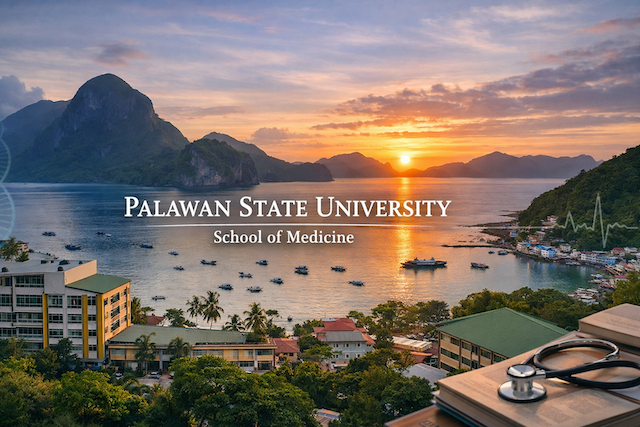
Palawan State University School of Medicine: Complete Guide to the Doctor of Medicine (MD) Program
Contents
- Palawan State University School of Medicine: Complete Guide to the Doctor of Medicine (MD) Program
- Overview
- Where the School of Medicine Is Located
- Program Recognition and Authority to Operate
- Who the MD Program Is For
- What the Curriculum Typically Looks Like
- Learning Approach and Program Goals
- Admission Criteria and Eligibility
- How to Prepare a Strong Application
- Application Steps and Requirements
- Tuition, Fees, and Cost Planning
- Scholarships and Support Opportunities
- Clinical Training and Skills Development
- Campus Environment and Student Life
- Career Path After the MD Program
- Tips for Applicants (Practical Checklist)
- How to Get Updates and Contact the School
- Final Thoughts
- FAQs (Frequently Asked Questions)
- Is Palawan State University School of Medicine a public medical school?
- What degree do students earn from the program?
- Where is the School of Medicine located?
- What are the basic eligibility requirements for applying?
- Does PSU accept transferees from other medical schools?
- What NMAT score is required, and how recent should it be?
- What documents are usually required for the application?
- Is the MD program suitable for students from non-traditional pre-med backgrounds?
- How should I prepare for the interview or screening process?
- How much does it cost to study medicine at PSU?
- Are scholarships available for MD students?
- What is the learning approach in the early years of medical school?
- What happens after graduating with an MD from PSU?
Palawan State University School of Medicine: Complete Guide to the Doctor of Medicine (MD) Program
Overview
Palawan State University (PSU) established its School of Medicine to expand access to medical education in Palawan and help address the continuing need for physicians in both rural and urban communities. For many families in the province, becoming a doctor traditionally meant relocating to Metro Manila, Cebu, or other major centers for four or more years—plus the added cost of living away from home. PSU’s MD program changes that equation by offering a local pathway to medical training while still aiming to meet national standards for physician education.
This guide explains what prospective students typically want to know: where the School of Medicine is located, what the MD program is designed to accomplish, how admissions work, what documents you’ll likely prepare, and how to plan financially and academically for medical school. Because medical education policies and school announcements can evolve year to year, treat this as a practical orientation and always confirm current details through PSU’s official channels.
Where the School of Medicine Is Located
PSU’s School of Medicine is situated on the university’s main campus in Tiniguiban, Puerto Princesa City. Studying within the main campus environment can be a big advantage: students often have easier access to university services, libraries, and administrative offices, and the School of Medicine can coordinate closely with other health and science programs on campus.
For applicants coming from outside Puerto Princesa (for example, from northern or southern municipalities), it’s worth planning early for housing and transportation. Medical school schedules are not like typical undergraduate schedules—expect long days, early starts, and frequent assessments. Living close to campus can reduce daily friction and help you protect study time and sleep.
Program Recognition and Authority to Operate
One of the most important questions for any new medical school is whether it has the appropriate authorization to offer the Doctor of Medicine program. PSU has publicly announced that it received a government permit and authority to operate and offer the Doctor of Medicine program from the Commission on Higher Education (CHED). This type of authorization matters because it signals that the program proposal, governance structure, and baseline requirements have been reviewed under national higher education processes.
If you are comparing options, do not skip this step: verify the program’s status and any current advisories directly from official PSU announcements and recognized government education channels. This is especially important for newly established programs, where policies, timelines, and requirements may be refined as the school grows.
Who the MD Program Is For
PSU’s MD program is generally best suited for applicants who want to train as physicians while staying connected to Palawan—whether that means serving the province long-term, minimizing relocation costs, or building clinical experience in settings relevant to local healthcare needs. It can also be a strong fit for applicants who value community-oriented medicine and want to learn in an environment that is closer to the realities of healthcare delivery outside the largest metropolitan areas.
At the same time, medical school is demanding anywhere. A local program is not “easier”—it is simply more geographically accessible. Applicants should be ready for a fast pace, heavy reading load, frequent exams, practical skills training, and continuous professional development (communication, ethics, teamwork, and responsibility for patient safety).
What the Curriculum Typically Looks Like
PSU’s School of Medicine shares curriculum information through its official School of Medicine site, including references to a curriculum proposal document. While course titles and sequencing can vary across medical schools, Philippine MD programs commonly follow a structured progression:
- Pre-clinical phase: foundational medical sciences (such as anatomy, physiology, biochemistry, microbiology, pathology, pharmacology) integrated with early clinical skills and patient communication.
- Transition to clinical learning:</strong more case-based discussions, diagnostic reasoning, and supervised skills practice as students prepare for hospital-based exposure.
- Clinical phase:</strong rotations (clerkship) in major areas such as internal medicine, surgery, pediatrics, obstetrics-gynecology, psychiatry, family/community medicine, and other specialties depending on training sites and program structure.
If you are an applicant, your goal should be to understand not only “what subjects” are taught, but “how” you will learn. Ask whether the program uses integrated teaching, problem-based learning, simulation, skills labs, community immersion, or structured research training. These teaching methods affect your day-to-day workload and how you develop clinical judgment.
Learning Approach and Program Goals
Newer medical schools often emphasize service-oriented training, particularly when they are created to address regional physician shortages. In practical terms, that can mean stronger exposure to community health realities, public health priorities, primary care, and preventive medicine—along with the hospital-based competencies required of all physicians.
As you review PSU’s program information, look for clarity on outcomes: what competencies graduates are expected to demonstrate, how professionalism is assessed, and how clinical skills are taught and evaluated. In medicine, assessment is not only about written tests—performance-based evaluations, practical exams, and clinical feedback can carry significant weight.
Admission Criteria and Eligibility
PSU’s School of Medicine has published admission criteria that include several key eligibility points. These may be updated, but commonly stated items include citizenship requirements, recent NMAT results, and a completed bachelor’s degree. For example, PSU’s published criteria include that an applicant should be a natural-born Filipino citizen, should have taken the NMAT within the last two years, and should have an NMAT score not lower than the 40th percentile. The criteria also indicate that applicants should not be currently enrolled in another medical school or applying as a transferee, and must have obtained a bachelor’s degree.
Even if you already meet the baseline criteria, admission can still be competitive. Many schools also consider academic records, recommendation letters, interviews, personal statements, and evidence of maturity and resilience—especially for applicants coming from diverse academic backgrounds.
How to Prepare a Strong Application
A strong medical school application is not only “high grades + NMAT.” It is a coherent story about your readiness for medical training and your capacity to grow into the responsibilities of patient care. Practical steps:
- Document readiness:</strong Keep your transcript, NMAT results, identification documents, and certificates organized and easy to retrieve.
- Show academic stamina:</strong Highlight difficult science coursework and any improvement trends (for example, stronger performance in later years).
- Demonstrate motivation:</strong Use your personal statement to explain why medicine, why now, and what experiences shaped your decision.
- Evidence of service:</strong Health outreach, volunteer work, and community activities can support your alignment with regional health needs.
- Professionalism:</strong Prepare for interviews by practicing clear communication, ethical reasoning, and reflective answers rather than scripted lines.
If you are coming from a non-traditional pre-med background, you can still be competitive. The key is demonstrating that you can handle rigorous science learning and that you have a realistic understanding of medical training demands.
Application Steps and Requirements
Medical school application steps generally follow a predictable flow: submit an application form, provide required documents, undergo screening, and complete interviews or additional assessments if required. PSU’s School of Medicine provides guidance through its official pages, including sections such as “How to Apply” and “Requirements.” The exact list of documents can change, so verify the current checklist before you finalize your submission.
Plan ahead for timing. Requesting official transcripts and certificates can take time. Also, don’t underestimate how long it takes to write a thoughtful personal statement and to secure strong recommendation letters. If you are still completing your bachelor’s degree, build a timeline that ensures your documents are ready when the application window opens.
Tuition, Fees, and Cost Planning
One of the most common applicant questions is tuition. Public universities may have different fee structures, possible subsidies, and varying miscellaneous costs depending on policy and cohort. However, for any MD program, you should plan for more than “tuition” alone. Typical cost categories include:
- Enrollment-related fees and laboratory/simulation fees
- Books, digital resources, and printing
- Medical tools and equipment (stethoscope, BP apparatus, basic instruments)
- Uniforms and clinical attire
- Transportation and daily living expenses
- Clinical rotation-related expenses (commuting to training sites, meals, occasional lodging depending on assignments)
A good approach is to build a conservative budget that assumes unexpected costs. Medical school is full of “small expenses” that accumulate quickly. If PSU provides scholarship pathways or financial assistance, review eligibility requirements early and submit applications on time.
Scholarships and Support Opportunities
PSU’s School of Medicine includes scholarship information as part of its applicant resources. Scholarships can dramatically improve access to medical education, but they often come with conditions (such as maintaining a certain academic standing) and may prioritize applicants aligned with regional health needs.
If you are counting on scholarship support, prepare a backup plan. Create a realistic budget for at least the first semester, identify potential family support or savings, and track deadlines carefully. Missing a deadline is one of the most avoidable reasons applicants lose financial aid opportunities.
Clinical Training and Skills Development
Clinical training is where medical students transition from learning concepts to applying them in patient care settings under supervision. The quality of your clinical experience depends on structured teaching, clear competency expectations, and consistent feedback. As PSU’s program grows, students should pay close attention to how clinical skills are introduced early, how simulation is used (if available), and how the school supports students during clerkship-style training phases.
When you speak with the School of Medicine (or attend orientations), ask practical questions: How are clinical skills taught in the early years? How are students evaluated on communication and professionalism? What support systems exist if a student is struggling academically or emotionally? Strong programs normalize seeking help early and provide guidance without stigma.
Campus Environment and Student Life
Medical school can be intense and isolating if you try to do everything alone. Your cohort becomes your support system. In a newer program, students often benefit from closer interaction with faculty and administrators as systems are refined. That can create a sense of shared mission and community.
Still, you should actively manage your wellbeing:
- Build routines:</strong sleep, exercise, meal planning, and weekly review sessions.
- Study efficiently:</strong active recall, spaced repetition, and practice questions are usually more effective than rereading notes.
- Communicate early:</strong if you are falling behind, ask for help before exams accumulate.
- Protect mental health:</strong medicine involves stress, uncertainty, and emotional experiences; having healthy coping strategies matters.
Career Path After the MD Program
An MD program is the beginning of a longer pathway. After graduation, students typically proceed to physician licensure requirements and then residency training (specialization) depending on their goals. Some graduates pursue community-based practice, public health, hospital-based roles, research, or further training.
If your long-term plan is to serve Palawan, start thinking early about what kind of doctor you want to be. Do you see yourself in primary care and community medicine, or do you want a hospital-based specialty? Which communities are underserved? What skills will matter most for those settings? Being intentional helps you choose electives, research topics, volunteer work, and mentors.
Tips for Applicants (Practical Checklist)
- Confirm your NMAT timeline:</strong ensure your result is within the validity window stated by the school.
- Organize documents early:</strong transcript, identification, certificates, and any required forms.
- Strengthen your science base:</strong review core biology and chemistry concepts if you have been away from them.
- Practice interview skills:</strong focus on clarity, honesty, ethical reasoning, and self-awareness.
- Budget realistically:</strong plan for supplies, commuting, and day-to-day living costs.
- Choose your support system:</strong identify family, friends, or mentors who can help you stay steady under pressure.
How to Get Updates and Contact the School
Because admissions windows, document requirements, and program announcements can change, the best practice is to follow PSU’s official announcements and the School of Medicine’s official pages. If you need clarification (for example, regarding document formats, deadlines, or scholarship steps), contact the School of Medicine directly through the contact information provided on their official site.
Before you send an inquiry, write down your questions clearly and include your basic applicant details (degree program, expected graduation date, NMAT schedule, and location). Clear questions tend to receive clearer answers—and faster responses.
Final Thoughts
Palawan State University’s School of Medicine represents an important development for medical education access in Palawan. For applicants who want to pursue medicine without leaving the province, PSU’s MD program can offer a meaningful pathway—especially if your goal is to contribute to local healthcare over the long term.
If you are serious about applying, focus on the fundamentals: meet eligibility requirements, prepare strong documents, build realistic budgets, and develop study habits that will sustain you over multiple years. Medical school is a marathon. The sooner you prepare for the pace and expectations, the better your experience will be once classes begin.
FAQs (Frequently Asked Questions)
Is Palawan State University School of Medicine a public medical school?
Palawan State University (PSU) is a state university, and its School of Medicine operates under the university. In general, being part of a public university can mean a mission focused on widening access to education and serving regional needs. However, tuition, fees, and financial policies can still vary by academic year and by program guidelines, so applicants should confirm the most current cost structure, payment schedule, and any special fees directly with PSU’s official announcements or the School of Medicine office.
What degree do students earn from the program?
Students who complete the program earn the Doctor of Medicine (MD) degree. The MD is the professional degree that prepares graduates for clinical practice and for the next steps in becoming a licensed physician. Completing an MD program is not the end of the journey; graduates typically proceed to licensure requirements and then choose a career path such as residency training, community practice, hospital-based work, or other health-related fields.
Where is the School of Medicine located?
PSU’s School of Medicine is based at the university’s main campus in Tiniguiban, Puerto Princesa City. For students relocating from other parts of Palawan, it is helpful to plan housing early and consider daily commuting time. Medical school schedules can include early classes, long laboratory or skills sessions, and frequent evaluations, so living closer to campus often improves time management and reduces stress.
What are the basic eligibility requirements for applying?
Eligibility requirements can be updated from year to year, but commonly include a completed bachelor’s degree and a valid NMAT (National Medical Admission Test) result within the timeframe required by the school. Some programs set a minimum NMAT percentile. PSU has published criteria that include NMAT timing and a minimum percentile threshold, along with other conditions such as not applying as a transferee. Because these rules can change, always verify the current admissions checklist and eligibility notes before submitting your application.
Does PSU accept transferees from other medical schools?
Many medical schools have specific policies regarding transferees, and these can be strict for new or developing programs. PSU’s published admission criteria have indicated that applicants should not be currently enrolled in another medical school and should not apply as transferees. If your situation is complicated (for example, you previously enrolled in a different program), contact the School of Medicine directly and request a written clarification of your eligibility.
What NMAT score is required, and how recent should it be?
Schools commonly require NMAT results within a defined validity window (often within the last two years) and may set a minimum percentile score. PSU’s published criteria include a minimum NMAT percentile requirement. If you have not taken the NMAT yet, plan your test schedule around application deadlines. If you already have a score, confirm that it falls within PSU’s accepted validity period and meets or exceeds the required percentile.
What documents are usually required for the application?
Most MD applications require an application form, a transcript of records (or proof of degree completion), NMAT results, identification documents, and other supporting papers such as certificates or recommendation letters. Some schools also require a personal statement or essay. Because the exact list can differ, applicants should follow PSU’s official “How to Apply” and “Requirements” pages and prepare documents early, especially items that take time to request, such as official transcripts.
Is the MD program suitable for students from non-traditional pre-med backgrounds?
Applicants can come from a variety of undergraduate degrees, depending on admissions rules, but non-traditional backgrounds may need to prove readiness for intensive medical science coursework. If you did not take many biology or chemistry subjects, you can strengthen your application by showing strong academic performance, completing prerequisite courses if required, and demonstrating serious preparation. Practical preparation includes reviewing foundational topics, building study systems, and being realistic about the pace of medical training.
How should I prepare for the interview or screening process?
Medical school interviews often evaluate more than academic metrics. Interviewers may look for clarity of motivation, maturity, ethical reasoning, communication skills, and resilience. Prepare by reflecting on why you want to study medicine, what experiences shaped that decision, and how you handle stress and feedback. Practice answering questions in a structured way: describe the situation, your actions, and what you learned. Avoid memorized speeches; honest, specific answers are usually stronger.
How much does it cost to study medicine at PSU?
Costs can include tuition, miscellaneous fees, laboratory or simulation fees, uniforms, books, and clinical supplies. Even if tuition is relatively affordable compared with private institutions, medical school can still be expensive once you account for daily living expenses and learning materials. The best approach is to request the latest fee schedule from PSU’s official channels and build a budget that includes additional costs such as transportation, printing, and equipment like a stethoscope.
Are scholarships available for MD students?
PSU provides scholarship-related information as part of its School of Medicine resources, and scholarships may also exist through government programs or partner organizations. Scholarship availability, coverage, and eligibility criteria can change, and some scholarships may come with conditions such as maintaining a required academic standing or fulfilling service commitments. If you plan to rely on scholarship support, track deadlines carefully and prepare a backup financial plan in case funding is limited.
What is the learning approach in the early years of medical school?
In many MD programs, early training combines foundational medical sciences with clinical skills development. Students often learn anatomy, physiology, and related subjects while also practicing patient communication, physical examination, and clinical reasoning through case discussions or skills labs. The exact structure depends on the school’s curriculum design. As a prospective student, ask how courses are integrated, how practical skills are assessed, and what academic support systems exist for students who need help.
What happens after graduating with an MD from PSU?
After completing the MD degree, graduates typically proceed to licensure requirements and then pursue further training such as residency, depending on their career goals. Some may choose community-based practice or work in public health settings, while others pursue hospital-based specialties. If your long-term goal is to serve Palawan, it helps to plan early by seeking mentors, building strong clinical foundations, and exploring areas where physicians are most needed.
Complete List of Medical Schools in the Philippines (All 78 MD Programs)
Best Medical Schools in the Philippines (Local & International Rankings)
Recommend
2026年1月23日
Sultan Kudarat State University College of Medicine: Complete Guide for Aspiring MD Students
2026年1月23日
University of Southern Mindanao College of Medicine: Complete Guide for Aspiring MD Students
2026年1月23日
Mindanao State University – General Santos College of Medicine: Complete Guide for Future MD Students

How to Register for eTravel Philippines (2025 Guide)
Step-by-step guide to completing your eTravel registration before arriving in the Philippines, with images and tips.

Night Market in Cebu – Things You Don’t Know About Cebu Life
Discover the hidden charm of Cebu’s night markets, from street food stalls to local life tips you won’t find in tourist guides.

How to Use ChatGPT for IELTS Preparation: A Complete Guide
Learn how to prepare for IELTS using ChatGPT — including strategies for Writing, Reading, Listening, Speaking, and grammar support.

How to Build a Website Without Coding Using ChatGPT
Discover how to build your own website using AI—no coding skills needed. From structure planning to SEO and design, let ChatGPT guide you.