2026年1月23日
3D ACADEMY offers affordable English study programs in Cebu, Philippines – perfect for beginners, professionals, and exam takers.

3D UNIVERSAL ENGLISH INSTITUTE INC
info.3d-universal.com
8:00-17:00(Mon-Fri)
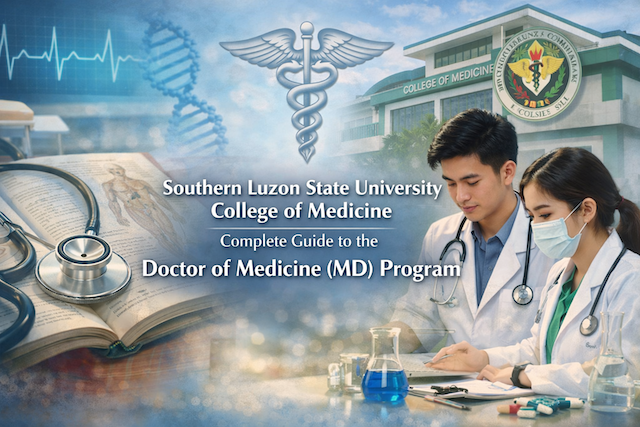
Southern Luzon State University College of Medicine: Complete Guide to the Doctor of Medicine (MD) Program
Contents
- Southern Luzon State University College of Medicine: Complete Guide to the Doctor of Medicine (MD) Program
- Quick Overview: What is SLSU College of Medicine?
- Location and Campus Setting: Studying Medicine in Lucban, Quezon
- Legal Foundation and Mandate: Why SLSU-COM Was Created
- Programs Offered: Doctor of Medicine and the Integrated Pathway
- Curriculum and Learning Approach: Competency-Based and Community-Oriented
- Facilities and Training Environment: What Students Can Expect
- Admissions Requirements: Who is Eligible to Apply?
- Required Documents: What You Need to Submit
- Application Timeline: Academic Year 2026–2027
- Scholarship and Service Commitment: Public Service as a Core Theme
- How to Prepare a Strong Application
- Student Experience: What Life May Look Like at SLSU-COM
- Career Outcomes: Where an SLSU-COM MD Can Lead
- Final Thoughts: Is SLSU College of Medicine Right for You?
- FAQs (Frequently Asked Questions)
- Is Southern Luzon State University College of Medicine a government medical school?
- Where is SLSU College of Medicine located?
- What degree does SLSU College of Medicine offer?
- What learning approach does the MD program follow?
- What are the basic admission eligibility requirements?
- Is the NMAT required, and what score should I aim for?
- What prerequisite subjects do I need before applying?
- What documents are usually required for the application?
- When is the application period for AY 2026–2027?
- Does SLSU College of Medicine offer scholarships?
- Is there a return-service obligation after graduation?
- What kind of clinical training will students receive?
- How can I become a more competitive applicant?
- Is SLSU College of Medicine a good choice for students who want to practice in the province?
Southern Luzon State University College of Medicine: Complete Guide to the Doctor of Medicine (MD) Program
Southern Luzon State University (SLSU) in Lucban, Quezon has expanded its academic footprint with the creation of the Southern Luzon State University–College of Medicine (SLSU-COM). For aspiring physicians who want a program rooted in public service, community health, and competency-based training, SLSU-COM is positioned as a mission-driven medical school designed to help strengthen healthcare capacity in Quezon Province and the wider CALABARZON region.
This guide explains what SLSU-COM is, how it was established, what kind of MD education it aims to deliver, who can apply, and how to prepare a competitive application. It is written for pre-med graduates, career shifters who have completed the required science units, and families who want clear, practical information about the pathway to medical school in a state university setting.
Quick Overview: What is SLSU College of Medicine?
SLSU-COM is the medical school established at the SLSU Main Campus in the Municipality of Lucban, Province of Quezon. It primarily offers a Doctor of Medicine (MD) program and is mandated to implement a learner-centered, competency-based, and community-oriented approach that includes both basic science and clinical courses. The intent is not only to train physicians for hospital settings, but also to produce doctors who understand real community needs and can contribute to strengthening the overall healthcare system—especially in underserved areas.
In practical terms, students can expect an MD track that emphasizes foundational medical sciences, early professional identity formation, patient-centered skills, and a public service mindset. As a state university program, SLSU-COM is also closely aligned with national initiatives that increase access to medical education while addressing physician shortages in many provinces.
Location and Campus Setting: Studying Medicine in Lucban, Quezon
SLSU’s main campus is located in Lucban, Quezon—known for its culture, heritage, and proximity to Mt. Banahaw. For medical students, the setting matters: your environment influences daily routines, stress management, and the community context where you learn about public health realities.
Studying in Lucban can offer a more grounded and community-connected experience compared with highly urban campuses. The pace can be conducive to focused study, and the community-oriented mandate of SLSU-COM fits naturally with a provincial setting where public health needs are visible and meaningful. For students who want to build long-term careers in CALABARZON or serve in their home provinces, training in a regional hub like Lucban can be a strong advantage.
Legal Foundation and Mandate: Why SLSU-COM Was Created
SLSU-COM was formally established through national legislation. The law explicitly creates a medical school at the SLSU Main Campus in Lucban and names it the “Southern Luzon State University–College of Medicine.” It also defines the college’s general mandate: to offer a Doctor of Medicine program, including an Integrated Liberal Arts and Medicine program, with a learner-centered, competency-based, and community-oriented approach.
What does that mean for students? It suggests that SLSU-COM is expected to align with outcomes-based medical education, develop competencies step by step, and train students to deliver care with a strong understanding of families and communities. It also signals long-term institutional support because the college is created by law, with governance under the SLSU Board of Regents and an administrative structure led by a dean.
Programs Offered: Doctor of Medicine and the Integrated Pathway
The primary program of SLSU-COM is the Doctor of Medicine (MD). The mandate also includes an “Integrated Liberal Arts and Medicine Program,” which typically refers to an accelerated or structured pathway that integrates pre-med/lower-division coursework with medicine. The exact implementation can vary by institution and may evolve over time as the college grows, hires faculty, and expands its academic offerings.
If you are applying as a traditional MD applicant, the key takeaway is that SLSU-COM’s core commitment is to deliver a full medical curriculum that includes:
- Basic medical sciences (the foundational “why” behind disease and treatment)
- Clinical sciences and skills (the “how” of diagnosis, patient interaction, and management)
- Community-oriented training (preparing you for real-world healthcare delivery, not just hospital-based learning)
As a new and growing medical school, SLSU-COM may refine its tracks and partnerships over time. Applicants should stay updated through official announcements for details about the newest academic year’s structure and program components.
Curriculum and Learning Approach: Competency-Based and Community-Oriented
SLSU-COM is designed around a competency-based framework. In competency-based medical education, the focus is on demonstrable outcomes—what you can do safely and effectively as you progress. Instead of learning being measured only by time spent in class, competency-based design emphasizes:
- Clear learning outcomes (knowledge, clinical reasoning, skills, professionalism)
- Frequent feedback and structured assessments
- Progressive skill-building from basic science to clinical practice
- Community health perspective alongside hospital exposure
Because the mandate highlights a community-oriented approach, students should expect learning experiences that connect medicine to population health, prevention, and primary care realities. This can include family- and community-centered frameworks, public health integration, and possibly structured community immersion components depending on how the program evolves.
Early reports about SLSU-COM’s initial academic activities indicate the inclusion of foundational subjects such as Anatomy, Physiology, Biostatistics, Histology, and Family Medicine during the early phase—showing a blend of core sciences and a primary-care oriented discipline. This type of mix supports the goal of producing doctors who are clinically grounded while remaining sensitive to community needs.
Facilities and Training Environment: What Students Can Expect
Medical education requires more than classrooms. It requires laboratories, learning resources, clinical exposure, and the right environment for developing practical competence. SLSU-COM highlights access to health experts and “state-of-the-art laboratories and equipment” intended to strengthen practical skills and readiness for medical practice.
As the college expands, students can reasonably expect ongoing development of facilities, learning spaces, and program support systems. When evaluating fit, it’s smart to look for:
- Laboratory access for anatomy, physiology, and related practical training
- Library and digital learning support
- Student services that support mental health, wellness, and academic needs
- Clear pathways to clinical training sites and supervision
Because SLSU-COM is relatively new, facilities and partnerships may continue to mature each year. Applicants who value being part of a pioneering batch may find this exciting; those who prefer an older, fully established system may want to ask more questions about rotations and clinical training arrangements as they are announced.
Admissions Requirements: Who is Eligible to Apply?
SLSU-COM has published straightforward eligibility requirements for applicants to the MD program. These standards are meant to ensure that applicants have both academic readiness and the personal fitness to handle the demands of medical training. In general, applicants should be prepared to show strong academic performance, completion of required prerequisite subjects, and an NMAT score that meets the threshold.
Based on published criteria, applicants must meet the following eligibility requirements:
- Natural-born Filipino citizen
- General Weighted Average (GWA) of at least 2.5, with no failing grades
- Completion of at least a 3-unit course in each of the following: Zoology (or related subject), Chemistry (or related subject), and Research
- NMAT score of 65 or higher
- No record of dropping out from any medical school
- Physically and mentally fit to pursue medical studies
These requirements are important because SLSU-COM is not positioned as an open-entry program; it expects applicants to be academically capable and prepared for the intensity of an MD curriculum. If you are still completing prerequisites or waiting for updated NMAT results, plan your timeline carefully so you can submit complete requirements within the application period.
Required Documents: What You Need to Submit
Medical school applications often fail not because an applicant lacks potential, but because documents are incomplete, inconsistent, or submitted late. SLSU-COM’s requirements emphasize submitting the correct documents and ensuring they are uploaded properly if the process is online.
Commonly required documents include:
- Transcript of Records (TOR)
- NMAT result
- Parents’ proof of income
- Certificate of Residency from the Barangay
- Certificate of General Weighted Average (GWA) from the Registrar
Practical tip: prepare both scanned copies (clear, readable, properly named files) and original copies for verification. Keep a folder with backup copies, and ensure your documents match exactly—name spelling, dates, and official seals or signatures where applicable.
Application Timeline: Academic Year 2026–2027
SLSU-COM has announced an expected application period for Academic Year 2026–2027. Planning your timeline is crucial because medical school preparation includes taking or retaking the NMAT, requesting official academic documents, and preparing personal and financial documentation.
For AY 2026–2027, the application period is expected to open on January 19, 2026 and continue until May 29, 2026. Applicants should treat these dates as the planning anchor for their NMAT schedule, document requests, and personal preparation. If you submit early, you reduce the risk of last-minute technical issues, missing files, or delayed certifications from your school or local barangay.
Scholarship and Service Commitment: Public Service as a Core Theme
One of the most distinctive aspects of state-supported medical education in the Philippines is the linkage between scholarships and service. Early reporting about SLSU-COM’s initial cohorts indicates alignment with the “Doktor Para sa Bayan” framework, where scholars may be expected to render service in government health offices, government hospitals, or accredited government public health facilities—often connected to hometown or underserved areas—corresponding to scholarship years.
This is a major consideration for applicants. The promise is meaningful: reduced financial barriers to medical school, paired with a clear pathway to serving communities that need doctors the most. The responsibility is equally meaningful: you should be emotionally and professionally ready to commit to service, potentially in resource-limited settings, after graduation or during required return service periods as specified by program rules and implementing guidelines.
If your long-term goal is public health, family medicine, rural practice, or hospital service in the provinces, this model can be a strong match. If you are unsure about service commitments, you should research the scholarship rules carefully and reflect on whether you are ready to align your medical career with public service obligations.
How to Prepare a Strong Application
Meeting minimum requirements is only step one. Competitive applicants typically demonstrate academic consistency, a realistic understanding of medical training, and a clear motivation for becoming a doctor—especially in a state university context where community service is a core value.
Here are practical steps to strengthen your application:
- Plan your NMAT strategically: If your score is close to the threshold, consider preparing for a retake early. A higher score can help you stand out.
- Verify prerequisite units: Confirm you have at least 3-unit credits in Zoology (or related), Chemistry (or related), and Research. If not, consider completing units before the deadline.
- Request documents early: TOR and registrar certifications can take time. Barangay certificates may also require processing time depending on local procedures.
- Prepare for screening: New medical schools may include interviews or assessments designed to evaluate fit, resilience, and service orientation.
- Show commitment to community health: Volunteer experiences, public health involvement, and community engagement can align well with the college’s mission.
Lastly, be honest about readiness. Medical school requires sustained study habits, emotional resilience, teamwork, and the ability to accept feedback. Demonstrating maturity and a realistic perspective on training can matter as much as raw academic performance.
Student Experience: What Life May Look Like at SLSU-COM
While each batch may have a unique experience—especially in a growing college—medical school life usually follows a demanding rhythm: lectures, laboratory sessions, small-group learning, assessments, and independent study. Being in Lucban can add a community-focused dimension to student life. You may find more opportunities to see how healthcare access, family dynamics, and local public health programs shape real patient outcomes.
Expect to spend most weekdays focused on academics. Strong time management is critical. Many students create structured routines: early morning review, focused lecture participation, post-class consolidation, and weekend deep study. A supportive peer group can make a major difference, especially during heavy exam seasons.
Because SLSU is a full university, students can also benefit from broader campus resources—libraries, student services, and wellness support. Medical training is intense, so it is smart to actively protect sleep, mental health, and long-term motivation.
Career Outcomes: Where an SLSU-COM MD Can Lead
An MD degree opens multiple pathways. Many graduates proceed to the Physician Licensure Examination, followed by internship, residency training, and specialization. Others build careers in community health, public health leadership, research, or academic medicine. In a college designed to strengthen regional healthcare capacity, graduates may find meaningful careers in provincial hospitals, rural health units, local government health offices, and community-based programs.
For students who are aligned with service, training in a mission-driven state medical school can help shape a career identity centered on impact. Over time, as SLSU-COM strengthens its alumni network and clinical partnerships, graduates may also gain access to broader professional opportunities in CALABARZON and beyond.
Final Thoughts: Is SLSU College of Medicine Right for You?
SLSU-COM can be a strong fit if you want a medical education that emphasizes competency, community orientation, and public service—especially if you plan to build your career in Quezon Province or nearby regions. It is also attractive for applicants who value state university opportunities and scholarship-linked pathways that reduce financial burdens while addressing urgent healthcare needs.
At the same time, as a newer medical school, SLSU-COM is still building its long-term systems, expanding its cohorts, and developing resources year by year. For many students, being part of an early-generation batch is a meaningful experience: you help shape traditions, culture, and excellence from the ground up.
If you are considering applying, start early: plan your NMAT, confirm prerequisites, secure documents, and reflect seriously on the service-oriented mission. Medicine is not only an academic pursuit—it is a commitment to people, communities, and lifelong professional growth.
FAQs (Frequently Asked Questions)
Is Southern Luzon State University College of Medicine a government medical school?
Yes. Southern Luzon State University (SLSU) is a public, state-run university, and its College of Medicine operates within that public university system. In practice, this means the program is designed to support national and regional health workforce needs, and it may align with government initiatives that expand access to medical education. Applicants should still review the most recent official announcements each cycle because policies, fees, and admission processes can evolve as the college grows.
Where is SLSU College of Medicine located?
The College of Medicine is based at the SLSU Main Campus in Lucban, Quezon. Lucban is a municipality in the CALABARZON region and is accessible from Metro Manila and nearby provinces. Studying in Lucban often provides a community-centered environment where students can better understand local health concerns, primary care realities, and public health challenges that are especially relevant to provincial practice.
What degree does SLSU College of Medicine offer?
The main program is the Doctor of Medicine (MD). The college’s mandate also includes an Integrated Liberal Arts and Medicine pathway, which generally refers to a structured or accelerated track that connects pre-medical preparation with medical training. Availability, structure, and number of slots for any integrated pathway can vary, so applicants should rely on the latest SLSU College of Medicine admissions notices for the most accurate program options.
What learning approach does the MD program follow?
SLSU College of Medicine is intended to follow a learner-centered, competency-based, and community-oriented approach. “Competency-based” typically means students are trained and assessed on measurable skills and professional behaviors—such as clinical reasoning, communication, patient safety, and ethics—rather than only seat time. “Community-oriented” means students may be trained with a strong primary care and public health perspective, connecting classroom learning to the realities of community health.
What are the basic admission eligibility requirements?
Applicants are generally expected to meet requirements related to citizenship, academic standing, prerequisite coursework, and NMAT performance. Commonly published criteria include being a natural-born Filipino citizen, having at least a 2.5 GWA with no failing grades, meeting minimum NMAT requirements, completing required science and research units, having no record of dropping out from another medical school, and being physically and mentally fit for medical studies. Always confirm the latest thresholds and rules because requirements can be updated.
Is the NMAT required, and what score should I aim for?
Yes, the NMAT is typically required for MD admissions in the Philippines, and SLSU College of Medicine also uses it as part of eligibility screening. Some published guidelines cite a minimum NMAT score requirement (often presented as a cutoff). Even if you meet the minimum, aiming higher is helpful for competitiveness—especially if applicant volume increases. Plan your NMAT schedule early so you have time for a retake if needed.
What prerequisite subjects do I need before applying?
Applicants are commonly required to have completed at least 3 units in Zoology (or a related subject), Chemistry (or a related subject), and Research. If your undergraduate program labeled these differently, check your transcript for equivalent courses (for example, “General Biology,” “Organic Chemistry,” or “Research Methods”). If you are missing units, it is best to complete them before the application deadline so your credentials are clear and verifiable.
What documents are usually required for the application?
Requirements can vary by cycle, but commonly listed documents include your Transcript of Records (TOR), your NMAT result, a certificate of GWA from the registrar, a barangay certificate of residency, and proof of parents’ income (or equivalent documentation). Prepare clean, readable scans and keep original copies for verification. Incomplete or unclear files are one of the most avoidable reasons applications get delayed.
When is the application period for AY 2026–2027?
For the AY 2026–2027 cycle, application dates have been announced in some materials as running from January 19, 2026 to May 29, 2026. Treat these dates as your planning window: request documents early, finalize your NMAT results, and avoid last-week submission problems. If SLSU posts an updated schedule, follow the newest announcement, since deadlines and procedures may change.
Does SLSU College of Medicine offer scholarships?
Many state medical schools align with government scholarship and health workforce programs, and SLSU College of Medicine has been associated in reports with “Doktor Para sa Bayan” style support in its early cohorts. Scholarship availability, eligibility, and benefits can change yearly depending on policy and funding, so applicants should verify scholarship details directly through official government and school channels. If you are applying primarily due to scholarship support, confirm the exact obligations and coverage before committing.
Is there a return-service obligation after graduation?
Some government-supported medical scholarships require a return-service commitment in public health facilities, government hospitals, or local health offices. If you receive scholarship funding tied to service, you should expect conditions that specify where and how long you must serve. This can be an excellent pathway for students who want to practice in underserved communities, but it is a serious obligation. Read the implementing guidelines carefully and plan your career path with the service requirement in mind.
What kind of clinical training will students receive?
Medical education typically progresses from basic sciences to clinical clerkship, internship, and then licensure. Because SLSU College of Medicine is developing as a newer college, its clinical training sites and partnerships may expand over time. Applicants should look for clear information about affiliated hospitals, supervision structure, and rotation planning in the most current admissions materials. Asking about clerkship arrangements is normal and responsible when evaluating any medical school.
How can I become a more competitive applicant?
Start by exceeding the minimum where possible: aim for a strong NMAT score, maintain a solid GWA, and ensure prerequisites are complete. Then focus on fit: demonstrate genuine motivation for medicine and community service, and show readiness for a rigorous training schedule. If interviews are part of screening, prepare to explain why you want to study at SLSU, how you handle stress and feedback, and how you see yourself contributing to community health in Quezon and the broader region.
Is SLSU College of Medicine a good choice for students who want to practice in the province?
It can be an excellent choice for applicants who intend to serve in Quezon Province or nearby areas. A community-oriented approach and potential alignment with government health workforce needs often fit students who want a long-term provincial practice. Ultimately, “good choice” depends on your learning preferences, your readiness for a newer program that is still expanding, and whether you share the college’s service-driven mission.
Complete List of Medical Schools in the Philippines (All 78 MD Programs)
Best Medical Schools in the Philippines (Local & International Rankings)
Recommend
2026年1月23日
Sultan Kudarat State University College of Medicine: Complete Guide for Aspiring MD Students
2026年1月23日
University of Southern Mindanao College of Medicine: Complete Guide for Aspiring MD Students
2026年1月23日
Mindanao State University – General Santos College of Medicine: Complete Guide for Future MD Students

How to Register for eTravel Philippines (2025 Guide)
Step-by-step guide to completing your eTravel registration before arriving in the Philippines, with images and tips.

Night Market in Cebu – Things You Don’t Know About Cebu Life
Discover the hidden charm of Cebu’s night markets, from street food stalls to local life tips you won’t find in tourist guides.

How to Use ChatGPT for IELTS Preparation: A Complete Guide
Learn how to prepare for IELTS using ChatGPT — including strategies for Writing, Reading, Listening, Speaking, and grammar support.

How to Build a Website Without Coding Using ChatGPT
Discover how to build your own website using AI—no coding skills needed. From structure planning to SEO and design, let ChatGPT guide you.