2026年4月5日
3D ACADEMY offers affordable English study programs in Cebu, Philippines – perfect for beginners, professionals, and exam takers.

3D UNIVERSAL ENGLISH INSTITUTE INC
info.3d-universal.com
8:00-17:00(Mon-Fri)
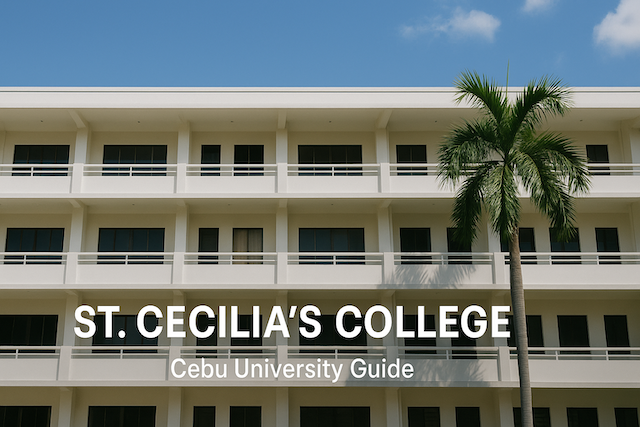
St. Cecilia’s College – Cebu: Cebu University Guide
Contents
- St. Cecilia’s College – Cebu: Cebu University Guide
- Overview of St. Cecilia’s College – Cebu
- History and Institutional Background
- Academic Programs Offered
- Campus Life and Student Experience
- Facilities and Learning Environment
- Admission Requirements and Enrollment Process
- Tuition Fees and Financial Assistance
- Graduate Outcomes and Employability
- Why Choose St. Cecilia’s College – Cebu?
- Conclusion
- FAQs (Frequently Asked Questions)
- What levels of education does St. Cecilia’s College – Cebu offer?
- What senior high school tracks and strands are available?
- Which college degree programs can I take at St. Cecilia’s College – Cebu?
- Is St. Cecilia’s College – Cebu a Catholic institution?
- How much is the tuition fee and are there payment plans?
- Does the school offer scholarships or financial assistance?
- What facilities can students use on campus?
- Is St. Cecilia’s College – Cebu a safe and student-friendly environment?
- Are international or non-local students accepted?
- Does the school provide dormitories or help with accommodation?
- Are there extracurricular activities and student organizations?
- How can I apply or get more information about St. Cecilia’s College – Cebu?
St. Cecilia’s College – Cebu: Cebu University Guide
St. Cecilia’s College – Cebu is a well-established private educational institution known for its strong commitment to academic excellence, character formation, and community-focused programs. Located in the bustling province of Cebu, the college has become a preferred choice for students seeking high-quality education from basic education to collegiate programs. This comprehensive university guide explores the school’s history, academic offerings, campus life, admission process, facilities, and overall value for students and parents evaluating options within Cebu.
Overview of St. Cecilia’s College – Cebu
St. Cecilia’s College – Cebu is recognized for delivering holistic education grounded in Catholic values and modern academic standards. The institution emphasizes discipline, moral integrity, and academic competence, making it a reputable choice among Cebu-based colleges.
The school offers a wide range of programs from basic education (preschool, grade school, junior high school, and senior high school) to tertiary-level courses. Many students choose St. Cecilia’s College – Cebu because of its accessible location, student-friendly community, and consistent performance in national assessments.
History and Institutional Background
St. Cecilia’s College – Cebu was founded with the mission of providing accessible, values-centered education to young learners in the region. Named after Saint Cecilia, the patron saint of music, the institution began modestly but steadily expanded its programs and facilities over the years.
Key institutional characteristics include:
-
Catholic foundation: The school integrates faith-based learning and spiritual formation throughout its curriculum.
-
Growth through community trust: As enrollment demand increased, the college expanded from basic education to include tertiary-level programs.
-
Commitment to modernization: The administration consistently updates its facilities, teaching methods, and programs to meet modern academic standards.
Today, the college stands as a respected learning institution that nurtures both academic excellence and personal development.
Academic Programs Offered
St. Cecilia’s College – Cebu provides a comprehensive lineup of academic programs supporting students from early education to college-level studies.
Basic Education Department
The Basic Education program follows the K–12 curriculum mandated by the Department of Education (DepEd).
Preschool
A play-based, activity-centered curriculum designed to introduce foundational learning skills and social development.
Grade School
Focuses on core competencies in Math, English, Science, Filipino, and Araling Panlipunan while incorporating values education and co-curricular activities.
Junior High School
Students are trained in analytical thinking, communication, and digital literacy, preparing them for Senior High School pathways.
Senior High School (SHS)
St. Cecilia’s College – Cebu offers SHS tracks designed to match different student interests:
-
Academic Track
-
Accountancy, Business, and Management (ABM)
-
Humanities and Social Sciences (HUMSS)
-
General Academic Strand (GAS)
-
-
Technical-Vocational-Livelihood (TVL) Track
-
Information and Communications Technology (ICT)
-
Home Economics (HE)
-
The SHS department ensures students are college-ready or job-ready with practical skills and experience.
College Department
The College Department offers several undergraduate programs that prepare students for professional careers.
Bachelor of Elementary Education (BEEd)
Focuses on training future educators skilled in teaching young learners using modern pedagogical approaches.
Bachelor of Secondary Education (BSEd)
Prepares students to teach in high schools, offering specializations such as English, Math, and Social Studies.
Business Administration Programs
Designed for students planning careers in corporate, entrepreneurial, or administrative fields:
-
Bachelor of Science in Business Administration (BSBA) – Major in Financial Management
-
BSBA – Marketing Management
-
BSBA – Human Resource Management
Information Technology Programs
Ideal for tech-driven individuals:
-
Bachelor of Science in Information Technology (BSIT)
-
BS in Computer Science (depending on availability per school year)
These programs include hands-on training in programming, networking, and systems development.
Campus Life and Student Experience
St. Cecilia’s College – Cebu promotes a friendly, supportive, and engaging campus atmosphere. Students enjoy a balance of academic work, extracurricular activities, and social engagement.
Student Organizations
The school hosts multiple clubs and organizations such as:
-
Academic clubs (Math Club, Science Club, IT Society)
-
Arts and music groups
-
Student leadership councils
-
Sports teams and fitness clubs
-
Religious and community service groups
These activities help students develop leadership, creativity, and interpersonal skills.
Facilities and Learning Environment
The college provides facilities that support an effective learning experience:
-
Fully equipped classrooms
Air-conditioned or well-ventilated rooms designed for comfortable learning. -
Computer and ICT laboratories
Updated systems with software for IT-related programs. -
Science laboratories
Used for hands-on experiments and STEM subjects. -
Library and Learning Resource Center
Offers digital and physical learning materials for research. -
Chapel
A space for prayer, reflection, and spiritual formation. -
Sports and recreational spaces
Areas for athletics, school events, and physical education classes.
The campus maintains a safe and secure environment with guards and clear safety protocols.
Admission Requirements and Enrollment Process
Admission to St. Cecilia’s College – Cebu is open to Filipino and international students who meet the academic standards.
General Requirements
For Preschool to High School:
-
Birth certificate (PSA)
-
Report card (if applicable)
-
Certificate of Good Moral Character
-
Two passport-size photos
For College Freshmen:
-
Senior High School report card (Form 138)
-
PSA Birth Certificate
-
Certificate of Good Moral Character
-
2×2 ID photos
-
Entrance exam (if required for the program)
For Transferees:
-
Transcript of Records or copy of grades
-
Honorable Dismissal
-
Transfer Credentials
Enrollment Procedure
-
Visit the school or official website for admission schedules.
-
Submit the required documents to the Registrar’s Office.
-
Take entrance assessments if required.
-
Attend orientation sessions.
-
Finalize tuition payment through available payment centers.
The school offers flexible payment plans and accepts various payment methods.
Tuition Fees and Financial Assistance
St. Cecilia’s College – Cebu maintains competitive tuition rates that are considered affordable compared to many private schools in Cebu. Costs vary by program and level, but students and parents can expect:
-
Installment plans
-
Discounts for siblings
-
Scholarships for honor students
-
Financial aid for underprivileged but deserving students
These options make the institution accessible to a wider range of learners.
Graduate Outcomes and Employability
Graduates of St. Cecilia’s College – Cebu are known for strong moral character, discipline, and competence. Many find employment in:
-
Education (public and private schools)
-
Business and corporate roles
-
Technology and IT sectors
-
Entrepreneurship
-
Community development and NGO work
The SHS programs also equip students with job-ready skills for immediate employment if they choose not to pursue college.
Why Choose St. Cecilia’s College – Cebu?
The school stands out because of:
-
A strong Catholic-based educational foundation
-
Comprehensive programs from preschool to college
-
Student-centered teaching strategies
-
Affordable tuition rates
-
Safe and welcoming campus environment
-
Holistic approach combining academics, values, and extracurricular activities
Families looking for a balanced and nurturing institution will find St. Cecilia’s College – Cebu a strong contender.
Conclusion
St. Cecilia’s College – Cebu is a reputable institution offering well-rounded education rooted in values, competence, and community engagement. Its comprehensive programs, student-centered facilities, and supportive campus environment make it an excellent choice for students in Cebu seeking quality, affordable, and holistic learning.
FAQs (Frequently Asked Questions)
What levels of education does St. Cecilia’s College – Cebu offer?
St. Cecilia’s College – Cebu typically offers a complete education pathway from basic education up to college level. This usually includes preschool, grade school, junior high school, senior high school, and selected undergraduate degree programs. The exact offerings may vary slightly by year, so it is always best to check the latest list of programs with the school’s Registrar or official communications before applying.
What senior high school tracks and strands are available?
The senior high school department generally follows the K–12 curriculum and offers both Academic and Technical-Vocational-Livelihood (TVL) tracks. Common strands under the Academic Track may include ABM (Accountancy, Business, and Management), HUMSS (Humanities and Social Sciences), and GAS (General Academic Strand). Under TVL, students can often choose from strands like ICT or Home Economics. Availability can change, so prospective students should confirm current strands directly with the school.
Which college degree programs can I take at St. Cecilia’s College – Cebu?
The college department usually focuses on practical and in-demand fields. Typical offerings include Education programs (such as Elementary and Secondary Education), Business Administration majors, and Information Technology–related courses. Each program is designed to combine theoretical foundations with practical training. However, not all programs are offered every year, and new programs may be introduced, so applicants should ask the Registrar’s Office for the updated list of degrees.
Is St. Cecilia’s College – Cebu a Catholic institution?
Yes, St. Cecilia’s College – Cebu is commonly recognized as a Catholic-oriented institution. This means it integrates Christian values, spiritual formation, and moral education into its academic life. Students may participate in religious activities such as masses, recollections, and outreach programs. While rooted in Catholic tradition, the school typically welcomes students from different religious backgrounds who are respectful of its values and policies.
How much is the tuition fee and are there payment plans?
Tuition fees at St. Cecilia’s College – Cebu are generally considered competitive compared to many private schools in Cebu. The total cost depends on the level (basic education, SHS, or college) and the specific course or strand. The school often provides installment plans, allowing families to pay by down payment and monthly installments. Some levels or programs may also offer discounts or special arrangements during early enrollment periods.
Does the school offer scholarships or financial assistance?
St. Cecilia’s College – Cebu usually provides various forms of financial support to qualified students. These may include academic scholarships for honor students, discounts for siblings, and assistance for financially challenged but deserving learners. Requirements can involve grade thresholds, behavior records, and sometimes an interview or screening. Since scholarship policies can change, students should always refer to the latest scholarship guidelines from the Guidance Office or Registrar.
What facilities can students use on campus?
The campus generally includes standard learning facilities such as regular classrooms, laboratories for science and ICT, a library or learning resource center, and spaces for sports or physical education. Many Catholic schools also maintain a chapel for spiritual activities. Facilities may be upgraded over time, with improvements in multimedia equipment, computer units, or study areas, so visiting the campus is helpful to see the current learning environment.
Is St. Cecilia’s College – Cebu a safe and student-friendly environment?
The school typically implements security measures such as gate guards, ID systems, and visitor logging to help maintain a safe campus. Beyond physical security, it also promotes a student-friendly atmosphere through guidance services, homeroom programs, and value-based discipline. Parents often appreciate the balance of structure and care, which aims to form students who are both responsible and respectful.
Are international or non-local students accepted?
Many private colleges in Cebu, including institutions like St. Cecilia’s College – Cebu, can accept non-local or foreign students as long as they comply with Philippine immigration and school requirements. These may include additional documents such as a passport, visa-related papers, or certification of previous schooling. Because procedures for foreign students are more specific, it is important to consult the Registrar early in the application process.
Does the school provide dormitories or help with accommodation?
Some schools operate their own dormitories, while others partner with nearby boarding houses or leave housing choices to the family. If you are an out-of-town or international student, you should ask the Admissions or Student Affairs Office whether St. Cecilia’s College – Cebu currently offers on-campus housing, recommended dorms, or guidance in finding safe accommodation near the campus.
Are there extracurricular activities and student organizations?
Yes, student life at St. Cecilia’s College – Cebu generally includes a variety of extracurricular activities. Learners may join academic clubs, student government bodies, music or arts groups, sports teams, and religious or community-service organizations. These activities help develop leadership, teamwork, creativity, and social responsibility. Participation in clubs also enriches a student’s overall college experience and can be a valuable addition to a future résumé.
How can I apply or get more information about St. Cecilia’s College – Cebu?
To apply, you usually start by preparing basic documents such as your report card, birth certificate, ID photos, and certificates of good moral character. Then, visit the campus or contact the school through its official channels to learn about entrance exams, interviews, or online application procedures. For the most accurate and updated information on programs, fees, and schedules, always rely on the school’s official announcements, website, or verified social media pages.
Philippines University Guide
Cebu University Guide
Cebu Province All Universities Lists

How to Register for eTravel Philippines (2025 Guide)
Step-by-step guide to completing your eTravel registration before arriving in the Philippines, with images and tips.

Night Market in Cebu – Things You Don’t Know About Cebu Life
Discover the hidden charm of Cebu’s night markets, from street food stalls to local life tips you won’t find in tourist guides.

How to Use ChatGPT for IELTS Preparation: A Complete Guide
Learn how to prepare for IELTS using ChatGPT — including strategies for Writing, Reading, Listening, Speaking, and grammar support.

How to Build a Website Without Coding Using ChatGPT
Discover how to build your own website using AI—no coding skills needed. From structure planning to SEO and design, let ChatGPT guide you.